
Boiling River Hot Springs, Montana: Soak or Skip?
Plan a soak at Boiling River in Yellowstone, where hot spring runoff meets the cold Gardiner River. Learn the half-mile walk, parking, and river-level timing.
On this page
Boiling River rewards travelers who want a real geothermal soak without a resort pool, a reservation desk, or a long approach. The attraction is the mixing zone itself: scalding runoff pours into the cold Gardiner River, and you slide into the blended current where the two meet. It suits fit walkers based near Mammoth Hot Springs who can build a half-day around one short riverside stroll, and it is a poor fit for anyone expecting a maintained tub with a posted temperature.
What Boiling River is
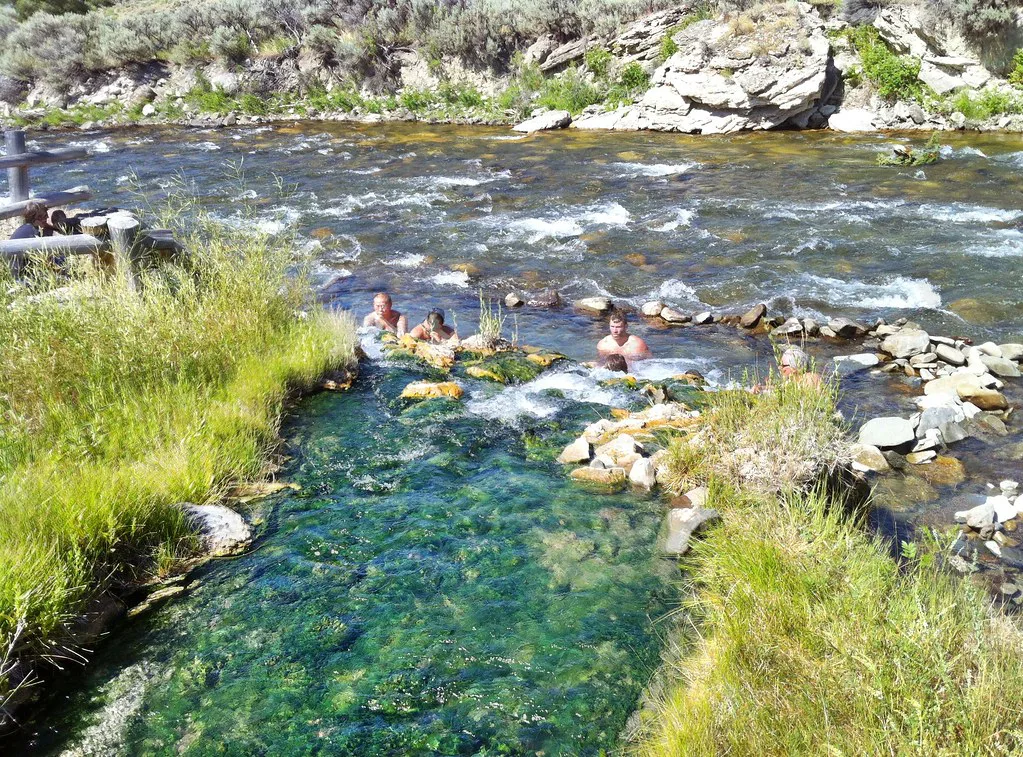
The name is a little misleading, because there is no single boiling pool to step into. Hot spring water above Mammoth Hot Springs runs downhill and empties into the Gardiner River, and soakers position themselves in the river where the hot inflow mixes with cold water. The Yellowstone Volcano Observatory documents the feature as a geothermal site near Mammoth Hot Springs, which sits in the park's northern range.
Because the soak is the confluence rather than a constructed pool, everything depends on flow. In high water the river pushes harder and dilutes the hot inflow faster, so the comfortable band along the bank narrows. In lower water you can find a wider warm zone and pick a spot with more control over how much cold river you sit in.
Where it sits
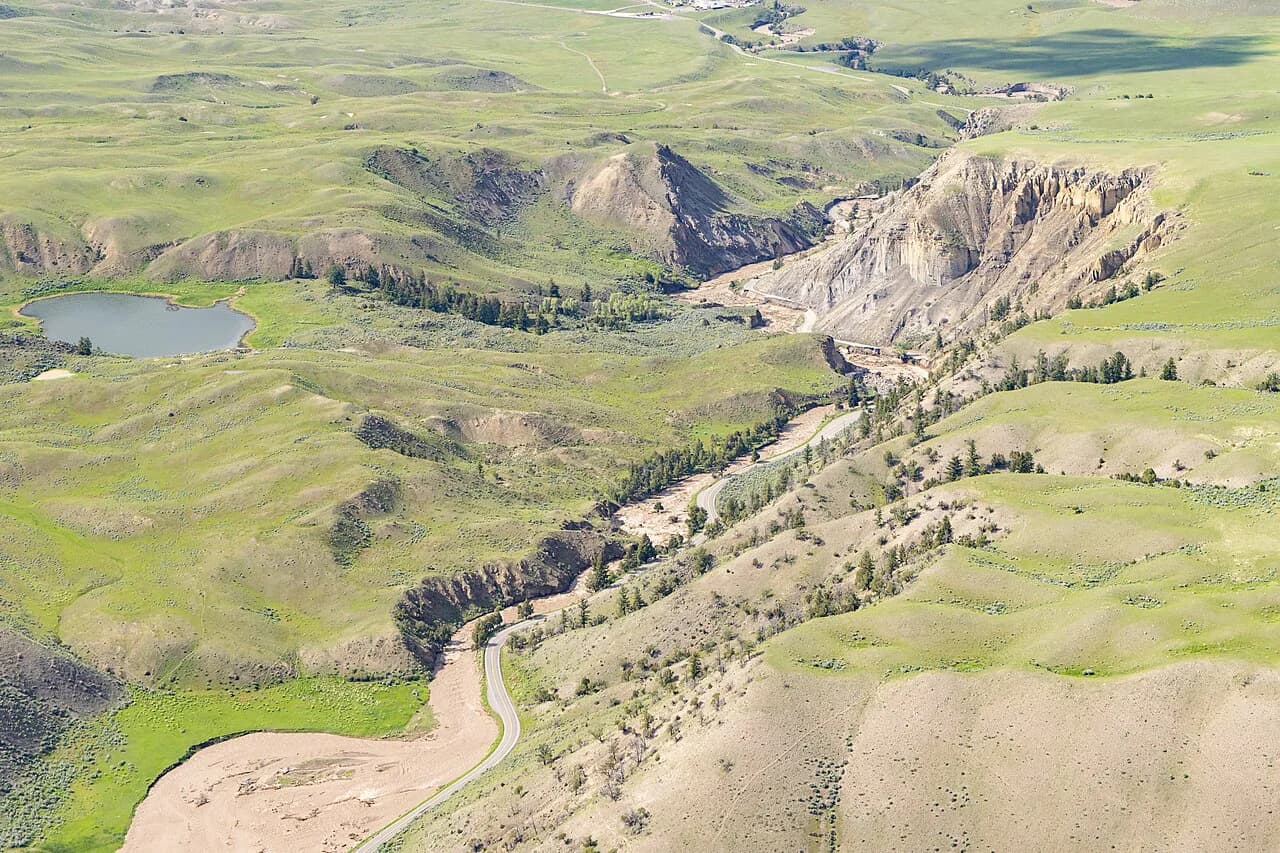
Boiling River lies on US Highway 89 in the far north of Yellowstone, just north of Mammoth Hot Springs and close to the Wyoming–Montana state line. The park road connects Mammoth with Gardiner, Montana, the nearest town with services, so you can pair a soak with a night in Gardiner and drive in from the north entrance.
The landmark to navigate by is the 45th Parallel bridge and the state border sign on US-89. Parking sits in the lot and in designated roadside areas near that border marker, and from there you walk south along the river to reach the soaking area. The Park Service describes the site in its Mammoth area natural highlights material, so look for the 45th Parallel Bridge and Boiling River entry when you plan your route.
Getting there
From the parking area, the approach is a walk of roughly half a mile south along the river, not a mountain hike. That distinction matters for packing: you do not need a daypack with a full backcountry kit, but you do need footwear that handles uneven river rock and a way to carry layers and a towel. Budget more time for the soak than the walk.
The walk follows the riverbank to the confluence, where you step down to the water's edge. Expect slick, rounded rock and ledges along the bank, and choose your entry point carefully rather than hurrying in at the first warm spot you feel.
The pools
Think of Boiling River as an adjustable natural tub. Sit close to the bank where the hot runoff enters and the water is hottest; move a step or two toward midstream and the cold Gardiner water takes over. The short falls and cascades where the hot stream drops into the river give the site its character and let you find a spot with the mix you want.
The source water leaves the ground scalding hot, so treat the inflow itself as something to avoid rather than soak in. Keep your head above water and watch your footing on the slippery ledges.
The source water leaves the ground scalding hot, so treat the inflow itself as something to avoid rather than soak in. Keep your head above water, since this is untreated geothermal water flowing through a popular public site, and keep your footing on the slippery ledges. That combination of very hot inflow and cold river is what makes the confluence work, and it is also why position matters more here than at a built pool.
Timing the soak
Creek and river flow drives the experience more than air temperature. Early-season snowmelt swells the Gardiner and makes the current stronger, which pushes the warm mixing zone tighter against the bank; by later in the summer and into fall, lower flows usually give you more room to find a comfortable spot. Aim for mid-June or later if you want the current to have eased, and treat spring visits as a look-and-decide outing rather than a guaranteed soak.
Plan around the park's road season as well as the river. The Mammoth-to-Gardiner road is your access, and the park publishes opening and closing dates for its roads each year, so match your trip to that calendar before you commit to a Boiling River stop. A soak fits naturally into a day that also includes the Mammoth Hot Springs terraces, which are minutes away.
What to bring
Bring a swimsuit you can change into, water shoes or sandals with grip for the slick rock, a towel, and a warm layer for the walk back. Mornings along this stretch of the Gardiner run cool, and you will be wet on the return leg. A dry bag keeps phones and keys usable.
Leave glass behind and carry out anything you bring in. The banks around the confluence see heavy use, and overhanging ledges along the river have collapsed where people walked too close to the edge, so stay on established paths and keep off the fragile lip of the bank.
Rules and etiquette
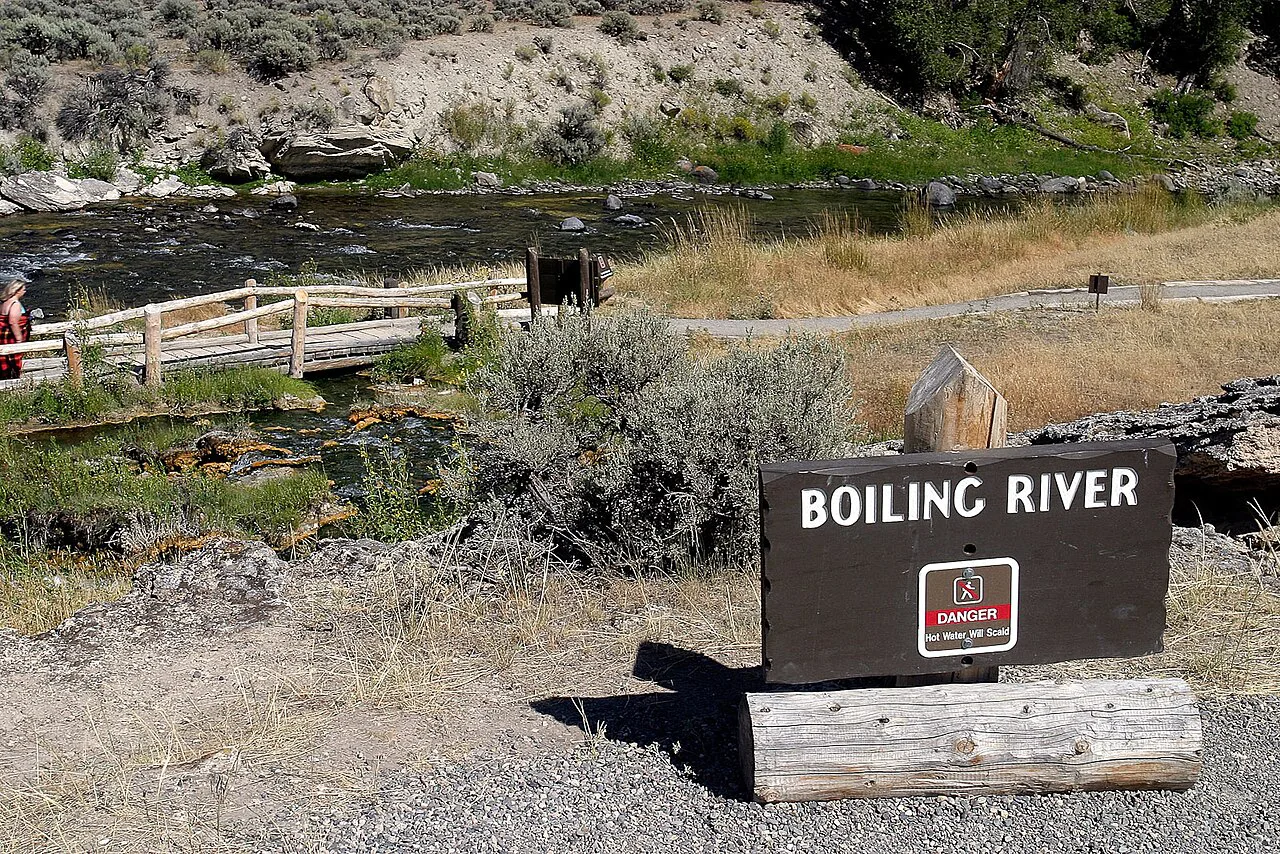
This is a national park soak, so the park's geothermal rules apply: stay out of closed thermal areas, stay on trails and established routes, and keep the water out of your mouth. The hot inflow is the feature, not a bathtub, and the cold river is what makes the site usable. Check posted signs at the parking area for the current rules before you walk down.
Because this is a roadside soak rather than a hike-in spring, the etiquette is simple: pack out everything, do not rearrange rocks to build walls, and give other soakers room in the narrow warm band. If the confluence is packed, the terraces at Mammoth Hot Springs make a good wait-out stop.
Crowds
Boiling River is well known despite its low profile on park maps, and it draws a crowd in the middle of a summer day. The banks fill with people adjusting position in the current, which is part of the social character of the place but also means less room to find your own temperature band.
Go early or late in the day to find a quieter bank and an easier parking spot near the border sign. A cool morning soak means fewer people competing for the warmest pockets.
Go early or late in the day to find a quieter bank and an easier parking spot near the border sign. Weekdays beat weekends in July and August, and a cool morning soak means fewer people competing for the warmest pockets. Leave the midday hours to the terraces and the Mammoth area.
Nearby springs and stops
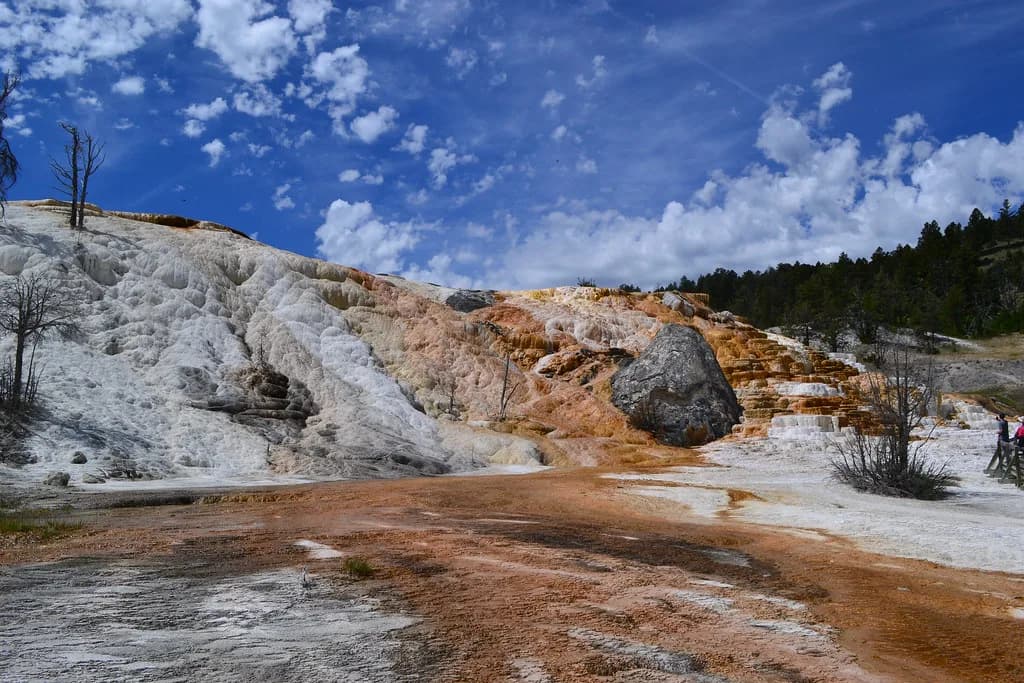
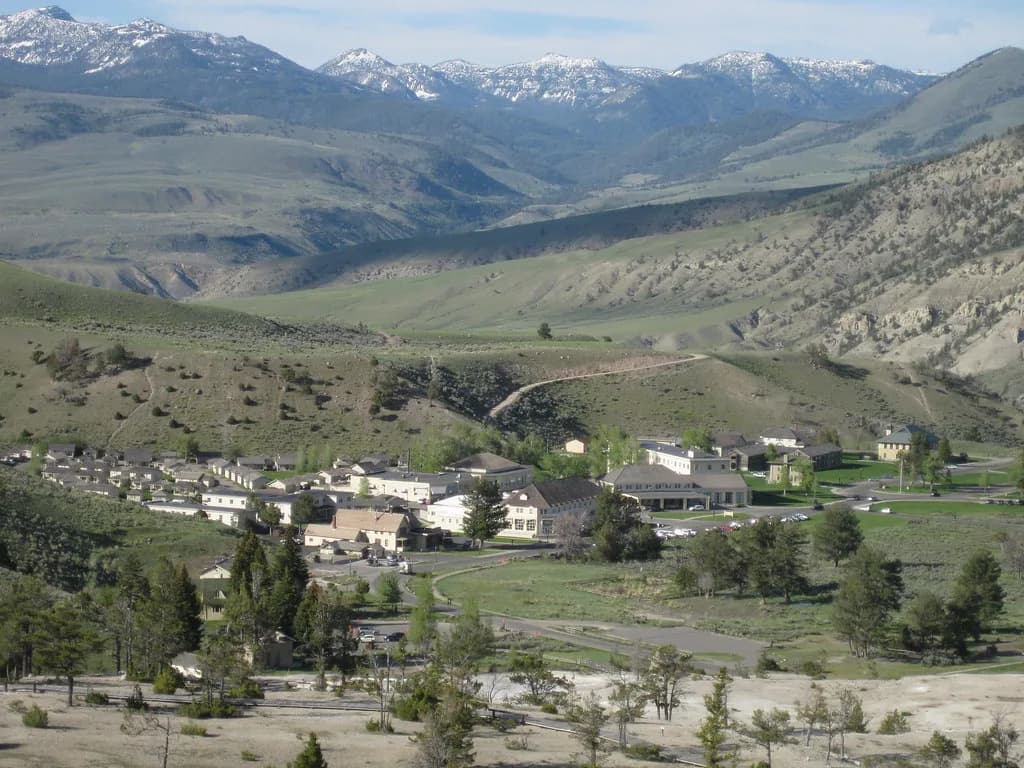
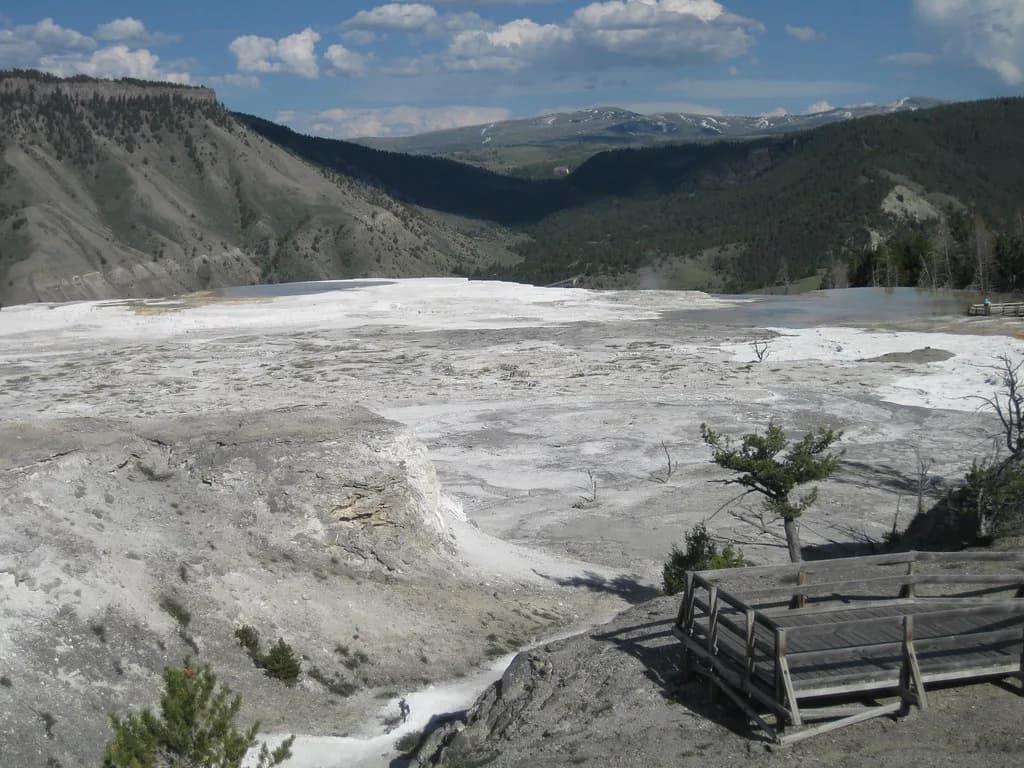
Mammoth Hot Springs is the obvious pairing, with boardwalks over travertine terraces a short drive from the Boiling River parking area. Build the half-day around the soak first, then walk the terraces while you dry off, and finish with the drive north to Gardiner.
If you want a developed pool with a deck and a soak that does not depend on river flow, look at the hot springs in Montana beyond the park boundary. Quinn's Hot Springs Resort, Montana sits west of the divide in the Clark Fork valley near Paradise, an easy add-on for a longer road trip through the state's soak country. For a longer soak-focused road trip, our hot springs in Idaho guide covers the neighboring pools just across the state line.
Where to stay
Gardiner, Montana, just north of the park entrance on US-89, is the natural base for a Boiling River soak. It puts you minutes from the parking area and from Mammoth Hot Springs, and it keeps you outside the park when you want a restaurant meal after a cool evening soak.
Inside the park, Mammoth Hot Springs has lodging and services at the hub of the northern range, which shortens the drive on a dawn run to the river. Book well ahead for summer dates, and use the park's own lodging pages for availability rather than third-party listings.
Plan Your Soak
Treat Boiling River as a river soak, not a spa: walk the half mile from the US-89 parking area near the border sign, pick your spot in the mixing zone, and let the Gardiner's flow set the schedule. Late summer and fall give you a friendlier current than the snowmelt weeks of early summer.
Confirm road access and current conditions with the National Park Service before you drive out, especially on the shoulder seasons when the Mammoth-to-Gardiner road may not match your plans. Then pack water shoes, a towel, and a dry layer, and build the rest of the day around Mammoth Hot Springs.
Frequently Asked Questions
Where do you park for Boiling River?
Parking is in the lot and in designated roadside spaces near the 45th Parallel bridge and the Wyoming–Montana border sign on US-89, just north of Mammoth Hot Springs. From there you walk south along the river to the soaking area. Arrive early in summer, when the lot and the shoulder spaces fill first.
How long is the walk to Boiling River?
The approach is about half a mile south along the riverbank from the parking area, on an uneven path rather than a maintained trail. Wear shoes with grip for slick river rock and carry your towel and layers in a bag so your hands are free at the water's edge.
Can you swim at Boiling River in Yellowstone?
People soak where the hot runoff mixes with the cold Gardiner River, which is the point of the site. The inflow itself leaves the ground scalding, so stay out of the hottest water, keep your head above the surface, and keep untreated geothermal water out of your mouth. Posted signs at the parking area carry the park's current rules.
When is the best time of year to soak at Boiling River?
Later summer and fall generally bring lower river flows, which widen the comfortable mixing zone along the bank. Early-summer snowmelt strengthens the current and pins the warm water close to the edge. Match your visit to the park's road calendar for the Mammoth-to-Gardiner route before you commit.
How crowded does Boiling River get in summer?
Midday in July and August is the busiest window, when the banks fill with soakers shifting position in the current. Early mornings and late afternoons are quieter, and weekdays beat weekends. Use the middle of the day for the Mammoth Hot Springs terraces instead.
What else can you do near Boiling River?
The Mammoth Hot Springs terraces are a short drive away and make an easy pairing with a soak. Gardiner, Montana, has the nearest services and restaurants, and longer road trips can add developed pools elsewhere in the state.
Sources
Hot springs notes for your next road trip
Optional updates when we add or revise hot springs guides.
You might also like
Continue reading
More guides you'll find useful
.jpg)
.jpg)