Hot Springs in Utah: Developed Resorts and Wild Soaks
Choose a Utah hot spring by trip style, from developed resorts with mineral pools and saunas to primitive desert soaks, with access notes for each.
On this page
Utah rewards both kinds of soaker: families who want a warm pool with changing rooms, and road-trippers willing to drive two hours of gravel for a spring nobody else has found that morning. The state's geothermal belt runs through its western half, so nearly every spring on this list sits off Interstate 15, US-6 or US-50 rather than in the mountains. Pick by season and vehicle first, then by how much company you want.
Three clusters do most of the work: the Wasatch Front and its northern valleys, the central corridor between Fillmore and Monroe, and the far western desert along the Nevada line. Each has a developed option and a wild one within an hour of each other, which makes pairing them easy on a two- or three-day loop. If you are extending the drive north, the same developed-or-wild calculus shapes a trip through the Wyoming hot springs.
Why Utah Has So Many Hot Springs
Utah sits at the eastern edge of the Basin and Range province, where the crust is stretching and thinning, so heat from the earth's interior sits closer to the surface than it does under most of the country. Faults created by that spreading give cold snowmelt a route down and hot water a route back up, which is why springs cluster along fault lines rather than spreading evenly across the map.
The Utah Geological Survey counts 106 springs in the state with water above 77 degrees Fahrenheit, a useful reminder that most of them are warm rather than scalding. The hottest water recorded in the state reached 195 degrees Fahrenheit at Crystal Hot Springs in Salt Lake County, so the water coming out of the ground varies enormously from one spring to the next. That range is why a spring's published temperature matters more than its reputation.
How to Choose: Resort, Roadside or Hike-In
Developed resorts filter and monitor their water and run year-round, which suits families, winter trips and anyone who wants a sauna, a changing room and a predictable temperature. Primitive soaks are untested and untreated, with no staff and no facilities, and their appeal is silence, scenery and the sense that you found the place yourself. Neither is better; they answer different questions.
| Spring | Location | Temperature | Setup |
|---|---|---|---|
| Zion Canyon Hot Springs | La Verkin | Cool 70s to 104 degrees | Developed resort, open 10 a.m. to 11 p.m. daily |
| Crystal Hot Springs | Honeyville, about 70 miles north of Salt Lake City | — | Developed, operates year-round |
| Homestead Crater | Midway | 90 to 96 degrees year-round | Developed, timed sessions with reservations |
| Mystic Hot Springs | Monroe | Source at 168 degrees | Developed, reservations and a soaking pass required |
| Meadow Hot Springs | Near Fillmore | Around 90 to 100 degrees | Primitive, no facilities and no staff |
| Fifth Water (Diamond Fork) | Near Spanish Fork | — | Hike-in, 2.5-mile hike |
| Gandy Warm Springs | Snake Valley, western Millard County | Up to 81 degrees | Primitive, reached by gravel road |
Season decides a lot. Pools with heat and shelter work in any weather, while primitive pools depend on road and trail conditions, daylight and how much mud the last storm left behind. If your group includes young children or someone who needs a handrail, choose the developed side and keep the wild soak as a scouting trip for next time.
Route decides the rest. A spring ten minutes off the interstate fits a long driving day; one at the end of 28 miles of gravel needs its own afternoon and a full tank. Build the itinerary around the spring rather than squeezing it between two parks, and the day stops feeling like a checklist.
Developed Hot Springs: Zion Canyon Hot Springs in La Verkin
Zion Canyon Hot Springs in La Verkin is the newest developed resort in the state, 25 to 30 minutes from the south entrance of Zion National Park and about 25 minutes from St. George. It draws its water from the historic Pah Tempe spring on the Virgin River, which the Paiute people revered for centuries and which has been closed to public soaking since 2013. The resort is now the way to soak in that water.
The property holds more than 50 bodies of water, including 32 mineral pools running from the cool 70s to 104 degrees, three cold plunges, three barrel saunas, a family side and a 21+ side with 16 additional pools. Pool water turns over roughly every two hours, and the source carries more than 14 minerals including magnesium, calcium and iron. Hours run 10 a.m. to 11 p.m. daily, which makes an evening soak possible after a long Zion hike.
Treat this as the choice for a park day with a group that wants options: one person in the hot pools, one in the sauna, kids on the family side. Book ahead for weekends and park holidays, and bring your own towel if you would rather not rent one. For the rest of the La Verkin and Hurricane area, see the guide to zion hot springs for travelers basing themselves near the park.
Developed Hot Springs: Crystal Hot Springs in Honeyville
Crystal Hot Springs has operated in Honeyville since 1901, about 70 miles north of Salt Lake City, and pairs hot and cold springs at the same site. The combination is the draw: mineral tubs and large pools on one side, waterslides and shallow areas on the other. Visit Utah credits the springs with the highest mineral content in the country.
For families driving between Salt Lake City and Logan or Bear Lake, this is the obvious stop, and the waterslides give kids a reason to stay past the first hour. Adults get soaking tubs at a range of temperatures rather than one big pool. The resort operates year-round, so it works in a snowstorm as well as in July.
Box Elder County is farm country, and the setting reflects it: flat fields, big skies and easy parking rather than canyon scenery. If you want the postcard view, save your soaking for a canyon spring and treat this one as the practical, kid-friendly leg of the trip.
Developed Hot Springs: Homestead Crater in Midway
The Homestead Crater in Midway is a 55-foot limestone dome formed over 10,000 years, with water holding 90 to 96 degrees year-round inside it. The 65-foot depth supports warm-water scuba diving, the only such site in the continental United States. You soak inside a geologic feature rather than beside one, which no other Utah spring offers.
Sessions are timed and reservations are required, so pick your slot before you leave the house and arrive early enough to change without rushing. The dome holds a limited number of people at once, which keeps the experience calm compared with a busy resort pool. Midway sits in the Heber Valley about 45 minutes from Park City and roughly an hour from Salt Lake City, making it an easy add-on to a Wasatch weekend.
Families with small children should plan for the depth and the enclosed space: this is a pool with rules and a lifeguard-style structure, not a place for free swimming. Bring water, keep the visit to the length of your session, and pair it with lunch in Midway or a drive up the Provo River corridor.
Developed Hot Springs: Mystic Hot Springs in Monroe
Mystic Hot Springs in Monroe splits the difference between resort and ruin: water emerges at 168 degrees and cools as it moves through pools and cast-iron bathtubs set into a mineral hillside. Reservations and a soaking pass are required, and the site sits about two hours from Zion and roughly the same from Bryce Canyon. The tubs are the signature, perched on terraces that catch the evening light.
The source water is far too hot to enter directly, so the pools and tubs are where you soak after the water has cooled. It suits couples and small groups who want atmosphere over amenities, and photographers who want the hillside at sunset. Sevier County also holds Red Hill Hot Springs, a set of small pools against red rock a few minutes away, which makes Monroe a natural overnight stop on a central Utah route.
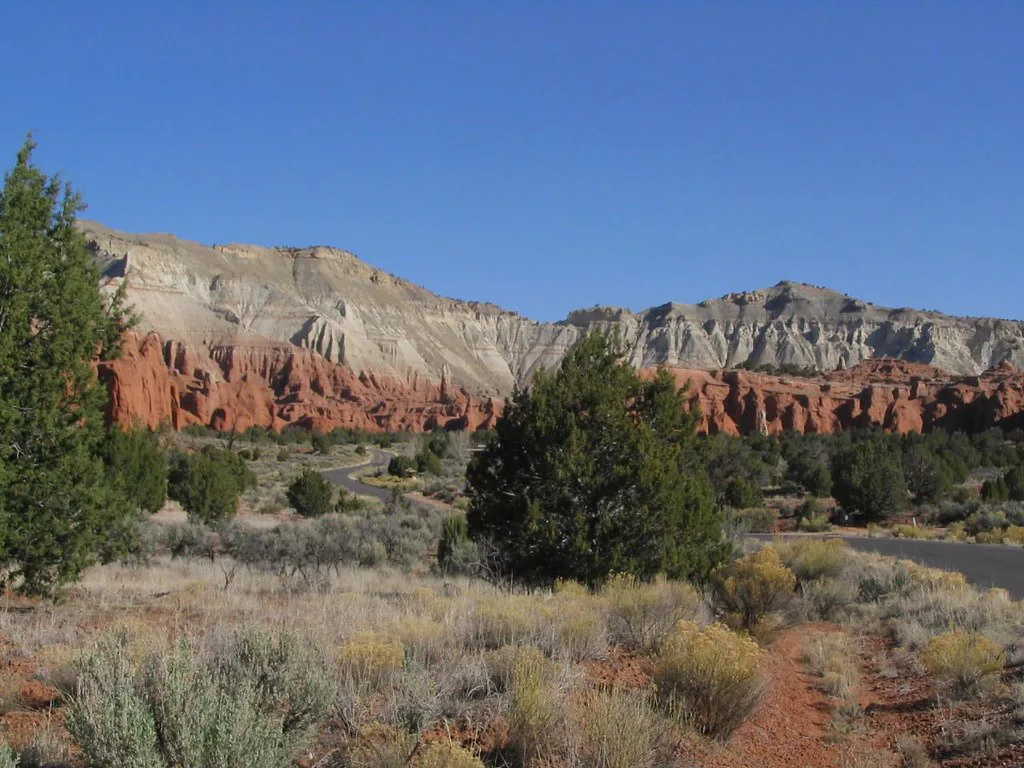
Primitive Soaks: Meadow Hot Springs Near Fillmore
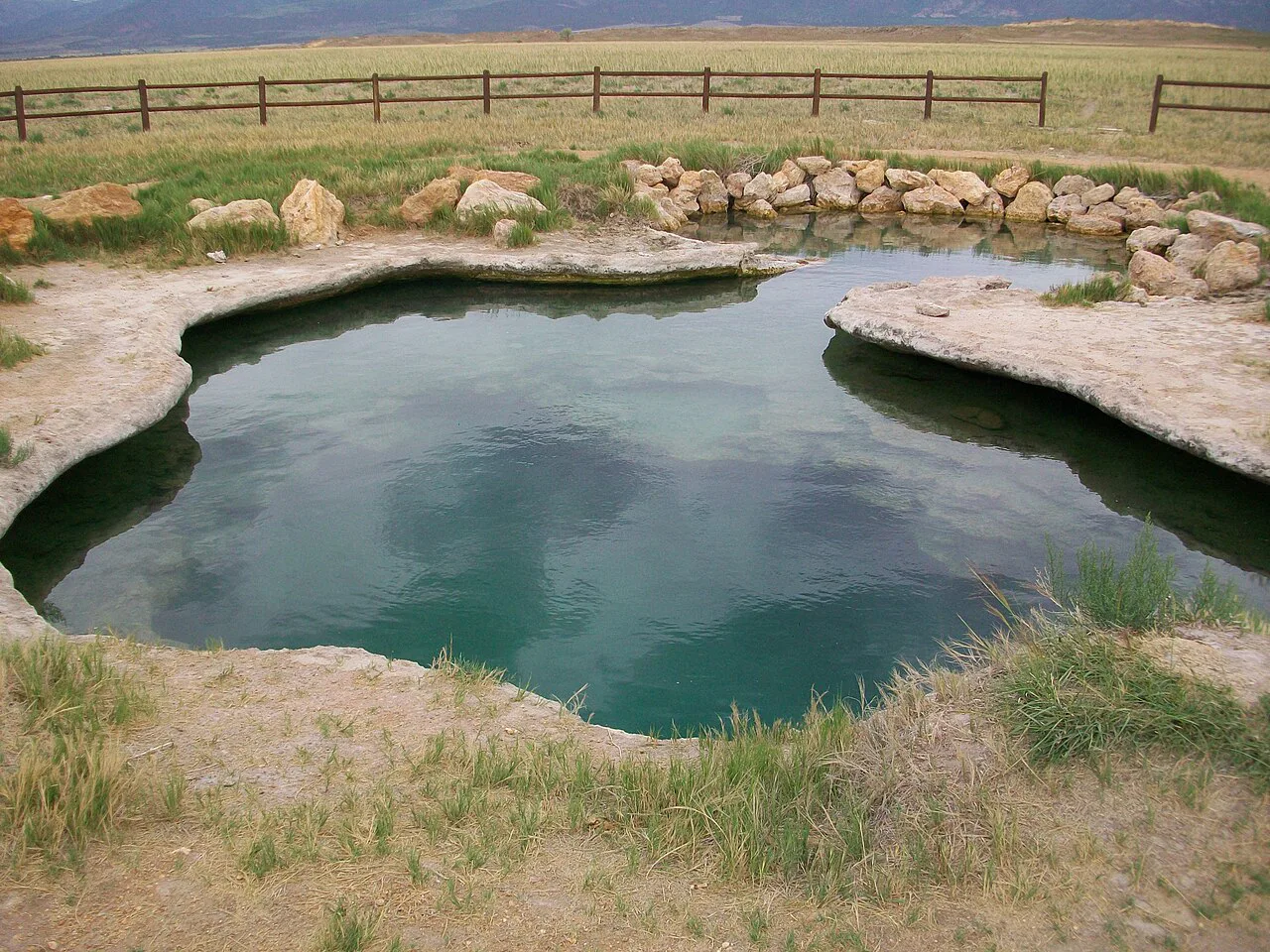
Meadow Hot Springs near Fillmore holds three clear geothermal pools around 90 to 100 degrees on private farmland open to respectful visitors. There are no facilities and no staff, so you pack out everything you bring and leave the farm as you found it. The pools sit in open country with big sky and few distractions, which is the whole appeal.
Because Meadow sits just off Interstate 15 between Salt Lake City and the southern parks, it works as a leg-stretch soak on a driving day rather than a destination. Plan an early arrival for quiet and better light, and keep your visit short if a storm is building. The pools are shallow and clear, so you can see the bottom and judge the temperature before committing.
Treat the farmland as the landowner's front yard: stay on established paths, keep voices low and skip glass containers entirely. Dogs and alcohol policies are set by the landowner and posted at the site, so read what is there instead of carrying over rules from resorts elsewhere.
Hike-In Soaks: Fifth Water (Diamond Fork) Near Spanish Fork
Fifth Water Hot Springs, also called Diamond Fork, requires a 2.5-mile hike near Spanish Fork to reach blue mineral pools and small waterfalls. A parking fee applies at the trailhead. The trail climbs gently through a canyon, and the reward is a set of terraced pools at several temperatures along the creek.
This is the hike-in soak for fit hikers rather than a casual roadside stop: allow two to three hours round trip plus soaking time, and carry water because the climb back is steady. Blue pools and waterfalls wait at the top, and the setting draws crowds on summer weekends, so an early start matters more here than at any other spring on this list. Snow and ice can close the access road in winter.
Wear shoes with grip for wet rock around the pools, and treat the creek as cold water even in August. Etiquette here is simple: pack out everything, do not build rock dams that alter the flow between pools, and give other soakers room. Clothing rules and hours are set by the managing forest unit and posted at the trailhead.
Remote Western Soaks: Gandy Warm Springs in Snake Valley
Gandy Warm Springs sits on Bureau of Land Management land in western Millard County, near the Nevada line on the western edge of Snake Valley. Most visitors turn north off US-50/6 onto Gandy Road about two-thirds of a mile west of the state line, drive roughly 28 miles north, then take a signed left and continue about 2.7 miles west to a turnaround and parking area at the creek. Standard vehicles handle the gravel in dry weather; wet weather can make the road impassable.
Standard vehicles handle the gravel in dry weather, but wet weather can make the road impassable.
The spring discharges nearly 9,000 gallons per minute at temperatures up to 81 degrees, creating pools, cascades and a cave spring known informally as Beware Cave where water emerges under a limestone overhang at nearly four feet deep. Water at 81 degrees is warm rather than hot, which makes Gandy refreshing in summer and a cool soak in shoulder season. The site holds Pyrgulopsis saxatilis, a springsnail found nowhere else on earth, along with native speckled dace.
Services are the real constraint: the Border Inn on US-50 at the state line is about 30 miles south, and Delta is roughly 120 miles east. Camping is permitted on surrounding BLM land with no designated sites, water or restrooms, so arrive self-sufficient with fuel, spare water and a full-size spare. Cell service is unreliable in Snake Valley, and summer heat regularly tops 100 degrees, which makes spring and fall the better seasons. Monsoon rain from July through September brings flash-flood risk in the drainages.
Because the springsnail and fish are protected, keep hands off the aquatic life and rinse off after soaking. Rattlesnakes are active around the rocks and vegetation in warm months, so watch where you step and sit. This is the one spring on the list where the drive is the adventure as much as the water.
Fees, Hours and Reservations
Book ahead at the properties that run timed sessions or passes: the Homestead Crater requires reservations for its sessions, and Mystic Hot Springs requires reservations and a soaking pass. Zion Canyon Hot Springs is open 10 a.m. to 11 p.m. daily. Each operator publishes current rates and session times on its own site, so settle the price before you commit.
Fifth Water charges a parking fee at the trailhead, and that is the only cash-out-of-pocket cost on the hike-in legs described here. Bring small bills as a backup on any rural leg, and check rates and hours with the Uinta-Wasatch-Cache National Forest before you go.
Camping and Lodging by Cluster
Around Zion, base in La Verkin, Hurricane or Springdale and treat the resort as an evening activity; the drive back to Springdale after a late soak is short. In the north, Honeyville and Brigham City have motels, and Logan adds restaurants 30 minutes farther up the valley. Midway and Heber City offer rentals and inns close to the crater.
In the center of the state, Monroe and Richfield have small motels, and Meadow pairs with Fillmore's motels for an interstate-friendly overnight. For Gandy, plan on primitive camping on BLM land near the spring or a room at the Border Inn; there is nothing closer than Delta or the state line.
Crowds and Timing
Developed pools absorb crowds better, but weekend afternoons in summer still fill the parking lots, especially near Zion. Primitive soaks are quiet at dawn and busy by mid-morning on summer Saturdays, and a hike-in spring like Fifth Water can feel like a queue by noon. Natural springs shine in spring and fall, when the heat is mild, water is high and trails are in condition.
Winter changes the calculus. Resorts operate year-round with controlled temperatures, while Meadow, Red Hill and Fifth Water depend on snow, mud and road clearing, which can limit or block access for weeks at a time. Call the land manager early in the day on winter trips and have a resort as the backup plan.
Safety at Pools and Primitive Springs
Primitive pools are untested and untreated, and the water carries minerals and aquatic life you would not find in a chlorinated pool. Avoid swallowing the water and avoid submerging your head, and rinse off afterward. Soft creek-bank ground around warm springs can be uneven and muddy, and wet rock near cascades is slippery.
Mystic's source emerges at 168 degrees, so never step into undiluted spring water.
At the source, water can be far hotter than the pools: Mystic's source emerges at 168 degrees, so never step into undiluted spring water. Zion Canyon Hot Springs advises pregnant guests and people with cardiovascular conditions to consult a doctor before contrast therapy, and that guidance applies sensibly to hot soaking anywhere in the state. Drink water before and during a soak, and step out if you feel lightheaded.
Pairing Springs With the Parks
Zion is the easiest pairing in the state: soak in La Verkin after a day on the Narrows or Angels Landing, 25 to 30 minutes from the south entrance. Mystic and Red Hill pair with a central route toward Bryce Canyon and Capitol Reef, both about two hours away, which makes Monroe a natural overnight between them. Meadow works as an Interstate 15 stop between Salt Lake City and the southern parks.
A four-day loop can cover Crystal in the north, the Homestead Crater in the Wasatch, Meadow on the interstate and Mystic in the center with time left for a park. Keep driving days under four hours and you will actually soak at each stop instead of photographing the water from the car.
Leave No Trace at Wild Springs
At primitive and hike-in springs, everything you carry in comes out with you, including food scraps and wet wipes. Stay on established paths around the pools, keep soap and sunscreen out of the water, and leave the aquatic life alone, especially at Gandy where the springsnail exists nowhere else. Keep groups small, keep voices low and give wildlife a wide berth on the walk in and out.
Plan Your Visit
Start with the trip you are actually taking: a family in a rental car should build around Zion Canyon Hot Springs, Crystal or the Homestead Crater, all of which run year-round and take reservations. A couple with a free weekend can do Meadow on the drive south and Mystic that evening. A truck, a full tank and a taste for gravel point west toward Gandy.
Two habits make the difference on any Utah spring trip: book the timed sessions before you leave and give the wild soaks their own half-day instead of squeezing them between parks. Check current conditions with the Bureau of Land Management or the Utah Geological Survey's geothermal resources map for the wild springs and the trailheads, and you will spend your time in the water rather than on the phone.
Explore more Utah hot springs
- Crystal Hot Springs, Utah
- Fifth Water Hot Springs
- Hot Springs Near Zion
- Mystic Hot Springs, Utah
- Homestead Crater
- Hot Springs Near Salt Lake City
- Inlet Park Hot Springs
- Meadow Hot Springs, Utah
- Red Hill Hot Springs, Utah
- Saratoga Springs Hot Springs
- Utah Hot Springs Resorts
- Belmont Hot Springs, Utah
- Gandy Warm Springs, Utah
- Hot Springs Near Fillmore, Utah
- Hot Springs Near Moab
- Hot Springs Near Park City, Utah
- Hot Springs Near Provo
- Hot Springs Near St. George, Utah
- Ogden Hot Springs
- Pah Tempe Hot Springs
- Veyo Hot Springs
Frequently Asked Questions
Are there hot springs around Salt Lake City?
Crystal Hot Springs in Honeyville sits about 70 miles north of Salt Lake City and pairs hot and cold springs with mineral tubs, large pools and waterslides. The Homestead Crater in Midway is roughly an hour east in the Heber Valley, where timed sessions are required and the water holds 90 to 96 degrees year-round.
Do you need reservations for Utah hot springs?
At the Homestead Crater, sessions are timed and reservations are required. Mystic Hot Springs in Monroe also requires reservations and a soaking pass. Developed resorts generally take bookings online, while primitive pools such as Meadow and Gandy have no staff and nothing to reserve.
Are Utah hot springs open in winter?
Developed properties operate year-round with controlled temperatures, including Crystal Hot Springs and the Homestead Crater. Primitive pools depend on weather, road conditions and daylight, and snow or mud can limit access to Meadow, Red Hill and Fifth Water for extended stretches.
What is the closest hot spring to Zion National Park?
Zion Canyon Hot Springs in La Verkin sits 25 to 30 minutes from the park's south entrance and draws its water from the historic Pah Tempe spring on the Virgin River. The property holds 32 mineral pools from the cool 70s to 104 degrees, along with cold plunges, barrel saunas and a separate 21+ side.
How far is Gandy Warm Springs from Salt Lake City?
Gandy Warm Springs is roughly 150 miles southwest of Salt Lake City, reached by taking I-15 south, US-6 west toward Delta, then US-50 to the Gandy Road turnoff and about 28 miles of gravel north. Allow at least two and a half hours each way, and fill the tank in Delta before the last stretch.
Can you go in natural hot springs while pregnant?
Zion Canyon Hot Springs advises pregnant guests and people with cardiovascular conditions to consult a doctor before using its contrast circuit, and that caution applies to hot soaking anywhere in the state. Primitive pools are also untested and untreated, so keep your head above water and step out if you feel lightheaded.
Sources
Hot springs notes for your next road trip
Optional updates when we add or revise hot springs guides.
You might also like
Continue reading
More guides you'll find useful