
Hot Springs Near Salt Lake City: 5 Best Soaks to Plan
Compare hot springs within reach of Salt Lake City, from the developed Crystal pools to the Meadow soak, with drive times and what suits each kind of trip.
On this page
Salt Lake City works as a hot springs base because the options spread in every direction: north to a developed pool complex, east into the Wasatch foothills, south along Interstate 15 toward Fillmore. You can soak before lunch and be back on the Wasatch Front by dinner, or build a two-day loop that ends near Great Basin. The trade-off is style rather than distance, since a family-friendly pool with a waterslide, a timed swim inside a limestone dome and a hike-in waterfall soak all sit within roughly two hours of the city.
The springs below sort by how much time and effort each one asks: a half-day drive-and-soak, a full day with a trail, or an overnight that pairs a soak with a road trip. Pick the one that matches your group and the season, then read the access notes before you leave, because winter changes the hike length and spring runoff changes the water.
Why Salt Lake City works as a hot springs base
Most soaks near the city fall within a 60- to 120-minute drive, which makes a morning or evening trip realistic even on a short visit. Northern options along Interstate 15 and the I-80 corridor toward Park City feel like half-day outings, while the springs south of Provo and Fillmore reward a full day or a night away. Think in trip lengths rather than a single list: half-day for Crystal or the Homestead Crater, full day for Fifth Water, overnight for Meadow and Baker.
Summer and early fall are the simplest seasons for planning because mountain roads are open and the hike into Fifth Water is at its shortest. Winter narrows the field to developed pools and shorter walks, which is when the indoor-style setting of the Homestead Crater and the pools at Crystal earn their keep. Spring is the wildcard, since snowmelt can raise the creek at the waterfall pools and make the trail muddier than expected.
Treat the town of Honeyville, Midway, Spanish Fork, Fillmore and Delta as your map pins, and you can string two springs into one loop without much backtracking. If you want the full statewide picture before choosing, the guide to hot springs in utah covers the rest of the state and helps you slot these soaks into a longer itinerary.
Crystal Hot Springs (Honeyville): the developed family option
Crystal Hot Springs sits at 8215 N Hwy 38 in Honeyville, north of the city off Interstate 15, and it operates as a full pool complex rather than a natural soak. The layout includes a large mineral soaking pool, a hot pool with a cool waterslide, and a steamy Olympic-size pool, which makes it the easiest option for families and anyone who wants a deck, changing space and a predictable setup.
One published round-up lists pool temperatures across the complex ranging from 65 to 134 degrees Fahrenheit, which captures how varied the water is across the different pools; sample each one before settling in, since the hot end is genuinely hot. The same round-up notes adult admission starting around $18, with a family night promotion on Wednesdays, and describes the complex as open year round.
The contrast with a primitive soak is the point: you give up solitude and natural surroundings, and you get facilities, a waterslide for kids and reliable access in any weather. If you want to read more about the pools and the Box Elder County setting before committing, a dedicated page on crystal hot springs goes deeper.
Homestead Crater (Midway): the domed geothermal pool
The Homestead Crater sits at 700 N Homestead Dr in Midway, a short drive east of the city through Parleys Canyon and the Heber Valley. You enter a 65-foot-tall limestone dome and find a geothermal pool inside it, hovering around a constant 90 to 96 degrees Fahrenheit, which is warm enough to linger in but not scalding. Because the pool is enclosed, the crater works in snow, rain or summer heat, making it the most weather-proof soak on this list.
Access runs through the Homestead Resort, and a published guide notes that swim entry starts around $13, with timed experiences and a separate rate for a one-hour scuba dive starting around $22 mid-week. Self-guided crater tours are listed as free but do not include a dip, so decide whether you want to swim or simply look.
The crater also hosts paddleboard yoga and snorkel sessions, so the water can be busy with organized groups rather than free soaking. For a quieter visit, aim for a weekday session outside peak vacation weeks. Pair the soak with a walk around Midway or a drive up the Heber Valley for lunch.
Fifth Water and Diamond Fork (Spanish Fork): the hike-in soak
Fifth Water Hot Springs, also called Diamond Fork Hot Springs, sits at the end of a trail off Diamond Fork Road above Spanish Fork in the Uinta-Wasatch-Cache National Forest. A published description puts the summer walk at about 2.5 miles from the trailhead, with hot pools set among waterfalls. The same source notes that swimsuits are required but that you may encounter nude bathers, so set expectations if you are bringing kids.
Winter changes the math: with the road unplowed to the summer trailhead, the approach becomes roughly a six-mile hike, which demands more daylight, better layers and a realistic turnaround time. Entry fees for the recreation area begin at around $6 and run slightly higher for overnight camping, according to a published guide. The waterfall pools are the draw, but rocky edges and variable water temperatures mean you should test the water carefully before easing in.
This is the best pick when you want a hike and a soak in one day, and the worst pick for anyone with limited mobility or a tight schedule. The pools draw crowds, so an early start or a late-afternoon hike gives you a better chance of finding space. Read the trail and pool details on the fifth water hot springs page before you go.
Meadow Hot Springs (Fillmore): the private-property soak
Meadow Hot Springs lies just south of Fillmore on Interstate 15, set on private property in a meadow, with three soaking areas and clear, deep water that hovers at about 100 degrees Fahrenheit. The landowner keeps the springs open to the public and asks visitors to read and obey posted signs, respect the area and pack out everything they bring in. It is accessible year round and dog-friendly, which makes it a flexible stop in almost any season.
Getting there from Salt Lake City is straightforward: take I-15 south to Meadow, turn south on Meadow Main Street and drive through town, then take the first right past the last buildings onto a dirt road and continue west over the freeway. Keep heading west for about 4.8 miles, watching for several turns, and park on the side of the road for the half-mile walk to the springs. The unsigned turn is the one detail that trips people up, so note the distance and the overpass.
One published guide describes the pools as reachable by a fenced walking trail from the roadside parking, with dogs welcome and camping permitted on site under a leave-no-trace approach. The same guide notes an underwater cave that trained scuba divers can access, which is a reason to keep the soak to swimming unless you have the certification and the owner's permission. For more soaks in this stretch of I-15, see the guide to Hot Springs Near Fillmore, Utah.
Saratoga and Inlet Park (Utah Lake): the shoreline soak
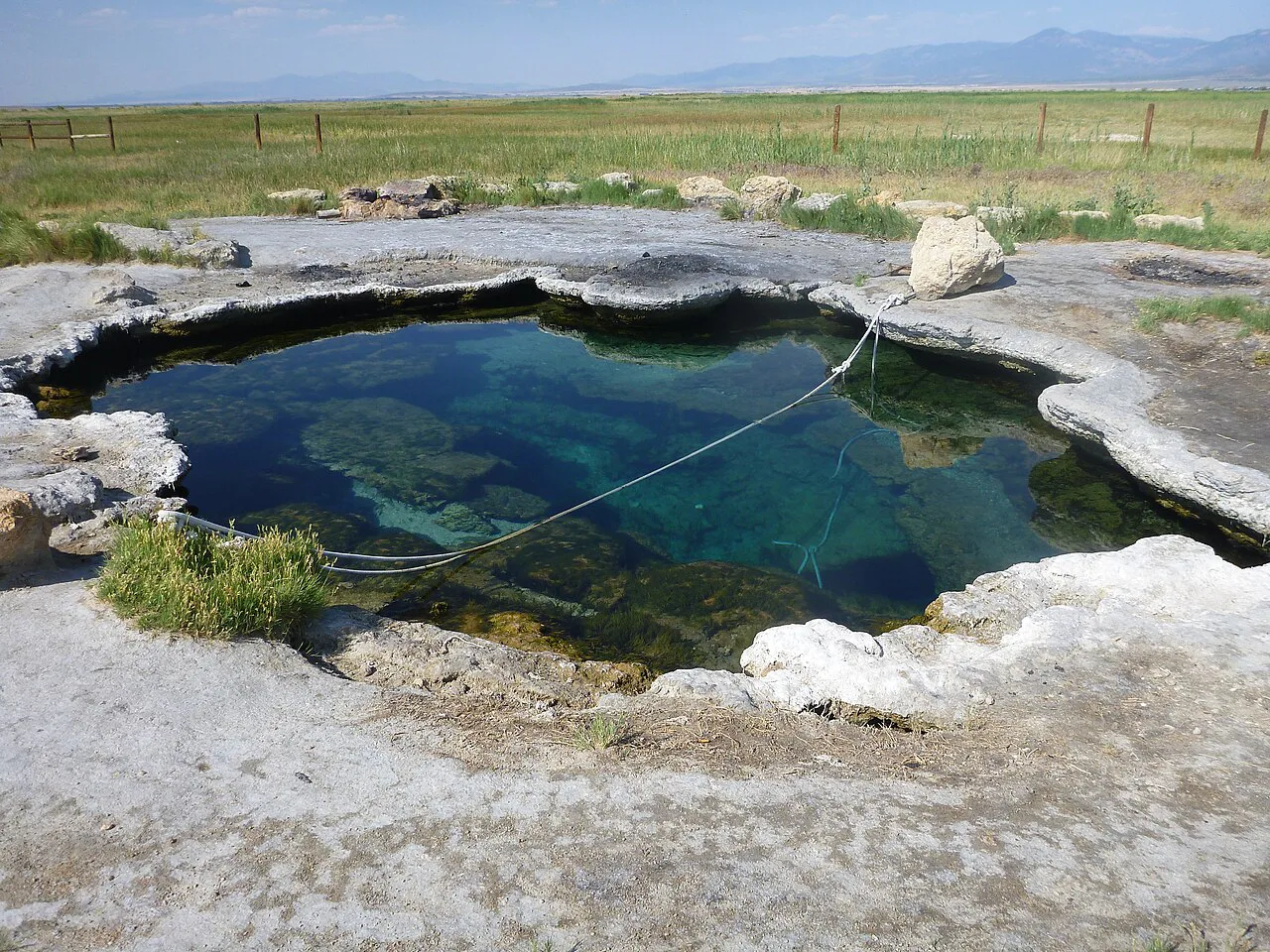
Saratoga Hot Springs, also known as the Inlet Park Hot Springs, sits on the northwest shore of Utah Lake about an hour from Park City and a similar drive from Salt Lake City. The soaking pool is ringed by mud and plants, which gives it a wilder feel than a developed resort, and it is large enough to share with a crowd. Lake and mountain views are the reason to come, so plan the soak around daylight and a walk along the shore.
This one works best as a lake-day add-on rather than a destination on its own: swim or paddle at Utah Lake, then finish in the warm pool. The shoreline setting means muddy footing and slick edges, so bring sandals you can wear into the water and a towel you do not mind getting dirty. Weekdays outside school holidays give you the best chance of a quiet soak.
Baker Hot Springs (Delta): the road-trip tub stop
Baker Hot Springs sits near Delta, on the approach to Great Basin National Park, and consists of three large soaking tubs fed by hot- and cold-water ditches that let you adjust the temperature. A published guide notes that volunteers handle all maintenance and asks visitors to pack out their trash. The tubs each fit roughly seven to eight people, which makes them a sociable stop rather than a solitary one.
The source water here runs very hot, and the ditches are how you temper it, so add cold water before you step in and test with a hand first. One published account describes the tubs as free to enter with pets welcome outside the water. This is the natural stop if you are heading east toward Great Basin and want a soak at the end of a long driving day.
Because the site is remote and volunteer-run, arrive with your own water, a towel and a plan for the night rather than counting on services nearby. Delta is the last real town for supplies before the desert stretch.
Matching springs to the trip
For the shortest drive and the least planning, pick the Homestead Crater in Midway: it is weather-proof, timed and close enough for an evening session. For kids and groups who want a waterslide and multiple pools, Crystal Hot Springs in Honeyville is the obvious choice. For a hike with a payoff, Fifth Water is the one, provided everyone can handle the trail and the seasonal distance.
The Homestead Crater is enclosed, so it works in snow, rain or summer heat.
| Spring | Soak style | Access |
|---|---|---|
| Crystal Hot Springs | Developed pool complex with a waterslide | Honeyville, north of the city off I-15 |
| Homestead Crater | Domed geothermal pool, timed sessions | Midway, east through Parleys Canyon |
| Fifth Water Hot Springs | Hike-in waterfall pools | About 2.5 miles in summer, roughly six miles in winter |
| Saratoga (Inlet Park) | Shoreline soak on Utah Lake | About an hour from Park City |
| Meadow Hot Springs | Soaking areas on private property | South of Fillmore, half-mile walk from the road |
| Baker Hot Springs | Three large soaking tubs | Near Delta, on the approach to Great Basin |
For an overnight, Meadow Hot Springs pairs well with a Fillmore stop and an early start the next day, while Baker suits travelers pointed at Great Basin. If you are heading south toward the national parks instead, the zion hot springs options make a separate leg of the trip worth planning. Those chasing desert soaks across state lines can also compare Arizona hot springs for a similar drive-and-soak decision.
What to bring and what to wear
Bring water shoes for the rocky and muddy entries at Fifth Water, Saratoga and Baker, and a towel plus a dry layer for the walk back to the car. Hydrate before and after soaking, since warm water and dry mountain air dehydrate you faster than you expect. Keep your head above the water in untreated geothermal pools, and supervise children closely around hot source water and slippery rock.
Keep your head above the water in untreated geothermal pools, and supervise children closely around hot source water and slippery rock.
At developed pools like Crystal and the Homestead Crater, follow the posted rules on swimwear, glass, alcohol and diving rather than assuming resort norms carry over. At Meadow, the landowner's signs govern everything from alcohol to pets, and following them is what keeps the spring open to the public; check current rules before you go, since access can change with the landowner's policies.
Camping and lodging nearby
Midway and Heber City offer the widest range of lodging near the Homestead Crater, from resort rooms to vacation rentals, and the crater sits inside the Homestead Resort property. Honeyville and nearby Brigham City serve as the base for Crystal Hot Springs, with Ogden adding more choice about half an hour farther north.
For Meadow, Fillmore is the closest town for motels and services, and Meadow Hot Springs itself allows camping according to a published guide. Near Baker, Delta is the practical base before the drive toward Great Basin.
Nearby springs to combine
A northern loop links Crystal Hot Springs with a stop in Ogden, then returns through the Heber Valley for the Homestead Crater, giving you one developed pool and one domed soak in a single day. A southern loop pairs Fifth Water with a drive down I-15 to Meadow, with Fillmore as the overnight.
If your trip runs farther south, hot springs near zion make a natural extension once you cross into red-rock country. Build at most two soaks into a day so the driving does not crowd out the soaking, and check road conditions with the land manager or operator once before you set out.
Leave No Trace at hike-in and private-property springs
At Fifth Water and Meadow, everything you carry in should come back out, including food scraps and wrappers that look harmless on the ground. Stay on the established trail and use the fenced route at Meadow rather than cutting across the meadow, and keep dogs leashed where signs require it. Keep soaps, sunscreen and food out of the pools, and give other soakers room at the smaller waterfall pools.
Plan Your Soak
Start with the trip length you actually have: a half-day points to the Homestead Crater or Crystal Hot Springs, a full day to Fifth Water, and an overnight to Meadow or Baker. Then match the drive to the season, remembering that winter shortens your daylight and lengthens the hike into Fifth Water. Pack water shoes, layers and a towel, read the posted rules on arrival, and you will get the most out of whichever spring you choose.
If you want to widen the loop, the full guide to hot springs covers the rest of Utah and helps you plan where these soaks fit next. For a southern extension, compare Hot Springs Near Zion before you lock in dates.
Frequently Asked Questions
Are there hot springs around Salt Lake City?
Yes. Within roughly two hours of the city you can reach the developed pool complex at Crystal Hot Springs in Honeyville, the domed Homestead Crater in Midway, the hike-in pools at Fifth Water above Spanish Fork, the shoreline soak at Saratoga on Utah Lake, and Meadow Hot Springs south of Fillmore. Each suits a different trip length, from a half-day to an overnight.
How do I get to Meadow Hot Springs?
From Salt Lake City, take I-15 south to Meadow, turn south on Meadow Main Street and drive through town. About 1.5 miles from the freeway, take the first right past the last buildings onto a dirt road and continue west over the freeway for about 4.8 miles. Park on the side of the road and walk roughly half a mile to the springs.
Which hot springs near Salt Lake City are easiest to reach?
The Homestead Crater in Midway is the simplest for a short trip because the soak sits inside a resort property and runs on timed sessions, so weather matters less. Crystal Hot Springs in Honeyville is also straightforward, with a pool complex just off the I-15 corridor. Both work well for a half-day outing.
Which hot springs near Salt Lake City require a hike?
Fifth Water Hot Springs, also called Diamond Fork, is the hike-in option, reached by a trail off Diamond Fork Road in the Uinta-Wasatch-Cache National Forest. A published description puts the summer walk at about 2.5 miles, and the approach lengthens to roughly six miles in winter when the road is not plowed to the summer trailhead.
Can you swim at Homestead Crater?
Yes, swimming is the main draw of the crater, and the resort also runs snorkel, scuba and paddleboard yoga sessions in the water. Entry is tied to timed experiences booked through the Homestead Resort, so reserve a session rather than arriving without one. Self-guided tours that do not include a swim are also available.
What is the difference between hot springs and geysers?
A hot spring is a pool where heated groundwater reaches the surface and sits or flows, which is what you soak in at places like Meadow or the Homestead Crater. A geyser is a hot spring with a constricted plumbing system that periodically erupts water and steam under pressure. Soaking springs do not erupt, though their source water can be extremely hot.
Sources
Hot springs notes for your next road trip
Optional updates when we add or revise hot springs guides.
You might also like
Continue reading
More guides you'll find useful

.jpg)
