Fifth Water Hot Springs, Utah: Hike, Pools and Parking
Plan a soak at Fifth Water Hot Springs near Spanish Fork, Utah: the waterfall trail, turquoise pools, winter parking and the national forest day-use fee.
On this page
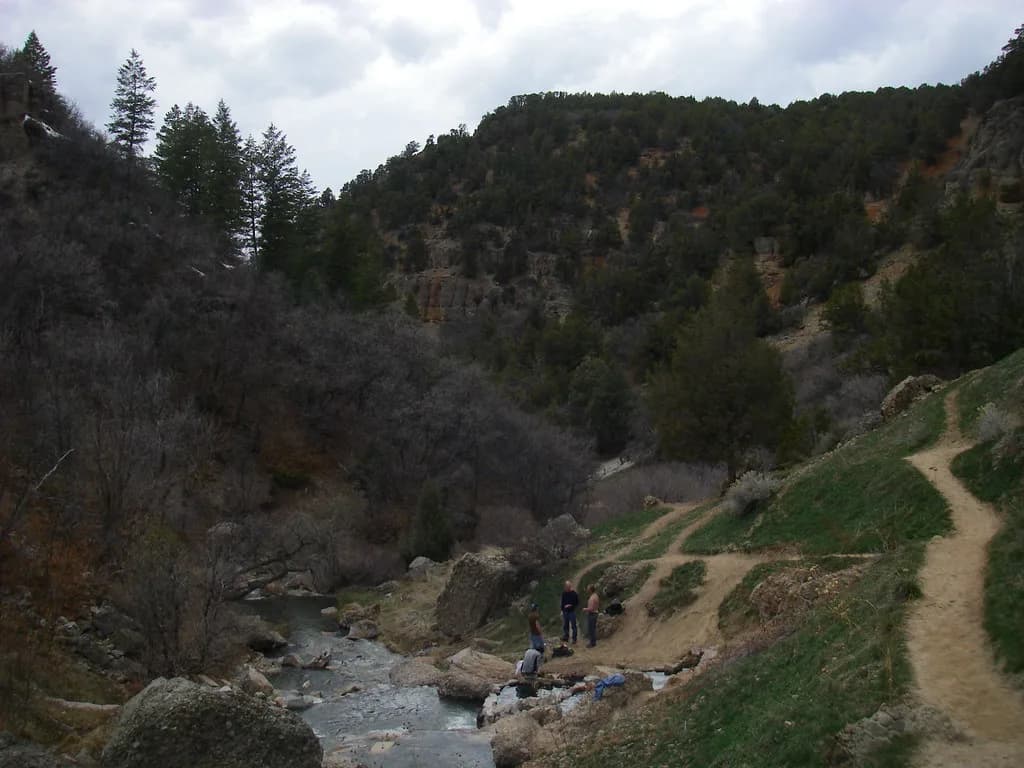
Fifth Water Hot Springs earns the trip because the soak sits in a staircase of waterfalls, with clear turquoise pools tucked against Fifth Water Creek and forested canyon walls rising on both sides. It suits hikers who want a memorable half-day outing with falling water beside the pool, not a drive-up soak.
The springs lie along Fifth Water Creek, a tributary of the Diamond Fork River in Uinta-Wasatch-Cache National Forest east of Spanish Fork. Plan on roughly an hour east from Provo and about an hour and 15 minutes south of Salt Lake City, with the final leg up Diamond Fork Road.
Where the springs sit in Diamond Fork Canyon
Fifth Water is the waterway, and the hot pools spread along its banks just above where it meets the Diamond Fork drainage. The canyon runs east of Spanish Fork off US-6, and the spring sits in national forest land rather than a developed resort.
The closest towns are Spanish Fork and Provo, with Salt Lake City a plausible day-trip base if you are willing to start before dawn. Uprooted Traveler puts the trailhead about an hour and 15 minutes from Salt Lake City and an hour east of Provo.
Which trailhead to use
Most hikers start at Three Forks Trailhead on Diamond Fork Road, the shorter and more direct approach to the pools. From Spanish Fork, drive US-6 east for about 11 miles to the signed Diamond Fork turnoff, then follow Diamond Fork Road about 10 miles to the signed trailhead.
The Rays Valley route is the alternate: from Spanish Fork, drive US-6 east about 22.5 miles, take the paved road signed for Sheep Creek and Strawberry Reservoir north about 14 miles, and hike down Fifth Water Creek from the trailhead. It puts the main pools about 2.5 miles in, with the hike climbing back out at the end instead of dropping in first.
Choose Three Forks for the shortest walk and the fullest pool scene, and Rays Valley if you want a quieter descent and do not mind finishing on an uphill. The Rays Valley trailhead sign has been an unreliable marker in the past, so carry offline coordinates.
Driving to Three Forks Trailhead
The final stretch up Diamond Fork Road is paved and narrow, and the trailhead lot is small, holding roughly twenty standard cars. It commonly fills by 8 AM or earlier on weekends, and parking outside marked pull-offs along the road can draw tickets.
Two vault toilets stand at the lot. Come prepared to carry out your own trash rather than counting on bins.
Winter access and the road gate
In the colder months, typically November through May, the section of Diamond Fork Road that reaches the trailhead lot is gated off. Alternative lots sit just before the gate, roughly 1.5 miles from the trailhead, which adds about three miles round trip to the hike.
From November through May the road to the trailhead lot is gated, so you park about 1.5 miles back and the hike grows by about three miles round trip.
That road section is fairly flat, but it and the trail can hold serious ice and snow. Budget the extra hours and bring traction; Utah.com notes the packed snow often lets hikers reach the pools without snowshoes, while a four-wheel-drive vehicle is needed for the trailhead approach.
The hike in
From Three Forks, cross the small Diamond Fork River and follow the wide, well-maintained trail east along the north side of Sixth Water Creek. About a mile up, cross Sixth Water on a bridge and take the right-hand trail onto smaller Fifth Water Creek, staying on the north bank as you climb.
Count on roughly 4.5 miles out and back with an easy rating from Utah.com; AllTrails lists about 4.7 miles with roughly 613 feet of gain and a moderate rating, taking around two to two and a half hours. Either way, expect a steady climb rather than a flat stroll.
The path narrows beside the creek in places and crosses steep, rocky stretches, so boots with real traction beat sneakers. A headlamp matters if you start before sunrise, which is the common strategy for beating the crowd.
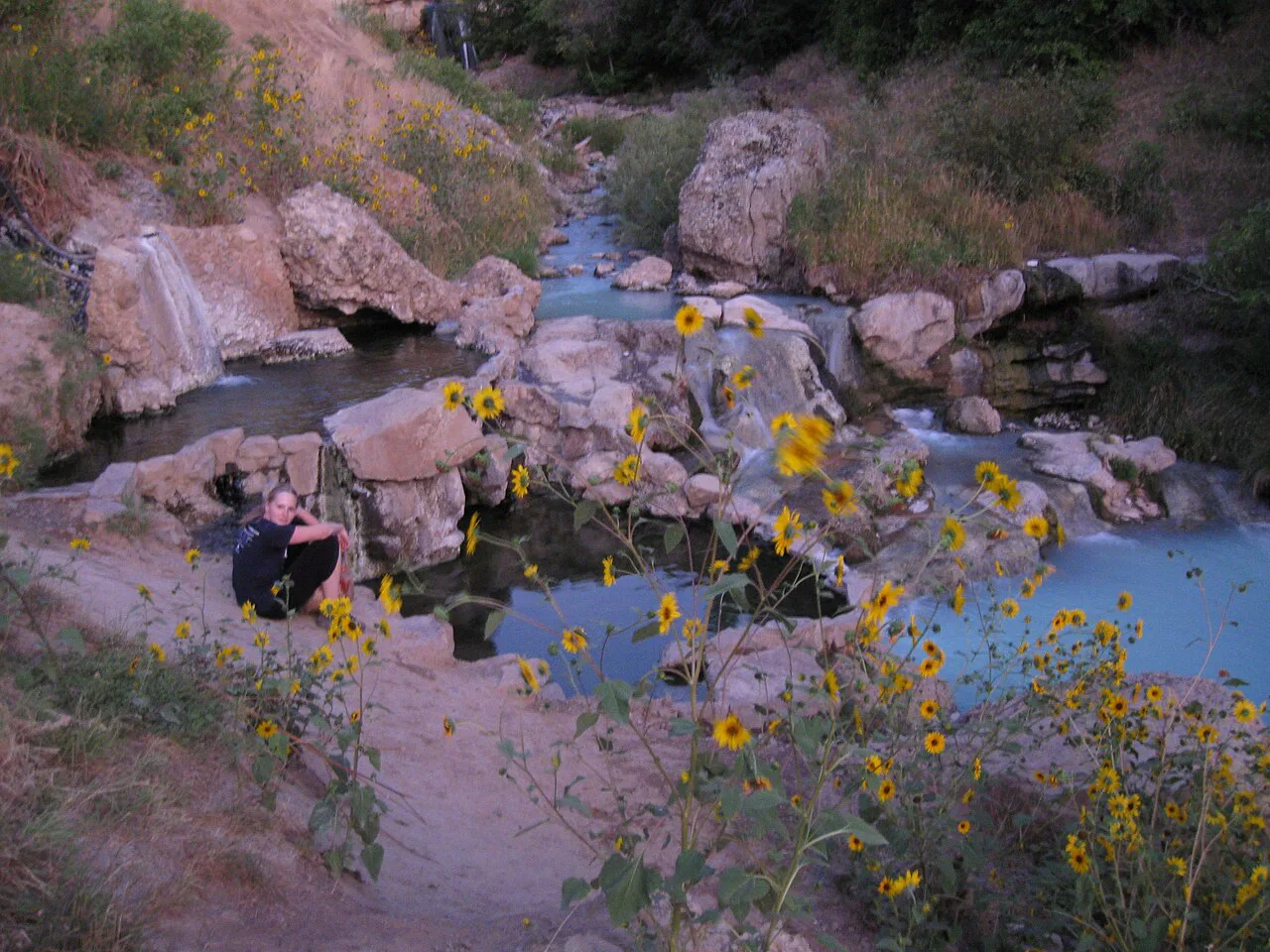
The pools
The main soaking pools sit right below the first waterfall, and you will smell sulfur as you approach. The water runs clear, and you can adjust temperature by moving to a different spot in a pool or by shifting the flow of hot water into it.
Two more good pools lie along the stream between the first and second waterfalls, and additional pools climb above the falls, typically with fewer people in them. One recent account counted at least seven creekside pools of varying color, clarity and depth, with the warmest around 110°F.
The creek itself is cold, fed by snowmelt rather than geothermal water, so the pools are the soak and the creek is a plunge. Keep your head above the untreated geothermal water and treat slick rock at the pool edges with care.
Waterfalls worth the extra minutes
The first waterfall drops right beside the main soaking pool, which is why the soak feels dramatic rather than tucked away. Just above it sits a taller, multi-tiered second waterfall, the most photogenic of the group, with a third further upstream.
Walk up past the main pool before you settle in. The upper falls and the pools between them are worth the ten extra minutes of climbing.
Walk up past the main pool before you settle in. The upper falls and the pools between them are the reward for ten extra minutes of climbing.
Fees and passes
The national forest charges a $10 day-use fee to park at the trailhead, valid for three days, so bring cash. An America the Beautiful annual pass is the alternative for anyone visiting federal lands repeatedly.
Rules and the pool scene
Utah law prohibits nudity in public, though clothing-optional soaking has long been common at Fifth Water, so families should know what they may encounter. Dogs are allowed on the trail on a leash, but the pools themselves are a poor place for them given the hot water and the lack of anywhere to tie up.
The pools have had elevated bacteria readings in the past. Soak with your head up and keep any cuts covered; if an advisory is posted at the trailhead, take it seriously rather than treating the water as a treated tub.
Camping and lodging
A handful of signed dispersed campsites line the trail, with no water or toilets, and camping is not allowed right at the pools. Three Forks Campground and Diamond Fork Campground are the established options in the corridor if you want a picnic table and a fire ring.
For the dispersed sites and the trail in general, pack out everything you bring, including food scraps and trash, and keep soap and sunscreen out of the creek. A short walk from the water for dishwashing and bathroom breaks keeps a heavily used canyon from degrading further.
Spanish Fork and Provo hold the nearest motels and vacation rentals, which makes a weekday sunrise start realistic without camping. Staying in Provo puts you about an hour from the trailhead.
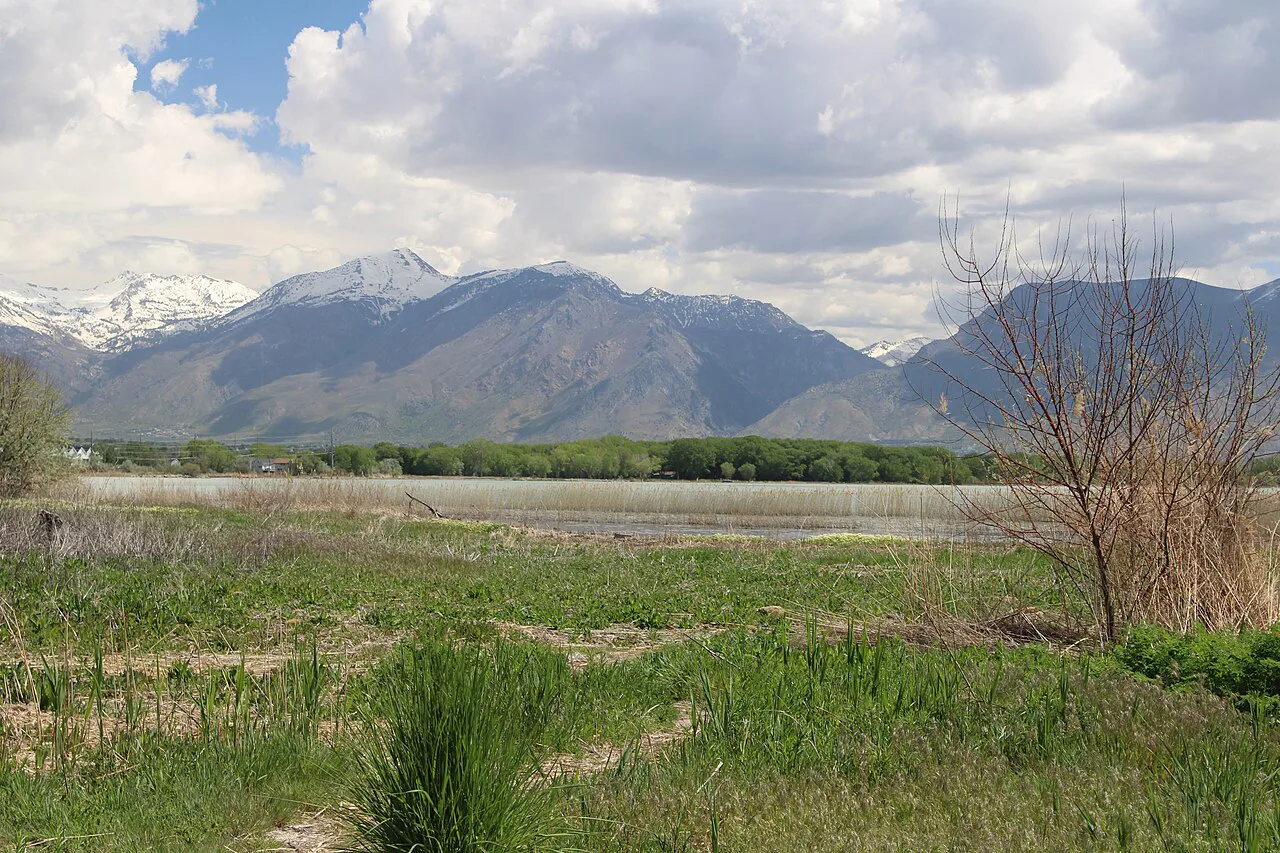
Crowds and the best time to go
Fifth Water is genuinely popular: it is not unusual to share the pools with a hundred or more people on a weekend, and the lot fills early. A weekday start before sunrise is the reliable way to have pools to yourself for a while, and by mid-morning on a summer weekend the road can be lined with parked cars.
Cold months bring the milky turquoise color most photos show, at the cost of the gated road, extra miles and icy trail. Summer is the busiest season and gets hot by mid-morning, while fall offers foliage and thinner crowds with a chance of early snow.
Weather shifts fast in this canyon, so it is worth a call to the Uinta-Wasatch-Cache National Forest office or a look at the Diamond Fork Hot Springs Facebook page for trail updates the day before you drive up.
What to bring
Pack cash for the day-use fee, boots with grip, a headlamp for early starts, a towel, a dry bag for keys and phone, and a trash bag. In winter, add microspikes and check the snowpack before committing to the extra road miles.
A dry bag matters more than it sounds: pools sit at creek level, and a slipped phone ends the trip. Leave glass containers at home and carry water for the hike, since the only facilities are the vault toilets at the lot.
Nearby soaks and road-trip add-ons
Fifth Water pairs naturally with a broader Utah itinerary, since the state runs from forest soaks to developed resort pools. Use the hot springs in utah map to line up stops before or after your Diamond Fork hike. If your road trip crosses state lines, the Nevada hot springs guide covers another canyon-and-desert soaking circuit worth comparing.
If you are building a longer southern loop, the developed pools and drive-up access covered in the zion hot springs guide make an easy contrast to this hike-in canyon.
Plan Your Soak
Fifth Water rewards an early alarm: a weekday start before sunrise gets you parking, quiet pools and the waterfalls at their best. Bring cash for the day-use fee, boots with traction, and a plan for the winter gate if you visit between November and May.
Treat the pools as the fragile, heavily used place they are, keep your head above the water, and leave the canyon cleaner than you found it. A quick look at the forest page for road and trail status before you drive up saves a wasted morning.
Frequently Asked Questions
How long is the hike to Fifth Water Hot Springs?
From Three Forks Trailhead the round trip runs about 4.5 miles with roughly 630 feet of climbing, and Utah.com rates the walk easy while AllTrails calls the 4.7-mile version moderate. Winter parking before the road gate adds about 1.5 miles each way, so plan on a longer day between November and May.
Do you have to pay to soak at Fifth Water Hot Springs?
Parking at the trailhead carries a national forest day-use charge, valid for three days, and it is paid with cash on site. A valid America the Beautiful annual pass is the alternative for anyone who visits federal lands often. Bring bills in advance, since the lot has no reliable way to pay by card.
Can you drive to Fifth Water Hot Springs in winter?
The stretch of Diamond Fork Road that reaches the trailhead is gated in the colder months, typically November through May. You park in the lots just before the gate and walk the extra 1.5 miles to the trailhead, which adds about three miles round trip and often means ice and packed snow underfoot.
Are dogs allowed at Fifth Water Hot Springs?
Dogs are allowed on the trail on a leash, but the soaking pools are a poor fit for them: the water is hot, and there is nowhere near the pools to tie a dog while you soak. Most hikers leave pets at home for this one.
Can you camp at Fifth Water Hot Springs?
Signed dispersed campsites sit along the trail, with no water or toilets, and camping is not allowed right at the pools. Three Forks Campground and Diamond Fork Campground are the established options nearby, and Provo and Spanish Fork have motels if you would rather sleep indoors.
When are the pools most crowded?
Weekends in warm weather draw the biggest numbers, the trailhead lot fills by 8 AM or earlier, and a summer Saturday can put a hundred or more people at the pools. Start before sunrise on a weekday to have the water mostly to yourself.
Is the water safe to soak in?
The pools are untreated geothermal water that has shown elevated bacteria readings in the past, so keep your head above the surface and cover any cuts. If an advisory is posted at the trailhead, follow it, and watch your footing on the slick rock at the pool edges.
Sources
Hot springs notes for your next road trip
Optional updates when we add or revise hot springs guides.
You might also like
Continue reading
More guides you'll find useful