
Terwilliger (Cougar) Hot Springs, Oregon: Soaking Guide
Plan a soak at Terwilliger (Cougar) Hot Springs in Oregon's Willamette National Forest: the short walk in, four pools from 85 to 112°F, rules and nearby stops.
On this page
Terwilliger (Cougar) Hot Springs earns its reputation on convenience: a short, mostly flat forest walk delivers you to a terraced stack of rock-lined pools above Cougar Reservoir, close enough to Eugene and the McKenzie River corridor for a half-day trip. It suits travelers who want a real soak without a long backcountry approach, and who are comfortable sharing small pools with strangers in a clothing-optional setting.
The trade-off is popularity. This is one of the most visited soaks in the Willamette National Forest, the pools are modest in size, and the road in has a history of landslide closures and detours. Plan around the drive and the timing first, and the soak itself becomes simple.
Why Terwilliger suits a short forest soak
The appeal here is the combination of a developed trailhead and an undeveloped soaking area: you park, walk a short trail, and arrive at pools built from river rock on a hillside. No long shuttle, no river ford, no route-finding. That makes it a strong first stop for someone working through the hot springs in Oregon, especially as an introduction to the clothing-optional custom that prevails at many forest soaks.
Skip Terwilliger if you want solitude, a large pool to yourself, or a soak you can drive right up to. The pools are small, the site is well known, and on a sunny weekend afternoon you may wait for space. The trail is dirt and roots and can turn muddy after rain, so it asks for real shoes even though it is short.
Where the spring sits
Terwilliger, often called Cougar Hot Springs, sits in the Willamette National Forest on the slopes above Cougar Reservoir, southeast of the town of Blue River. The reservoir and the McKenzie River valley form the surrounding recreation corridor, so the soak fits naturally into a day of driving Oregon Route 126. Slide Creek Campground, on the reservoir's east bank, is about 50 miles from Eugene.
The nearest services are in Blue River and McKenzie Bridge, both on Highway 126. Go Wander Wild trail notes point to a Chevron station on the McKenzie Highway near the reservoir turnoff as the last convenient fuel stop, so fill the tank before you leave the valley.
Getting there
From Blue River, drive about 4 miles east on Highway 126 to Aufderheide Drive, which is Forest Service Road 19, and follow it along Cougar Reservoir toward the Terwilliger trailhead. Arrive early on weekends, since a popular site with limited parking fills quickly when the weather is good.
The Willamette National Forest recreation page for Terwilliger (Cougar) Hot Springs carries directions, trailhead details and current conditions, and it is worth opening before you leave cell coverage behind.
Road conditions and the Cougar Reservoir detour
Landslides have closed parts of the forest road on the west side of Cougar Reservoir in recent years. When that stretch is blocked, the detour crosses the bridge and follows a mostly unpaved road along the east side of the reservoir, which adds 40 minutes or more to the drive.
Landslides have closed the west-side forest road at times, and when it is blocked the detour adds 40 minutes or more to the drive.
A trip from Loloma Lodge on the McKenzie River takes about 25 minutes with the direct road open and about 50 minutes with the closure in place. There is no cell service on the road or at the springs, so download offline maps before you go.
The hike in
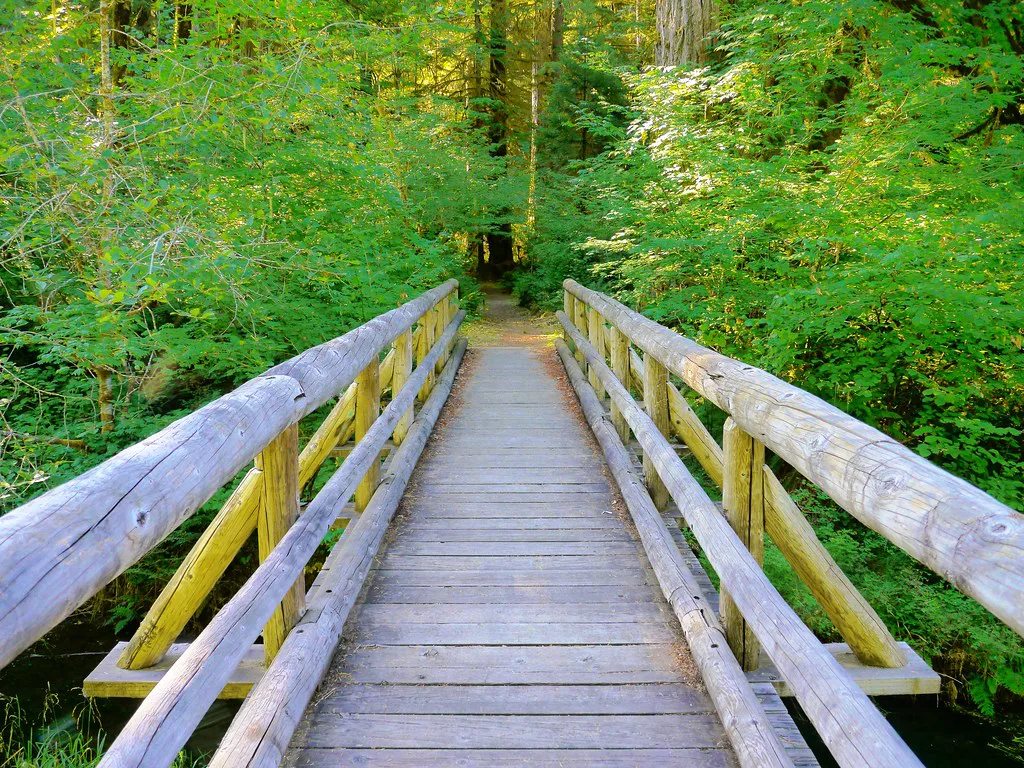
The walk from the trailhead to the pools is short, under a mile round trip with roughly 90 feet of elevation gain, and mostly flat. The surface is dirt with roots that turns muddy at certain times of year or after rain, so shoes with grip beat flip-flops.
Part of the trail passes through recently burned forest, though the trees around the springs themselves came through unharmed. Carry your gear in a pack so your hands are free on the rock steps, and bring a towel, a dry layer for the walk out, and water.
The pools
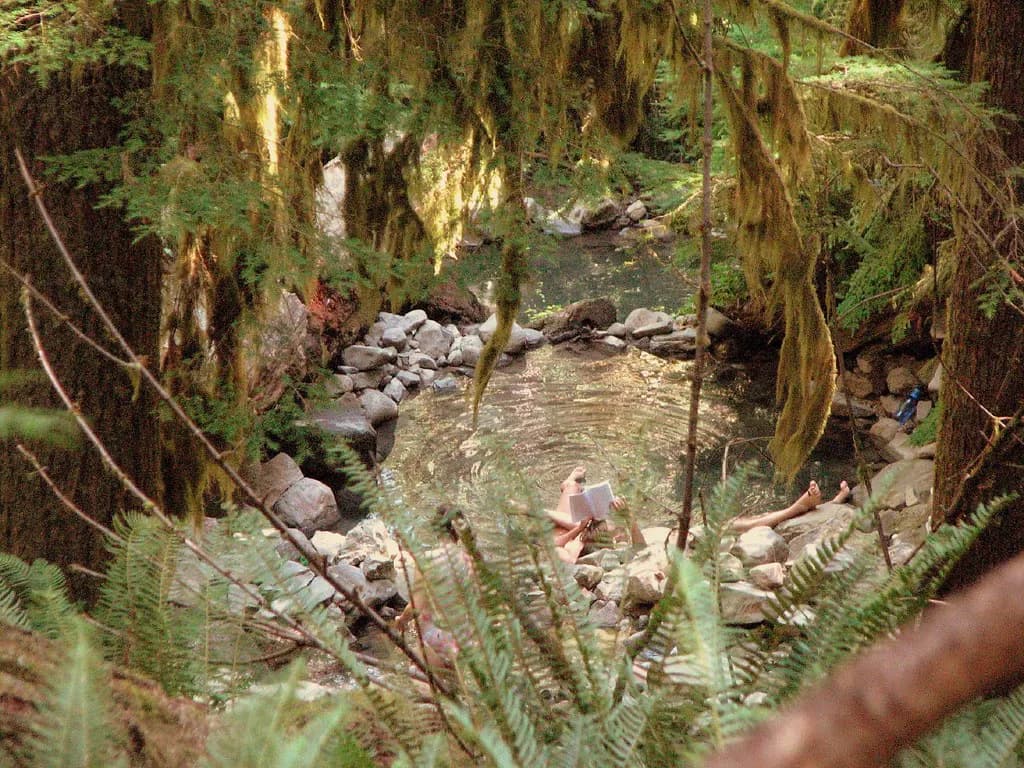
Go Wander Wild trail notes describe four rock-lined pools at Terwilliger that cascade into one another, with temperatures ranging from about 85°F to 112°F. The top pool sits at the natural source, so it is the largest, deepest and warmest, and it draws the biggest crowd. Depth tops out around 3 feet, which suits sitting more than swimming.
Each pool below the source is smaller and cooler, and the lowest ones can feel lukewarm. That gradient helps groups with mixed heat tolerance: anyone who finds the top pool too hot can drop a level without leaving the terraces, and a quiet corner is easier to find in the lower pools.
Work your way down rather than starting at the top. Test the water with a hand or foot, choose a pool that matches your tolerance, and keep your head above water in the geothermal pools. The water is clear with no noticeable smell, and the rock lining stays slick, so step deliberately between pools.
Facilities at the trailhead and the springs
The trailhead has a parking lot with vault toilets, but there are no toilets near the springs. An open-air shelter by the pools gives you somewhere to store belongings and change, and many visitors prefer to change at the parking-lot toilet for privacy.
Beyond the shelter, the site has no soakside amenities, so your day setup is whatever you pack: towel, water, a dry bag for clothes and warm layers for the exit. The pools are cleaned weekly.
Clothing-optional soaking and pool etiquette
Clothing is optional at the springs and nudity is common, which is a planning decision rather than a footnote. Decide before you go whether that suits your group, and brief anyone traveling with you so nobody is surprised at the pools. Swimsuits are fine too, and many visitors wear them.
Keep voices low, give people space when a pool is full, and don't monopolize the hottest pool. If every pool is occupied, wait on the rocks rather than crowding in. Photos are limited to frames with no other people visible.
Payment, hours and the soak limit
Terwilliger is a day-use site that runs from sunrise to sunset. A ranger collects payment at a booth at the trailhead, and each soaker receives a wristband with a two-hour soaking limit. National Forest parking passes are not accepted or required here.
Each soaker receives a wristband with a two-hour soaking limit, and the springs close on Thursdays from 8 a.m. to noon for cleaning.
The springs close on Thursdays from 8 a.m. to noon for cleaning, so a Thursday visit works best in the afternoon. The site can hold about 50 people at a time, which keeps the pools busy but rarely unmanageable on a weekday.
Alcohol, dogs and other rules
Alcohol, smoking and glass containers are prohibited at the springs. Dogs must be leashed and are not allowed past the chain-up area near the trailhead, so leave the dog at home or with a friend for the soak.
Camping is not allowed at the springs. Overnight stays belong at the developed campgrounds around Cougar Reservoir, and the trailhead is a day-use stop only.
Crowds and best season
Terwilliger is busy, and the pattern is predictable: weekend afternoons in summer are the worst window, while weekdays and the hours before 10 a.m. are best. Staying late also works, but the sundown closure shortens the window in autumn.
Summer is beautiful but often too warm for the hotter pools. Fall and spring are the most appealing seasons because cool air makes the water feel better, and winter is usually quieter and mild with little snow at the springs. Steam rising off the pools in the rain is a bonus, so pack a rain shell and a dry bag.
Camping and lodging
Camping near Terwilliger centers on the Cougar Reservoir corridor. Slide Creek, Sunnyside and French Pete are the campgrounds trail reports name nearest the springs, and Loloma Lodge on the McKenzie River offers glamping tents, cabins and campsites.
Slide Creek Campground, on the east bank of the reservoir, has 15 non-electric sites with fire rings and picnic tables, plus drinking water, vault toilets, a boat ramp and a swimming beach. Some sites overlook the reservoir, and all are an easy walk to the swimming area. Campers should keep food out of sight and locked in the vehicle as the campground asks visitors to be bear aware.
For a bed instead of a tent, Blue River and McKenzie Bridge on Highway 126 have the closest lodging and food. Staying in the valley also puts you within easy reach of the McKenzie River and its own hot springs, making a two-soak weekend easy to assemble.
Food and stops near the trailhead
McKenzie Bridge has a general store with burgers, pub food and a beer garden, plus a restaurant serving American comfort food, so you do not need to carry a full picnic from Eugene.
Terwilliger also pairs with the best-known short stops on the upper McKenzie. Sahalie and Koosah Falls are roadside waterfalls, and Tamolitch Blue Pool is a short hike away. Proxy Falls is another popular walk, but it is closed in winter, so leave it out of a cold-season itinerary.
Nearby soaks and stops
The obvious pairing on the same highway is Belknap Hot Springs, a developed resort along the McKenzie River with pools and lodging. Belknap Hot Springs, Oregon makes a comfortable contrast to Terwilliger's forest terraces: one is a soak in the trees, the other a full-service stop with a bed at the end of the day.
| Spring | Setting |
|---|---|
| Belknap Hot Springs | Developed resort with pools and lodging along the McKenzie River |
| Umpqua Hot Springs | Travertine pools above a river gorge in the North Umpqua River country |
| Bagby Hot Springs | Rustic cabin-and-tub soak in Mt. Hood National Forest |
Longer road trips can reach Umpqua Hot Springs, Oregon in the North Umpqua River country east of Roseburg, a very different setting of travertine pools above a river gorge. Farther north, Bagby Hot Springs in Mt. Hood National Forest offers a rustic cabin-and-tub soak that pairs well with a loop through the Cascades. If you are extending the trip beyond Oregon, the hot springs in Idaho make a natural next leg on a similar backcountry soaking itinerary.
Practical packing for a cool-weather soak
The forest here stays cool and damp even in summer, so pack a dry bag with a towel, a warm hat and a fleece that you save for the walk out. Water shoes with grip help on the slick rock, and a headlamp is useful if you soak late in the day.
Bring more water than you think you need. Leave jewelry and anything you can't afford to lose at the car, and keep your phone in a dry pouch rather than on the pool edge.
Leave No Trace at a hike-in soak
This is a hike-in soak on public land, so pack out everything you bring, including food scraps such as peels and nutshells, stay on the established path, and keep soap out of the water.
Plan Your Visit
Terwilliger works best as an early-morning weekday soak paired with a night on Cougar Reservoir or in Blue River. Pack for a short hike that ends in hot water and slick rock, and plan the drive around the reservoir detour.
If you want a longer soak tour, build the drive around the McKenzie River corridor and add one developed stop to balance the forest pools. Check road conditions with the Willamette National Forest before you commit to the drive.
Frequently Asked Questions
Is Terwilliger Hot Springs open?
The springs are open as a day-use site from sunrise to sunset, and they close on Thursdays from 8 a.m. to noon for cleaning. Landslides have closed the west-side forest road at times, which sends drivers on a longer detour around the east side of Cougar Reservoir.
How long is the hike to Terwilliger Hot Springs?
The walk is under a mile round trip with roughly 90 feet of elevation gain, and it is mostly flat. The dirt and root surface can get muddy after rain, so wear shoes with grip.
What is the water temperature at Terwilliger Hot Springs?
Temperatures run from about 85°F to 112°F across four cascading pools. The top pool is the warmest and deepest, at around 3 feet, and the lower pools are smaller and cooler, so you can move down to find your comfort level.
Can you get to Terwilliger Hot Springs in winter?
Yes. Winter is usually quieter and mild with little snow at the springs, though landslide closures on the forest road can add a detour of 40 minutes or more.
Where do you camp near Terwilliger Hot Springs?
Camping is not allowed at the springs. Slide Creek, Sunnyside and French Pete campgrounds around Cougar Reservoir are the closest options, with Blue River and McKenzie Bridge offering lodging and food on Highway 126.
Do you need a swimsuit at Terwilliger Hot Springs?
Clothing is optional and nudity is common, and many visitors wear swimsuits as well. Decide with your group before you arrive so everyone is comfortable.
Sources
Hot springs notes for your next road trip
Optional updates when we add or revise hot springs guides.
You might also like



Continue reading
More guides you'll find useful


