
Umpqua Hot Springs, Oregon: Pools, Hike & Toketee Falls Stop
Plan a soak at Umpqua Hot Springs in Oregon: the short steep hike, the travertine pools, water temperatures, and camping at Toketee Lake Campground.
On this page
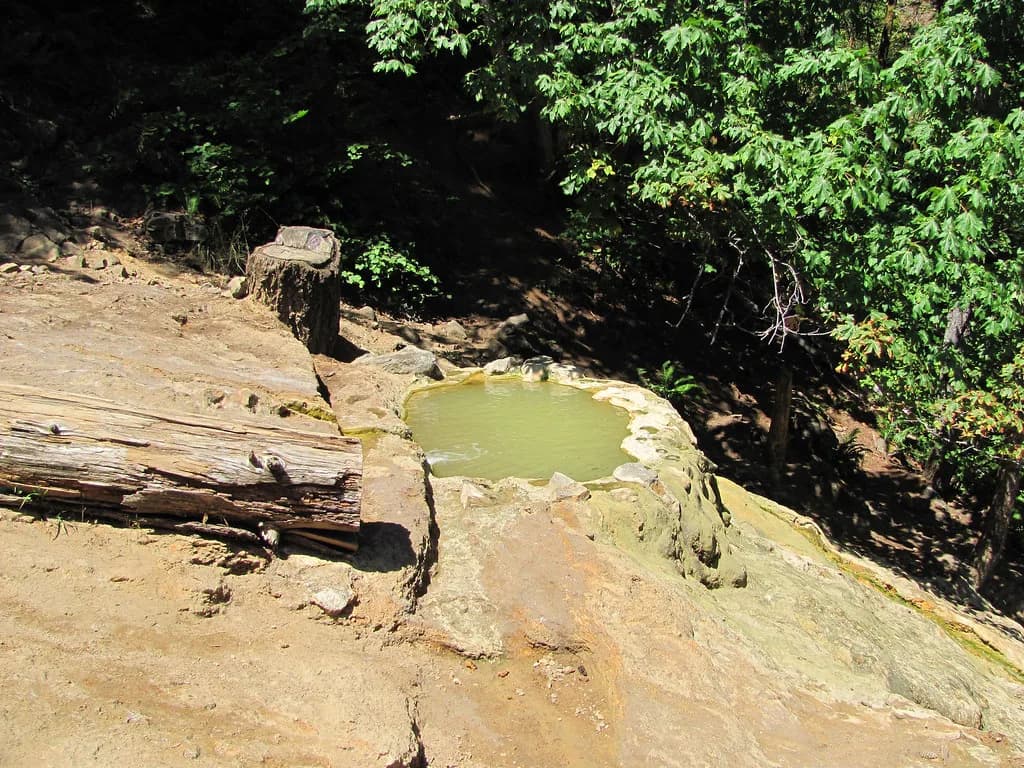
Umpqua Hot Springs earns its reputation on geology: mineral-rich water has built a staircase of travertine terraces above the North Umpqua River, and you soak in the results. Eight pools step down the hillside, each one a little cooler than the last, with a separate grotto pool down at the river. It suits hikers who don't mind a short, steep climb for a view-soaked soak, and road-trippers linking it to Toketee Falls.
Where Umpqua Hot Springs sits
The springs sit in the Umpqua National Forest on the north side of the North Umpqua River, roughly 63 miles east of Roseburg along OR-138. That makes Roseburg the practical base for fuel and groceries, about 60 miles of road from the springs. Bend is about 121 miles southwest and Eugene about 130 miles southeast, so the soak fits a long day trip from either city or an overnight on the Highway 138 corridor.
Set at about 2,640 feet in elevation, the site is primitive: a vault toilet at the parking area and no other facilities. You are in national forest, on a hillside that drops to a cold, fast river, so plan your gear around a short hike rather than a poolside parking spot.
Getting there
From Roseburg, drive east on OR-138 to the Toketee-Rigdon Road, signed as FR 34, near milepost 59. Turn left onto FR 34, cross the concrete bridge, then turn left again and continue about 2.2 miles to Basket Butte Road, FR 3401. Bear right onto FR 3401 and drive about 2 miles to a parking area on the left.
Cell service is thin on this stretch of the Cascades, so save the directions offline before you leave OR-138.
The last stretch is a rough dirt road, and a high-clearance vehicle is recommended, so a low sedan on a road trip is the vehicle to worry about. Cell service is thin on this stretch of the Cascades, so save the directions offline before you leave OR-138. Snow and road conditions can close the gate, and the Umpqua National Forest is the source to check before a winter attempt.
The hike
The walk from the parking area is only about 0.3 miles, but it gains ground fast. Cross the footbridge over the North Umpqua River, turn right, and follow the path about 0.1 miles to a junction; turn right again and climb a steep, narrow trail for roughly 0.2 miles. A wooden sign marks the way, and the trail is slick when wet, so sturdy shoes beat sandals.
From the upper pools to the river and the grotto below, the route is steep and mineral-coated, with ropes fixed in some sections for the descent. Treat that lower stretch as the crux of the visit: on wet rock it demands care, and it is the reason to carry your gear down rather than skid after it.
The pools
Water rises through cracks in the volcanic rock at temperatures up to 115°F (46°C) and cools as it flows across the terraces. The hottest upper pools hold about 108°F (42°C), water drops through natural rock channels, and the lower hillside pools sit around 100°F (38°C) or cooler depending on weather and flow. Work down the staircase to find your temperature instead of committing to the first pool you reach.
| Pool | Temperature | Notes |
|---|---|---|
| Source water in the rock | Up to 115°F (46°C) | Rises through cracks in the volcanic rock |
| Upper pools | About 108°F (42°C) | Hottest terraces, cooling as water flows down |
| Lower hillside pools | Around 100°F (38°C) or cooler | Varies with weather and flow |
| Riverside grotto | 102–104°F (39–40°C) | Its own hot-water source, with thinner crowds |
Another account puts the upper pools at 112°F with temperatures falling as you descend, so expect some variation between visits rather than a fixed reading on a gauge. The mineral-covered rock between pools is extremely slippery, and posted cautions at geothermal sites usually advise keeping your head above water. Drink more than you think you need to, since soaking in hot water dehydrates you.
The riverside grotto
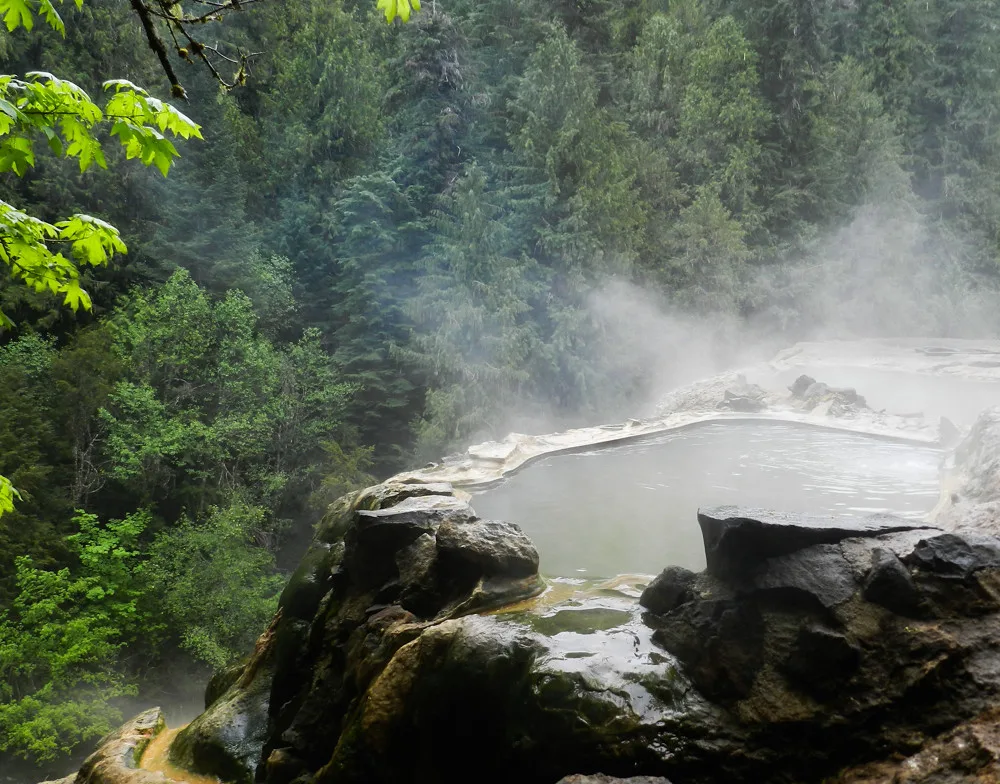
Down at river level, a colorful travertine grotto holds its own pool fed by what appears to be a separate hot-water source. It generally runs around 102–104°F (39–40°C), which makes it a comfortable middle ground between the scalding upper terraces and the cooler lower hillside pools. For many soakers it is the highlight of the site, and the short, steep approach keeps the crowd thinner than up top.
Fees, hours and pass details
Expect a day-use fee at the site, and note that an Interagency Senior, Access or Military pass is accepted in its place. The springs are open year-round from sunrise to sunset, though the gate can close on account of snow or road conditions. Bring the pass or payment method that matches your plan, because there is no town nearby to sort it out.
Surprise Falls and the river
From the riverbank below the pools you can see Surprise Falls across the North Umpqua River. Some people have waded across in low water, but that is not an established or recommended route, and the river runs cold and fast even in late summer. Use the designated crossing on the North Umpqua Trail instead if you want to see the falls properly.
Rules and etiquette
Some visitors soak without clothing, as the Oregon Discovery write-up and trip reports make plain, so the scene can be free-spirited. The terraces are fragile travertine built up over thousands of years, so step lightly on the rock lips; a towel on the rock and dry feet do more for the place than any well-intentioned scrub, and the vault toilet at the parking area is where human waste belongs.
Camping at Toketee Lake
Camping is not allowed at the hot springs or near the trailhead, so plan your overnight elsewhere. Toketee Lake Campground, about three miles away, has developed sites with picnic tables, fire rings and vault toilets. It is a dry campground, so bring your own drinking water; in-season sites can be reserved, and the off-season runs first-come, first-served through the Forest Service.
For a bed instead of a tent pad, Roseburg has the widest selection of hotels and vacation rentals on the corridor, roughly 60 miles west by road. Staying there turns a soak into a comfortable two-day run at the river and nearby waterfalls.
Crowds and the best time to go
This is one of the busier soaks on the corridor, and the parking area is unfussy about volume, so an early start is the real crowd-control tool. One visitor arriving around noon found the lot already dotted with cars, and summer weekends bring the heaviest traffic to the short trail. Late summer gives you the warmest road conditions and the easiest river access, but the river itself stays cold.
Seasonal access and the winter gate
Timing shapes this trip more than most soaks. The best window runs May through September, with weekday mornings the quietest, and FR 3401 is usually gated from November through April. A gated road turns the short approach into a much longer walk, so winter visitors should plan for extra mileage on foot or pick a different outing.
Gate status changes with weather and road conditions, and weather closures have interrupted access in past seasons. A dry August day and a January snow day are different trips, so keep a backup plan such as Toketee Falls, which sits a short drive away.
Summer brings its own variable. Wildfire smoke can settle into the North Umpqua canyon and take the pleasure out of a hot soak, and a fire closure can shut the corridor entirely, so watch InciWeb for active fires in the weeks before a July or August trip.
Pool-side rules and what to pack
Glass containers and alcohol are not allowed near the pools, and soap, shampoo and food stay out of the water, including products sold as biodegradable. There is no trash service, so everything you bring in, and any litter you find, leaves with you. Minerals in the water can stain light-colored swimwear, so dark suits are the better choice.
Glass containers and alcohol are not allowed near the pools, and soap, shampoo and food stay out of the water.
Dogs are allowed on a leash, though a steep, slippery trail and hot water are hard on paws, so many owners leave pets at home. The site is primitive, with a vault toilet at the trailhead and nothing else.
Plan on being self-reliant. Cell service typically drops after the town of Glide and GPS can be unreliable in the canyon, so download offline maps before leaving town. Dry Creek Store, about 16 miles away, is the nearest stop for gas and basics. Bring plenty of drinking water because geothermal soaking dehydrates you, sturdy shoes with grip instead of flip-flops, a dry bag for clothes and towels, and a bag to carry out trash.
Pairing Umpqua with Toketee Falls
Toketee Falls, a two-tiered cascade, sits only a couple of miles away, so most trips fold both stops into one outing. The waterfall trail is easy, about a third of a mile of gentle terrain to a viewing platform, and makes a good cool-down after the steep climb at the springs. Parking there is tight, holding only about five or six cars, so visit the falls first or early and save the soak for later.
The walk to the falls is roughly 0.8 miles out and back with about 200 feet of climbing, on grades of 12 to 20 percent and a series of wooden stairs. The trail ends at a viewing platform over the 113-foot, two-tiered falls, and the stairs and uneven ground mean it is not wheelchair accessible. Dogs are allowed but swimming is not, and the platform is the safe vantage because the rock below is slippery. Spring and early summer typically bring the best flow, while winter can bring snow and ice.
If you want a longer hike, the North Umpqua Trail follows the river through the forest in segments, and its Hot Springs segment includes a spur to the pools. The Emerald Trail and the short Susan Creek Falls hike give you more forest and waterfall options along the same drive.
Nearby springs to add to the drive
McCredie Hot Springs, on the OR-138 corridor, is the natural second soak on the way back toward Roseburg and makes a convenient stop at the end of the day. Farther south, the hot springs in Oregon range from roadside tubs to hike-in pools and resort-fed baths, so you can build a longer trip around a few different styles of soak.
If your route heads northwest instead, bagby hot springs in Mt. Hood National Forest offers a very different soak, with tubs and a longer approach in a forest setting. On the way, Terwilliger (Cougar) Hot Springs and Belknap Hot Springs give you an overnight-worthy stop on the McKenzie River side of the Cascades.
Plan Your Visit
Build the day around a morning start: drive the OR-138 and FR 34 route, hike in while the trail is quiet, soak from the top terraces down to the grotto, then finish with Toketee Falls and a night at Toketee Lake. Sturdy shoes and water matter more than fancy gear here.
Before a winter attempt, check gate and road conditions with the Umpqua National Forest, and treat the steep, slick climb to the river as the part that sets your pace. A day pass or an Interagency pass covers entry, so bring one and skip the scramble.
Frequently Asked Questions
How long is the hike to Umpqua Hot Springs?
It is about 0.3 miles from the parking area, but the climb is steep and narrow, and the path is slick when wet. You cross a footbridge, follow the signed trail to a junction, then climb roughly 0.2 miles to the pools. From the upper pools down to the river grotto, expect another steep, slippery section with ropes in places.
Can you camp at Umpqua Hot Springs?
Camping is not allowed at the springs or near the trailhead. Toketee Lake Campground, about three miles away, has developed sites with picnic tables, fire rings and vault toilets, and it is a dry campground, so bring your own drinking water. In-season sites can be reserved; the off-season operates first-come, first-served.
How hot are the pools at Umpqua Hot Springs?
Source water reaches up to 115°F (46°C), and the hottest upper pools hold about 108°F (42°C). Lower hillside pools run around 100°F (38°C) or cooler depending on weather and flow, and the riverside grotto pool sits around 102–104°F (39–40°C). Pick your spot by working down the terraces.
Do you need a pass for Umpqua Hot Springs?
There is a day-use fee at the site, and an Interagency Senior, Access or Military pass is accepted in place of paying cash. Bring whichever applies to you, since there is nothing nearby to sort it out after you have driven in.
Is Umpqua Hot Springs clothing optional?
Some visitors soak without clothing, so expect a clothing-optional atmosphere. The site is primitive, and the rock between pools is extremely slippery, so watch your footing and keep your head above water in the pools.
What else is near Umpqua Hot Springs?
Toketee Falls is a couple of miles away with an easy third-of-a-mile trail to a viewing platform, and parking there is tight. The North Umpqua Trail follows the river in segments, and McCredie Hot Springs sits on the OR-138 corridor on the way back toward Roseburg.
Sources
Hot springs notes for your next road trip
Optional updates when we add or revise hot springs guides.
You might also like



Continue reading
More guides you'll find useful


