
McCredie Hot Springs, Oregon: Roadside Pools on Salt Creek
McCredie Hot Springs sits just off Highway 58 near Oakridge, Oregon, with primitive riverside pools along Salt Creek and a short walk from the parking area.
On this page
McCredie Hot Springs delivers one of the easiest hot-water stops on Oregon's Highway 58: a set of shallow, rock-lined pools tucked against fast-moving Salt Creek in Willamette National Forest, about 10 miles east of Oakridge. The soak rewards travelers driving between the Willamette Valley and Willamette Pass, since you park on pavement and walk only a couple of minutes to the water. It suits road-trippers, weekday-morning soakers and anyone who values access over polish, because the pools are silty, the setting is social and the vibe is decidedly natural.
This is a primitive national forest site rather than a resort, so plan for murky water, a gravel and silt bottom, and rocks that bathers shift to blend cool creek water into the hot flow. The springs sit in dense Douglas fir and hemlock forest, and the whole experience is built around the creek's mood, which swings from calm summer flows to pool-swamping spring runoff. If you want a developed pool with a front desk, look elsewhere in the state; if you want hot water minutes from your car, McCredie is hard to beat.
Where McCredie Hot Springs sits
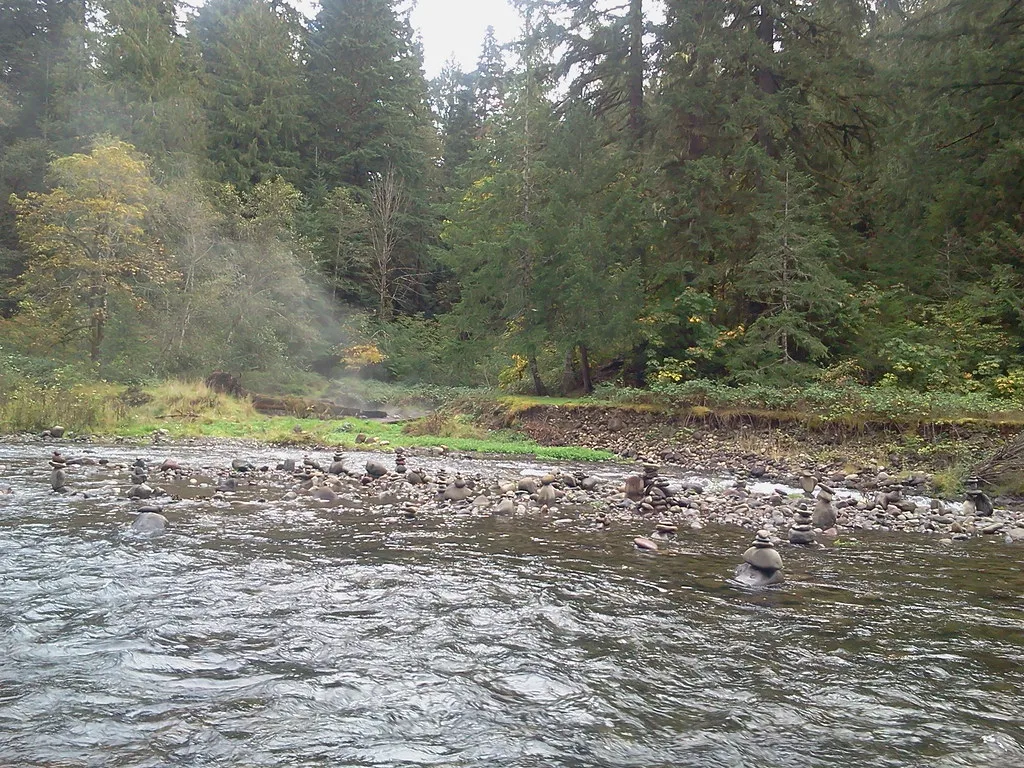
The springs lie along both banks of Salt Creek in the Middle Fork Ranger District of Willamette National Forest, at roughly 2,000 feet of elevation. Oakridge, 10 miles west, is the nearest town with full services, and Eugene sits about 50 miles northwest. The forest here is thick with Douglas fir and hemlock, and the pools sit close enough to the highway that you can hear traffic between bursts of rushing water.
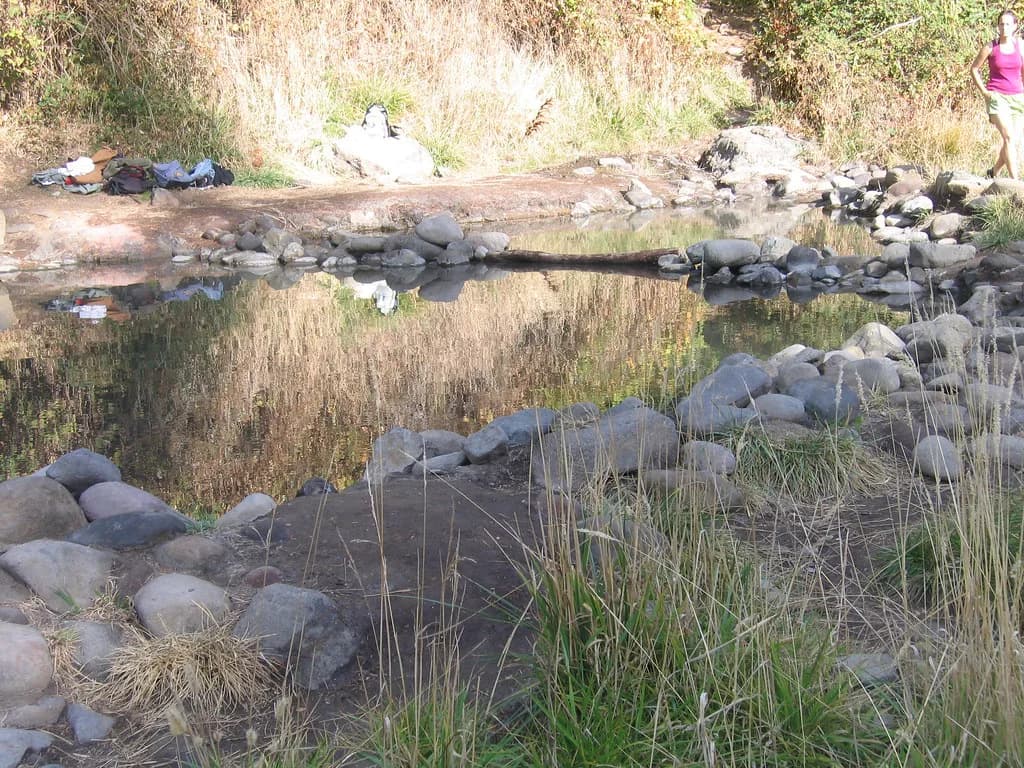
Salt Creek is a tributary of the Willamette River, and the springs vent directly into and beside it, which is why the pools feel like part of the river rather than separate tubs. Expect two to four distinct pools depending on the season and water level, each one to two feet deep, with temperatures that shift as creek water mixes in. The forest setting is genuinely handsome, but this is a roadside soak, not a backcountry secret.
Getting there from Oakridge and Eugene
From Oakridge, drive east on Highway 58 for about 10 miles and watch for the blue hot springs sign between mileposts 45 and 46, then turn into the large paved parking area. The highway is a well-maintained two-lane road, so the approach is straightforward in any season. If you are coming from Eugene, allow for the roughly 50-mile drive southeast along the same corridor.
The parking area has a pit toilet, and cell service is generally reliable at the lot for most carriers, which makes meeting up or checking a map simple. The GPS coordinates land near 43.708, 122.288, useful if the sign is obscured by snow or darkness. Winter visitors should expect the lot to be plowed while the path down to the pools turns extremely icy and slippery, so traction matters more than driving distance.
The walk from the parking lot
The path from the lot to the pools is short and easy, about 0.2 miles with almost no elevation gain, and most people reach the water in a few minutes. That makes McCredie a realistic stop for travelers with limited time, coolers in the car or kids in tow. The trade-off is popularity: the closest pools see constant traffic because nobody has to earn them.
Footing is the main concern on the descent. The trail can be muddy and snow-covered in winter, and the rocks around the pools are slick with algae and mineral deposit, so water shoes earn their place here. Bring a towel and a dry layer for the walk back, since the creek spray and shaded forest cool you quickly once you leave the water.
The pools and their temperatures
The pools at McCredie are shallow, typically one to two feet deep, with a bottom of river silt, sand and smooth gravel. Water in the pools ranges from about 98°F to 114°F, while the source runs close to 130°F, which is why bathers rearrange rocks to let cool creek water in. Treat the hottest corners with real respect: source water at that temperature can scald, and the mix changes as the creek rises or falls.
Source water at that temperature can scald, so test the water with a hand and stay out of the hottest corners until you know how the pool behaves.
Water clarity is moderate at best, and the pools run murky with silt, so this is not a soak for anyone who needs clear blue water. The site has a long history as a local gathering spot, and the clothing-optional tradition is well established, so expect to see nude bathers at any time of day.
North bank versus the far side of Salt Creek
The pools on the day-use side, nearest the parking area, are the first ones you reach and the most heavily used. Across Salt Creek, the south-side pools tend to be quieter and generally make for a better soak when the near bank is crowded. Crossing the creek is the trade-off: it demands care when flows are high, and it is not a route for everyone in the group.
If you stay on the near bank, go in with modest expectations about crowds and water quality, and treat the far side as the reward for a little more effort. On busy weekends the difference between the two banks can be the difference between a social scene and an actual soak.
Season, runoff and fire restrictions
McCredie is open year-round, but the creek dictates the experience. During peak snowmelt in late spring, high water typically floods the pools, leaving them too cold or unsafe to enter. Runoff risk peaks in May and June, so early-summer travelers should have a backup plan along the highway.
Summer and fall bring high fire danger and strict campfire bans in the surrounding forest, so leave the camp stove and wood at home when restrictions are posted. Autumn usually delivers the most reliable combination of low water, comfortable air temperatures and thinner weekday crowds. Winter soaks can be excellent, but ice on the path and spray from the creek make for a cold, careful exit.
Fees, passes and land-manager rules
McCredie is managed by the Willamette National Forest's Middle Fork Ranger District, and visiting requires a Northwest Forest Pass or a day-use fee of $5. The ranger district office is the place to confirm current pass requirements before you drive up.
Posted rules here are simple: no glass containers, dogs on a leash, and no overnight camping at the springs.
Posted rules are simple but enforced: no glass containers, dogs on a leash, and no overnight camping at the springs themselves. The pools sit on national forest land, so standard forest regulations apply alongside the site-specific ones. The site is also clothing-optional by tradition, a norm that coexists with family use rather than excluding it.
Crowds, timing and etiquette
Because the pools sit minutes from Highway 58, weekends and holidays bring very high traffic, especially on the near bank. Weekday mornings are the reliable window for quiet, and arriving early also means better odds of parking in the paved lot rather than along the shoulder. The site has suffered from litter in the past, and a few minutes of pack-it-out effort goes a long way toward keeping access open.
Expect the scene to be social: music, conversation and people moving rocks to adjust their pool's temperature. If that is not your idea of a hot spring, come at dawn or plan your visit around a weekday. Bring a bag for your own trash and any litter you can carry out, and leave the pools as you found them.
Camping and services nearby
Two national forest campgrounds make good bases: Blue Pool Campground, about a mile west, and Packard Creek Campground along the same corridor. Both put you close enough to soak in the morning before the day-use crowd arrives. Oakridge, 10 miles west, covers food, fuel and groceries, including breweries and a full-service grocery store.
Camping at the springs themselves is not allowed, so plan your overnight stay at one of the campgrounds or in Oakridge. If you are linking soaks, the broader guide to hot springs in Oregon is a useful way to see what else fits a Highway 58 or Willamette Pass itinerary.
What to bring and how to soak safely
Pack water shoes for the slippery rock, a towel, and a change of clothes for the walk back up to the lot. A rinse afterward is sensible at a silty, high-turnover spring, and a jug of water in the car makes that easy. Keep your head above the water in untreated geothermal pools, and watch children closely around the near-bank pools and the creek.
The two real hazards are the scalding source water and the fast-moving creek beside the pools. Test the water with a hand before committing, and stay out of the hottest corners until you know how the pool behaves. In spring, when Salt Creek runs high, the current itself is reason enough to skip the crossing to the far bank.
Leave No Trace matters more here than at a staffed resort: pack out everything, skip soap and shampoo in the pools, and keep dogs leashed away from the water's edge. These are primitive pools on public land, and their condition depends on the people who use them.
Combining McCredie with other Oregon soaks
McCredie fits naturally into a Willamette Pass day: soak early, then walk to Blue Pool or explore the campgrounds along Highway 58 before heading back to Oakridge for food. For a different kind of forest soak, Bigelow Hot Springs, Oregon offers a quieter creekside alternative on a similar road-trip route. Farther afield, Bagby Hot Springs in Mt. Hood National Forest and Umpqua Hot Springs each bring their own character and their own access considerations.
Travelers heading east across the state can pair a McCredie stop with Snively Hot Springs on the Owyhee River or Hart Mountain Hot Springs in the Hart Mountain National Antelope Refuge, both wild soaks that reward a longer drive. If your road trip continues beyond Oregon's borders, this Nevada hot springs guide covers the soakable stops on the other side of the state line. Build the route around water levels and fire season rather than a fixed calendar, and keep a backup plan within an hour of the highway.
Plan Your McCredie Soak
McCredie Hot Springs works best as an early, unhurried stop: park in the paved lot off Highway 58, walk the short path, and claim a pool before the weekend crowd arrives. Bring water shoes, a towel and a trash bag, and treat the hottest water with caution. The Middle Fork Ranger District is the land manager to contact for pass requirements and current conditions before you go.
Pair the soak with a campground at Blue Pool or Packard Creek, or base yourself in Oakridge for food and fuel. For a wider circuit of soaks across the state, start with the hot springs in Oregon guide and build a route that matches your tolerance for rough roads and crowds.
Frequently Asked Questions
Are clothes optional at McCredie Hot Springs?
Yes. McCredie has a long-established clothing-optional tradition, and you should expect to see nude bathers at any time. Families do use the site, so set expectations for your group before you arrive and choose the far-bank pools if you want more privacy.
Can you camp at McCredie Hot Springs?
No. Overnight camping at the springs is not allowed. Camp at nearby national forest campgrounds such as Blue Pool Campground, about a mile west, or Packard Creek Campground, or stay in Oakridge, 10 miles west.
How far is the walk from the parking lot to the pools?
It is short, roughly 0.2 miles with almost no elevation gain, so most people reach the water in a few minutes. The path can be icy in winter and muddy in spring, and the rocks around the pools are slippery, so water shoes help.
What is the water temperature at McCredie Hot Springs?
The pools generally range from about 98°F to 114°F, while the source runs close to 130°F. Bathers move rocks to mix in cooler creek water, so temperatures vary from pool to pool and day to day. Test the water before you get in and keep your head above the surface.
When is the best time to visit McCredie Hot Springs?
Weekday mornings are the quietest, since weekends and holidays bring heavy traffic from Highway 58. Late spring runoff can flood the pools, and summer and fall bring fire restrictions, so autumn is often the most reliable window for a soak.
Do you need a pass to visit McCredie Hot Springs?
A Northwest Forest Pass or a day-use fee is required at this Willamette National Forest site, and the current rate is listed on the forest's recreation fee page. The Middle Fork Ranger District is the land manager, and its office in Oakridge can confirm pass requirements before your trip.
Is McCredie Hot Springs family-friendly?
Children are allowed, but the clothing-optional culture and the fast-moving creek make it a better fit for families who are comfortable with both. Keep kids close on the near bank and skip the creek crossing when flows are high.
How do you get to McCredie Hot Springs from Oakridge?
Drive east on Highway 58 for about 10 miles from Oakridge, watch for the blue hot springs sign between mileposts 45 and 46, and turn into the large paved parking area. The route is a well-maintained two-lane highway, with a pit toilet at the lot.
Sources
Hot springs notes for your next road trip
Optional updates when we add or revise hot springs guides.
You might also like



Continue reading
More guides you'll find useful



.jpg)