Hot Springs in Idaho: A Soak-by-Soak Guide to the Best Pools
Plan an Idaho hot spring trip with real details on developed pools and primitive soaks, from Kirkham and Sunbeam to Gold Fork and Trinity.
On this page
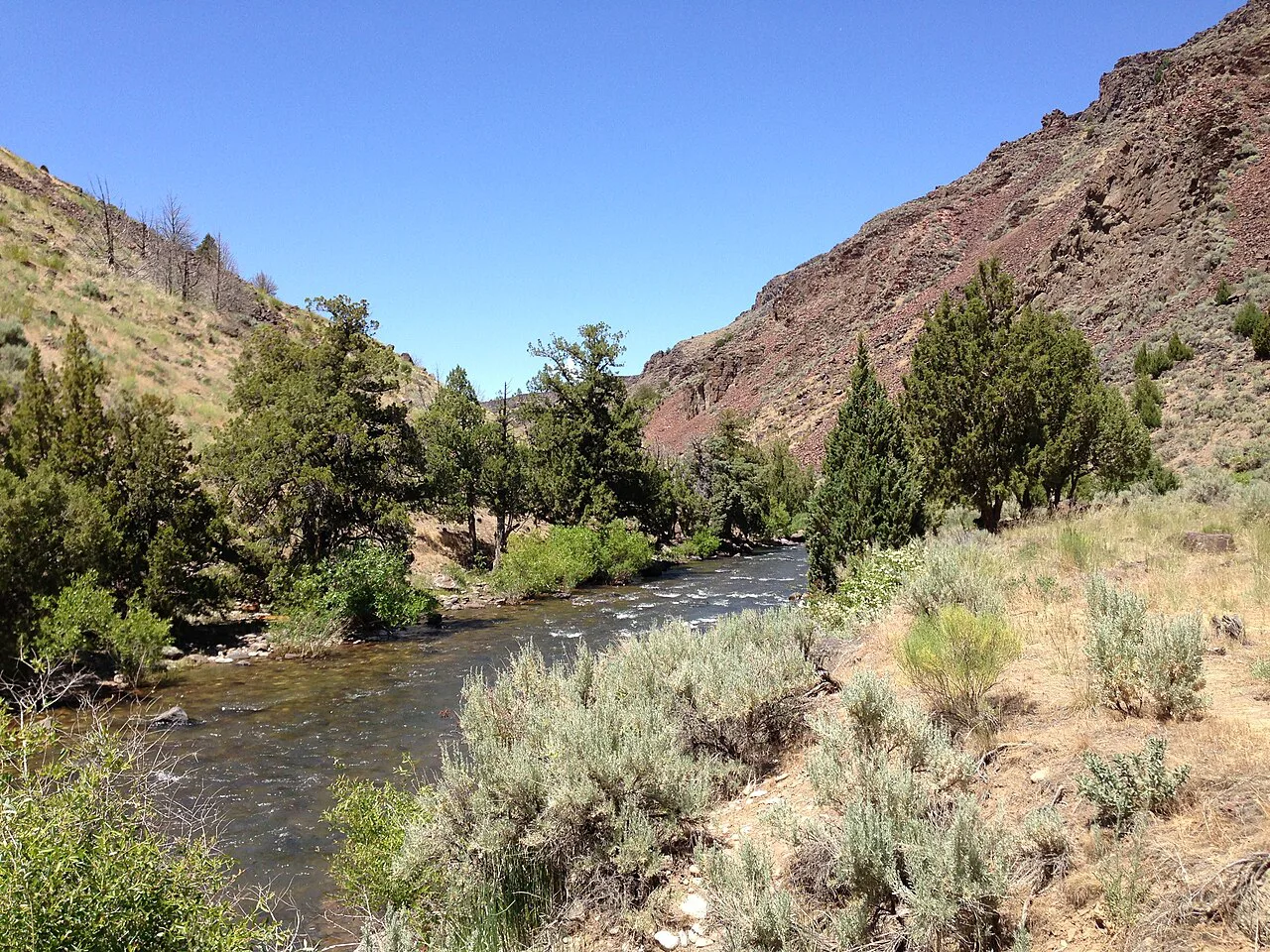
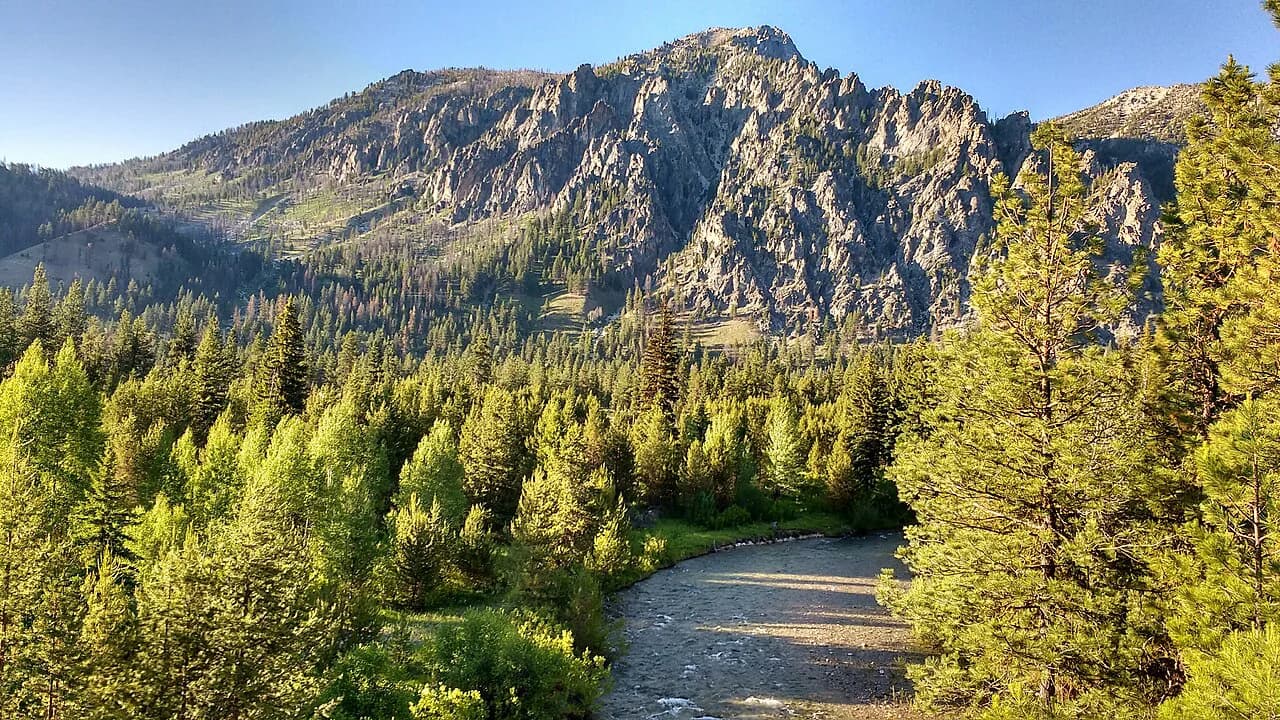
Idaho suits a hot springs road trip better than almost any state in the West because the soaks sit on the way to somewhere else. The Ponderosa Pine Scenic Byway threads from Boise through Garden Valley and Lowman to Stanley, and steam rises from the Payette River bank in plain sight of the road. You can string a hot waterfall, a forest soak shack and a Salmon River tub into two days without backtracking.
The range runs from primitive rock pools that rewild themselves every spring to developed pools with posted hours and age rules. Knowing which you are driving to decides what you pack: water shoes and a bucket for the river soaks, a reservation and a towel for the developed ones. This guide follows the corridor in drivable order and names the trade-offs at each stop. If you are weighing a longer western road trip, the hot springs in Montana make a useful comparison for the same developed-versus-wild decision.
How Idaho springs differ
Most Sawtooth-area soaks are rock or tub pools built where hot water meets a cold river, and their temperature swings with flow. The source water runs hottest right at the vent, often near 120 degrees Fahrenheit, and some vents climb far higher, so the comfortable soak is the one where creek or river water has mixed in. Pools reading roughly 95 to 110 degrees are the norm where that mixing works.
Developed pools work the other way. Operators control the temperature, post hours and rules, and often cap how long you can soak, which makes them the easier choice for families or a first trip. The trade-off is that you trade the riverbank improvisation for a schedule and, at some, a fee.
Because river levels decide so much, spring runoff is the planning hinge for primitive pools. High water in May and June can wash out or cut off lower pools along the Payette and Salmon, while late summer and early fall leave the rock shelves exposed. Build a primitive-soak itinerary around that window rather than around a fixed calendar date.
Getting there: the Boise to Stanley corridor
From Boise, the drive northeast on the Ponderosa Pine Scenic Byway runs about three hours to Stanley, passing Crouch, Garden Valley and Lowman. Crouch is the practical supply stop, with a well-stocked grocery, restaurants and fuel before the road narrows and climbs. Coming from the east, Sunbeam and Cove Creek sit along the Salmon River approach through Challis, which makes them the first soaks if you arrive from that direction.
Stanley itself is small, with a population around 100 and a private airstrip; most travelers fly into Boise, Friedman Memorial in Sun Valley or Magic Valley Regional and pick up a rental car. The order that wastes the least driving is Boise, then the Payette River springs, then Stanley, then the Salmon River springs east of town.
Kirkham Hot Springs
Kirkham is the corridor's headline soak: a large lot right on the Payette River, a bridge you cross on foot into a former campground now managed as day use, and pools both near the bridge and farther along the bank. The draw is a hot waterfall cascading over the hillside into the river, which you can stand under. Vault toilets and trash service remain on site.
Expect a per-vehicle day-use fee of $5, payable in cash, or display an Interagency pass; the America the Beautiful annual pass covers this and other federal sites. Because it is one of the most popular springs in the state, arrive at sunrise. Early arrivals often have the pools nearly alone for an hour before the lot fills.
Pair Kirkham with the quieter bends of the same river if you want a second soak without moving camp. If you are building a longer Idaho loop, the full write-up on Kirkham Hot Springs, Idaho covers the layout in more depth.
Bonneville Hot Springs
Bonneville sits on a bluff above Warm Springs Creek just off the scenic route, roughly 19 miles east of Lowman and 40 miles west of Stanley, with a campground a quarter-mile walk from the water. The signature is a rustic wooden soak shack holding a cast iron tub you plug with a wood stopper and fill from a pipe, with rock pools of varying temperature downhill from it.
The campground operates May through September, and non-campers soaking here pay the same day-use fee or show an Interagency pass. When the campground closes, the gate adds about a mile to the approach, and snowshoes or cross-country skis are the sensible winter footwear.
Sunbeam Hot Springs
Sunbeam combines a piece of history with a do-it-yourself soak on the Salmon River east of Stanley. The Civilian Conservation Corps built the stone bathhouse in 1937, and it now serves as a changing room with interpretive boards and a pit toilet beside it. Down a steep slope east of the parking area, two tubs sit directly below the source.
The tubs have large drain holes, so each visitor plugs them and runs fresh hot water from the pipes. Bring a bucket or watertight container to carry cold river water, or you will be waiting on a temperature you cannot control. There is no fee to visit Sunbeam, and rock pools along the riverbank offer a simpler alternative to the tubs.
Pine Flats Hot Springs
Pine Flats puts the soak a 0.3-mile walk through the woods along the river from its campground, which is open May through September. A small day-use lot and trailhead serve non-campers, and when the campground is closed you add a quarter-mile walk from the main road. Campers soak at no extra cost; day users pay a day-use fee or display an Interagency pass.
The pools sit on a rocky cliffside above the river, reached by scrambling over slick rock, so bring water shoes with real tread. Spring runoff raises the river and cuts off the lower pools, which is why this one rewards a mid-summer or fall visit. In low water you can work along the rocks to a small waterfall pool sized for two.
Sacajawea Hot Springs
Sacajawea feels more removed than the highway springs, reached by five miles of unpaved seasonal road off Highway 21 on Grandjean Road. Sawtooth Lodge and Grandjean Campground sit nearby, so the pools draw more company in warm months when the lodge is busy. The road is closed to vehicles in winter, which leaves a long approach on foot or skis.
The pools here are fickle. Temperature depends heavily on river level, and it is common to find one pool too hot to enter and another holding pockets of cold river water that never quite mix. Plan Sacajawea for summer or early fall, after high water has dropped and before the road closes.
Cove Creek and the Highway 21 pool
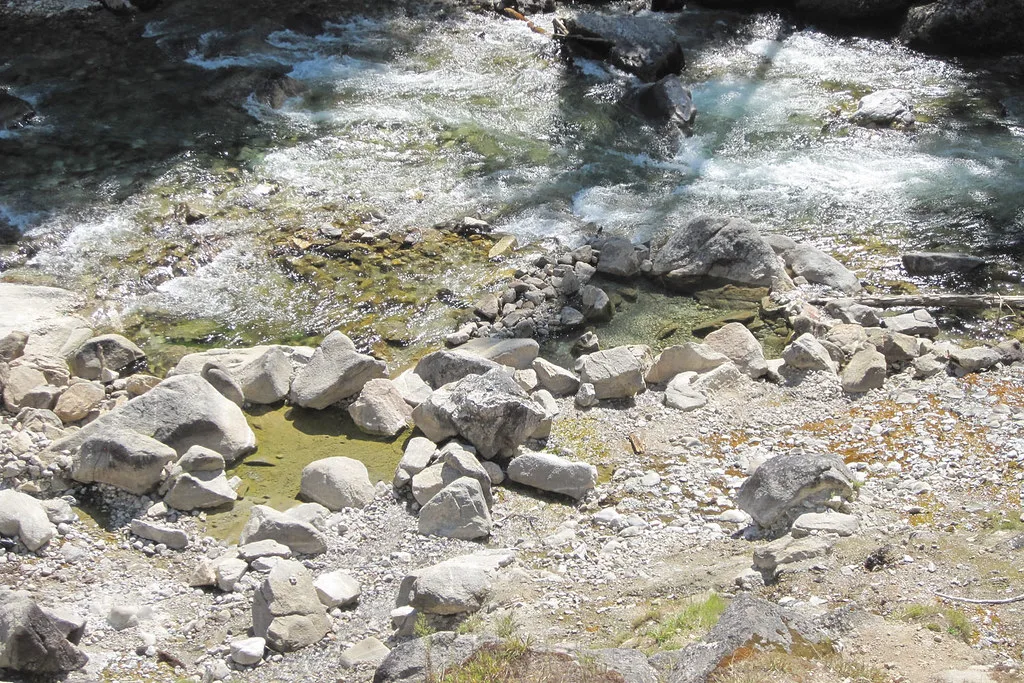
Cove Creek is the closest quick soak to Stanley, about ten minutes from downtown and just off the main road, with a small pool set downhill from the parking area. A vault toilet and a grassy picnic stretch along the river make it a good half-day stop, and it draws fewer people than the famous springs.
Across the road from Hot Springs Campground on Highway 21, a paved lot and short downhill walk lead to a handful of pools; the main one is piped, sandy-bottomed and roomy enough for a group, with a river view. This is the westernmost stop on the corridor, which makes it the first soak on the drive out of Boise.
Gold Fork Hot Springs near Donnelly
Gold Fork is the developed counterpoint to the river soaks, set about eight miles east of Highway 55 and a mile south of Donnelly at 1026 Gold Fork Road. The pools hold alkaline, mineral-rich water in a landscaped setting, and Gold Fork Hot Springs publishes seasonal hours rather than keeping one schedule year-round.
Soaks are capped at two hours, no one enters after 7:30pm, and Tuesday is a closure day, so check the posted calendar before you drive out.
The posted rules matter here: children under 13 must leave by 4pm, Thursday sessions are for adults 18 and over, Tuesday is a closure day, and soaks are capped at two hours with no entry after 7:30pm. Winter hours begin October 1, and Gold Fork adjusts its schedule for severe weather or when holiday demand exceeds capacity, so plan around the calendar posted on the Gold Fork site and don't count on a late dip.
Trinity Hot Springs in Paradise
Trinity Hot Springs sits in Paradise, Idaho, on a property built around a deep natural spring, and it runs as a membership and retreat destination rather than a drop-in pool. Soaking, yoga and wellness programming, retreats and lodging are separate offerings, with cabin rooms, lodge rooms and camping or RV spaces on site.
Reservations go through the property by phone or email, and the posted booking windows are weekdays 10am to 8pm and weekends 10am to 9pm. Sort out your soaking access and lodging together before you drive, since this is not a roadside stop you can decide on at the last minute.
Fees, hours and passes
The campground springs on the Payette corridor, including Kirkham, Bonneville and Pine Flats, charge a per-vehicle day-use fee and accept an Interagency pass instead. The America the Beautiful annual pass covers those fees along with national parks and other federal sites, so it pays for itself on a multi-spring trip. Carry cash anyway, because fee envelopes and iron rangers are the norm at these lots.
| Spring | Fee or access | Notable detail |
|---|---|---|
| Kirkham | $5 per-vehicle day-use fee | Hot waterfall you can stand under |
| Bonneville | Day-use fee or Interagency pass | Wooden soak shack with a cast iron tub |
| Sunbeam | No fee | Stone bathhouse built in 1937 |
| Pine Flats | Free for campers, day-use fee for others | Pools on a rocky cliffside |
| Gold Fork | Posted hours and age rules | Soaks capped at two hours |
| Sacajawea | Five miles of unpaved seasonal road | Temperature shifts with river level |
Developed properties run on their own terms. Gold Fork posts its hours, age limits and soak cap, while Trinity takes bookings in set windows and ties soaking to membership and lodging. Mountain Village Resort in Stanley books its indoor pool by reservation, with free access for resort guests and a fee for everyone else.
Water temperature and safety
Treat every primitive source as scalding until you have tested it with a hand or foot. Spring vents commonly run near 120 degrees Fahrenheit, and the risk of burns climbs sharply above 130, so ease in at the edges where cooler water mixes. River-fed pools settle into the 95 to 110 range when the mix is right.
Test every primitive source with a hand or foot before you get in. Vents commonly run near 120 degrees Fahrenheit, and the risk of burns climbs sharply above 130.
Keep your head above water in untreated geothermal pools, hold children close at tubs fed by open pipes, and wear shoes with grip on algae-slick rock. River levels add a second hazard: fast spring current can undercut the shelves you scramble across at Pine Flats and Sacajawea.
When to go
Summer brings the most reliable access and the biggest crowds, and afternoon thunderstorms are common, so sunrise soaks are both quieter and safer. Fall delivers cooler air, thinner traffic and color around Stanley, though high-elevation trails can pick up snow late in the season.
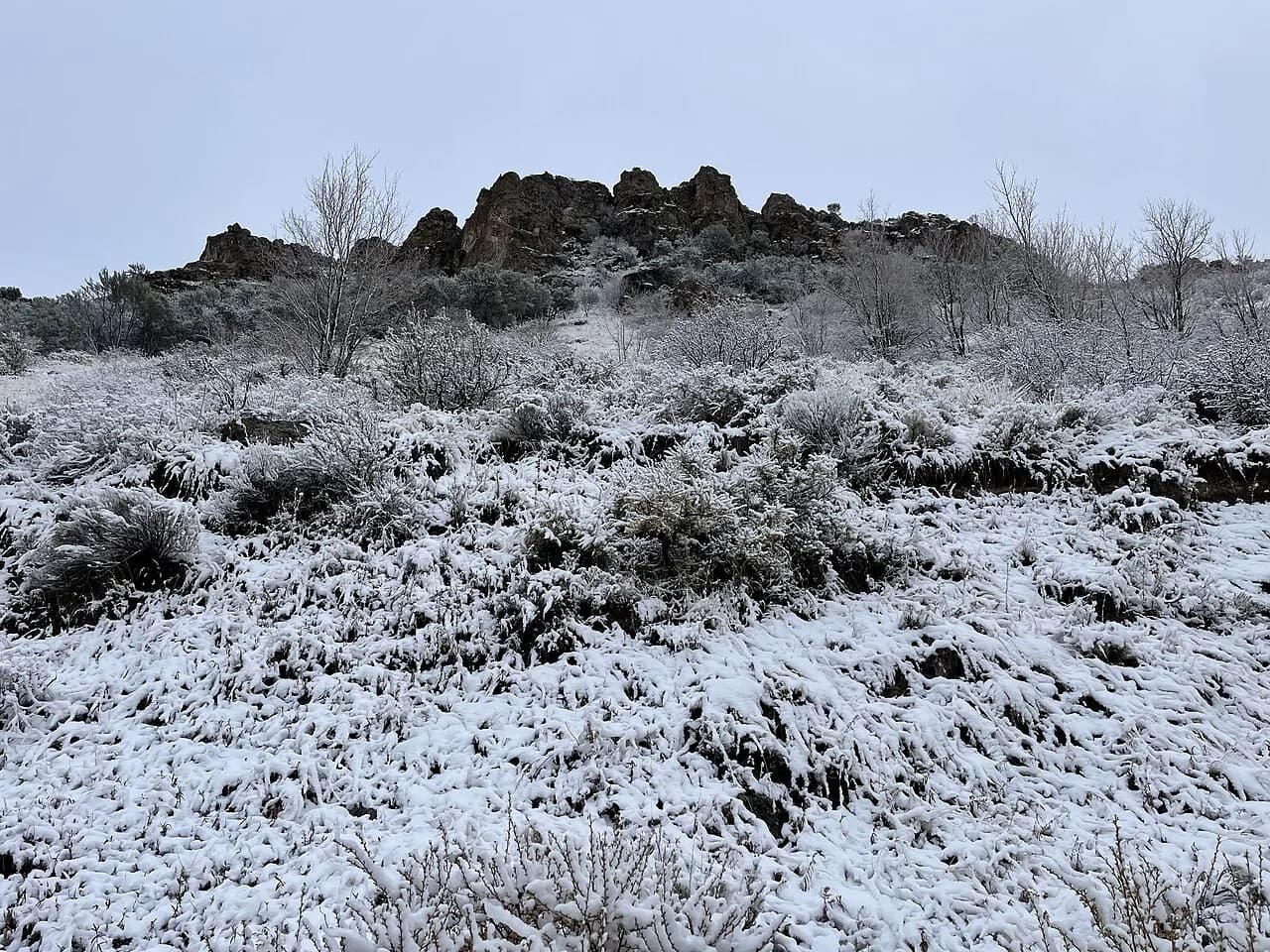
Spring is the season to skip for primitive pools, since high water washes out or blocks the riverbank soaks and snow can linger into June at elevation. Winter rewards the prepared with steaming pools in a snowscape, but storms bring road closures, rockfall and avalanche concerns, and the approaches demand snowshoes or skis.
Camping and lodging
The easiest base is a campground attached to a spring. Bonneville has 22 reservable sites plus first-come spots, Pine Flats has 24 reservable sites among ponderosas on the Payette, Hot Springs Campground mixes group and single sites on Highway 21, and Grandjean holds 31 primitive first-come sites near Sacajawea.
In Stanley, Mountain Village Resort anchors the town with a lodge, general store, fuel and an RV park, while Redfish Lake Lodge and the Stanley High Country Inn offer rooms and cabins on the lake and in town. Boondockers find scenic forest-road sites north of Stanley and along the Payette near Lowman, though the best spots sit down tight, uneven tracks.
A two-day road trip
Start in Boise early and take the scenic byway northeast, stopping at the Highway 21 pool across from Hot Springs Campground and then at Kirkham for the waterfall. Camp or lodge near Lowman, then drive east the next morning to Bonneville's soak shack and on to Stanley, finishing at Sunbeam's tubs on the Salmon River.
If you have a third day, use Stanley as a base for Cove Creek and Pine Flats, and save Sacajawea for a dry stretch when Grandjean Road is open. Leaving the primitive soaks for the middle of the trip gives you the best odds on water levels.
What to bring
Pack water shoes or sandals with real traction, since the best pools at Pine Flats and Sunbeam are reached over slick rock and steep slopes. A bucket or watertight container lets you mix cold river water into a hot tub, and a dry bag keeps layers and keys out of the splash zone.
Carry cash for fee lots, skip glass containers entirely, and bring a trash bag so you can pack out more than you carried in. A towel and a warm layer matter more than they seem at 6am on the Payette.
Leave No Trace at primitive springs
At undeveloped soaks, nothing goes in the water but you: no soap, shampoo, lotion or sunscreen. Stay on the existing path to the pools, pack out every wrapper and bottle, and leave the glass at home.
Small pools fill fast, so share the space: keep music low, give a soaking group room, and move on rather than crowding a tub meant for two. Use the toilet before you leave the trailhead, and if you must go on site, step well away from the water.
Nearby springs and Idaho soaks farther afield
South of the Sawtooth corridor, Lava Hot Springs anchors a completely different kind of Idaho soak, with a town built around developed pools and the Lava Hot Springs Foundation running them. It pairs well with a southern Idaho loop that includes Miracle Hot Springs, Idaho and the Banbury Hot Springs pools near the Snake River, both developed and reservation-friendly.
East of the Snake River plain, Heise Hot Springs near Idaho Falls adds a developed pool complex to a route toward Jackson Hole, and makes a natural overnight between the eastern parks and the central mountains.
Plan Your Idaho Soak
Build the trip around river levels first, then around driving order. The Payette corridor from Boise through Lowman to Stanley delivers the densest run of soaks, with the Highway 21 pool and Kirkham as the opening stops and Bonneville, Pine Flats and Sunbeam filling the days after.
Reserve what needs reserving, whether that is Gold Fork's posted schedule, Trinity's soaking and lodging windows, or a campsite at Bonneville or Pine Flats. Check current conditions with the managing land manager before a winter or early-season push, and carry cash and water shoes for the fee lots and slick rock.
Explore more Idaho hot springs
- Burgdorf Hot Springs
- Downata Hot Springs
- Gold Fork Hot Springs
- Goldbug Hot Springs, Idaho
- Heise Hot Springs
- Hot Springs Around Idaho City, Idaho
- Kirkham Hot Springs, Idaho
- Lava Hot Springs, Idaho
- Maple Grove Hot Springs
- Miracle Hot Springs, Idaho
- Trinity Hot Springs, Idaho
- Banbury Hot Springs
- Bear River Hot Springs, Idaho
- Boat Box Hot Spring
- Challis Hot Springs, Idaho
- Free Hot Springs in Idaho
- Frenchman's Bend Hot Springs
- Givens Hot Springs, Idaho
- Green Canyon Hot Springs, Idaho
- Hot Springs Camping in Idaho
- Hot Springs Near Boise
- Hot Springs Near McCall, Idaho
- Idaho Hot Springs Resorts
- Jerry Johnson Hot Springs
- Loftus Hot Springs, Idaho
- Mountain Village Hot Springs
- Nat Soo Pah Hot Springs
- Riverside Hot Springs Inn & Spa
- Rocky Canyon Hot Springs
- Roystone Hot Springs, Idaho
- Stanley Hot Springs
- Sunbeam Hot Springs, Idaho
- Trail Creek Hot Springs
- Weir Creek Hot Springs
- Zim's Hot Springs
- Atlanta Hot Springs, Idaho
- Barney Hot Springs, Idaho
- Baumgartner Hot Springs
- Bruneau Hot Springs
- Cove Creek Hot Springs, Idaho
- Durfee Hot Springs
- Easley Hot Springs, Idaho
- Hot Springs Near Coeur d'Alene
- Hot Springs Near Idaho Falls
- Hot Springs Near Ketchum
- Hot Springs Near Pocatello, Idaho
- Hot Springs Near Stanley, Idaho
- Hot Springs Near Twin Falls, Idaho
- Murphy Hot Springs, Idaho
- Pine Flats Hot Spring, Idaho
- Russian John Hot Springs
- Sacajawea Hot Springs, Idaho
- Sharkey Hot Springs, Idaho
- Silver Creek Plunge Hot Springs
- Skillern Hot Springs, Idaho
- Slate Creek Hot Springs
- Starkey Hot Springs, Idaho
- Twin Springs Hot Springs
- Vulcan Hot Springs, Idaho
- Worswick Hot Springs, Idaho
Frequently Asked Questions
Where are the main hot springs in Idaho?
The densest cluster runs along the Ponderosa Pine Scenic Byway between Boise and Stanley, where Kirkham, Bonneville, Pine Flats, Sunbeam and Cove Creek sit within a few hours of each other. Sacajawea is reached by a seasonal road off Highway 21 near Grandjean. Gold Fork is up near Donnelly off Highway 55, and Trinity is in Paradise, so plan those as separate legs.
Are Idaho hot springs free?
It depends on the site. The Payette corridor springs tied to campgrounds, including Kirkham, Bonneville and Pine Flats, charge a per-vehicle day-use fee that an Interagency pass can cover. Sunbeam is a no-fee stop. Developed properties such as Gold Fork and Trinity set their own rates and hours, so ask when you book.
Which Idaho hot springs have campgrounds next to them?
Bonneville, Pine Flats, Hot Springs Campground on Highway 21 and Grandjean near Sacajawea all put you within a short walk of a soak. Bonneville and Pine Flats run May through September with reservable sites, while Grandjean is first come, first served and more remote. In Stanley, Mountain Village Resort and Redfish Lake Lodge work as lodging bases.
What is the best time of year to soak in Idaho?
Mid-summer through early fall gives the most reliable access to primitive river pools, once runoff drops and the rock shelves are exposed. Summer means crowds and afternoon storms, so early morning helps. Fall brings thinner traffic and color. Spring high water washes out or blocks many riverbank pools, and winter approaches often need snowshoes or skis.
What should you wear and bring to an Idaho hot spring?
Bring water shoes or sandals with tread for slick rock and steep slopes, and a towel plus a warm layer for cold mornings. A bucket or watertight container lets you mix river water into a tub, and cash covers fee lots. Leave glass behind, and carry a bag so you can pack out more than you brought in.
Sources
Hot springs notes for your next road trip
Optional updates when we add or revise hot springs guides.
You might also like
Continue reading
More guides you'll find useful