Rocky Canyon Hot Springs, Idaho: River-Crossing Pools Guide
Rocky Canyon Hot Springs in Idaho means rustic rock pools on the Middle Fork Payette River, reached by a dirt-road drive and a short, cold river crossing.
On this page
Rocky Canyon Hot Springs is a backcountry soak built around a single dramatic fact: the hot water arrives as a cascade, spilling from a hot upper pool down a set of rock-dammed basins until it reaches the Middle Fork Payette River. That layout gives you a range of soak temperatures within a few steps, from a hot top pool to cooler water where the spring mixes with the river. It suits travelers who want a primitive, unpolished soak in Boise National Forest and are comfortable with a short, cold wade to get there.
What makes Rocky Canyon worth the trip
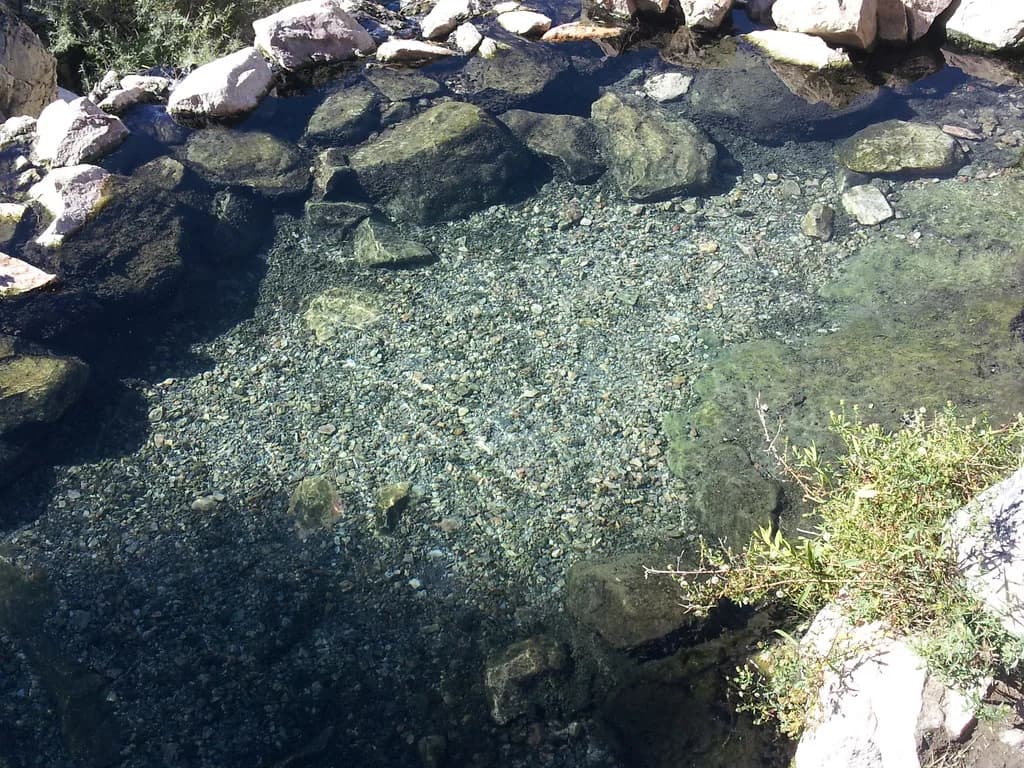
The draw here is the staircase. Hot water leaves the ground high on the bank and steps down through a series of rock pools toward the river, so each pool you enter is a little cooler than the one above it. You can sit in the hot top basin, move down a pool to cool off, and finish with your feet in the river without walking more than a few yards.
This is a primitive soak, not a developed facility: no lifeguards, no deck, no temperature gauge on the wall. The pools themselves are formed by stacked rock, and the number of usable pools shifts as water levels and conditions change. Plan on wet, uneven footing and bring footwear you can wear in the river and on slick rock.
Where it is
The springs sit along the Middle Fork Payette River in the Boise National Forest, upstream of Garden Valley in Valley County. From Boise, the drive runs west on W State Street to ID-55 north through Eagle, then follows Banks-Lowman Road and Middle Fork Road into the river corridor, a trip of roughly an hour and a half.
The last stretch is a dirt road, so give yourself more margin than a highway drive would suggest, especially if you are towing a trailer or driving a low-clearance car. Cell coverage thins out in the canyon, so download the route before you leave the Boise area.
Getting there
Set your route as W State Street to ID-55 north, then Banks-Lowman Road east, then Middle Fork Road following the river upstream. ID-55 is the fast part; the middle section through Banks and along the Lowman road is slower, and Middle Fork Road is where the surface turns to dirt.
Parking along the corridor is informal, and the soak is reached by a short walk from the road. The trail portion is brief, about a tenth of a mile with a small elevation change, so the approach on foot is easy; the river is the part that takes attention.
The river crossing
To reach the pools you wade the Middle Fork Payette. The river is the go or no-go factor here, and its depth and speed change with the season and with releases upstream. In cold months the water is punishingly cold, and rocks in the channel are both slippery and sharp.
Wear water shoes with real tread, and wait for a lower-water day if the river looks high, fast or pushy.
Wear sandals or water shoes with real tread rather than going barefoot, and carry your gear in something that stays dry if you slip. If the river looks high, fast, or pushy, wait for a lower-water day rather than committing mid-channel.
The crossing is short but it is the reason this soak is quieter than a roadside pool. Treat it as the centerpiece of your planning: pick your footwear, pack a dry layer for the return wade, and turn around if the water is above your comfort level.
The pools
The top pool is the hottest, cited at around 100 degrees Fahrenheit, and it cools as the overflow cascades into the next basin and then toward the river. That means the most comfortable spot often depends on air temperature: a cold morning pushes you to the upper pool, while a hot afternoon makes a lower basin more appealing.
Sit lower in the pools and keep your head above the water. Untreated geothermal water carries minerals and, in some springs, organisms that are best kept out of your eyes, nose, and mouth, so let the soak stop at your shoulders. The rock rims are stacked and can shift under weight, so test a handhold before you lean on it.
A soak plan
For a half-day visit, arrive with time to wade, soak, and dry off before the drive back to Boise. Because the pools are small and the corridor sees steady foot traffic, aim to be in the water early in the day or later in the afternoon, and keep your soak short if others are waiting for a basin.
For a fuller day, pair the soak with a picnic on the bank and a second dip after a walk along the river. The trip is short enough from Boise that an overnight is optional, but camping on the corridor turns it into a relaxed weekend rather than a there-and-back sprint.
Rules and etiquette
Clothing is optional at these pools, so expect to share the water with nude bathers. Dogs are welcome along the river but need to be on a leash, and they stay out of the pools themselves.
Because this is a primitive soak on public land, pack out everything you bring in, including food scraps and bottle caps, and leave the rock pools as you found them. Do not move rocks to deepen a pool or build a new dam, and keep soap and shampoo out of the river.
Camping on Middle Fork Road
Camping is available along Middle Fork Road before and after the springs, which lets you soak in the evening and again the next morning without a second drive from Boise. The corridor is national forest land, so the usual rules for dispersed camping apply: stay in established sites, keep fires within current restrictions, and pack out trash.
Whether a site is open on your dates depends on the season, road conditions, and any fire restrictions in effect, so ask the local Forest Service district office before you commit to an overnight.
Best time to go
Late summer and early fall bring the lowest river levels, which makes the wade easiest and the pools most accessible. Spring runoff raises and speeds the Middle Fork, and winter turns the crossing into a genuinely cold plunge, so the shoulder seasons ask more of you.
Weekdays are quieter than weekends out of Boise, and mornings tend to be calmer than afternoons. If you go in the fall, bring layers for the drive back; the canyon cools down fast once the sun leaves the water.
Nearby springs to combine
Rocky Canyon fits neatly into a Boise National Forest loop. Pine Flats and Kirkham Hot Springs sit along the South Fork Payette corridor near Lowman, both roadside soaks with their own character, and they make a natural second stop on the way home. If you are planning a longer soaking itinerary, our Nevada hot springs guide covers the same kind of roadside-versus-remote tradeoffs at another destination.
Farther north, Gold Fork Hot Springs near Donnelly is a developed pool with a very different feel, and Burgdorf Hot Springs up the Payette is a historic stop worth the detour if you are building a multi-day trip.
If you are heading east instead, Bear River Hot Springs near Preston offers a developed soak to break up the drive, and Frenchman's Bend Hot Springs gives you a hike-in option along the Payette.
What to bring
Start with footwear you can wear in the river: sandals or water shoes with grippy soles protect against sharp rock and give you traction on the slick channel bottom. Add a quick-dry towel, a dry bag for phone and keys, and a warm layer for the wade back.
Pack water and snacks, since the nearest services are back toward Garden Valley and Crouch, and carry a trash bag so you can pack out everything you bring. A small first-aid kit covers the scrapes that come with rocky river crossings.
Plan Your Visit
Rocky Canyon rewards travelers who treat the river crossing as the main event rather than an inconvenience. Check the flow and the forecast, bring shoes for the wade, and build in time to move between the hot top pool and the cooler basins below.
From Boise, the trip is a manageable day out, and camping along Middle Fork Road turns it into a relaxed overnight. Before you go, confirm road and river conditions with the Boise National Forest district office, then leave the canyon as you found it. For every soak in the state, start with our guide to Idaho hot springs.
Frequently Asked Questions
How far is Rocky Canyon Hot Springs from Boise?
It is about an hour and a half from Boise by car. The route runs west on W State Street to ID-55 north, then east on Banks-Lowman Road and up Middle Fork Road into the Boise National Forest.
Do you have to cross a river to reach Rocky Canyon Hot Springs?
Yes. The pools sit across the Middle Fork Payette River from the road, so you wade the river to reach them. The crossing is short but cold and slippery, so wear water shoes and turn around if the water is high or fast.
How hot is the water at Rocky Canyon Hot Springs?
The top pool is cited at around 100 degrees Fahrenheit, and the water cools as it cascades down through the lower basins toward the river. The lower pools mix with river water, so you can pick a temperature to suit the day.
Is there camping near Rocky Canyon Hot Springs?
Camping is available along Middle Fork Road before and after the springs. The corridor is national forest land; check current fire restrictions and road conditions with the local Forest Service office before an overnight.
Are dogs allowed at Rocky Canyon Hot Springs?
Dogs are welcome along the river but must be on a leash, and they are not allowed in the pools themselves. Clothing is optional at the soak, so expect to share the water with nude bathers.
Can you soak at Rocky Canyon Hot Springs in winter?
The pools are used in winter, but the river crossing becomes very cold and the dirt road can be rough. Go with proper footwear and a dry layer, and skip the soak if the river is running high.
What hot springs are near Rocky Canyon Hot Springs?
Pine Flats and Kirkham Hot Springs along the South Fork Payette near Lowman are natural additions, and Gold Fork and Burgdorf are developed soaks farther north in the Payette corridor.
Sources
Hot springs notes for your next road trip
Optional updates when we add or revise hot springs guides.
You might also like
Continue reading
More guides you'll find useful