Goldbug Hot Springs, Idaho: Hike, Pools and Trip Planning
Goldbug Hot Springs near Salmon, Idaho, rewards a two-mile climb with cliffside pools above the valley. Plan the hike, parking, camping and the best season.
On this page
Goldbug Hot Springs is the rare Idaho soak that asks for real effort and pays it back with a view: a set of rock pools perched on a cliffside above a mountain valley, fed by a thermal creek that spills over warm waterfalls down the slope. It suits hikers who are comfortable with a steady climb and rough footing, and it rewards anyone who starts early enough to have the upper pool to themselves for a few minutes. This is a hike-in spring, not a roadside tub, so the day is built around the walk as much as the soak.
What Goldbug Hot Springs is
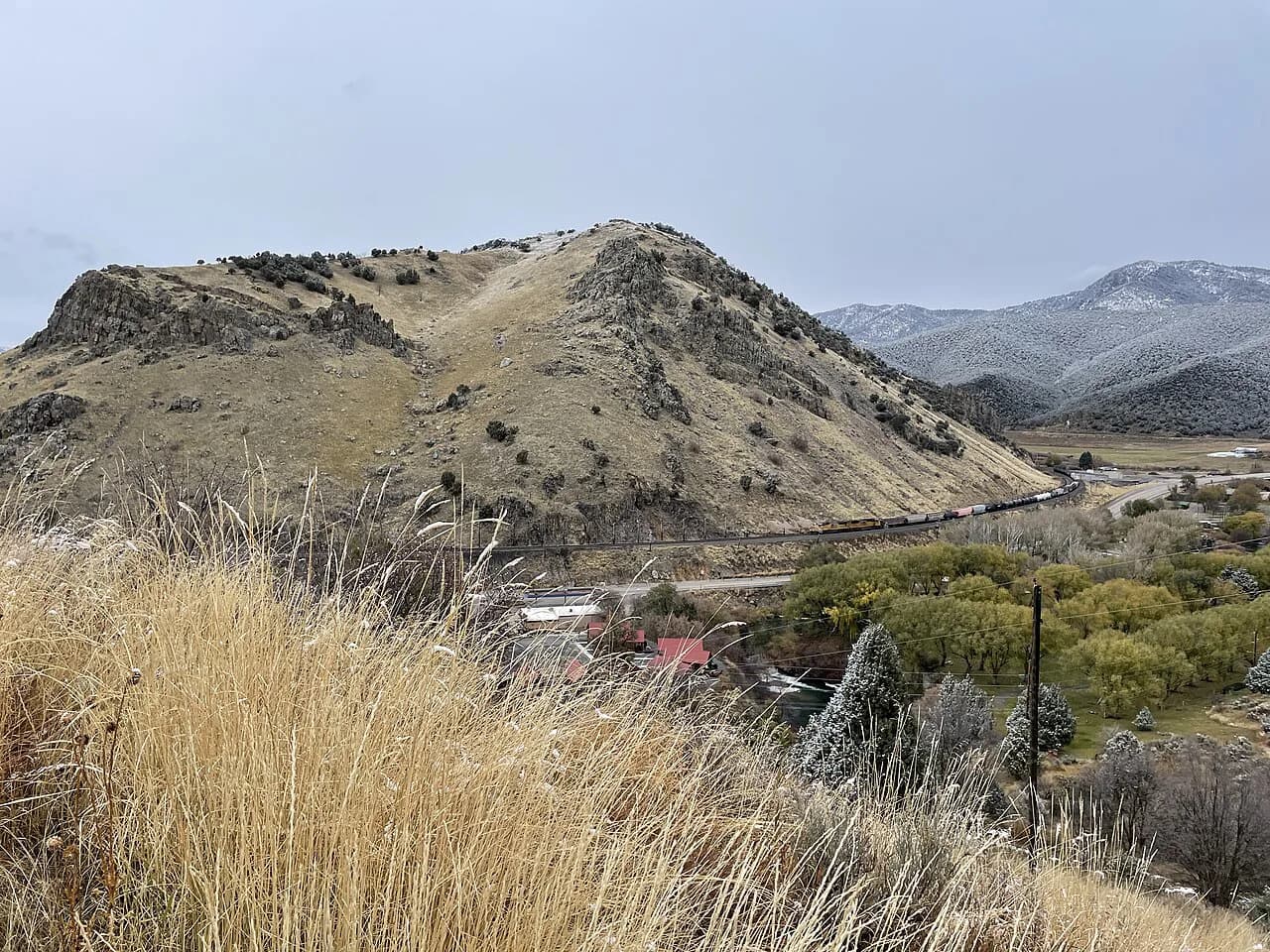
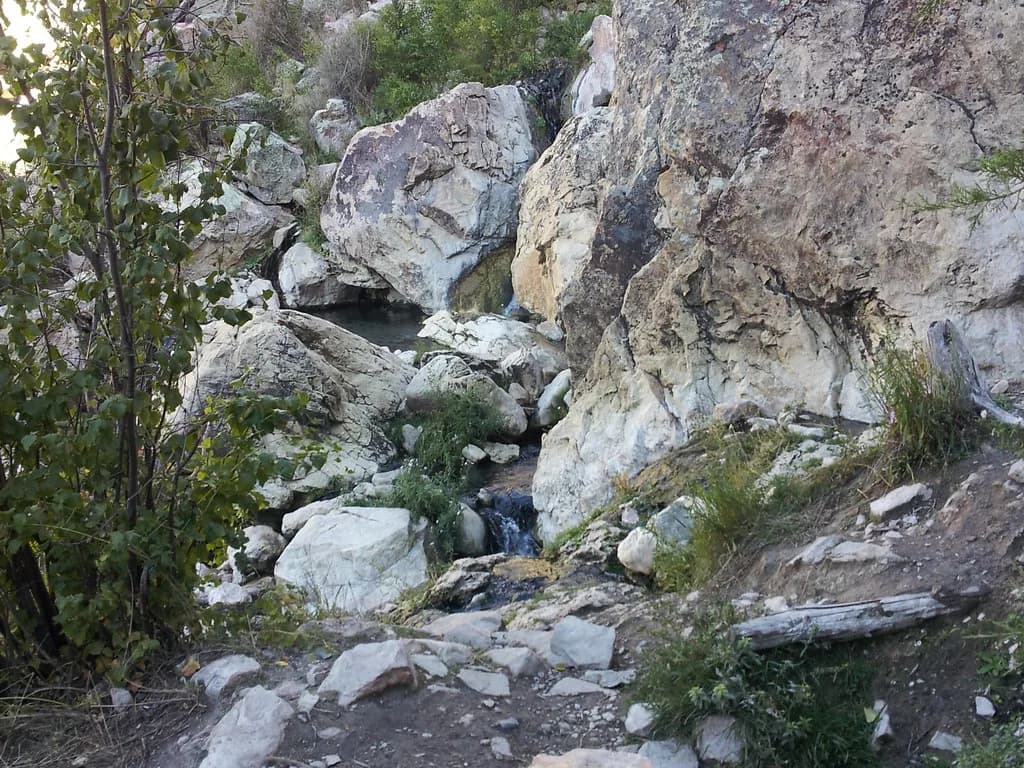
Goldbug is a series of natural pools on a steep slope in the Salmon-Challis National Forest, high enough above the valley floor to open up long views of the surrounding mountains. The thermal water emerges near the top of the cluster and cascades downhill through a chain of rock basins, so the pools differ in depth, size and temperature rather than forming one uniform bath. The top pool is the largest and the one most photographs show, with a shape that reads as roughly heart-like from the rocks above.
Because the pools sit on a cliff edge rather than beside a road, the trip is a half-day commitment: a climb of just over two miles each way, time in the water, and the walk back down. Plan on good shoes and a light pack rather than a towel over the arm. Couples and small groups get the most out of it, and confident older hikers who take the upper climb slowly will find the middle stretch of trail gentle.
Getting there
The trailhead sits off Highway 93 about 23 miles south of Salmon, near the community of Elk Bend; from the highway you turn east onto a county-maintained road and follow it a short distance to the parking area at the end. That road passes houses, so drive slowly and keep the residential driveways clear. Highway 93 is paved the whole way, so a standard passenger car handles the approach without high clearance.
Mapping apps are the most common way to start this trip badly: navigation has sent drivers to a gated gravel road nearby rather than the actual trailhead turnoff. Watch for the signed turn off Highway 93 instead of trusting the final voice instruction, and if the app points you up a steep gated track, return to the highway and continue to the correct road. Coming from the Stanley side, the drive follows Highway 93 north through the Salmon River corridor, which makes Goldbug a natural stop on a Sawtooth-to-Salmon loop.
Parking and the private-property easement
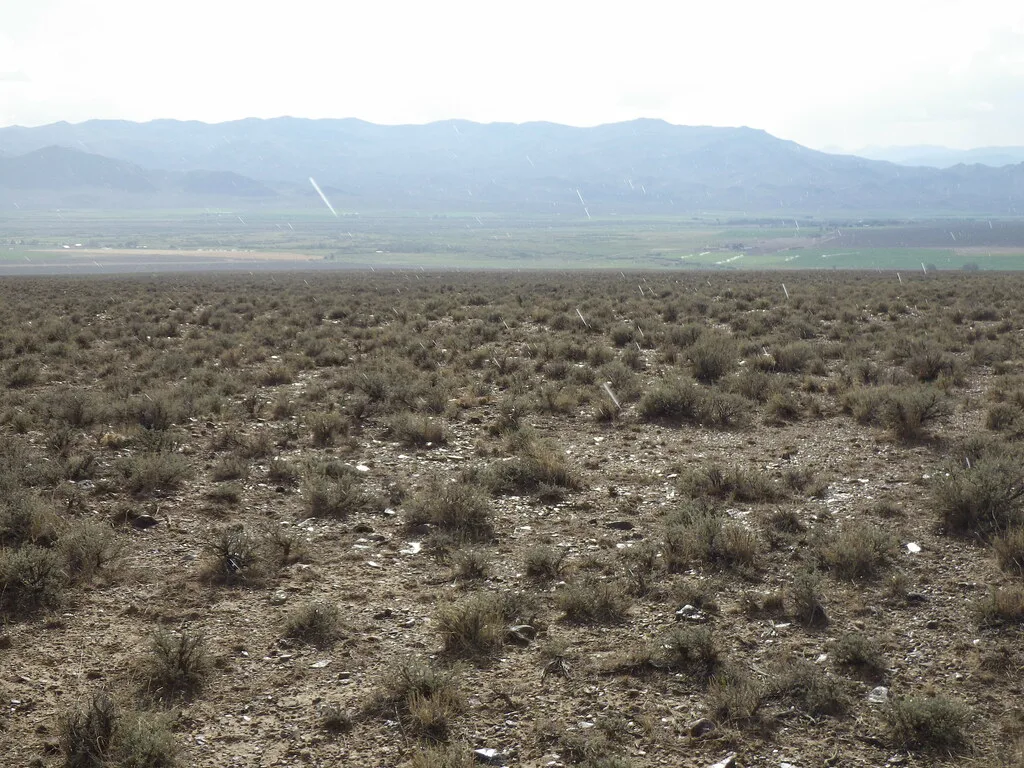
The trailhead lot is small, holding only a handful of vehicles, so late arrivals on summer weekends often park along the road and walk in. Respect any no-parking signs and never block a driveway, because the first quarter mile of trail crosses private land under an easement that landowners grant to hikers. That arrangement is fragile: loud groups, litter or trespass off the marked path put access at risk for everyone.
The first quarter mile of trail crosses private land under an easement, and litter or trespass put that access at risk for everyone.
Dogs are welcome on the route but must be leashed while crossing the private property, per the managing agency, so pack a lead even if your dog normally hikes off-leash. Past the gate where public land begins, the leash rule relaxes, though a dog on a short line is still the easier choice on the narrow, rubbly sections near the springs.
The hike: three distinct grades
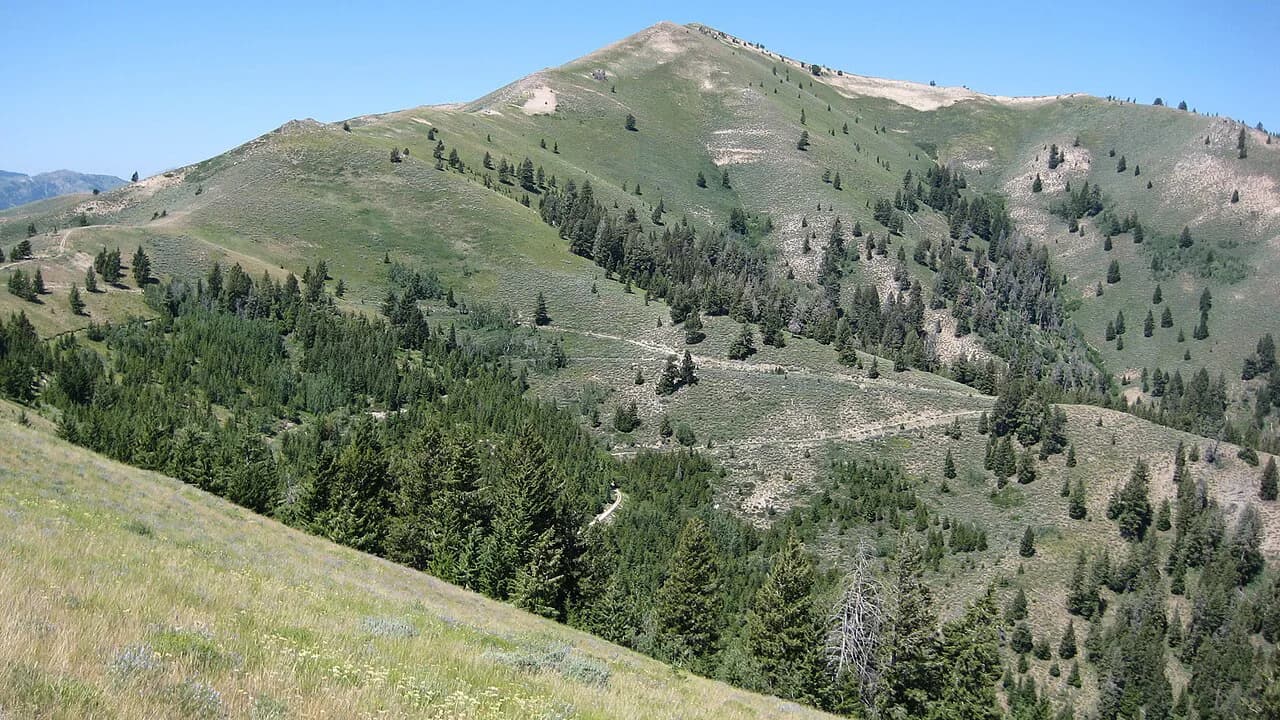
The climb breaks into three parts, and knowing them helps you pace the day. It opens with switchbacks that gain height quickly out of the trailhead, then eases into a flatter middle mile that follows the drainage through open, high-desert country with cacti and wide valley views. The final push is the roughest: a steeper climb over loose gravel and rock, with wooden box steps on the steepest pitch.
Figure roughly two miles each way and something close to an hour of walking in each direction at a steady pace, more if you stop for photos or take the gravel slope cautiously. The upper section is where trail shoes earn their place, since loose scree and wet or icy rock make the steps slick. A mossy waterfall on the left marks the last stretch, and a wooden bridge just beyond it puts you at the pools.
The pools
The upper pool is the centerpiece: shallow enough to sit in with water around your waist, fed directly by the thermal creek, and positioned for the best view down the valley. From its lip, warm water spills over the cliff in two ribbons that feed the pools below, which is why the whole cluster feels like a staircase of baths rather than a single soak. A bench sits near the upper pool; otherwise there are no facilities, changing rooms or lockers, so a dry bag for keys and phones earns its weight.
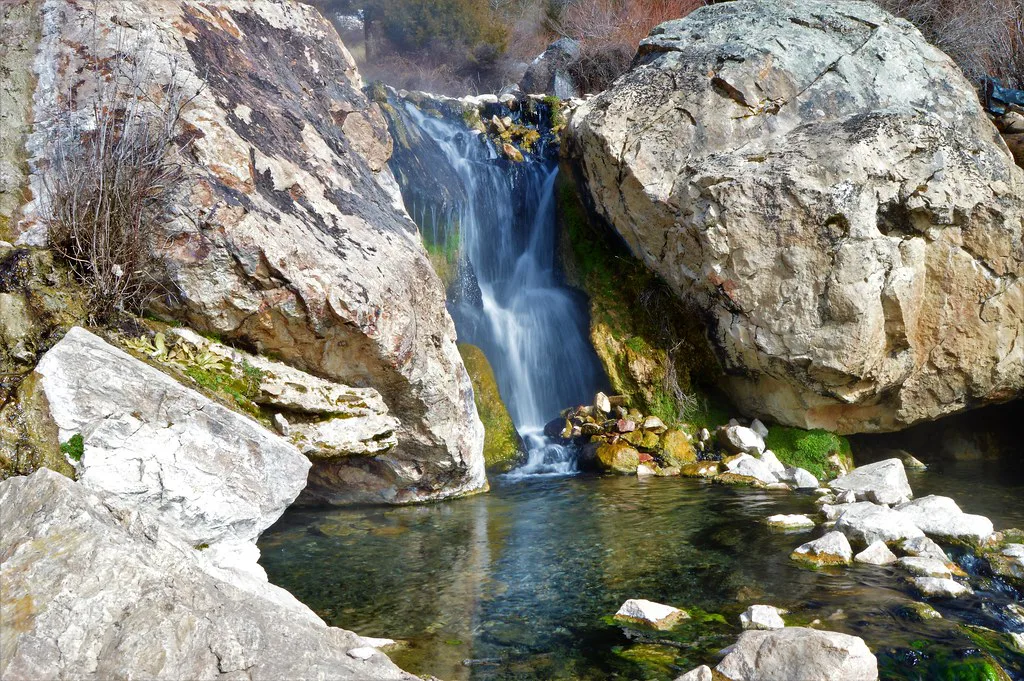
A second pool below, reached by a few minutes of scrambling over rock, is cooler and more enclosed, tucked among boulders where the falls feed it. That one is the better choice on a hot summer afternoon, while the upper pool holds warmth when the air is cold. Expect clothing-optional use at Goldbug, so keep cameras pointed at the valley and give other soakers room.
Water temperature and the hot-cold mix
The upper pool runs hot, with the thermal creek entering at the top, and one hiker account puts it near 110 degrees Fahrenheit at the source-fed end. Treat that as a rough figure rather than a posted reading, and test with a hand or foot before settling in. Sitting where creek water mixes into the pool lets you find a comfortable edge without moving pools.
Test the water with a hand or foot before settling in, since the upper pool runs hot where the thermal creek enters.
Temperature drops as you move downhill: the pools beneath the waterfalls blend hot inflow with cooler water and outside air, so the lowest basins feel mildest. In summer the cooler pools are the comfortable ones; in fall and spring the warm upper pool wins. Keep your head above water in any of them, since the springs are untreated geothermal water.
Fees and rules
The Bureau of Land Management lists no fees for Goldbug Hot Springs, and the Salmon Field Office manages the site. There is no developed campground, pool deck or concession here, so the rules that matter are the easement and leash requirements on the private land at the start and ordinary care for the rock and water.
Camping is allowed on the public land portion of the trail, past the gate, but not within 500 feet of the pools, a rule one hiker account reports being enforced. A handful of established sites with fire rings sit within the first mile of trail on the right, and each is big enough for several tents. Leave the car at the trailhead overnight if you backpack in, and sleep at a site rather than in the vehicle.
When to go
Summer brings the most reliable trail conditions and the biggest crowds; even a pre-dawn start on a July weekend can find the pools already occupied by people who camped nearby. Fall is the sweet spot for many hikers, with crisp air, turning larch and cottonwood, and a thinner stream of visitors, while spring delivers wildflowers and green slopes along with mud and slick rock.
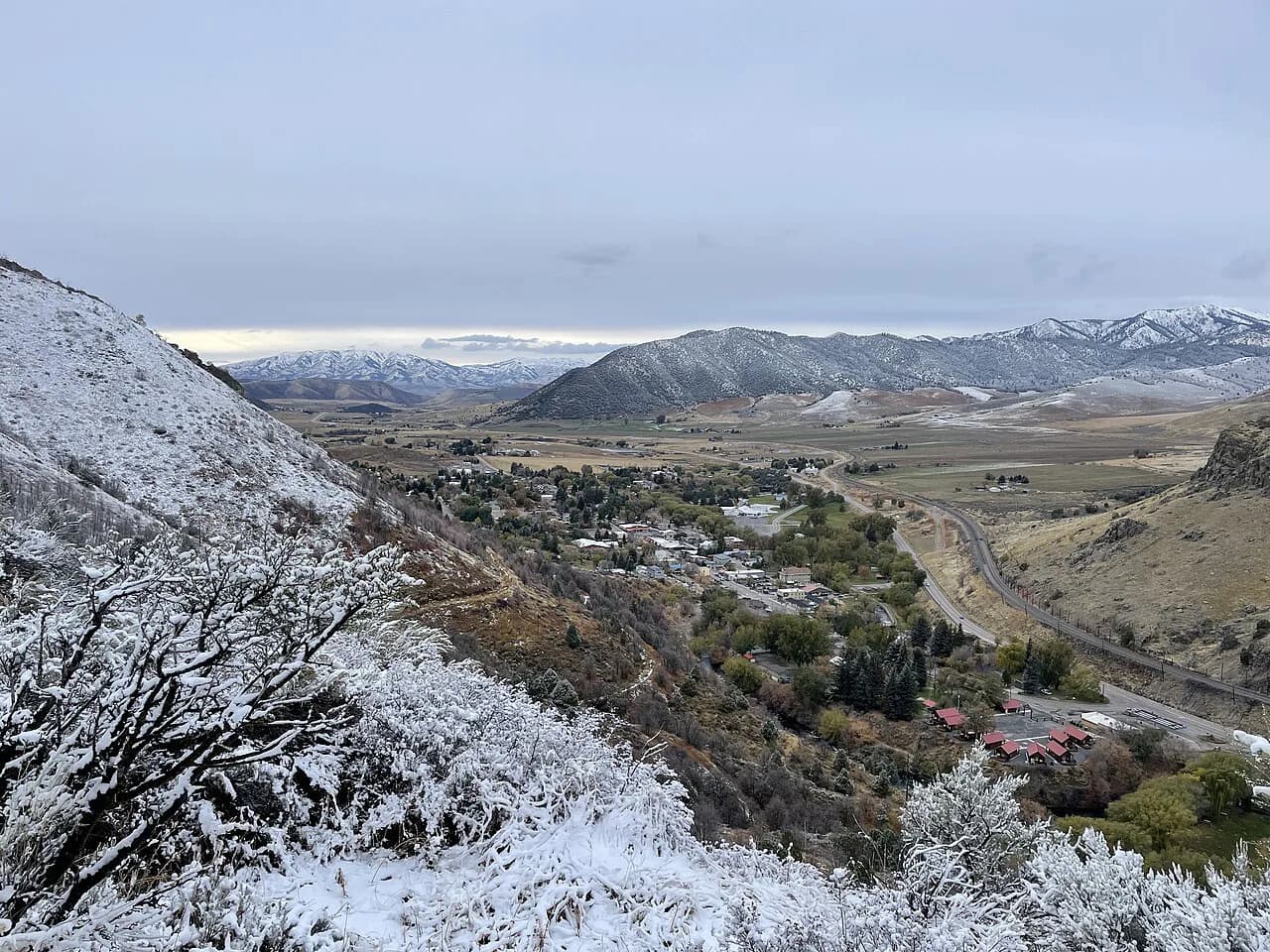
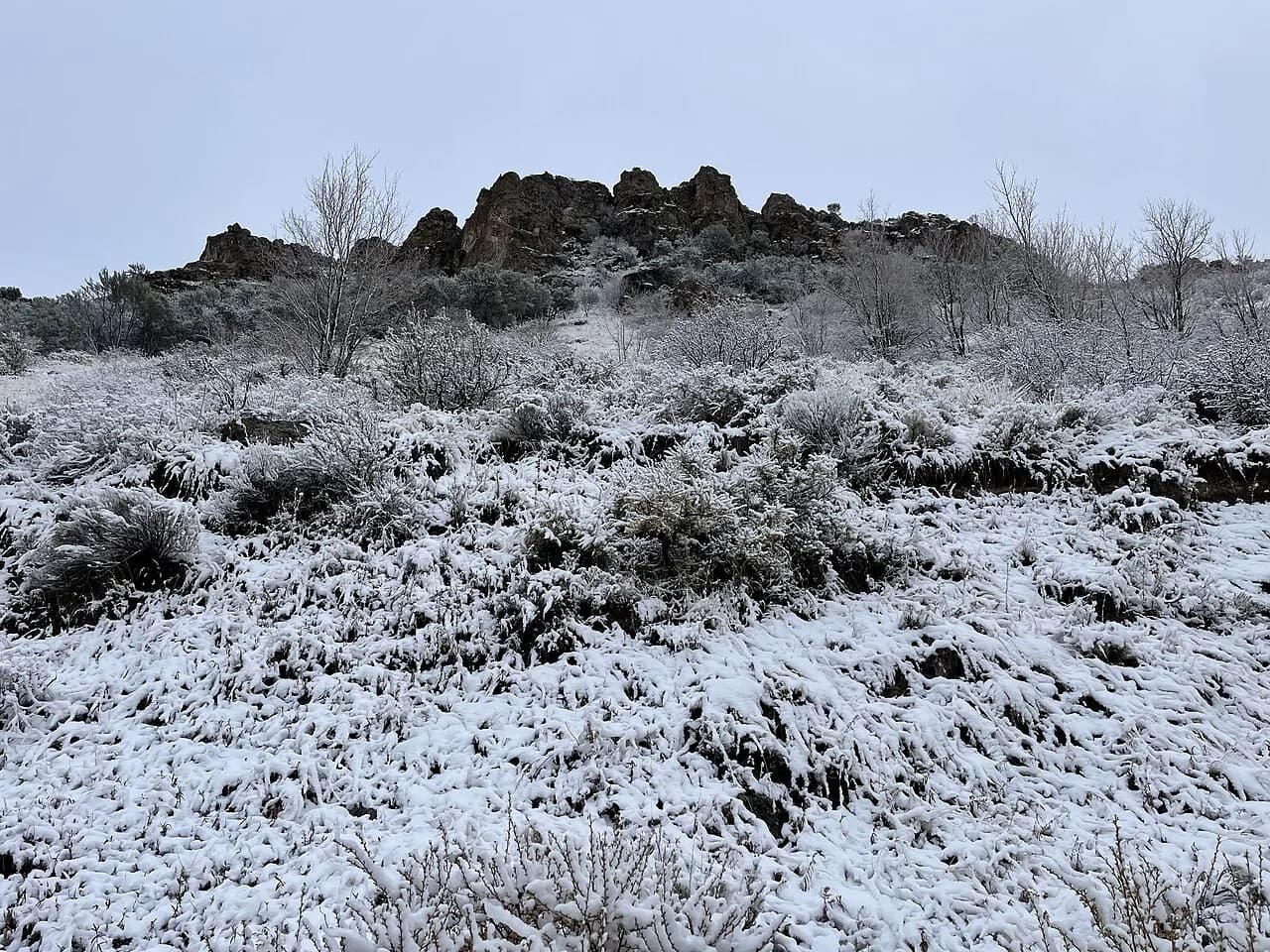
Winter at Goldbug is a trade: steaming pools in a snow-blanketed valley and a real chance at solitude, against sub-freezing temperatures and an upper slope that turns genuinely treacherous when iced over. Microspikes are the minimum for a cold-season attempt, and snowshoes may be needed after a storm. Check trail and road conditions with the BLM Salmon Field Office before committing to a winter hike.
What to bring
Footwear with real grip is the single most useful item: the gravel steps near the top are slippery even when dry, and wet or icy conditions make them worse. Add plenty of water, since the trail has little shade and the soak dehydrates you quietly, plus sunscreen and a hat for the exposed middle mile. A quick-dry towel and a dry bag keep your pack and clothes usable for the walk down.
For cold-weather trips, pack microspikes and look at recent trail reports before driving out; snowshoes earn a spot in the car after a heavy storm. A headlamp is worth having if you plan to soak late and descend in fading light, since the rocky upper section demands attention.
Staying nearby
Salmon, about half an hour north, is the closest full-service base for groceries, fuel and a motel bed, while Challis sits roughly 36 miles and 40 minutes away on the other side. Both make sensible overnights if Goldbug is the main event of your day. For a Sawtooth-focused trip, Stanley works as a base, with the drive to the trailhead running south along Highway 93 through the Salmon River corridor.
Nearby springs to combine
Goldbug pairs naturally with the Sawtooth corridor springs along the drive through Stanley. Sunbeam Hot Springs offers dammed river pools of varying temperature, Boat Box Hot Springs is a small roadside tub that holds only a couple of people, and Kirkham Hot Springs spreads across a hillside with a waterfall and a riverside setting. Kirkham Hot Springs is the busiest of the three, so slot it into an early morning.
For a longer soaking itinerary, the guide to hot springs in Idaho maps out the wider circuit, including developed resorts and forest soaks further west. If you are comparing hike-in soaks across state lines, the Wyoming hot springs guide covers another cliffside option at Thermopolis. Other hike-in options on the same broad circuit include Jerry Johnson Hot Springs, Idaho, on the Clearwater side, where the soak also comes at the end of a walk. Build the drive so Goldbug falls in the middle of the trip rather than on a travel day, since the hike deserves fresh legs.
Safety around the springs
The pools are carved into a cliff, so wet rock around the rims and the drops beside the waterfalls are the main hazards; move slowly and keep your footing when crossing between basins. Do not dive or jump between pools, and keep your head out of the water, which is untreated geothermal flow. Children need close supervision on the rock shelves and near the falls.
The upper climb is the part of the day most likely to cause a problem: loose gravel, wooden steps and ice in cold months all punish rushed feet. Start down well before dark, and turn around if the weather closes in on the exposed middle section.
Leave No Trace at a hike-in spring
Goldbug has no trash service and no staff, so everything you carry up comes back down with you, including food scraps and wet wipes. Keep soap, sunscreen residue and dogs out of the pools, and use the vault toilet at the trailhead before you start. On the private land at the beginning, quiet voices and clean ground are what keep the easement in place.
Plan Your Goldbug Soak
Build the day around the walk: an early start, shoes with grip, water for the exposed climb, and enough time at the top to enjoy both the hot upper pool and the cooler basins under the falls. Campers can use the established sites along the first mile of trail, while day-trippers based in Salmon or Challis get an easy half-hour or forty-minute drive to the trailhead.
Pair Goldbug with Sunbeam, Boat Box or Kirkham on a Sawtooth loop, and treat the winter version as an advanced trip that needs traction gear and a look at the forecast. If you want the wider Idaho circuit, plan a few days and work through the state's hot springs one cluster at a time. For every soak in the state, start with our guide to Idaho hot springs.
Frequently Asked Questions
How long is the hike to Goldbug Hot Springs?
About two miles each way, with roughly an hour of walking in each direction at a steady pace. The trail starts with switchbacks, flattens for a middle stretch, then climbs steeply over loose gravel and wooden steps to the pools, so allow more time in wet or icy conditions.
How do I get to Goldbug Hot Springs?
Take Highway 93 south of Salmon for about 23 miles to near Elk Bend, turn east on the county road and follow it a short distance to the trailhead lot. Highway 93 is paved and the approach road passes houses, so drive slowly and ignore navigation that sends you up a gated gravel track nearby.
Can you camp at Goldbug Hot Springs?
Camping is allowed on the public land portion of the trail, past the gate, but not within 500 feet of the pools. A handful of established sites with fire rings sit within the first mile of the trail and each holds several tents. Cars may stay at the trailhead overnight, but sleeping in the vehicle is not allowed.
Are dogs allowed at Goldbug Hot Springs?
Dogs are allowed on the hike, but they must be leashed while crossing the private property at the start of the trail. Past that gate, the requirement relaxes, though a short line is still safer on the narrow, rubbly sections near the pools. Keep dogs out of the water.
When is the best time to visit Goldbug Hot Springs?
Fall offers crisp air, turning colors and thinner crowds, while spring brings wildflowers along with mud and slick rock. Summer is the most reliable season but the busiest, and winter delivers solitude at the cost of ice on the upper climb and sub-freezing temperatures. An early start helps in every season.
What hot springs are near Goldbug Hot Springs?
The Sawtooth corridor along Highway 93 through Stanley has several: Sunbeam Hot Springs with dammed river pools, the small roadside tub at Boat Box Hot Springs, and the hillside pools and waterfall at Kirkham Hot Springs. All three make a natural add-on to a Goldbug road trip.
Sources
Hot springs notes for your next road trip
Optional updates when we add or revise hot springs guides.
You might also like
Continue reading
More guides you'll find useful