Boat Box Hot Spring, Idaho: A Roadside Cauldron Near Stanley
Boat Box Hot Spring near Stanley, Idaho, is a small roadside cauldron fed by a scalding pipe above the Salmon River. Here is how to find it and soak.
On this page
Boat Box Hot Spring is the quirkiest soak on Idaho's Highway 75 corridor: a metal cauldron perched on the bank of the Salmon River, fed by a geothermal pipe, six minutes north of Stanley. It is not a pool complex or a quiet backcountry retreat, and that is exactly the appeal for travelers who want a story and a photograph from a roadside stop.
The trade-off is size. The tub holds one or two people, so a wait is common even on weekdays, and the setting is a highway shoulder rather than a trailhead. Go in knowing what you are walking up to, and it works beautifully as a quick morning or sunset stop on the way to the bigger [hot springs in idaho](/idaho-hot-springs-guide) along this valley.
What Boat Box Hot Spring is
Geothermal water flows from a source through a plastic pipe into an old mining-style cauldron set in pine trees along the river, just off the highway. The water straight from the piping is roughly 110°F, far too hot to sit in without tempering, so a white bucket sits beside the tub for hauling cold river water.
The cauldron also has a valve that lets you drain some of the hot water so fresh water keeps moving through the tub. Between the bucket and the valve, you control both temperature and flow yourself, which is what makes a two-person tub usable at all.
Who it suits and who should skip it
Photographers, road-trippers and anyone who enjoys odd infrastructure will get a kick out of Boat Box: steam rising off a metal tub in a pine valley is a memorable sight. Couples and solo soakers who catch it empty get a short, memorable soak without hiking a step.
Skip it if you want room to stretch out, a quiet hour with no one waiting, or a pool you can share with kids. One or two people fill the cauldron, and there is no second tub to fall back on. Families and groups do better at larger riverbank springs such as Sunbeam, where several pools spread people out.
Getting there
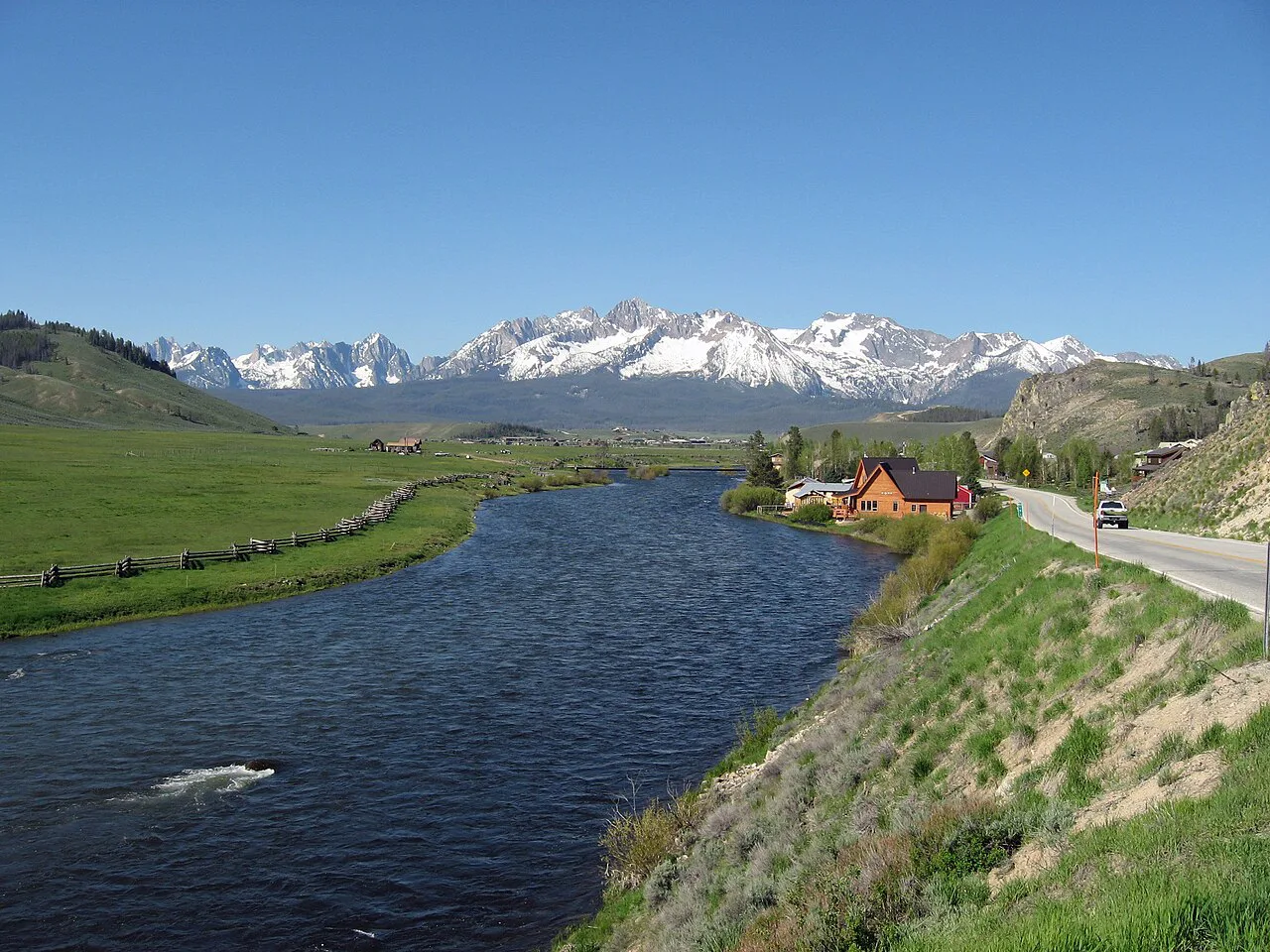
From Stanley, drive north on State Highway 75 for about six minutes and watch for a pullout on the river side of the road. The spring sits almost directly below the parking area, so if you pass it you will see steam rising to the right of the pullout when you face the river.
The tub is easy to miss from the highway despite being close to the road. Coming from Boise, Highway 75 through the Sawtooth National Recreation Area is the standard approach, and the drive is paved the whole way, so any passenger car handles it in dry conditions.
There is no trailhead or signed path, just a short walk down from the shoulder to the riverbank. Grippy shoes help on the way down, since the ground near the tub is uneven and damp.
The tub itself
Expect a single cauldron that comfortably seats one person and squeezes in two. Water enters through the pipe, cools in the tub, and drains through the valve, so the tub is not a static bath: you are managing a small flow the whole time you sit.
The bucket is the key tool. Fill it from the river and add cold water until the soak suits you, or open the valve to let hot water out and river-temperature water in. The bucket is shared equipment, so return it where you found it for the next person.
Tempering the soak
When the Salmon is running high in spring, river water sits close to the base of the cauldron, which makes cooling the tub easy. Later in summer, when the river drops, you climb in and out of the tub to refill the bucket, so the soak becomes an active routine rather than a long lazy wallow.
Add water in small amounts and test with your hand before committing. The difference between comfortable and scalding is a couple of bucketfuls.
In cold weather the tub loses heat quickly once the pipe flow is restricted, and snow or river water cools it fast. Add water in small amounts and test with your hand before committing, because the difference between comfortable and scalding is a couple of bucketfuls.
Safety on the bank
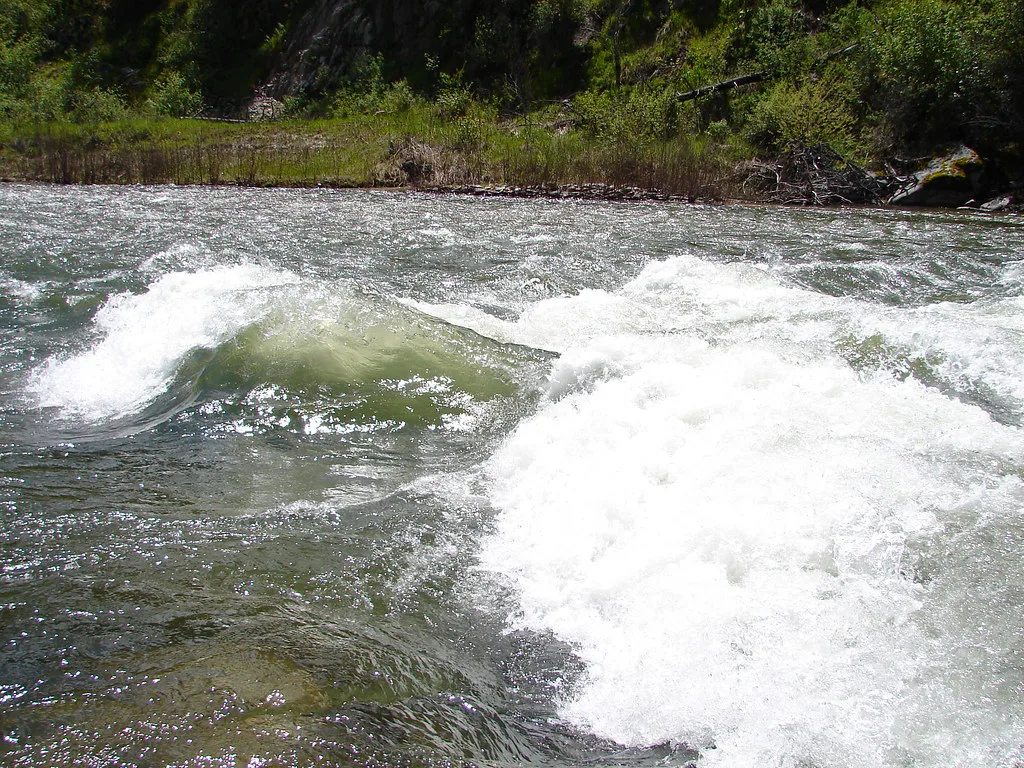
The source water arrives scalding, so never step in before testing, and keep your head above water in untreated geothermal springs. Rock near the inflow can be slick with mineral deposits, and the river alongside runs cold and fast during runoff, so watch your footing at the water's edge.
The source water arrives scalding, so never step in before testing. Keep your head above water in untreated geothermal springs.
Highway 75 runs right beside the pullout, and traffic moves quickly on this stretch. Cross and maneuver near the road with care, and keep an eye on anyone unsteady on their feet between the car and the tub.
Fees and hours
Boat Box sits in the Sawtooth National Recreation Area along Highway 75, and the soak itself has no entry charge or permit attached to it. There is also no gate or posted schedule, so the tub is effectively open whenever you can safely reach it.
Nearby developed and developed-adjacent springs on the same corridor do charge day-use fees in some cases, so carry a little cash if you plan to string several soaks together. For current road and site conditions on the Highway 75 corridor, check with the Sawtooth National Forest before you drive up from Boise in winter.
When to go
Summer is the busiest season on this corridor, and the pullout fills early. Arrive before sunrise or come close to sunset for the best shot at finding the tub empty, and pick a weekday over a weekend when you can.
Fall brings smaller crowds and stable river levels, which makes both the soak and the drive more relaxed. Winter soaks are photogenic, but ice on the pullout and path can make the short walk down to the tub genuinely slippery, so bring traction and expect a colder changing experience.
Parking reality
Parking is a shoulder pullout off the highway that holds only a handful of cars. When it is full, do not park on the roadway: the highway is narrow and winding, and a car left on the shoulder is a hazard to you and to passing traffic.
Because the tub holds one or two people, a full pullout usually means a wait for the soak as well. If you arrive and the spaces are taken, drive on to another spring and loop back later rather than idling on the roadside.
Nearby springs to combine
The Highway 75 corridor packs several soaks into a short stretch. Sunbeam Hot Springs, about 13 miles from Stanley, has five pools including metal tubs and rock-lined river pools, and it is the easiest big-capacity alternative when Boat Box is occupied. If you are stringing soaks together across state lines, the same weekend logic of one small tub versus many pools plays out in the Oregon hot springs along the Cascade corridor.
Cove Creek Hot Springs is another straightforward stop, with a designated pullout and vault toilet off the highway and a short descent to volunteer-built rock pools on the riverbank. Pool shapes shift with the current, and the source runs very hot until river water is mixed in.
West of Stanley, Kirkham Hot Springs is the marquee stop on the Payette River, with dozens of pools and a hot waterfall. Farther out, Burgdorf Hot Springs sits deep in the Payette National Forest and makes a good overnight anchor for a longer loop.
Camping and lodging
Camping is not permitted at Boat Box itself, so plan to sleep elsewhere. Basin Creek Campground, about 1.4 miles away, and Mormon Bend Campground, roughly 1.7 miles away, both take first-come, first-served campers in season and put you in the Stanley corridor for an early start.
Stanley has the nearest rooms, restaurants and services, and staying in town makes the six-minute drive to the spring easy at dawn. Reserve lodging ahead in summer, when the valley fills with Sawtooth visitors.
What to bring
Pack shoes with real grip for the bank, a towel and a robe for changing in the open, and something dry to sit on between soaks. Cash is worth carrying for day-use fees at other springs on the corridor, and a small trash bag lets you leave the site cleaner than you found it.
Leave No Trace at a volunteer-kept roadside spring
This is a primitive, visitor-kept site, so pack out everything you bring, including food scraps and any trash you find. Keep soap, sunscreen and glass out of the tub, and leave the bucket and valve as you found them so the next soaker can manage the temperature.
Plan Your Visit
Boat Box is a short, strange, memorable soak: one metal tub, one hot pipe, one bucket of river water, and a view up the Salmon River valley. Treat it as a 20- to 30-minute stop rather than the centerpiece of a day, and it delivers.
Build the rest of the morning around Sunbeam and Cove Creek, and keep room in the plan for a longer stop at Kirkham if you head west on the Ponderosa Pine Scenic Byway.
Frequently Asked Questions
Where is Boat Box Hot Spring located?
Boat Box Hot Spring sits on the bank of the Salmon River just off State Highway 75 in the Sawtooth National Recreation Area, about six minutes north of Stanley, Idaho, and roughly 130 miles from Boise.
How many people fit in the Boat Box hot spring tub?
The cauldron comfortably seats one person and fits two, with no second tub at the site. Expect to wait your turn when the pullout is busy, and limit your soak when people are waiting.
How hot is the water at Boat Box Hot Spring?
Water straight from the pipe runs around 110°F, which is too hot to sit in without mixing in cold river water. Use the white bucket to add river water and the valve to drain hot water until the soak is comfortable.
Is there parking at Boat Box Hot Spring?
Parking is a small shoulder pullout off Highway 75 that holds only a few cars. Do not park on the roadway when it fills, because the highway is narrow and winding; drive on and return later instead.
Can you camp at Boat Box Hot Spring?
Camping is not allowed at the spring itself. Basin Creek Campground and Mormon Bend Campground, both a short drive away, take first-come, first-served campers in season.
What other hot springs are near Boat Box Hot Spring?
Sunbeam Hot Springs and Cove Creek Hot Springs are both on the same stretch of Highway 75 and make easy add-ons. Kirkham Hot Springs, west of Stanley toward the Payette River, anchors a longer loop.
When is the best time to visit Boat Box Hot Spring?
Early mornings and evenings give you the best chance at an empty tub, and weekdays beat weekends in summer. Fall is quieter and the river is more stable; winter is photogenic but the path and pullout can be icy.
Sources
Hot springs notes for your next road trip
Optional updates when we add or revise hot springs guides.
You might also like
Continue reading
More guides you'll find useful