Hot Springs in Arizona: Desert Soaks, Fees, and Access
Plan a soak at Arizona's hot springs, from hike-in pools above the Colorado River near Hoover Dam to rustic desert baths near Tonopah and resort springs.
On this page
Arizona's hot springs reward people who plan around heat rather than fight it. The state's signature soak is a chain of sandbagged pools wedged into a volcanic slot canyon above the Colorado River, reached only on foot or by boat. The other easy classic is a low-key desert bathhouse outside Tonopah, where you rent a tub by the hour instead of hiking to one.
The two make a useful contrast. One is a strenuous desert loop with a ladder in the middle and a hard seasonal window; the other is a drive-up soak with fenced private pools and a communal bathing area. Decide which trip you actually want before you start mapping routes. If you are weighing similar choices beyond Arizona, the New Mexico hot springs guide compares hike-in canyon soaks with developed bathhouses the same way.
What makes Arizona's hot springs different
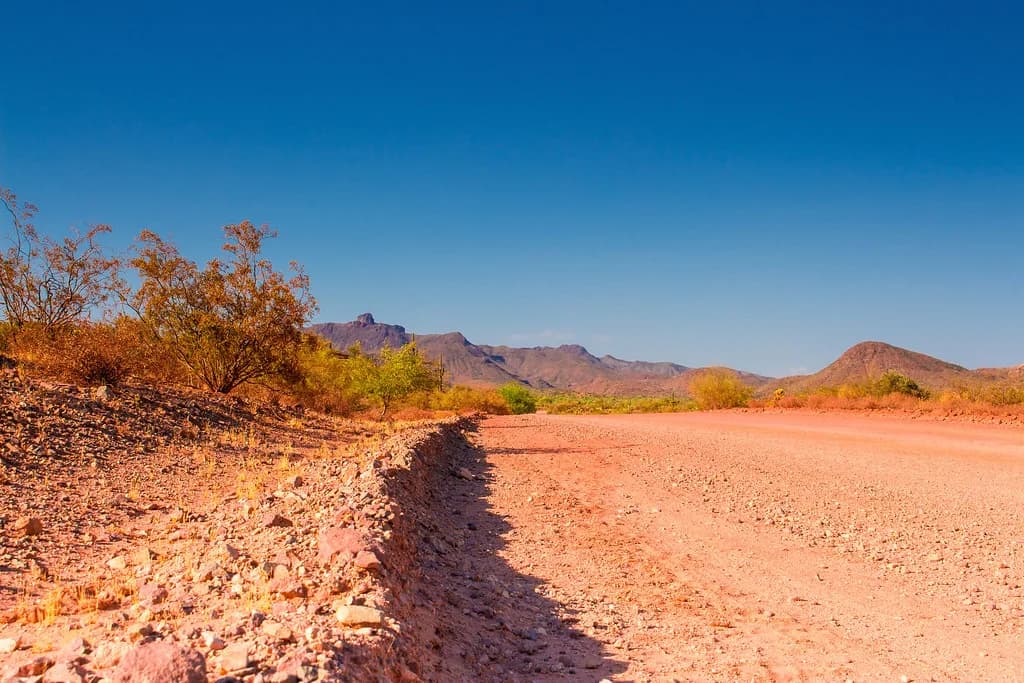
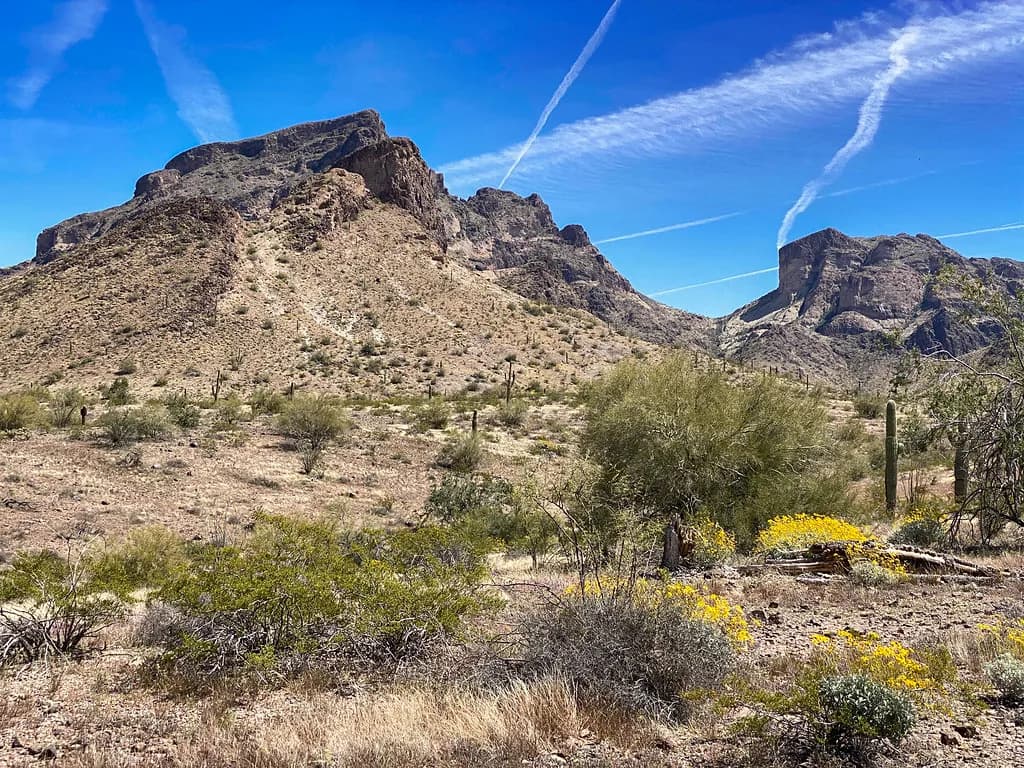
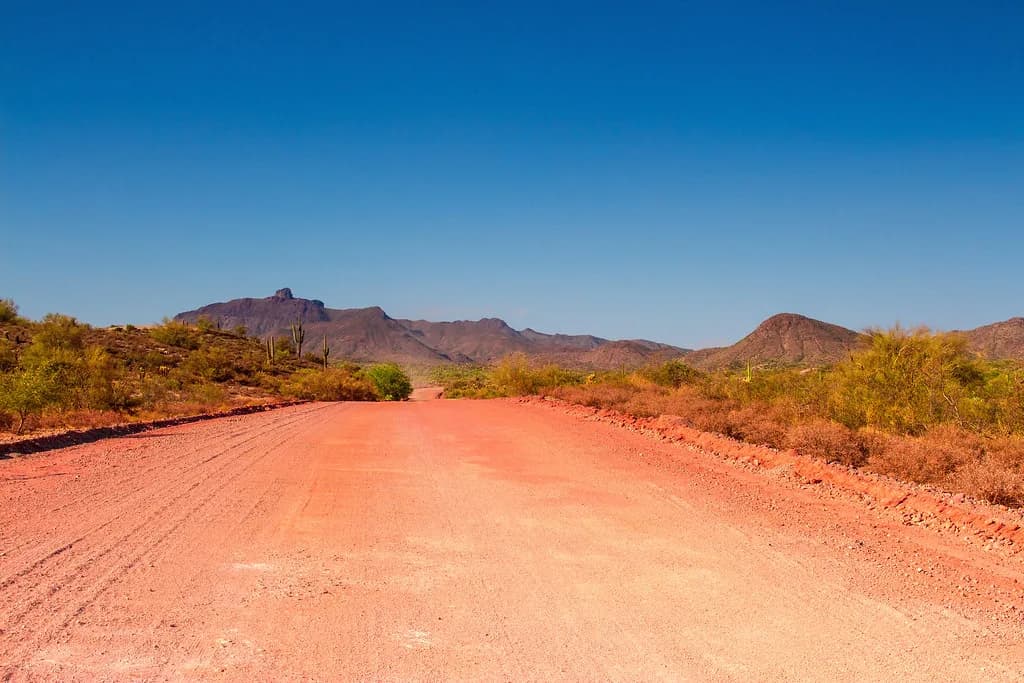
Desert soaking here is shaped by heat and scarcity. Water emerges from volcanic rock in narrow canyons or gets piped into modest pools on private land, so the soak itself is often smaller than the approach. Expect gravel bottoms, sandbags, and rock walls rather than tiled decks.
That means the trip planning is mostly about conditions: air temperature, sun exposure, and how much water you carry. A soak that feels perfect in January can be a poor idea in July, and the hike-in springs close for exactly that reason.
You also choose between two styles of bathing. Primitive canyon pools are clothing-optional by local custom and shared with whoever hiked in, while operated bathhouses post their own rules on dress, age, and hours. Read the rules for the specific place before you go.
Arizona Hot Springs (Ringbolt): the pools and water temperatures
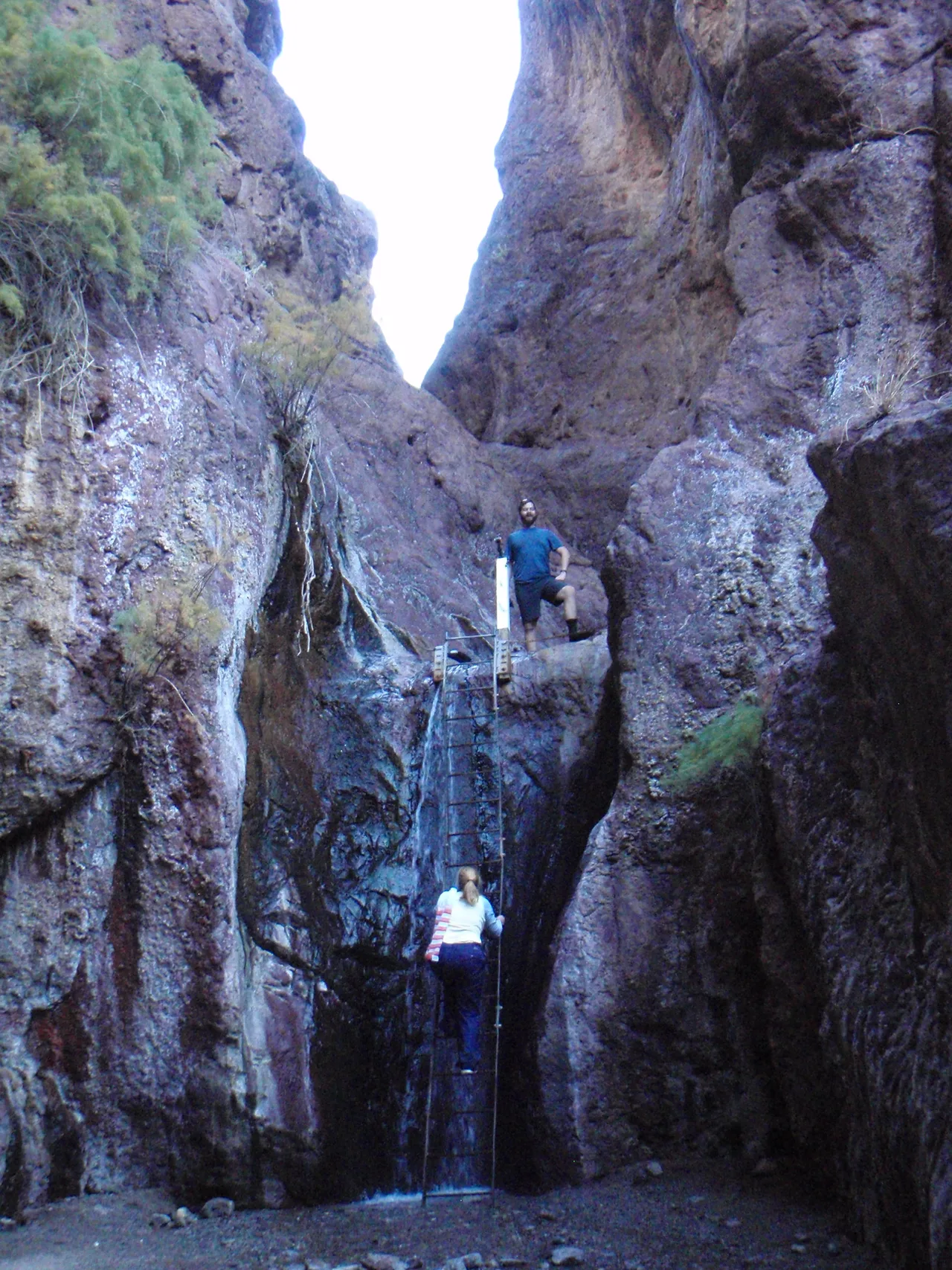
Arizona Hot Springs, also called Ringbolt Hot Springs, sits in a volcanic slot canyon in the Black Canyon area south of Hoover Dam. Four tiered, sandbagged pools with gravel bottoms step down the canyon, each one a little cooler than the one above.
| Pool | Approximate temperature | Notes |
|---|---|---|
| Top pool | About 110°F | Nearest the source |
| Second pool | About 105°F | — |
| Third pool | Near 100°F | — |
| Lowest pool | About 95°F | Below the ladder, the coolest soak |
The thermal water comes out of the upper canyon rock at about 122 degrees Fahrenheit, then cools as it spills from pool to pool. The top pool nearest the source runs around 110 degrees, the second about 105, the third near 100, and the lowest pool below the ladder is the coolest soak at roughly 95 degrees. Treat those figures as the site's published layering, not a live reading, and test the water with a hand before you commit.
The uppermost pool is the one to approach slowly, because water close to the source is genuinely hot. Keep your head above water rather than dunking, and plan breaks between soaks since the desert hike and the heat both dehydrate you.
Hiking to Arizona Hot Springs: the loop and the ladder
Access is from a shared trailhead just off US-93 south of Hoover Dam, about 15 miles from Boulder City, Nevada. The classic route is a 5.7 to 6.6 mile desert loop combining the White Rock Canyon and Arizona Hot Springs trails, with roughly 1,500 to 1,800 feet of elevation change.
The real gate on this trip is the 20-foot ladder bolted into the canyon, plus unmaintained stretches of trail and exposed desert walking. If a fixed ladder and that much climbing sound like too much, this is not the spring for you. Plan on a half day or more, since the hike itself runs about an hour and a half each way for many visitors.
Park at the trailhead lot and carry more water than you think you need, plus electrolytes, sturdy hiking shoes, and separate sandals for the pools. A headlamp and a layer belong in your pack if there is any chance of hiking out near dusk.
Season and river access at Arizona Hot Springs
The hike is seasonal: the trails are open October through May and closed for heat the rest of the year. Time your visit inside that window; a cool morning does not make a summer crossing reasonable.
The trails are open October through May and closed for heat the rest of the year, so plan the hike inside that window.
When the trails close, the pools stay reachable by boat on Lake Mohave, with a short walk up the canyon from the river. That makes a paddling or boating day the summer-friendly alternative to the loop.
Water levels and posted advisories on the lake change with releases and weather, so confirm conditions with the National Park Service before launching. Build in a buffer so you are not paddling back in fading light.
El Dorado Hot Springs near Tonopah
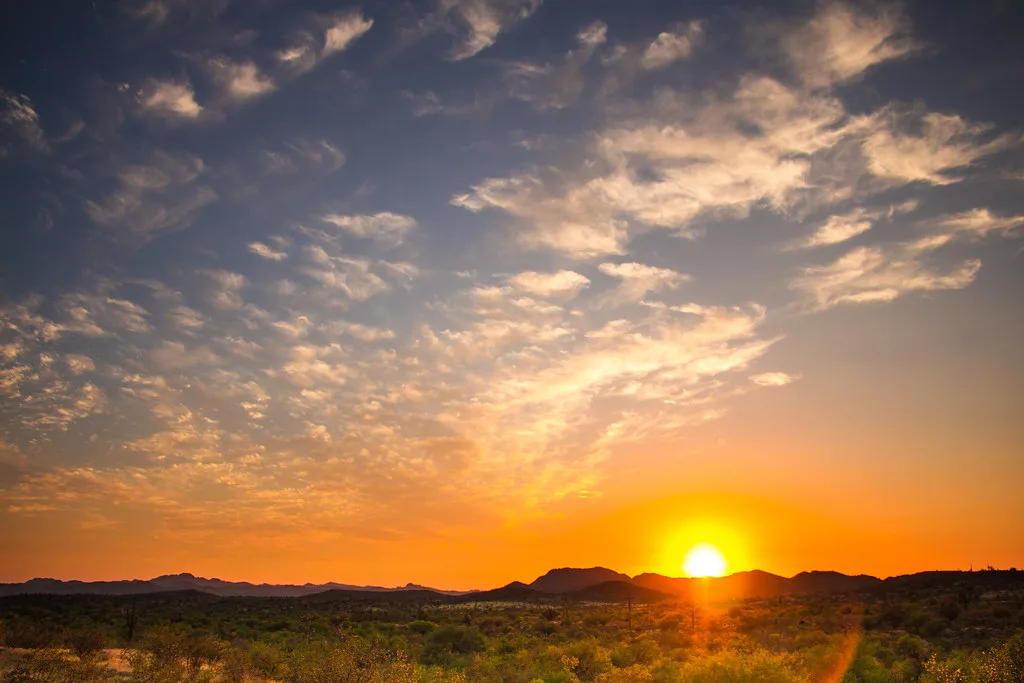
El Dorado Hot Springs sits in the quiet town of Tonopah, west of Phoenix in the Sonoran Desert, and offers a very different soak from the canyon hike. The property runs public and private soaking areas, with rustic rooms and camping on site so you can walk back to your bed after bathing.
The communal area, known as Desert Pete, holds a few shared pools in an enclosed space and is adults-only and clothing-optional. Those pools are not adjustable and sit around 107 degrees Fahrenheit. You can soak by the hour or buy an all-day pass.
Private pools come with their own fenced entrance, and some let you control the water temperature, which ranges around 98 to 110 degrees Fahrenheit. Two of them, Sunset Area and Desert View, look out on the desert mountains. For quiet and space with a small group, the private side is the easier sell.
Fees and soaking structure at El Dorado
El Dorado charges by time rather than by day. Private rental pools run $15 per hour per person, while the community area costs $10 per hour or $30 for a day pass, with overnight camping charged per person. Rates can change, so confirm the current structure when you book.
For a private pool, call ahead or book online so a tub is waiting when you arrive. The public pools generally take walk-ups, but check the day's hours before you drive out.
Morning and late afternoon are the comfortable soaking hours, and weekdays are quieter than weekends. Pack water, a towel, sunscreen, and sandals, and shower before you get in the water.
Where to sleep near each spring
At El Dorado you can stay on site, choosing between simple rustic rooms, more comfortable rooms with extras like a small fridge, and tent camping under the desert sky. Staying overnight puts the pools a short walk from your bed, which is the main reason to book a room rather than drive in for an hour.
For the canyon hike, Boulder City is the natural base at about 15 miles from the trailhead, with the drive continuing over Hoover Dam into Arizona. A motel night there lets you start the loop early, before the desert heats up.
Soaking etiquette at primitive desert pools
The canyon pools are a shared, fragile resource, so keep the basics: no urinating or defecating in or near the water, no glass anywhere near the pools, and dogs out of the water. Pack out every wrapper, food scrap, and bit of toilet paper.
Do not dig, move rocks, or build new dams, since changing the flow creates safety and health problems downstream. Where clothing is optional, give other soakers space and skip photos or video without clear permission. At busy times, rotate out of the hottest upper pools after a reasonable stretch.
What to pack for a desert soak
For the canyon hike, the packing list is a desert list: plenty of drinking water with electrolytes, sturdy hiking shoes, a separate pair of sandals or water shoes for the pools, a small towel, and a dry change of clothes in a waterproof bag. A headlamp and warm layer cover a late exit.
For a drive-up bathhouse, the load is lighter: water, a towel, sunscreen, easy-to-change clothes, and flip-flops for walking between pools. Add cash or a card for hourly charges and anything you plan to buy on site.
Pairing springs with a larger Arizona road trip
The two springs sit in different corners of the state, so most trips pick one as the anchor. The canyon hike pairs naturally with a Hoover Dam and Lake Mohave itinerary out of Las Vegas or Boulder City, while El Dorado fits a Phoenix loop through the Sonoran Desert.
If you are heading north from the Phoenix area, Castle Hot Springs, Arizona lies in the Bradshaw Mountains and makes a different kind of stop, with a storied history as a desert resort. Check what day access the property currently offers before building it into your route.
East of the Phoenix basin, Verde Hot Springs, Arizona sits above the Verde River and rewards a longer detour with a canyon setting. Pair it with the Tonopah soak only if you have a full day of driving, since the two are far enough apart to stretch a short trip.
How to Choose Your Arizona Soak
Pick Arizona Hot Springs if you want a real hike, a slot-canyon setting, and layered pools that cool as they descend, and you can travel between October and May. Pick El Dorado if you want a drive-up soak with private, temperature-controlled tubs and a place to sleep steps from the water.
Either way, plan around desert heat, carry more water than feels necessary, and confirm current conditions before you set out.
Explore more Arizona hot springs
- Castle Hot Springs, Arizona
- El Dorado Hot Springs
- Hot Springs Near Sedona
- Verde Hot Springs, Arizona
- Essence of Tranquility Hot Spring
- Gillard Hot Springs
- Hot Springs Near Flagstaff, Arizona
- Hot Springs Near Phoenix, Arizona
- Hot Springs Near Tucson
- Kaiser Hot Springs, Arizona
- Roper Lake Hot Springs
- Sheep Bridge Hot Springs
- Arizona Hot Springs (Ringbolt)
Frequently Asked Questions
How long is the Arizona Hot Springs hike?
The classic route is a 5.7 to 6.6 mile loop from the shared trailhead off US-93 south of Hoover Dam, with roughly 1,500 to 1,800 feet of elevation change. Many hikers take about an hour and a half each way, and the loop includes a 20-foot ladder in the canyon. Budget a half day or more once you add soak time.
When is Arizona Hot Springs open for hiking?
The trails are open October through May and closed for heat from June through September. Outside that window, the pools remain reachable by boat on Lake Mohave, with a short walk up the canyon from the river.
How hot is the water at Arizona Hot Springs?
The source emerges at about 122 degrees Fahrenheit, and the four tiered pools run roughly 110, 105, 100, and 95 degrees from top to bottom. Test the water before you get in, and approach the uppermost pool slowly because it sits closest to the hot source.
Are dogs allowed at Arizona Hot Springs?
Keep dogs out of the pools, both for their safety in hot water and to protect water quality. The pools are a shared natural resource, so plan to leave pets at home or keep them well away from the soaking area.
Do you need reservations for El Dorado Hot Springs?
For a private pool, call ahead or book online so a tub is available when you arrive. The public Desert Pete area generally takes walk-ups, but check the day's hours before driving out. The public area is adults-only and clothing-optional.
What should I bring to a hot spring?
Carry drinking water and electrolytes, a towel, sunscreen, sandals or water shoes, and a dry change of clothes. For the hike-in pools, add sturdy hiking shoes, a headlamp, and a warm layer for a late exit. For a drive-up bathhouse, the lighter version of that list is enough.
Why do Arizona's hot springs close in summer?
The canyon trails shut for heat because the exposed desert loop becomes dangerous in high temperatures. The pools themselves stay accessible by boat on Lake Mohave, which is the summer alternative to hiking in.
Sources
Hot springs notes for your next road trip
Optional updates when we add or revise hot springs guides.
You might also like
Continue reading
More guides you'll find useful