Sheep Bridge Hot Springs, Arizona: Plan Your Soak
Plan a soak at Sheep Bridge Hot Springs in Arizona's Tonto National Forest, from the rough drive out of Cave Creek to riverside camping on the Verde.
On this page
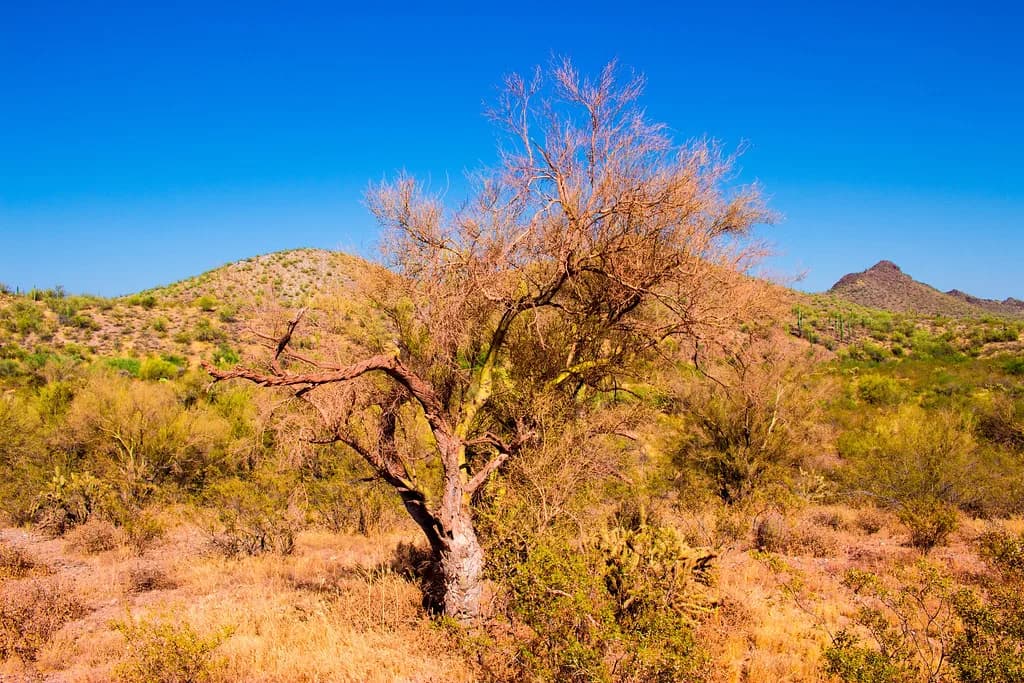
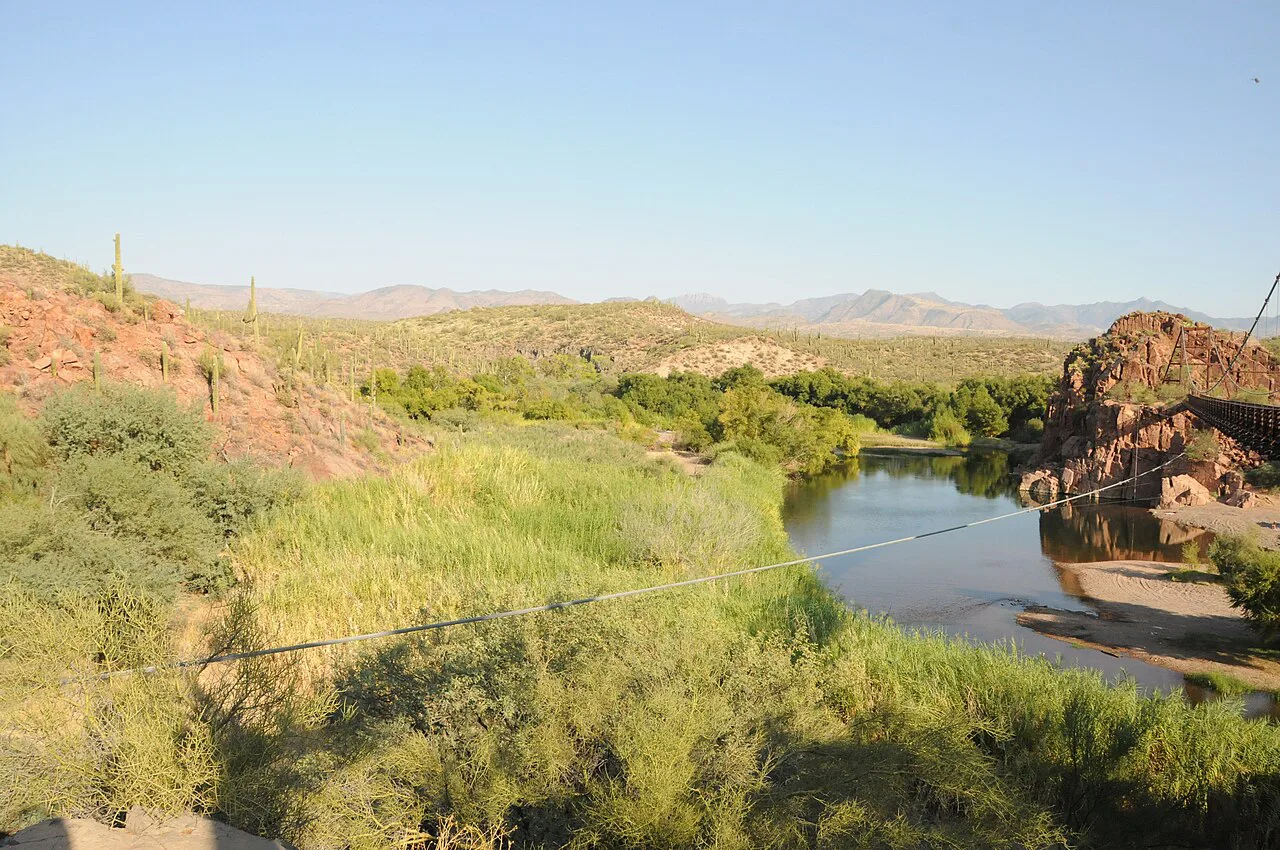
Sheep Bridge Hot Springs rewards the kind of traveler who treats the drive as part of the trip: a rough forest-road run through the northern Sonoran Desert to a set of primitive soaking spots on the Verde River in Tonto National Forest. There is no developed pool, no deck and no front gate, just rock-and-sand banks below the historic Sheep Bridge crossing that gives the place its name.
It suits self-sufficient campers with a capable high-clearance vehicle who are happy to build a night or two around the river. Anyone picturing a tiled tub, a changing room or a short stroll from the pavement should look at a developed spa instead and save this one for later.
What Sheep Bridge Hot Springs Is
This is a riverside soak in the rawest sense. Warm water emerges along the Verde River and bathers have worked out soaking spots in the rock and sand at the river's edge, below the old bridge structure that made this a historic crossing.
Primitive hot springs near the Sheep Bridge in Tonto National Forest are catalogued as free tub soaks reached by a 45-mile high-clearance drive, and the site has no facilities. Plan as if everything you need for the day and the night comes in with you and leaves with you.
Expect a river soak rather than a fixed-temperature tub: the soaking pools sit in and beside a live river, so depth and comfort shift with flow and season. Bring river shoes for slick rock and keep your head above water in untreated geothermal flow.
Who It Suits and Who Should Skip It
Sheep Bridge is for drivers comfortable on rough, slow jeep roads, for campers who carry their own water and shade, and for anyone who would rather hear the river than a pool pump. A high-clearance vehicle is the baseline requirement, and a group with two vehicles and recovery gear is better prepared than a solo car.
Skip it if you have a low-clearance car, a tight schedule, or a group that needs guaranteed amenities. Heat is another honest trade-off: summer daytime temperatures push well past comfortable, and the exposed drive and riverbank offer little shade. If guaranteed facilities are what you're after, the developed soaks in our New Mexico hot springs guide are an easier bet.
Getting There
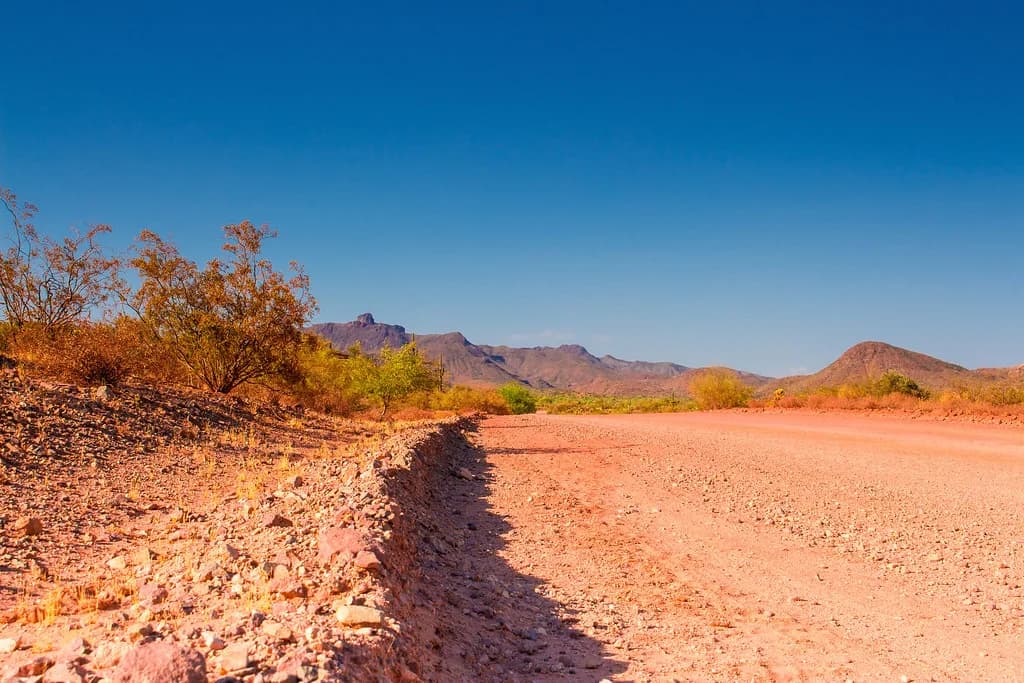
The documented approach is a roughly 45-mile high-clearance drive from Carefree, north of Phoenix, following a network of desert jeep trails to the Verde River. Budget far more time than the mileage suggests, because the road surface, not the distance, sets the pace.
A shorter line runs along the east side of Horseshoe Reservoir, but it involves fording the Verde River twice just below the reservoir. A crossing that reads knee-deep at one point can be thigh-deep a short distance later, so scout on foot before committing a vehicle.
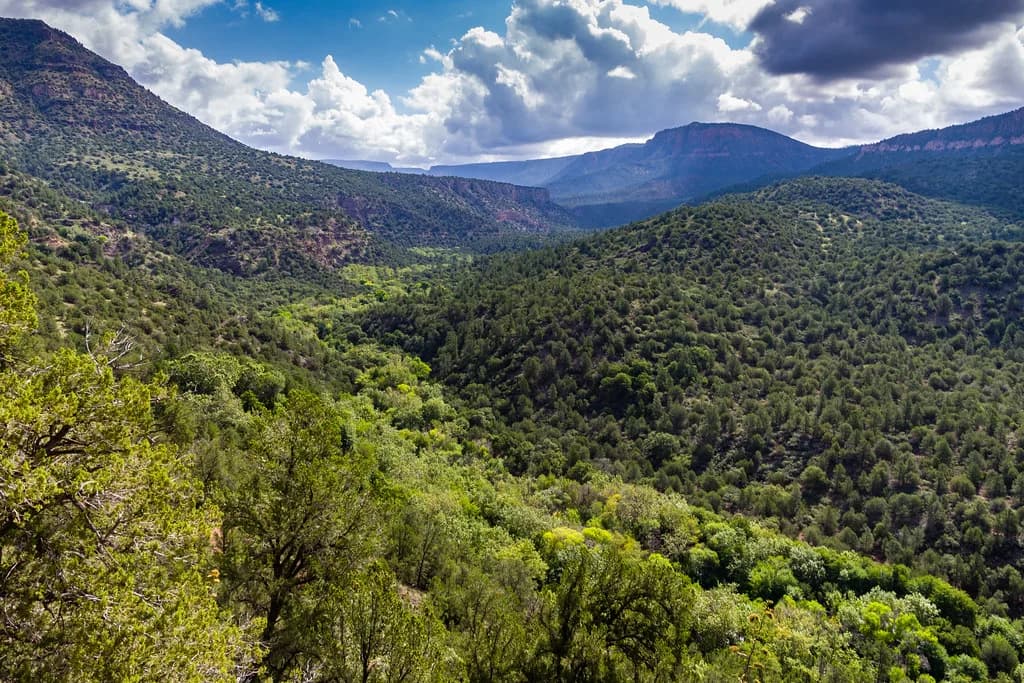
An alternative backtracks through Seven Springs and Tangle Creek, a slower jeep route that climbs to about 5,000 feet before dropping into the Verde River Valley. The trade is time and a rougher ride for a line that avoids the two reservoir-side fords; pick your route by vehicle capability and how recently the fords have been run.
The Last Stretch and the Walk In
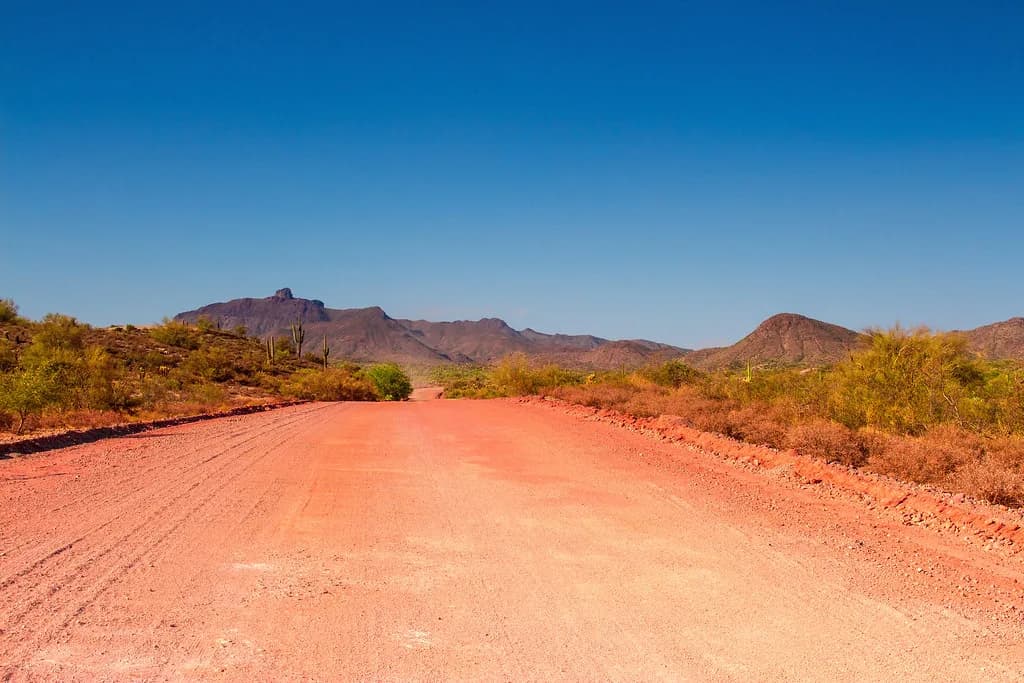
Whichever line you take, the final miles are the slowest. The Seven Springs and Tangle Creek route in particular is described as a bone-rattling jeep ride, with the grade climbing before it tumbles down into the river valley, so air down if your tires and sidewalls allow and keep momentum steady on the climbs.
At the river, camping and access points are limited to the few places where the bank is not walled off by thick cattails and salt cedar. That means the walk from where you park to the water is short but the usable bank is narrow, so arrive early enough to see what is open before you commit to a site.
The Pools and the River
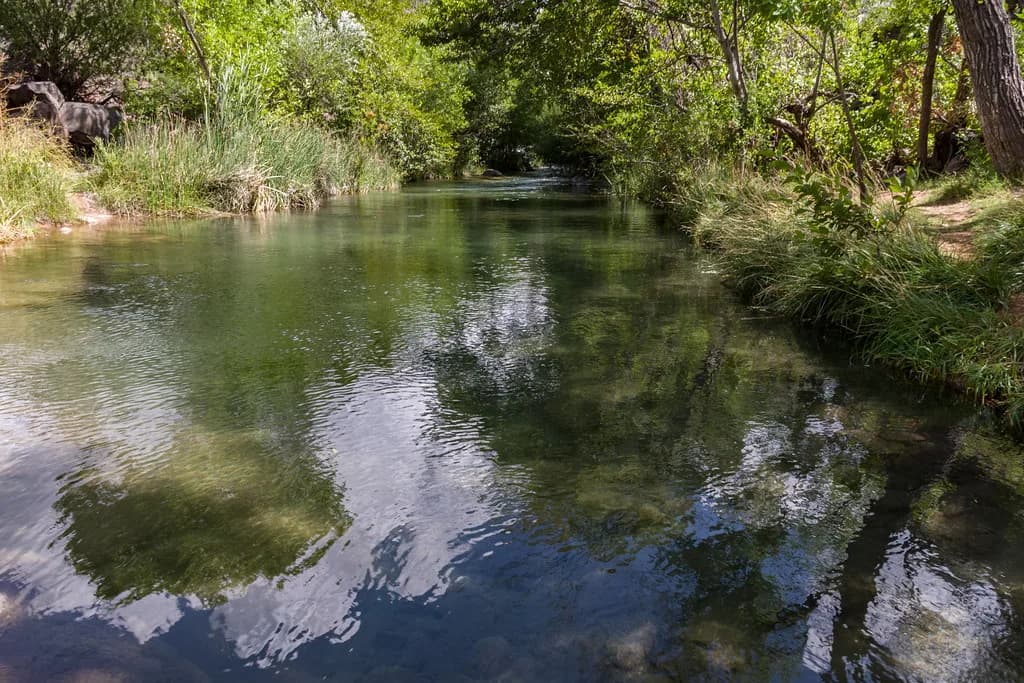
The soaking spots are rock-and-sand pools at the river's edge rather than constructed tubs, so their size and depth follow the Verde's flow. Where the river runs high, the hot flow mixes with cold river water and the soak is milder; where it runs low, the warm pockets concentrate and feel hotter.
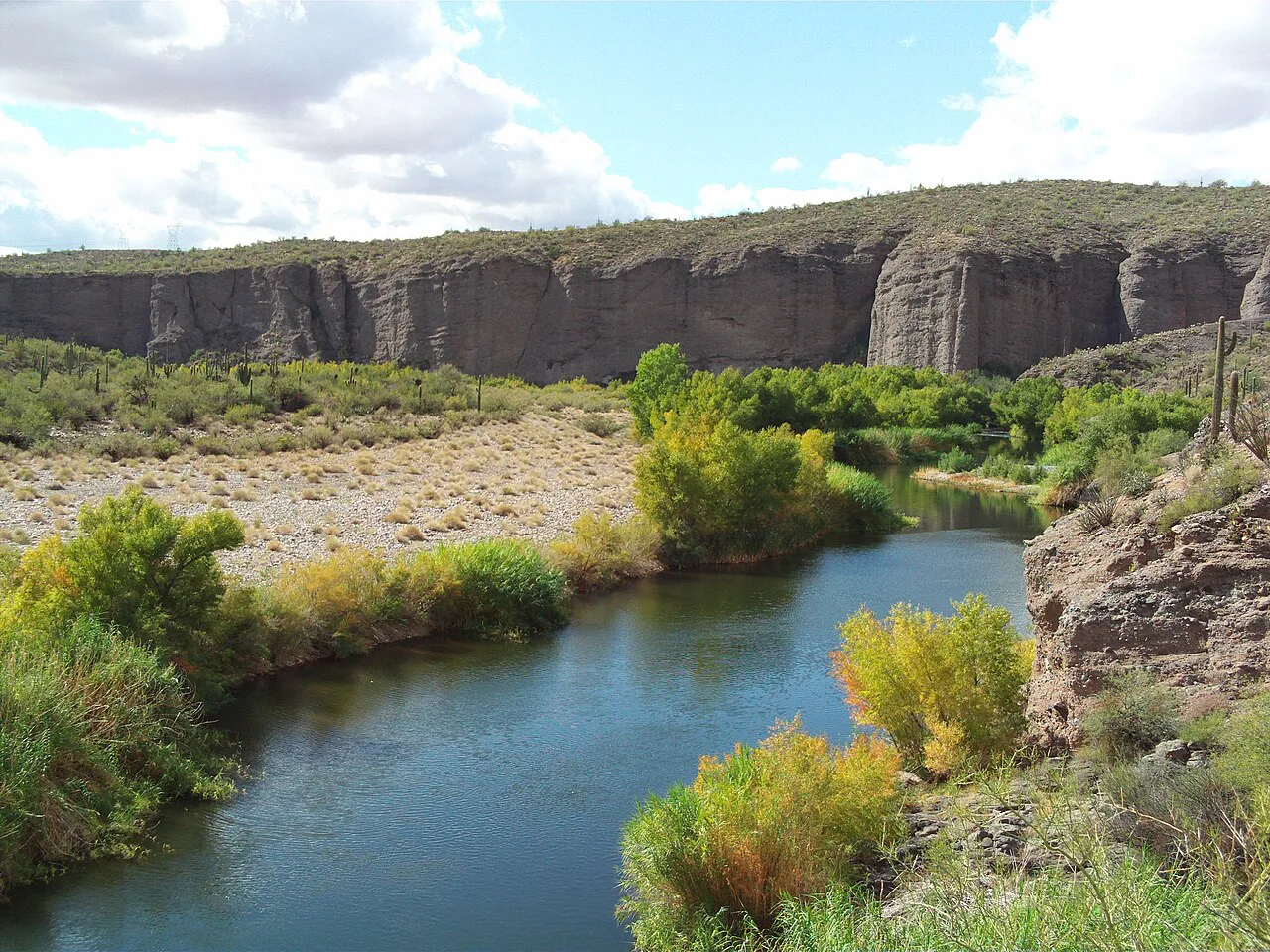
Treat the river as the main attraction and the soak as the bonus. The green water, willow-lined banks and cliffs above the valley make this a place to spend a day swimming, birding and reading rather than racing through a checklist of pools.
Chalk Mountain, a pale banded peak that stands out against the red rhyolite and black basalt cliffs of the valley, marks the wider landscape and gives you a landmark for the walk back to camp.
Camping at Sheep Bridge
Camping at the river is the natural way to break up the long drive, and there are a handful of clearings along the Verde where the bank opens up enough for a tent. Sites are first-come and unmarked, so plan to arrive with daylight left and to camp on ground that is already bare.
Bring everything: water, a stove, a shovel, wag bags and shade. No facilities are listed at the site, and the nearest services are back in Cave Creek or Carefree, so a forgotten item means a long return drive.
What to Bring
Start with the vehicle: a high-clearance 4x4, a full-size spare, a repair kit, traction boards and a way to communicate beyond cell coverage. The drive is the riskiest part of the trip, and most problems on this route are mechanical rather than aquatic.
Carry a full-size spare, a repair kit and a way to communicate beyond cell coverage, since most problems on this route are mechanical rather than aquatic.
For the river, pack river shoes with grip, a dry bag, sun protection, a hat and more drinking water than you think you need. Nights in the Verde valley cool off enough for a sleeping bag even when daytime temperatures climb, so bring layers.
Best Time to Go
November through March is the prime soaking window across Arizona, when desert daytime temperatures stay mild and the canyon flash-flood risk drops. That same window makes the Sheep Bridge drive and the exposed riverbank far more comfortable than midsummer.
Summer heat above 100 degrees makes both the drive and the soak risky, and a desert wash is the last place to be during a monsoon storm.
Summer heat above 100 degrees makes both the drive and the soak risky, and a desert wash is the last place to be during a monsoon storm. If you go in the shoulder months, start early, watch the sky and be ready to turn around rather than push through a flowing wash.
Rules and Etiquette
This is a primitive riverside soak, so pack it out: food scraps, wrappers, soap and glass all leave with you. Wash dishes and yourself well away from the river and skip soap entirely in the hot flow.
Camp on durable surfaces such as bare ground or sand, keep fires inside an existing ring if one is present, and give other parties space at the pools. A quiet, tidy camp keeps these places open to the next group.
Nearby Springs to Combine
Kaiser Hot Springs is a small rock pool inside a basalt-walled canyon off US-93, reached by a flat 1.4-mile sandy wash walk. It pairs well with Sheep Bridge as a quicker, lower-commitment soak on a longer road trip.
Verde Hot Springs, upstream on the same river, offers soaking pools in 1922 resort ruins reached by rough forest roads and a river crossing, a natural companion for anyone stringing together Verde River soaks.
For a developed option on the same trip, Castle Hot Springs in the Bradshaw Mountains pairs travertine pools with a resort stay, while El Dorado Hot Springs near Tonopah offers private and communal soaking an hour west of Phoenix.
Base Towns and Trip Planning
Cave Creek and Carefree are the practical last stops for fuel, food and water before the jeep trails begin, and Phoenix puts the whole route within a long day's reach. Top off the tank in Cave Creek rather than gambling on the drive out.
Build a buffer day into the plan. The road, the fords and the river all cost time, and a schedule with no slack is the most common reason a Verde River trip gets cut short.
Plan Your Visit
Sheep Bridge Hot Springs is a trip you commit to: a high-clearance drive from Carefree, a crossing choice at Horseshoe Reservoir, and a night on the Verde River under willow-lined banks. Check road and river conditions with Tonto National Forest before you leave, tell someone your route, and carry enough water and gear to be self-sufficient.
If that sounds like your kind of weekend, pair the soak with a quicker stop at a nearby spring and make the drive part of the adventure. If it sounds like a checklist item, choose a developed pool instead and leave this one to the campers. For every soak in the state, start with our guide to Arizona hot springs.
Frequently Asked Questions
Where is Sheep Bridge Hot Springs in Arizona?
It sits on the Verde River in Tonto National Forest, north of Phoenix and reached by jeep trails out of the Cave Creek and Carefree area. The documented high-clearance approach runs roughly 45 miles from Carefree to the river. The historic Sheep Bridge crossing is the landmark for the soaking spots and the riverside camps.
Do you need a high-clearance vehicle for Sheep Bridge Hot Springs?
Yes. The route is a network of rough desert jeep trails, and the shorter line past Horseshoe Reservoir adds two river fords below the reservoir. Come in a high-clearance 4x4 with a full-size spare, recovery gear and a way to communicate beyond cell coverage, and scout any crossing on foot before driving it.
Can you camp at Sheep Bridge Hot Springs?
Camping at the river is the practical way to handle the long drive. The usable clearings are limited to the few stretches where the bank is not closed in by cattails and salt cedar, so arrive with daylight left and pitch on ground that is already bare. Bring all water, a stove and wag bags.
What is the best time of year to visit Sheep Bridge Hot Springs?
November through March, when Arizona desert daytime temperatures stay mild and the canyon flash-flood risk drops. That window makes both the jeep-road drive and the exposed riverbank comfortable. Midsummer heat above 100 degrees is hard on vehicles and people, and monsoon storms make desert washes dangerous.
Which other Arizona hot springs pair well with Sheep Bridge?
Verde Hot Springs upstream on the same river offers pools in 1922 resort ruins reached by rough forest roads and a river crossing, and Kaiser Hot Springs off US-93 is a short flat walk to a small rock pool in a basalt canyon. For a developed stop, Castle Hot Springs in the Bradshaw Mountains and El Dorado Hot Springs west of Phoenix round out a longer loop.
Sources
Hot springs notes for your next road trip
Optional updates when we add or revise hot springs guides.
You might also like
Continue reading
More guides you'll find useful