
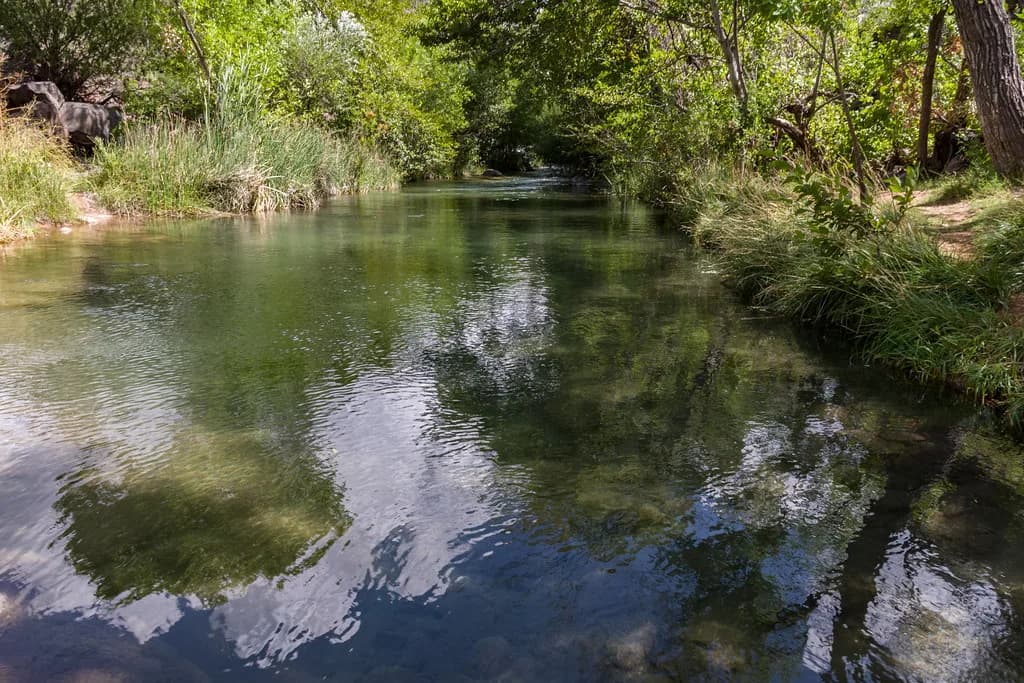
Hot Springs Near Flagstaff: Where to Soak in Arizona
Verde Hot Springs is the closest primitive soak to Flagstaff, reached by rough forest roads and a river crossing. Here is what the trip demands and who it suits.
On this page
Verde Hot Springs is the soak to build a Flagstaff day around: a pair of geothermal pools beside the Verde River, framed by the crumbling walls of a 1920s resort that burned down forty years later. It suits confident drivers with a high-clearance vehicle and hikers who do not mind wading a river to get wet. Anyone expecting a developed spa with a front desk and towels should look at a different kind of Arizona soak.
The appeal is the combination of ruins, river and hot water in a setting that feels genuinely remote, roughly 30 miles southeast of Camp Verde. The trade-off is that the last stretch of road and the river crossing, not the soaking, decide whether the trip happens.
Why Verde Hot Springs Is the Soak to Plan Around from Flagstaff
Flagstaff sits at high, cool elevation, and the nearest primitive geothermal soak lies well down in the Verde Valley, 86 miles south of the city off paved and graveled roads that turn steep and rough in places. That distance makes Verde a full-day outing rather than an after-work dip.
What you get for the effort is an off-grid site where hot water meets a live river, with two distinct pools and the remains of the old resort around them. Soakers who want a soak paired with a scenic drive and a short hike will find the format rewarding.
If you are mapping a wider loop, this is one stop among many hot springs in Arizona, ranging from resort pools to remote river soaks. Treat Verde as the adventurous end of that spectrum and plan easier soaks on either side of it. Cross-border road-trippers weighing a longer escape can compare the primitive soaks in this Nevada hot springs guide before committing to a route.
Where Verde Hot Springs Sits
The springs lie on the Verde River near the Childs Power Plant, about 30 miles southeast of Camp Verde and 86 miles south of Flagstaff. The nearest services, fuel and groceries are in Camp Verde, so arrive there with a full tank and water before heading east on State Route 260.
The drive from Camp Verde begins at the White Bridge, runs east on Highway 260 for about 6.8 miles to Forest Road 708, also called Fossil Creek Road. From there you continue to the junction with Forest Road 502 and turn south toward the river.
The Road In: Highway, Forest Roads and the Rough Final Stretch
The route mixes pavement with long stretches of dirt: roughly 15 miles on Forest Road 708 to the FR 502 junction, then about 6 miles south on FR 502 to the Childs Power Plant and the river. That final section is the crux, and the guide that documents the route calls it very bad road.
A high-clearance vehicle is the sensible call here, and a low sedan is a gamble on this approach.
Road condition sets the pace and the vehicle choice. The same source notes the roads are steep and rough in places and usually muddy after rain, which makes a high-clearance vehicle the sensible call and a low sedan a gamble.
Plan the drive so you reach the river with daylight to spare for the hike in and out. If rain is in the forecast or has just passed, expect the mud to slow you considerably and build in extra time.
The Hike and the River Crossing
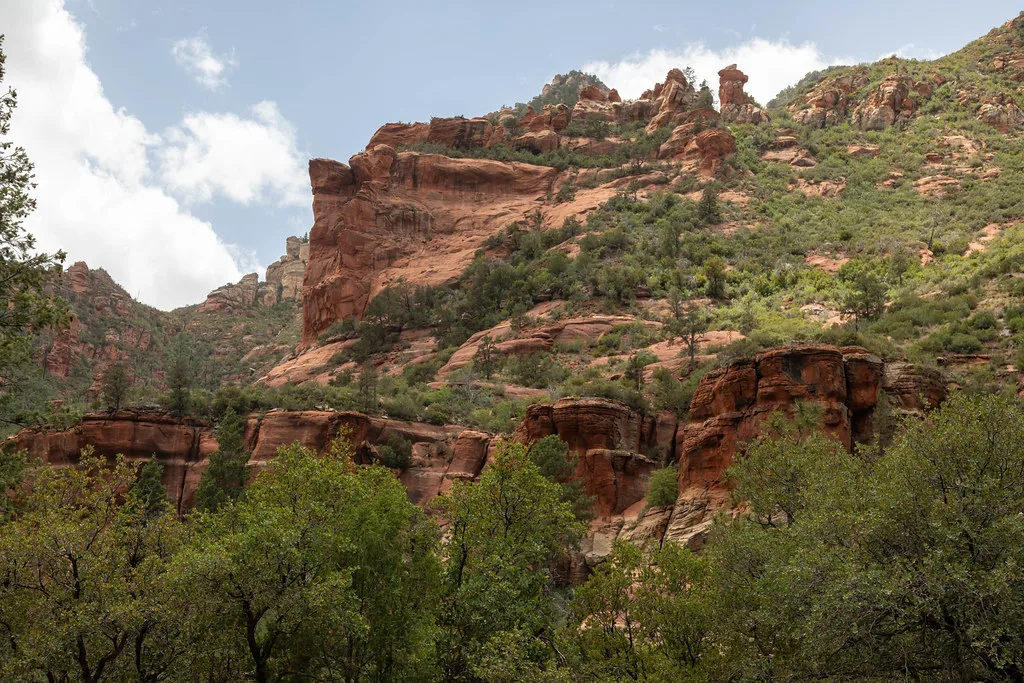
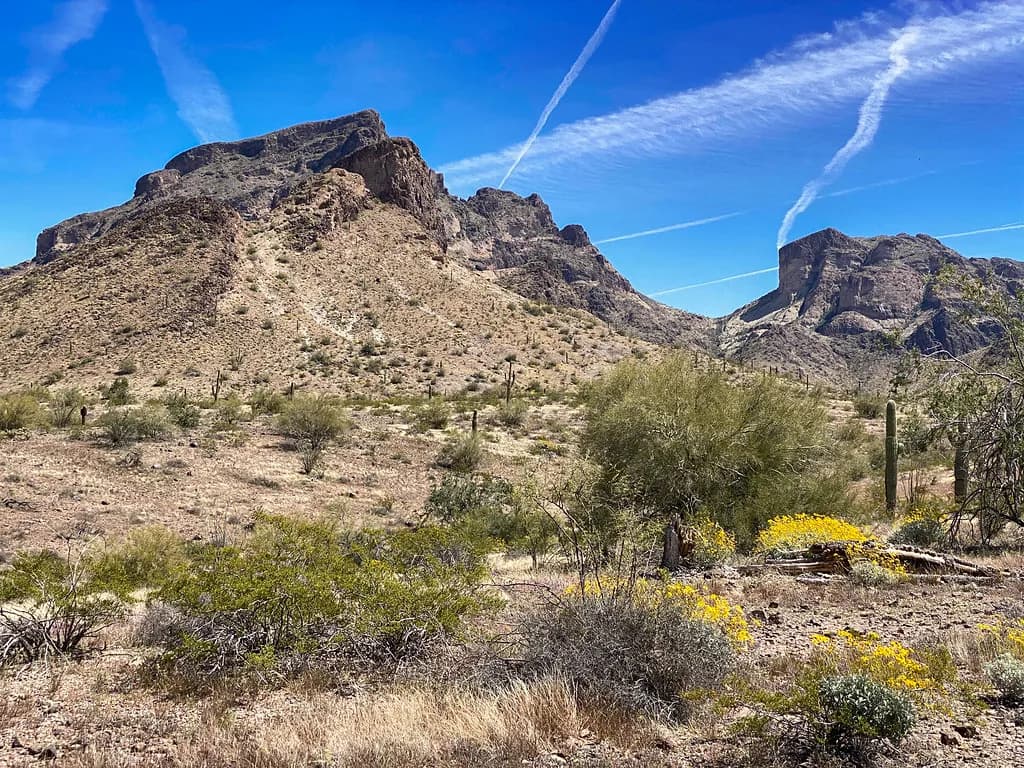
From the power plant area, the approach to the springs is a hike of about 2.5 miles each way, following the river between rugged cliffs and vegetation. Allow two to three hours for the round trip depending on your pace and how long you soak.
After rain or at high water, the river crossing can demand swimming instead of wading. If the river looks high and fast, turning around is the reasonable choice.
You have to cross the Verde River to reach the pools. In dry spells the water can be ankle to knee deep and easy to wade; after rain and at high water, the crossing can demand swimming instead. The guide to the site notes the river can be freezing and high in winter and spring.
Carry a dry bag for phones and keys, wear footwear you can wade in and keep a change of clothes waiting at the car. If the river looks high and fast, turning around is the reasonable choice rather than a failed trip.
The Pools: A Walled Tub and a River-Side Pool
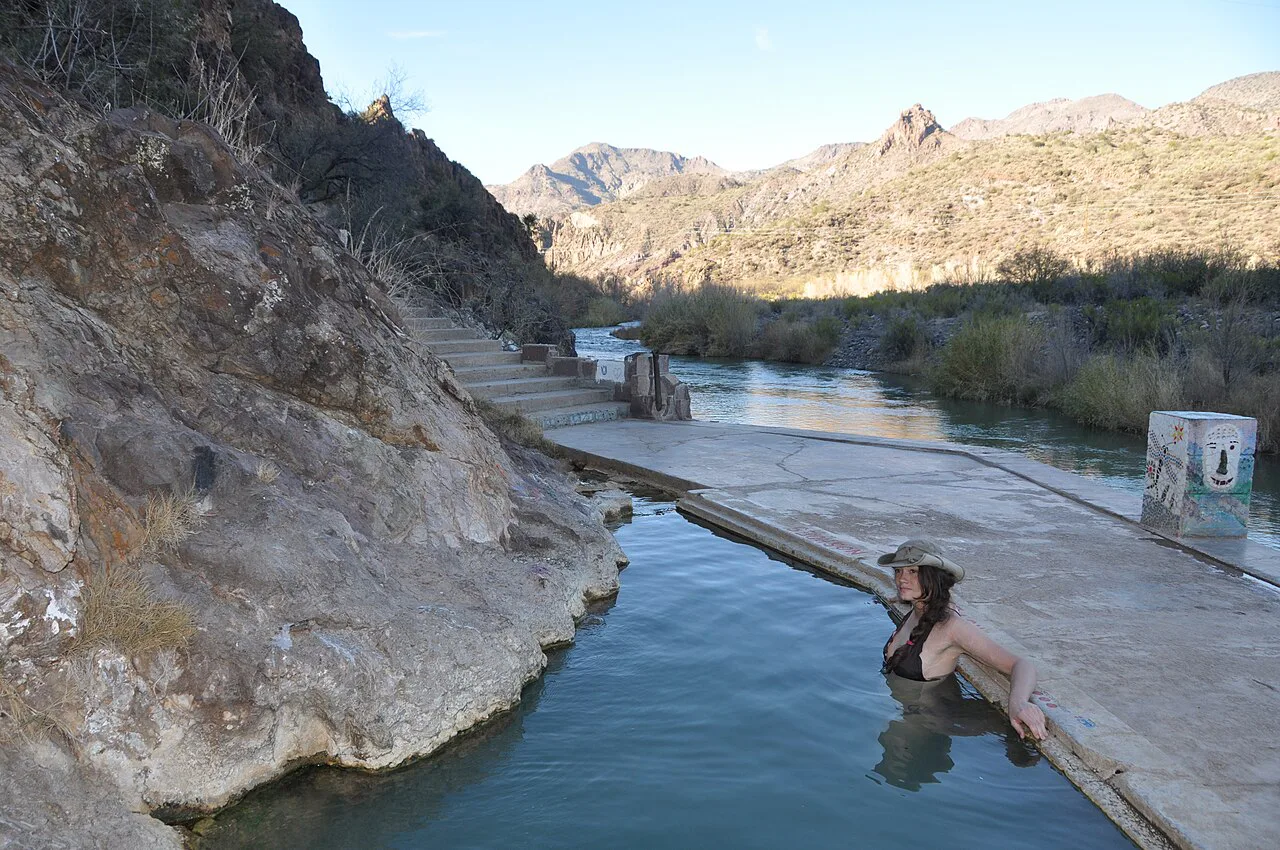
There are two soaking areas. One is a square, art gallery-style tub with painted walls reported at 102 degrees Fahrenheit. The other is a deeper, outdoors-style pool right beside the Verde River, reported at 99 degrees.
The published range across the site runs from 98 to 104 degrees Fahrenheit, so expect variation between the two pools rather than one uniform temperature. The river-side pool trades a little heat for the sound and sight of moving water.
Source water in geothermal pools can be scalding, and the rock around primitive tubs is often slick. Ease in, test the water with a hand first, and keep your head above the surface in untreated spring water.
Clothing-Optional Soaking and the Crowd
Soaking here is clothing optional, a legacy of the site's informal use since the resort era ended. Swimsuits are welcome, but expect some soakers to go without, and decide in advance whether that suits your group.
The pools never close, so use patterns follow the weather and the season rather than posted hours. Spring and fall bring milder temperatures and more visitors, while summer heat makes hot water less appealing and winter brings a bracing river crossing.
For the quietest soak, aim for a weekday and start early enough to finish the drive and the hike in good light. The trip is long enough that arriving late leaves little margin.
Site Rules and Etiquette
Dogs are allowed at the site but must stay on a leash, and they are not permitted in the springs. Plan for a shaded spot at the river's edge where your dog can wait while you soak.
Treat this as a hike-in soak: pack out everything you bring, including food scraps and glass, and leave the ruins and rock walls as you found them. Keep noise low, since sound carries along the river corridor.
Camping and Lodging Bases
Camp Verde and the wider Verde Valley make the most practical base, with the shortest drive to the Forest Road 708 turnoff and the most choice of lodging and supplies. Flagstaff works as a base too, but adds roughly 86 miles each way and puts the trip firmly in full-day territory.
For a different style of Arizona soak, Castle Hot Springs in the Bradshaw Mountains pairs resort comfort with hot water in a very different setting. It works well as the relaxed counterpoint on a trip that includes a primitive river soak.
Best Season and Time of Day
Spring and fall give you the most comfortable combination of air temperature, river level and daylight. Summer heat makes the hike and the soak less pleasant, though the river offers a cool-down, and winter brings a genuinely cold crossing with the reward of hot water at the end.
Start early whatever the season: the drive, the crossing and the hike each take real time, and you want to walk out before dark. A morning soak also tends to mean fewer people in the pools.
Combining Verde Hot Springs with Other Verde Valley Stops
The Verde Valley rewards a loop rather than a single out-and-back. Pair the springs with stops in Camp Verde and along State Route 260, and save the longer resort soaks for a separate day so you are not rushed on the rough forest road.
If you are extending the trip south, El Dorado Hot Springs is another Arizona option with a very different, more developed character. It suits soakers who want variety without repeating the same rough-road approach twice in one weekend.
What to Pack for the Drive, the Crossing and the Soak
Pack for three phases: a rough forest road, a river crossing and a primitive soak. That means a high-clearance vehicle with a full tank, water and snacks for longer than you expect, plus sturdy shoes you can wade in and a dry bag for valuables.
Bring a towel, warm layers for the walk out and sun protection for the exposed stretches along the river. Carry out all trash, including anything small, since the site has no services to handle it.
Plan the Trip Around the Road and the River
Verde Hot Springs is worth the drive from Flagstaff if you treat the rough forest road and the river crossing as part of the outing rather than an obstacle. Go with a high-clearance vehicle, start early, and be ready to turn back if the river is running high.
Check road and river conditions with the land manager before you commit to the drive, especially after rain or during spring runoff, since the final stretch is where plans unravel. With the logistics settled, the payoff is hot water, river sound and ruins in one of the state's more atmospheric settings.
Frequently Asked Questions
How far is Verde Hot Springs from Flagstaff?
The springs sit about 86 miles south of Flagstaff, off paved and graveled roads that include steep, rough stretches. From Camp Verde, the drive runs east on State Route 260 to Forest Road 708, then south on Forest Road 502 toward the Childs Power Plant and the Verde River. Budget a full day for the round trip, including the hike.
Do you have to cross the river to reach Verde Hot Springs?
Yes. The approach from the power plant area involves a hike of about 2.5 miles each way and a crossing of the Verde River. In dry conditions the water can be ankle to knee deep; after rain or during high water, the crossing can require swimming, so check conditions before setting out.
What is the water temperature at Verde Hot Springs?
The two pools are reported at 102 degrees Fahrenheit for the walled tub near the old resort walls and 99 degrees for the deeper pool beside the river. Published figures across the site range from 98 to 104 degrees, so expect some variation between pools and visits.
Is Verde Hot Springs clothing optional?
Yes. Soaking at Verde Hot Springs is clothing optional, a holdover from its informal use after the resort era. Swimsuits are fine, but expect some visitors to soak without them, and choose your timing and company accordingly.
Can you camp near Verde Hot Springs?
Camp Verde and the wider Verde Valley are the practical bases for a visit, with the shortest drive to the Forest Road 708 turnoff and the most choice of lodging and supplies. Flagstaff works as a base as well, though it adds roughly 86 miles each way.
When is the best time to visit Verde Hot Springs?
Spring and fall offer the most comfortable mix of air temperature, river level and daylight. Summer heat makes the hike and hot water less appealing, and winter brings a cold river crossing, though the hot pools reward the effort either way. Start early whenever you go.
Do you need a high-clearance vehicle for the drive in?
A high-clearance vehicle is the sensible choice. The final stretch on Forest Road 502 to the Childs Power Plant is described as very bad road, and the route turns steep, rough and muddy after rain. A low sedan is a gamble on this approach.
Sources
Hot springs notes for your next road trip
Optional updates when we add or revise hot springs guides.
You might also like
Continue reading
More guides you'll find useful
.jpg)