
Free Hot Springs in Idaho: 8 Natural Pools Worth the Drive
Eight natural Idaho hot springs without a resort gate, from roadside tubs near Stanley to hike-in pools above the Salmon River, with access and layout details.
On this page
Idaho suits road-tripping soakers because its natural pools bunch along a handful of river corridors, which means you can string two or three soaks into a single day instead of scattering across the state. The Payette drainages around Lowman and the Salmon River north of Stanley hold the densest run of roadside and short-walk springs. Many sit on public land and charge nothing at the gate, though a few through public campgrounds collect a day-use fee. This guide ranks eight soaks by the effort they ask, from a pullout tub to a two-mile climb.
Boat Box Hot Springs: a one- or two-person tub beside Highway 75
Boat Box is the definition of a roadside soak: a small tub fed by a pipe from a hot source, with river water on hand to temper it to your taste. It sits on the side of the river north of Stanley right off Highway 75, with parking in a pullout and no hike at all. The basin is tiny, sized for one or two people, so a wait is likely if someone is already in. The view over the narrow river valley is the point as much as the water. Walk My World notes the tub fits one or two soakers and is completely shielded from the road, which makes it feel more secluded than its location suggests.
Sunbeam Hot Springs: rock-dammed pools at the Salmon River
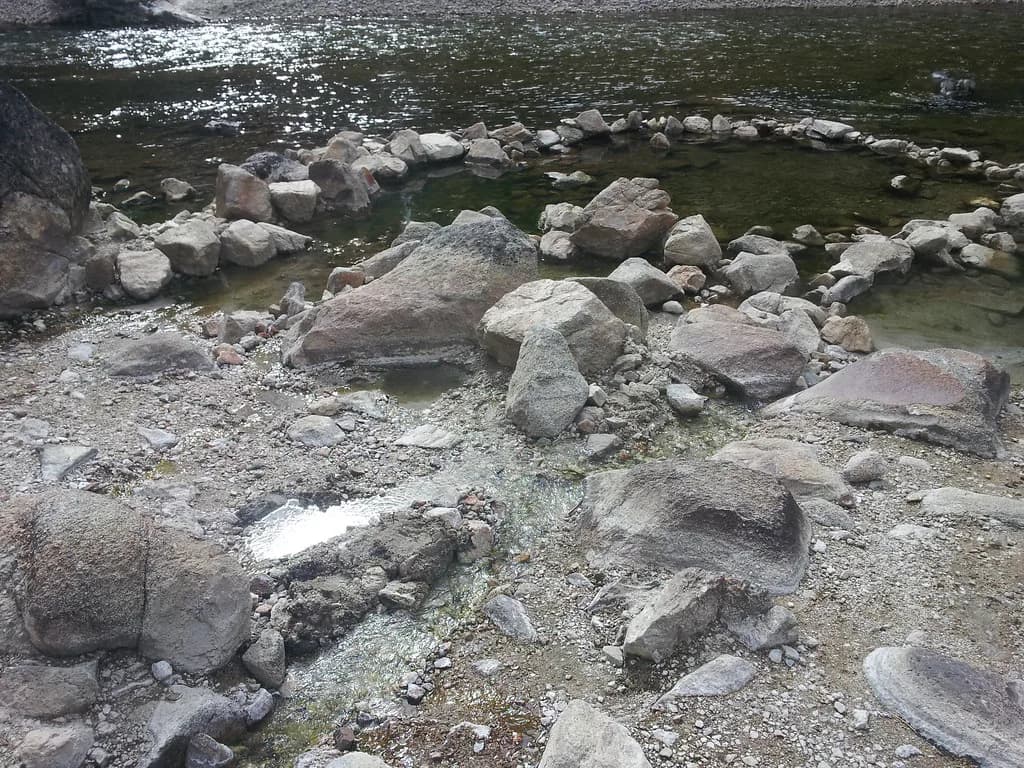
About ten minutes farther north from Boat Box on Highway 75, Sunbeam is a different kind of soak: pools created by damming the river's edge with rocks so the scalding source water mixes with cold river water. The result is a range from genuinely hot near the inlet to cool as you move toward the channel, so you hunt for your comfort level rather than accepting one temperature. A small tub offers a more consistent option. The remains of an old homestead bathhouse stand nearby, and the site has a bathroom and a designated pullout for parking. In spring runoff, most of the river-edge pools sit underwater or turn cold until flows drop. The Mandagies recommends late summer and fall for best access, so aim for a visit once flows have dropped.
Cove Creek Hot Springs: one silty pool near Stanley
Cove Creek is one single pool on the edge of the Salmon River, about a ten-minute drive east of Stanley, with a designated parking lot and a pit toilet. The bottom is silty, so moving around clouds the water; settle in and stay put if you want it clear. In June, when the river runs high, cold water mixes in and the pool reads lukewarm. The Mandagies suggests coming when water levels drop, roughly September through December, for a warmer soak. It is a day-use site, and the small parking area signals that it fills quickly on summer weekends.
Trail Creek Hot Springs: a short walk with a cold-water spigot
Trail Creek, east of Cascade off Warm Lake Road, gives you the feel of a deep-forest soak at the end of a very short trail from a pullout. The basin has a cold-water spigot and plug that let you dial in the temperature, a feature that makes it a good first soak for anyone unsure about natural hot water. The Reckless Roaming guide describes two to three pools here and a post-and-sign arrival at the clothing-optional site. Because the walk is so short, mornings and early afternoons are the quiet window; later in the day it draws a more social crowd. The pullout is small and easy to miss, so watch for parked cars.
Rocky Canyon Hot Springs: cascading pools after a river crossing
Rocky Canyon is a hillside of cascading pools above the Middle Fork Payette near Garden Valley, and the price of admission is a cold river crossing. The pools step up the slope and warm as you climb, with several basins to choose from. The Mandagies warns that the crossing is only advisable between June and September, when the water is low enough to wade safely; other times of year it can be too high or too cold for a safe ford. Wear shoes with grip for slippery rock, and treat the crossing as the decision point of the trip: if the river looks pushy, skip it. The long dirt-road drive and the wade keep crowds down.
Kirkham Hot Springs: tiered pools and a hot waterfall shower
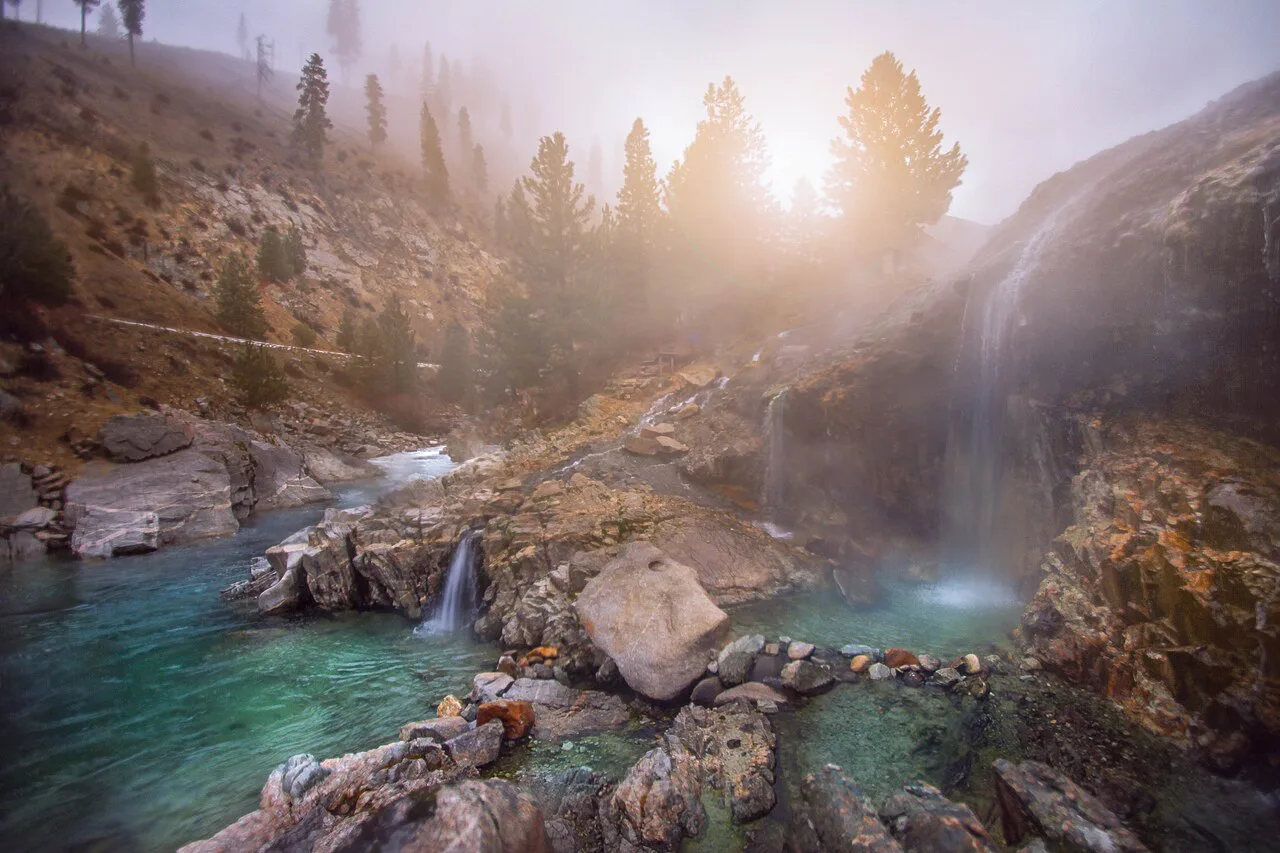
Kirkham is the best-known soak in the state, and for good reason: a staircase of pools along the Payette River, a hot waterfall that works as a shower, and a location right off the Banks-Lowman Highway near Lowman. The trade-off is company. Kirkham draws day trippers and campers all day, and the easiest pools near the road fill first; walk a few minutes upstream or cross the pools to find the quieter cliffside basin. The site is day-use only with a day-use parking lot, and the Mandagies lists a $5 day-use fee and posted hours of 7 a.m. to 9 p.m. The campground beside it is permanently closed, so plan to stay elsewhere. For the broader run of soaks in this corridor, the guide to hot springs in Idaho maps out the alternatives.
The campground beside Kirkham is permanently closed, so plan to stay elsewhere. The day-use fee is $5, with posted hours of 7 a.m. to 9 p.m.
Pine Flats Hot Springs: cliff-edge pools above the South Fork Payette
Pine Flats is the quiet neighbor to Kirkham, a set of small pools perched on a rocky ledge above the South Fork Payette. A flat, easy walk of about ten minutes from Pine Flats Campground gets you there, but the final approach involves slick rock and, depending on the route, a shallow river crossing. The pools are shallow and on the small side, so a group of two or three fills one. A day-use fee applies, and the campground has a bathroom. In high water, some pools are submerged or hard to reach, so fall is the more reliable season.
Bonneville Hot Springs: several pools above Warm Springs Creek
Bonneville sits just up the road from Kirkham but feels like a different world: a short walk from Bonneville Campground leads to several pools above Warm Springs Creek, ranging from scalding near the source to comfortable where creek water mixes in. A day-use fee applies and the source is extremely hot, so pick your pool by how far it sits from the inlet. Because the campground has a short season, Bonneville often sees far fewer people than its famous neighbor. For car campers, this is the best combination of access, facilities and quiet on the Payette corridor; more options are in the guide to hot springs camping in Idaho.
Goldbug Hot Springs: the two-mile climb above Elk Bend
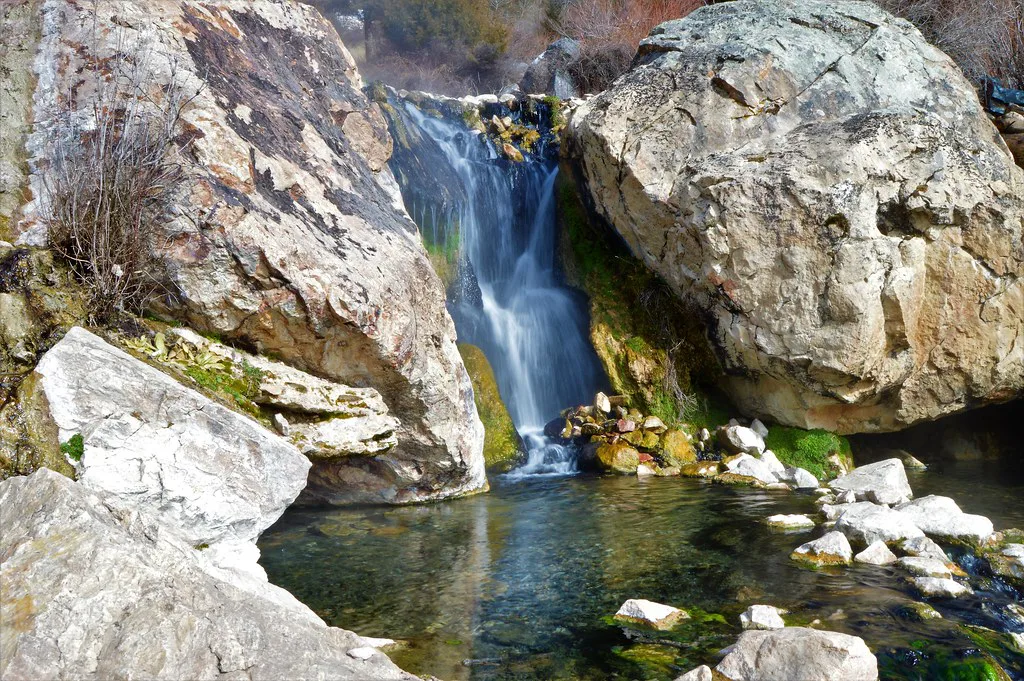
Goldbug is the hike-in soak that earns its reputation: a series of pools stacked on a hillside above the Salmon River valley near Elk Bend, with a heart-shaped top pool and a lower basin fed by two waterfalls. The catch is the walk, about two miles each way, with the steepest pitches at the start and the end and a flat middle. Walk My World reports that mapping apps send drivers to the wrong spot and that the trail has rough sections, so carry a paper map and allow extra time. The springs sit on BLM land, and camping is available along the route. Water temperatures at the source run hot enough that you will want to find a pool tempered by cooler inflow.
Mapping apps can send drivers to the wrong spot, and the trail has rough sections, so carry a paper map and allow extra time.
How the walk changes the soak
The difference between a roadside tub and a hike-in pool is measured in what you carry and how long you stay. At Goldbug, the two-mile climb means you want water, sun protection for the exposed upper trail, and shoes that handle steep, rough ground. At Boat Box or Sunbeam, the car is seconds away, so a towel and a change of clothes in the trunk cover it. Pack for the shortest walk you plan and add layers for the longest. In winter, the Mandagies advises traction cleats, a shovel and a four-wheel-drive vehicle for mountain roads, and some routes close seasonally, so check road conditions before you commit to a hike-in soak.
Which spring fits your trip
If you want the shortest walk possible, Boat Box and Sunbeam on Highway 75 and Kirkham on the Banks-Lowman Highway put you in water within minutes of parking. If you want fewer people and will trade a wade or a climb for quiet, Rocky Canyon, Bonneville and Goldbug deliver. For families with young children, the developed feel of Kirkham and the campground facilities at Pine Flats and Bonneville make logistics easier. For a first natural soak, Trail Creek's cold-water spigot gives you a measure of control over the temperature. Rank the springs by how far you are willing to walk, and the itinerary writes itself.
| Spring | Approach | Notable detail |
|---|---|---|
| Boat Box | Pullout beside Highway 75, no hike | Tub sized for one or two |
| Kirkham | Day-use lot off the Banks-Lowman Highway | Tiered pools and a hot waterfall shower |
| Goldbug | Hike of about two miles each way | Stacked pools above the Salmon River valley |
| Trail Creek | Very short trail from a pullout off Warm Lake Road | Cold-water spigot and plug |
| Rocky Canyon | Long dirt-road drive and a river crossing | Cascading pools near Garden Valley |
| Pine Flats | Walk of about ten minutes from the campground | Small pools on a rocky ledge |
Where to base yourself: Lowman and Stanley
Lowman is the practical hub for the Payette corridor: Kirkham, Pine Flats and Bonneville are all a short drive away, and the town sits on the Banks-Lowman Highway. Stanley serves the Salmon River run: Boat Box, Sunbeam and Cove Creek cluster north and east of town on Highway 75, and the Sawtooth Mountains frame the drive. Stanley is small, with limited food options that shrink further in the off-season, so plan meals accordingly. For a more polished night, the hot springs resorts in Idaho include options near Stanley, such as the Mountain Village Resort, where a private tub offers a different kind of soak.
Nearby soaks to pair on one drive
On the Payette side, Kirkham, Pine Flats and Bonneville sit within a few miles of one another near Lowman, which makes a three-soak day realistic if you start early and do not linger. On the Salmon side, Boat Box, Sunbeam and Cove Creek line up along Highway 75 north and east of Stanley, so you can warm up at one and move on when it fills. Rocky Canyon is a longer detour from Garden Valley and pairs poorly with the Lowman cluster because of the drive and the river crossing. If you want a developed pool at the end of the day, the Idaho hot springs resorts page lists the pay-to-soak options. If you are extending the road trip beyond state lines, Washington hot springs offer a similar mix of roadside soaks and resort pools.
Primitive-spring etiquette
At primitive and hike-in springs, the pools stay usable only if visitors pack out everything they bring in, including trash that does not belong to them. Keep dogs out of the water, since the pools are small and shared, and give other soakers room rather than crowding into a basin that already has company. At clothing-optional sites like Trail Creek, keep cameras pointed away from other people. The Reckless Roaming guide describes trash along the trail at Trail Creek and asks visitors to leave the springs better than they found them.
Safety at natural pools
Source water at these springs can be scalding, so test a pool with a hand or foot before committing, and pick a spot where cooler water mixes in if the inlet is too hot. Rock around the pools is often slick with algae and mineral deposits; water shoes with grip are worth the space in your bag. River crossings at Rocky Canyon and Pine Flats are the biggest variable, and they should be judged on the day, not on a fixed calendar. Keep your head above untreated geothermal water, and do not soak alone at remote sites. For current conditions, check with the local land manager before you drive out.
Plan Your Idaho Soak
The best free hot springs in Idaho are the ones that match your willingness to walk, wade or share a pool. Start with the corridor that fits your base, Lowman for the Payette or Stanley for the Salmon, and build a day around two or three soaks rather than racing across the state. Bring water shoes, a towel and a trash bag, and leave the pools as you found them. Then pick your first spring and go.
Frequently Asked Questions
Are there natural hot springs in Idaho that you can visit without a resort?
Yes. The Payette corridor near Lowman and the Salmon River corridor near Stanley hold a dense run of natural pools, from roadside tubs like Boat Box to hike-in soaks like Goldbug. Some sit on public land and charge nothing at the gate, while others access through public campgrounds collect a day-use fee. Check the specific spring before you go.
Which Idaho hot springs are easiest to reach without a hike?
Boat Box and Sunbeam on Highway 75, and Kirkham on the Banks-Lowman Highway, put you in or beside water within minutes of parking. Trail Creek east of Cascade is a very short walk from a pullout. Pine Flats and Bonneville are each about a ten-minute walk from a campground.
Do you need a fee or permit for Idaho's natural hot springs?
It depends on the spring. Kirkham, Pine Flats and Bonneville charge a day-use fee when you park at the associated public campground, while Goldbug and several others have no gate fee. Fees and rules can change, so check current details with the managing land manager before your trip.
Which Idaho hot springs require a river crossing?
Rocky Canyon near Garden Valley requires a ford of the Middle Fork Payette, and the crossing is only advisable in summer and early fall when flows are low. Some routes to Pine Flats pools also involve a shallow river crossing. Judge the water on the day and turn back if it looks pushy.
What is the best time of year for Idaho hot springs?
Fall offers mild weather, fewer people and reliable access, while winter brings quiet soaks but demands four-wheel drive and traction gear. Summer has the easiest access and the biggest crowds. Spring runoff submerges or dilutes many river-edge pools, so aim for higher pools or developed soaks that time of year.
Sources
Hot springs notes for your next road trip
Optional updates when we add or revise hot springs guides.
You might also like
Continue reading
More guides you'll find useful
.jpg)