
Three Forks Hot Springs, Oregon: Owyhee Canyon Access Guide
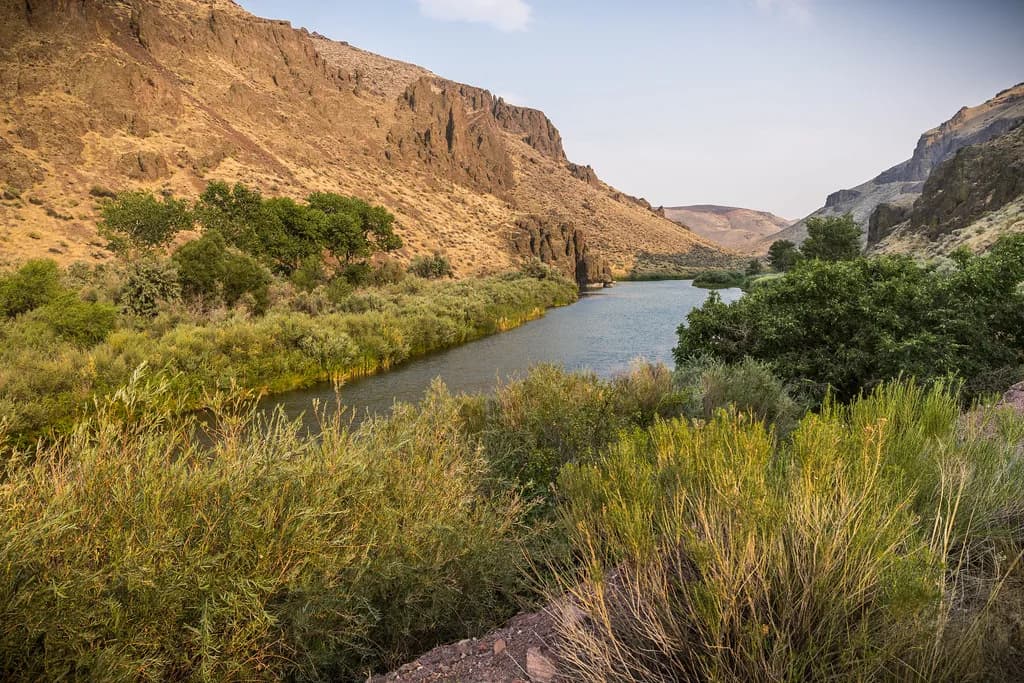
Three Forks Hot Springs sits at the Owyhee River confluence in southeast Oregon, reached by rough 4WD roads or a river trip through canyon country.
On this page
Three Forks Hot Springs rewards the kind of soaker who treats the drive as part of the trip: a cluster of warm pools tucked into the canyon where the Owyhee River's three forks come together in far southeastern Oregon. There is no pool deck, no gate, and no easy approach, which keeps crowds thin and makes the soak feel earned. It suits confident drivers with high-clearance 4WD and boaters on multi-day floats, not travelers looking for a quick roadside dip.
Where the springs sit
The springs lie at the confluence of the Owyhee's three forks in Malheur County, deep in the high-desert canyon country of southeastern Oregon. Jordan Valley is the nearest town and the usual last stop for fuel and supplies before the dirt roads begin. This is genuinely remote terrain where a wrong turn costs hours, so carry a paper map or downloaded offline maps rather than relying on a signal.
The Owyhee canyon setting is the whole point: basalt walls, sagebrush benches, and a river corridor that stays quiet even in summer. Eastern Oregon holds a surprising spread of soaks, from primitive canyon pools to forest springs, and the broader guide to hot springs in oregon helps you slot Three Forks into a longer loop. Plan on this being the wildest stop on your itinerary. If you are weighing canyon soaks against forest soaks farther north, the Washington guide covers a different set of Cascade and gorge pools.
The pools
The soaking pools sit in staggered natural rock basins near the river confluence, arranged above the waterline on the canyon bank. Because they are fed by geothermal water mixing with cold river water, each pool holds a different temperature, and the warmest water typically sits closest to the source. Test with your hand and move between pools rather than committing to the first one you reach.
Water levels drive the soak more than anything else. In high runoff the river can swallow or flood the lower pools and cool the rest, while late-summer low water leaves the basins exposed and the water warmer. There are no posted temperatures or maintained facilities here, so judge conditions on arrival and expect the pools to look different from one season to the next.
Getting there overland
The overland route runs on rough canyon roads that demand a high-clearance 4WD vehicle, and the going gets worse after rain or snowmelt. Rocky stretches, rutted climbs, and unmarked junctions are the norm rather than the exception. Treat the drive as the crux of the trip: if your vehicle, tires, or spare are marginal, pick a different spring.
Navigation matters as much as traction. Carry extra water, a full-size spare, and a way to communicate that does not depend on cell coverage, and tell someone your route and expected return. If conditions look doubtful, turn around early rather than pressing on toward the confluence. Local conditions on the canyon roads are worth confirming with the Bureau of Land Management district office before you commit.
The river ford
The decisive feature of Three Forks is the river crossing: the main soaking pools sit on the far side of the Owyhee, so getting to them means fording the river or reaching them by boat. How deep and fast that ford runs depends entirely on the season and recent snowmelt, and it is not a crossing to attempt casually.
If the water is high or moving hard, the far-side pools are out of reach on foot, so decide before you drive in whether you will turn around at the water's edge.
If the water is high or moving hard, the far-side pools are simply out of reach on foot, and wading a swift Owyhee is a poor trade for a soak. Boaters hold the advantage here, since they arrive on the correct bank without a ford. Decide before you drive in whether you are prepared to turn around at the water's edge.
Hiking versus boating in
Paddlers on multi-day Owyhee float trips reach the springs from the river, which sidesteps the ford and the worst of the road. Outfitters running those trips treat hot springs as a standard stop, and a boat approach lets you soak without worrying about the return drive. For anyone uncomfortable with remote 4WD travel, this is the more realistic way in.
Hikers coming overland walk the final stretch from a rough parking area down to the river, then face the ford to reach the main pools. There is no formal trailhead or signage, so route-finding on foot is part of the deal. Wear footwear with grip for slick rock and loose scree, and budget more time than the distance suggests.
When to go
Late summer and early fall give the most dependable window: runoff has dropped, the ford is at its most manageable, and the pools sit clear of high water. Spring runoff is the season to avoid for a first visit, since the river can rise enough to cut off the far bank and cool the pools sharply.
Late summer and early fall give the most dependable window, when runoff has dropped and the ford is at its most manageable.
Summer heat in the Owyhee canyon is intense, so plan the drive and soak for early morning or evening and carry more water than you think you need. Weekends draw the few parties willing to make the trip, while midweek usually leaves the pools to you. If you go in shoulder season, watch the weather forecast for rain that can turn the roads to grease.
Camping and nearby stays
Camping near Three Forks means dispersed sites on surrounding BLM canyon land, with no services, water, or reservations. Come self-contained with everything you need and choose a previously used pullout rather than clearing new ground. For a bed and a shower, Jordan Valley is the nearest base, and it makes sense to stage there before tackling the canyon roads.
What to bring
Pack for a primitive site: several gallons of drinking water per person, sturdy footwear for wet rock, sun protection, a towel, and dry layers for the drive out. Bring a pack-out bag for every scrap of trash, since there are no bins in the canyon. A first-aid kit and a satellite messenger are worth the weight when help is hours away.
A small pair of water sandals makes the ford and the slick pool edges far more comfortable, and a trekking pole helps on uneven rock. Leave glass at home and keep food sealed against wildlife. Charge devices and download maps before leaving Jordan Valley, because the last stretch has no services.
Safety at the pools
The geothermal source feeding the pools runs well above comfortable soaking temperature, and the hottest water concentrates near the inflow. Ease in slowly, test each pool, and keep children within arm's reach. The rock around the basins is uneven and slick, so move deliberately, especially when carrying gear.
River levels are the other real hazard: a rising or fast Owyhee can make the ford dangerous and can flood the lower pools without warning. Keep your head above the water in untreated geothermal pools and avoid swallowing it. There are no lifeguards or facilities, so your group is the safety net.
Leave No Trace at a primitive soak
This is an undeveloped site, so everything you bring, including food scraps and toilet paper, goes out with you. Use established paths and pool edges rather than widening the banks, and keep soap and shampoo out of the river entirely. Pack out trash left by others if you can, and leave the rock basins exactly as you found them so the next party gets the same soak.
Nearby springs for a road trip
Snively Hot Springs makes a natural contrast: a BLM pool on the Owyhee River with a short flat walk from the parking area and no hike required, which suits a day when you want an easy soak. Building a loop that pairs Three Forks with Snively lets you sample both the hard and easy ends of Owyhee soaking in one trip.
| Spring | Access |
|---|---|
| Snively Hot Springs | BLM pool on the Owyhee River with a short flat walk from the parking area |
| Echo Rock Hot Springs | Concrete pool in the Owyhee canyon country near Leslie Gulch |
| Ryegrass Hot Springs | Reached almost entirely by multi-day float |
Echo Rock Hot Springs, a concrete pool in the Owyhee canyon country near Leslie Gulch, and Ryegrass Hot Springs, reached almost entirely by multi-day float, round out the regional options. Farther afield, Austin Hot Springs, Oregon sits on the Clackamas River in the Cascades, a completely different landscape and a reminder of how varied the state's soaks are.
Who this soak suits
Three Forks is for experienced desert travelers with a capable 4WD rig or a scheduled river trip, a taste for route-finding, and patience for a ford that may not work out. It rewards those who build a whole day, or several, around getting there. If you want a reliable, low-stress soak, choose Snively or a developed pool and save Three Forks for when your vehicle and schedule can handle it.
Plan Your Trip
Build your Three Forks trip around the ford: check runoff timing, commit only if your vehicle and group are ready for remote canyon roads, and keep a backup soak in mind. Base yourself in Jordan Valley, carry everything you need, and treat the pools gently. Confirm road and river conditions with the Bureau of Land Management before you leave.
Frequently Asked Questions
How do you get to Three Forks Hot Springs?
You reach it overland on rough canyon roads in Malheur County, Oregon, then cross the Owyhee River to the main pools, or arrive by boat on a multi-day float trip. There is no formal trailhead or signage, so carry offline maps and plan for route-finding.
Do you need 4WD to reach Three Forks Hot Springs?
Yes. The overland approach uses rough, rocky canyon roads that call for a high-clearance 4WD vehicle, and conditions worsen after rain or snowmelt. If your vehicle or tires are marginal, choose a more accessible spring instead.
Can you camp near Three Forks Hot Springs?
Camping nearby means dispersed sites on surrounding BLM canyon land with no services or water. Come fully self-contained and use existing pullouts, or base yourself in Jordan Valley for a bed and supplies.
When is the best time to soak at Three Forks Hot Springs?
Late summer and early fall offer the most dependable conditions, with lower water making the ford and the pools easier to manage. Spring runoff can cut off the far bank and cool the pools, so time your visit accordingly.
Are there other hot springs nearby to combine with Three Forks?
Yes. Snively Hot Springs offers an easy Owyhee River soak with a short walk, while Echo Rock and Ryegrass appeal to canyon travelers and boaters. Pairing them makes a varied southeastern Oregon road trip.
Sources
Hot springs notes for your next road trip
Optional updates when we add or revise hot springs guides.
You might also like



Continue reading
More guides you'll find useful



