Crystal Hot Springs, Utah: Pools vs Camping Guide
Crystal Hot Springs in Honeyville, Utah, pairs a 120-134°F source with hot tubs, pools and waterslides. Plan a family day or a soak-first road trip stop.
On this page
Crystal Hot Springs is the kind of stop that suits almost any traveler on Interstate 15: a full geothermal resort in Honeyville where a scalding-hot spring and a cold spring rise within 50 feet of each other. The resort blends the two to fill three mineral hot tubs and a large soaking pool, so a 130°F source never means a 130°F soak. Families come for the waterslides and Olympic-sized pool, while soak-first travelers head straight for the hot tubs and the cave pool.
This is a developed day-use resort, not a primitive riverside soak: swimsuits are required throughout, outside food stays out of the facility, and the lawns are set up for picnics and volleyball between soaks. If you are building a longer tour of the state's soaks, it slots neatly into a circuit of hot springs in utah that ranges from resort pools to hike-in sources.
Why Crystal Hot Springs is worth the trip
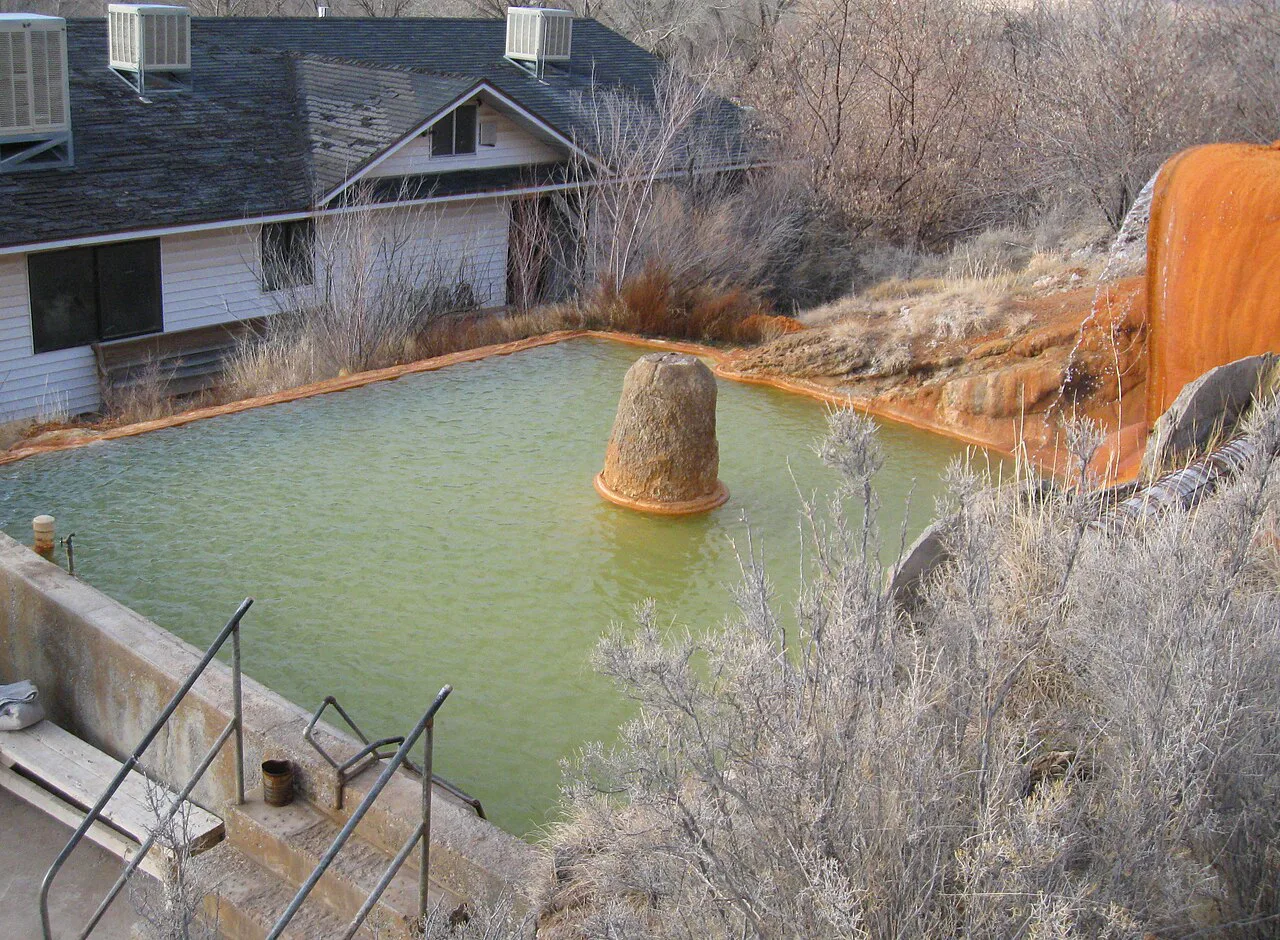
The draw here is geological: one of the largest side-by-side hot-and-cold spring systems anywhere, with the hot water emerging between 120°F and 134°F and the cold spring running 65-75°F less than 50 feet away. The resort mixes them to hit comfortable soaking temperatures, which is why the pools feel mild rather than raw. The hot spring alone pushes roughly 2.4 million gallons a day, so the pools turn over constantly.
Mineral content is the other bragging point: total dissolved solids reach about 46,000 mg/L, drawn from sodium, chloride, calcium, magnesium, potassium, lithium and sulfate. The water carries a mild mineral odor rather than a sulfur reek, and the flow-through system uses minimal chlorine. Treat the mineral figure as a published water-quality number, not a health promise; the appeal is the soak itself.
History adds context to a stop that otherwise takes an afternoon. Native peoples used the springs long before settlers arrived, Chinese railroad workers built cedar soaking tubs nearby in 1869, and the site opened as a commercial resort in 1901 as Madsen Hot Springs. It is commonly described as the last public hot spring resort still operating in northern Utah.
Where it is
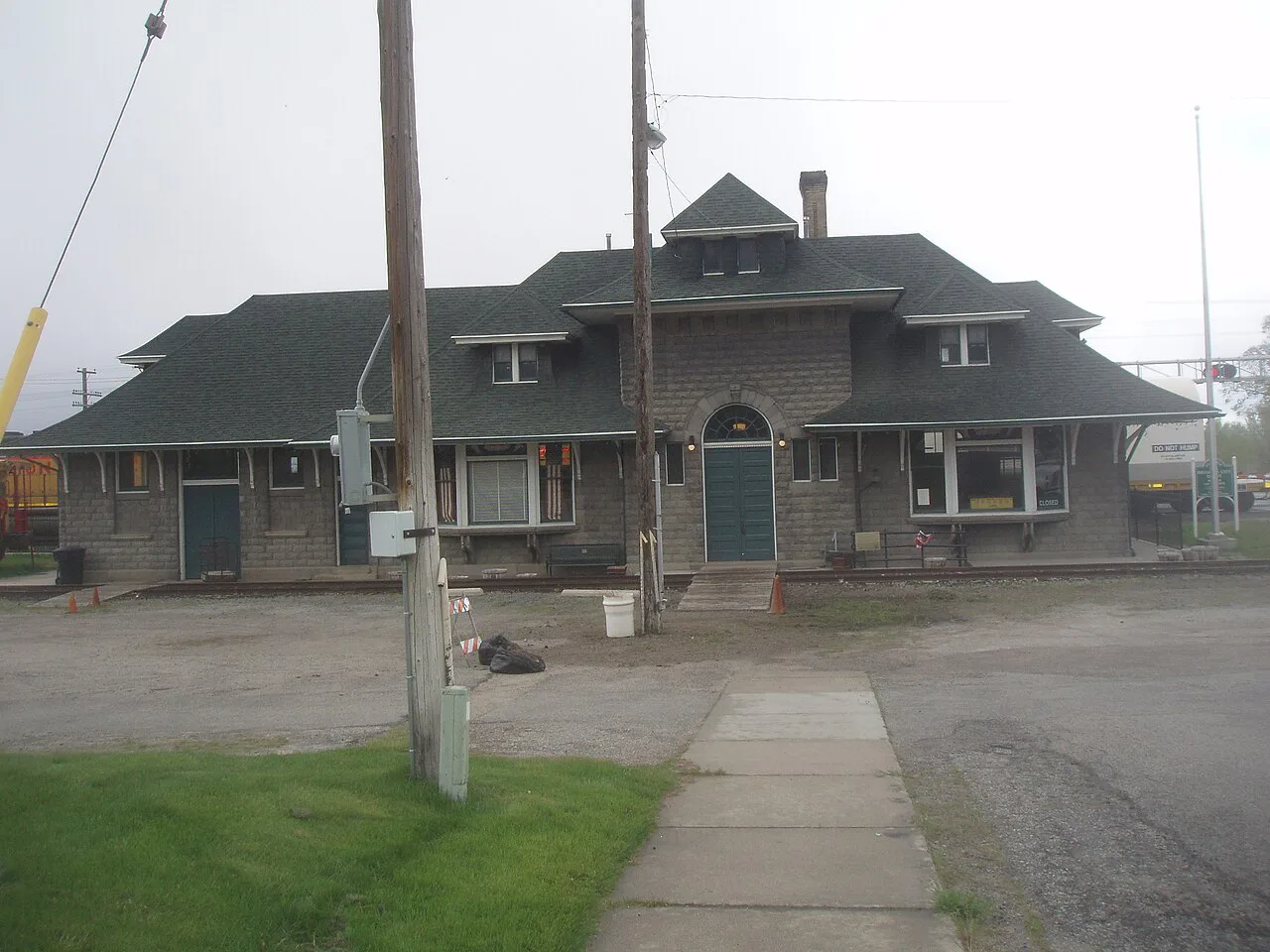
The resort sits at 8215 UT-38 in Honeyville, in Box Elder County, at roughly 4,200 feet elevation. Salt Lake City is about 75 miles south, a drive of around an hour and 15 minutes, which makes it one of the most accessible soaks in northern Utah. Brigham City is 11 miles south and Tremonton 12 miles northwest, so supplies, gas and a full range of restaurants are close at hand.
Getting there
From Salt Lake City, take I-15 north about 65 miles to Exit 372 for UT-240 toward Honeyville. Turn left onto UT-240, continue roughly a mile, then turn left onto UT-38 north and drive about 1.7 miles; the resort is on the west side of the highway. The route is paved highway all the way, so there is no rough forest road to worry about and no winter access problem beyond normal interstate conditions.
The water
The geothermal source is genuinely hot at 120-134°F, and the cold spring next to it runs 65-75°F and produces about 2.6 million gallons a day. Because the two are plumbed together, pool temperatures land wherever the resort sets them rather than at source temperature. That is the key thing to understand before you go: the soak you get is engineered, consistent and comfortable.
The system is flow-through with minimal chlorine, which keeps the mineral character noticeable in the water and in the air around the pools. Plan on rinsing your swimsuit afterward; the mineral load is part of the experience and also part of what you carry home.
The pools
Three mineral hot tubs hold temperatures of 99-105°F, which is where most adults settle in for the long soak. The resort also runs a large soaking pool that doubles as the cave pool, giving you a cooler place to sit in the same water. Swimmers who want to move rather than sit have the Olympic-sized pool and a lap pool.
The Olympic pool is the family anchor, and its temperature follows the seasons: warmest in winter and coolest in summer. That makes it a warm plunge in the cold months and a swimming pool when the weather is hot.
Pool temperatures by season
The resort posts a pool-by-pool temperature chart that is more specific than the ranges above. The soaker and cave pool run about 95-101°F year-round. Hot Tub 1 is the warmest at 103-105°F, Hot Tub 2 runs 102-104°F and Hot Tub 3 is the mildest at 99-101°F, so you can pick a tub to match your tolerance. The lap pool and the slide pool both sit at 70-85°F.
| Pool | Temperature | Notes |
|---|---|---|
| Soaking pool and cave pool | 95-101°F | Year-round |
| Hot Tub 1 | 103-105°F | Warmest tub |
| Hot Tub 2 | 102-104°F | — |
| Hot Tub 3 | 99-101°F | Mildest tub |
| Lap pool and slide pool | 70-85°F | — |
| Olympic-sized pool | 80-90°F summer; 90-96°F spring and fall; 96-99°F winter | Changes with the calendar |
The Olympic pool is the one that changes with the calendar: 80-90°F in summer, 90-96°F in spring and fall, and 96-99°F in winter. Staff adjust temperatures hourly, readings can drift slightly through the day, and construction on other pools can affect them, so a specific tub is worth a phone call before you plan around it.
Waterslides and dry-land extras
Two 365-foot hydro-tube waterslides operate year-round, heated by copper tubing submerged in the hot spring rather than by a separate boiler. Riders must be at least 42 inches tall and go one at a time, feet first. If you have children close to that height, measure before promising a slide run.
Beyond the water, the grounds include sand volleyball and spacious picnic lawns under shade trees, which is why the resort works for a half-day rather than a quick dip. The site is accessible to people with disabilities with assistance, and locker rooms are on site.
Rules and policies
Beyond the swimsuit requirement, the resort policies page is stricter than many hot spring visitors expect. Coolers and bags are checked at entry, snacks included, and outside food is not allowed in the facility, so plan meals for before or after your visit. Anyone found with alcohol in the pool area is asked to leave, and outside drinks must be in plastic or metal containers, never glass. Pets of any kind are not allowed in the pool area, and barbecues are prohibited in both the pool area and the parking lot.
If lightning forces a closure, refunds are given only to guests with a receipt showing they left for more than 45 minutes. Plan your exit around the weather as well as the locker room closing time.
A wristband is required at all times, and guests without one are asked to leave. Slide riders need a separate slide wristband, must be at least 42 inches tall, and must follow lifeguard instructions; stopping, standing or climbing in the slide is prohibited. Violations get no warning and no refund, and lost or confiscated wristbands are not replaced. Attire is expected to be family-friendly, and lifeguards will speak to anyone whose clothing or behavior is inappropriate.
Plan your exit as well as your entry. Locker rooms and the office close 20 minutes after the pools do, so leave the water early if you need time to change. If lightning forces a closure, refunds are given only to guests with a receipt showing they left for more than 45 minutes.
Because this is a treated, flow-through resort rather than a wild spring, it also makes a sensible first hot spring for families with young children. Keep your head above the water in the mineral pools, walk rather than run on wet decks, and treat the 120-134°F source with respect wherever it surfaces.
Fees and hours
The resort's daily hours schedule splits the week into three patterns for the main facility: noon to 10 PM Monday through Thursday, noon to 11 PM on Friday and Saturday, and noon to 8 PM on Sunday. There is no morning session, so an early start means a late-afternoon or evening soak instead. The waterslides open at 4 PM on weekdays but at noon on weekends, which matters if children are the reason for the trip.
Lockers cost $2 at the front desk and need collateral such as car keys or a refundable cash deposit of $20 or more. ID and credit cards are not accepted as collateral.
Holiday hours differ from the weekly pattern. The resort is closed on Halloween, Thanksgiving and Christmas Day, with a noon to 5 PM day on Christmas Eve, July 4 and July 24. The facility also closes temporarily when lightning strikes nearby, and hours can change without notice, so a quick look at the schedule on the day is worth the minute.
Standard daily admission is $18 per person, with free entry for children 3 and under, and $15 for seniors, military members and college students. Waterslide access is a $2 add-on. Wednesday family nights after 4 PM bundle a family of up to six at $36 for swimming only or $42 with the slide, with a per-person charge beyond six, though family nights are not offered on holidays or school breaks. Groups of 20 or more arrange discounted rates by phone or email in advance.
Under the resort's locker rules, lockers cost $2 at the front desk and require collateral such as car keys or a refundable cash deposit of $20 or more; ID and credit cards are not accepted as collateral. A weekday in a shoulder season like late spring or early fall tends to be quieter than a summer weekend, when the waterslides and Olympic pool draw family traffic. If you want the hot tubs mostly to yourself, arrive near opening on a school day and work outward from there.
Parking and the end of on-site camping
Parking at the resort is free, but overnight parking is prohibited and vehicles left overnight are towed. Semi-trucks, trailers and RVs are not permitted in the lot, so anyone towing a camper should unhitch at a campsite elsewhere and arrive in a standard vehicle.
Camping at the property has been discontinued, which is why this guide points to Willard Bay and Belmont for overnight stays. Any listing that still describes tent or RV sites on the grounds is out of date.
Camping and lodging
Crystal Hot Springs is a day-use resort, so plan to sleep elsewhere and drive in. Willard Bay State Park, about 15 miles south, has reservoir-side sites for tents and RVs. Belmont Hot Springs RV Park, about 18 miles north, offers full-hookup sites within easy reach of the pools.
For hotels and restaurants, Brigham City is 11 miles south and Tremonton 12 miles northwest, both straightforward bases for a one- or two-night stay, with Willard Bay State Park about 15 miles south if you would rather camp near the reservoir.
Combine it on a road trip
Golden Spike National Historical Park is about 30 miles west, marking where the first transcontinental railroad was completed in 1869, and the Bear River Migratory Bird Refuge lies about 25 miles southwest with a twelve-mile auto tour through 80,000-plus acres of wetlands. Both fit comfortably before a soak, since the pools open at noon. Hikers can head east into the Wellsville Mountains, where trails climb to around 9,300 feet.
For a second soak, Belmont Hot Springs sits a short drive north near Garland and offers warm-water scuba diving in a deep geothermal lake. Travelers heading south toward Salt Lake City can add the dome-shaped Homestead Crater Hot Spring, Utah, where you soak inside a limestone beehive, or swing through Sevier County for Mystic Hot Springs, Utah, known for its mineral-stained tubs and vintage setting. If Utah's blend of resort pools and wild soaks has you planning further afield, the hot springs in Idaho make a natural next stop on a longer soaking tour.
Planning the refuge and railroad stops
Both nearby stops are federal sites with their own schedules. At Bear River Migratory Bird Refuge, the refuge visit page lists the 12-mile auto tour route as open year-round, weather permitting, from sunrise to sunset. The route starts about 12 miles west of I-15 Exit 363, which makes the round trip about 36 miles.
The refuge visitor center sits roughly a quarter mile from the exit and is open Tuesday through Saturday from 10 AM to 4 PM, closed Mondays and federal holidays. Several short trails start near it, including a half-mile Wetland Wonders loop, and about a mile of trail is accessible. Fall duck migration is a highlight of the refuge.
At Golden Spike, entrance fees are $20 for a private vehicle, $15 for a motorcycle and $10 per person for cyclists and pedestrians, with an annual pass at $35. The park does not accept cash; entrance fees are paid by credit card at the visitor center, and America the Beautiful passes are accepted. The park's outdoor areas, including roads, historic areas and restrooms, are open daily from sunrise to sunset, and the historic locomotives run in summer.
What to bring
Pack a towel, a swimsuit, water and sun protection; the lawns and pool deck are open to the sky for much of the day. Water shoes help on wet concrete, and a bag for damp gear keeps your car livable afterward. Leave glass behind, since pool areas and bare feet do not mix.
Because outside food is not allowed inside, eat a real meal before you arrive or plan your stop around the drive to Brigham City. A refillable bottle matters more than snacks here: soaking in 99-105°F water dehydrates you faster than a swimming pool does.
Plan Your Soak
Crystal Hot Springs rewards the traveler who wants a real hot-spring soak without a hike, a rough road or a primitive campsite: three hot tubs in the 99-105°F range, a large soaking pool, a cave pool and a seasonally warm Olympic pool, all fed by a 120-134°F source blended with a cold spring. Give it a half day at minimum, more if children are coming for the slides.
Build the day around the noon opening: Golden Spike or the bird refuge in the morning, a long soak from the afternoon onward, and an overnight in Brigham City or at Willard Bay.
Frequently Asked Questions
How hot are the pools at Crystal Hot Springs in Utah?
The geothermal source comes out at 120-134°F, but the resort blends it with a cold spring at 65-75°F. The three mineral hot tubs run 99-105°F, and the Olympic-sized pool runs 80-90°F in summer, 90-96°F in spring and fall, and 96-99°F in winter.
Is there camping at Crystal Hot Springs?
No. Camping at Crystal Hot Springs has been discontinued, and the resort is day-use only. Willard Bay State Park, about 15 miles south, has tent and RV sites, and Belmont Hot Springs RV Park, about 18 miles north, offers full-hookup sites. Brigham City and Tremonton have hotels.
How far is Crystal Hot Springs from Salt Lake City?
About 75 miles, or roughly an hour and 15 minutes north. Take I-15 north to Exit 372, follow UT-240, then turn onto UT-38 north for about 1.7 miles; the resort is on the west side of the highway.
Are the waterslides at Crystal Hot Springs open year-round?
Yes. The two 365-foot hydro-tube waterslides operate year-round, and the slide water is heated by copper tubing submerged in the hot spring. Riders must be at least 42 inches tall and go one at a time, feet first.
What should I wear to Crystal Hot Springs?
A swimsuit is required throughout the resort. Bring a towel and water shoes for wet concrete, and leave glass bottles behind. Outside food is not allowed inside the facility, so plan meals around your visit.
Do you need reservations for Crystal Hot Springs?
Groups of 20 or more arrange their rates in advance by phone or email, and the resort lists daily admission on its swimming prices page. Holiday weekends and summer days with the waterslides running are the busiest times.
Sources
- Crystal Hot Springs in Utah: Soak in One of America's Most Mineral-Rich Hot Springs - Hot Springs Locator
- Hours
- Driving Directions/Parking
- Rules/policies
- Swimming Prices
- Temperatures
- Visit Us - Bear River Migratory Bird Refuge
- Fees & Passes - Golden Spike National Historical Park (U.S. National Park Service)
Hot springs notes for your next road trip
Optional updates when we add or revise hot springs guides.
You might also like
Continue reading
More guides you'll find useful