Hot Springs Near Moab: What's Actually Within Reach
Moab is a long way from Utah's soakable springs. Here are the realistic detours, the drive routes, and which pools suit a half-day versus a full day.
On this page
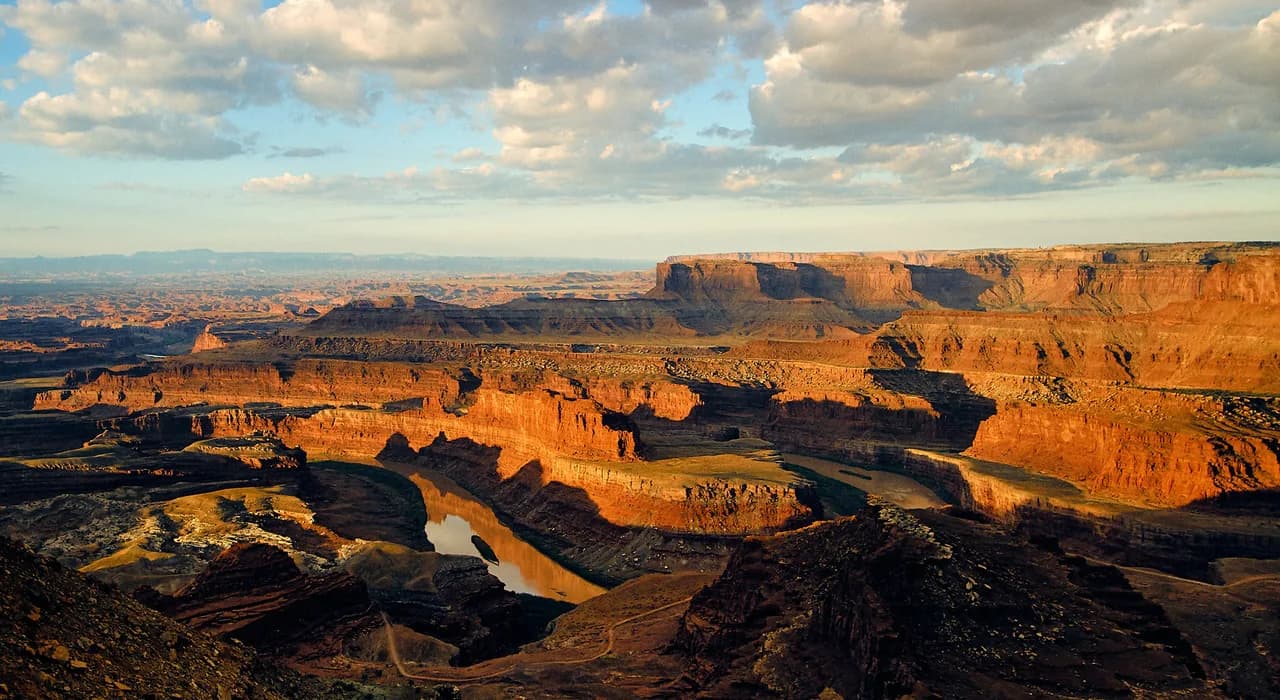
Moab rewards you with arches, canyon walls and the Colorado River, but it does not put a soakable hot spring at your doorstep. The realistic target for a hot-spring detour from Moab is the Sevier Valley around Monroe, where natural mineral pools spill down a red hillside and a vintage resort pipes the same geothermal water into tubs. This guide sorts the options by drive time, pool type and what you actually get when you arrive.
If your trip is built around Canyonlands and Arches, treat a soak as a separate half-day or overnight rather than a quick stop. The springs sit west of the Wasatch Plateau, reached via Interstate 15 and SR-118, so the route favors travelers already heading toward Richfield or Salt Lake City.
Why Moab is a poor base for hot springs
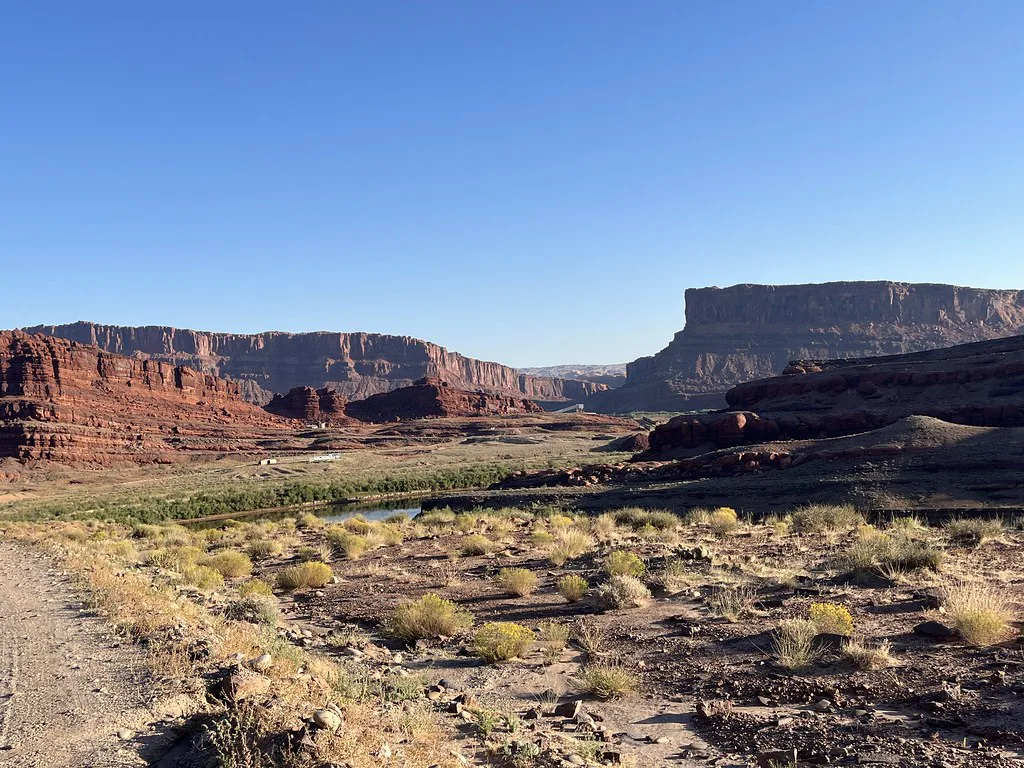
The geography works against a quick soak. Moab sits in southeast Utah, while the state's accessible natural pools cluster in the Sevier Valley and along the I-15 corridor to the west. A soaking detour from Moab means committing to a long drive each way, so it makes more sense as an overnight or a route change than as an afternoon errand.
That distance is why locals and repeat visitors treat Moab as a red-rock base and save the hot springs for the drive home. If your itinerary already includes Richfield or the Monroe area, build the soak into that leg. If it does not, weigh whether a long round trip is worth losing a day in the parks.
Red Hill Hot Springs in Monroe: the closest natural soak
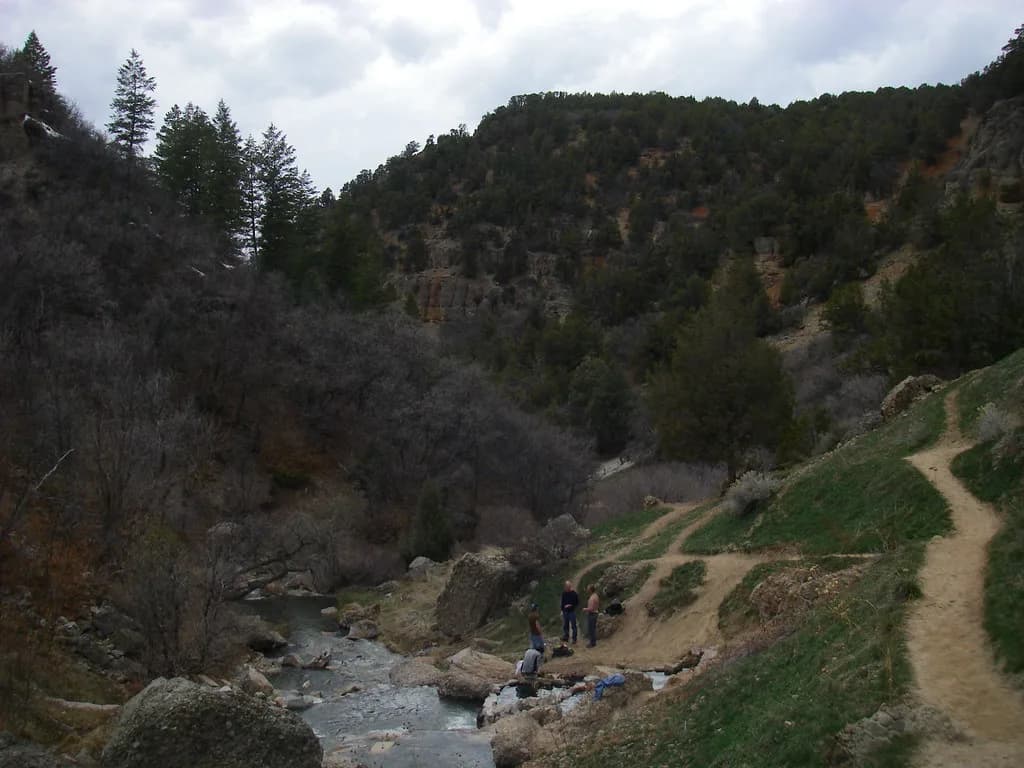
Red Hill Hot Springs is the natural option that makes the detour worthwhile. It sits about 1.3 miles east of Monroe in Sevier County, where geothermal water cascades down a vivid red mineralized hillside into a series of small pools. The land is privately owned but has been donated for public use and is managed by the city of Monroe, with a parking area and pit toilet at the base.
From Moab, the sensible route runs north and west to Interstate 15, then south on I-15 to the SR-118 exit for Monroe. Richfield, about 10 miles north on SR-118, is the nearest town with full services, so fuel and groceries belong there rather than in Monroe. The drive is long enough that you should plan it as a half-day or an overnight, not a lunch stop.
Red Hill temperatures: four zones on one hillside
The pools are not one uniform soak. The source at the top of the hill is near boiling, and the upper pool known as the Lobster Pot is often too hot for sustained soaking. The middle pools typically range from about 100 to 110 degrees Fahrenheit depending on conditions and are the most popular for soaking, while the lower pool is the coolest.
The source at the top of the hill is near boiling, and the upper Lobster Pot is often too hot for sustained soaking.
Test each pool before you commit, because the temperature shifts with flow and weather. Families with children usually settle at the lower pools, where the water is gentler, and keep everyone well away from the scalding source at the top. Do not submerge your head in untreated geothermal water, and keep your footing on the slick mineral edges.
Red Hill access: East 300 North off SR-118
The approach is straightforward if you follow written directions. From Main Street in Monroe, which is SR-118, turn east onto East 300 North and follow it about 1.3 miles; the road turns to graded dirt after the last buildings, and you continue roughly 0.4 miles to the parking area at the foot of the red hill. The pools are visible from the lot, so there is no hike.
Navigation apps are known to send drivers to Mystic Hot Springs instead of Red Hill, so follow the East 300 North address or the written route.
Navigation apps are known to send drivers to Mystic Hot Springs instead of Red Hill, so punch in the East 300 North address or follow the written route rather than trusting a pin. The dirt road is generally fine for all vehicles in dry weather, and high clearance helps after rain or snow. In winter, snow can make the final stretch difficult.
Red Hill rules and site setup
Red Hill is a city-managed site with a light footprint: a parking area, a pit toilet, and the pools themselves. There is no entry fee, and the site closes at dusk. Camping at the spring is not permitted, and signs at the parking area enforce the rule.
Dogs are allowed on a leash but must be kept away from the hottest upper pools, and a swimsuit is required. The hillside's red and orange color comes from iron minerals and fragile thermophilic bacteria, so stay on the paths and do not climb the slope behind the pools. Monroe maintains the site, and respectful use is what keeps it open. Check current conditions with the city of Monroe before a winter attempt.
Mystic Hot Springs, four miles away
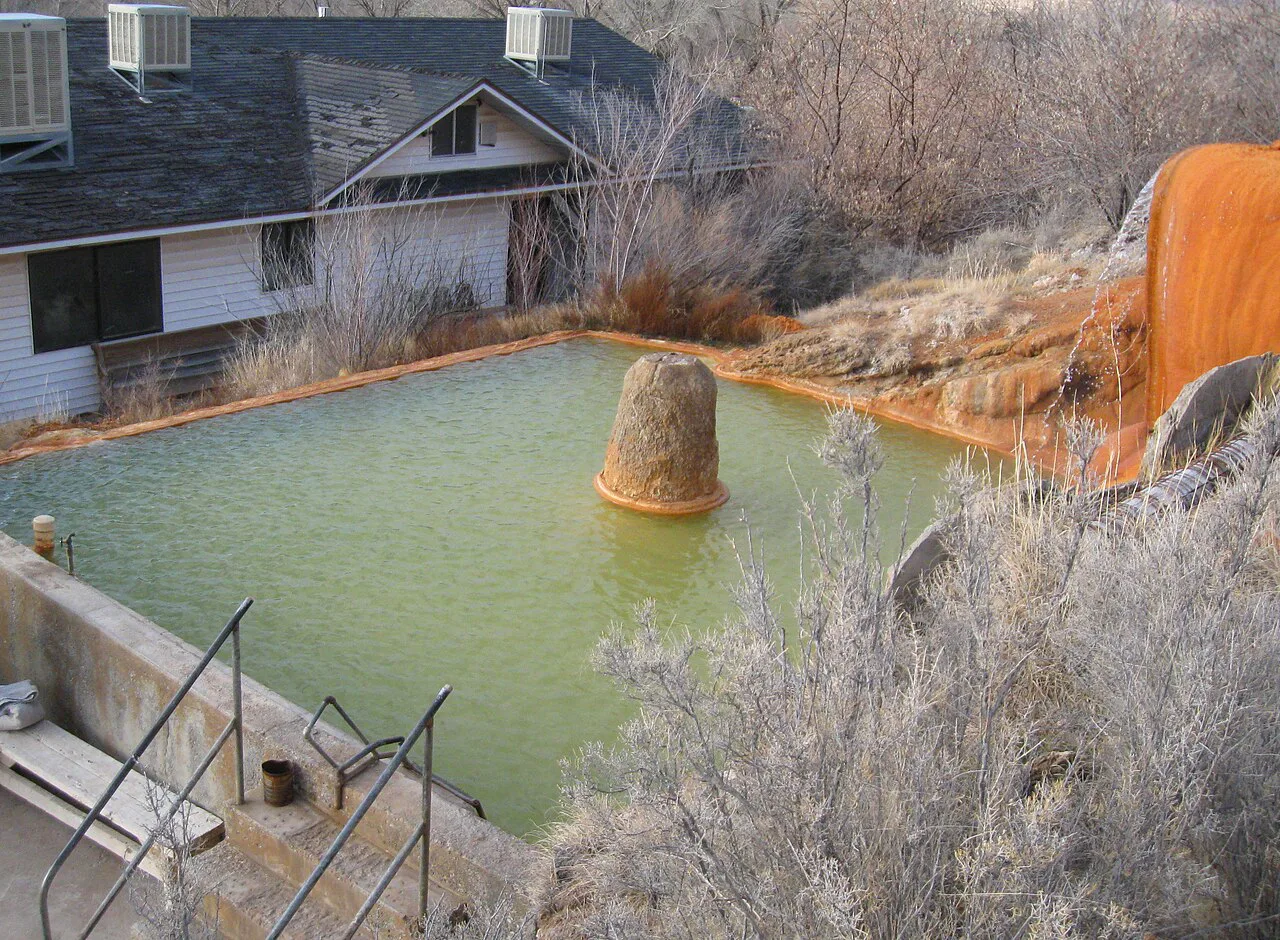
Four miles from Red Hill, Mystic Hot Springs offers the opposite experience: a private rustic resort where the geothermal water is piped into two large soaking pools and six porcelain tubs. The most photographed tubs are slowly being swallowed by fiery-orange travertine, and a pipe feeding the main pool has grown into an arched mineral formation. It is clean, maintained and unlike anything else in the state.
Entry costs fifteen dollars unless you are an overnight guest, and the resort also offers cabins, converted buses and campsites for people who want to stay. The fee buys you maintained tubs and a curated setting rather than a wild soak, which makes Mystic the better pick for travelers who want comfort and a memorable backdrop over roughing it.
Pairing Red Hill and Mystic in one Sevier Valley trip
Because the two springs sit minutes apart, the obvious plan is to soak at Red Hill in the morning and book a tub session or an overnight at Mystic for the evening. Red Hill suits travelers who want a free, natural, uncrowded soak, while Mystic suits those who want vintage tubs, accommodation and a resort feel. Base yourself in Richfield for full services, or stay at Mystic if you want to roll out of a tub and into a cabin.
Weekday mornings are your best shot at having Red Hill to yourself, since the pools are small and weekends draw a crowd. If you are building a longer Utah soaking tour, the broader guide to hot springs in Utah will help you sequence other stops alongside this one.
Gear and etiquette for Red Hill
Pack dark swimwear and an older towel. The iron-rich water and red sediment are known to stain light clothing permanently, and the mineral deposits around the pools are slippery when wet. Water shoes or sandals with grip make moving between pools much safer.
The site is open desert with no shade, so bring sun protection and drinking water, especially in summer. Pack out everything you bring in, stay off the fragile red hillside, and leave the pools as you found them. That etiquette is the price of keeping a donated, city-managed site open to the public.
Camping and lodging near Red Hill
You cannot camp at the spring, but BLM land surrounds the area and offers free dispersed camping along nearby dirt roads. Monroe Canyon Campground provides a more developed option in the same area, and Richfield has the fullest range of motels and services. Mystic Hot Springs adds cabins and converted buses for travelers who want to stay on site.
Half a day versus a full day
With half a day, pick one spring and do it well. Red Hill rewards a short, focused visit: soak in the middle pools, cool off in the lower pool, and drive back toward I-15 before dusk. Mystic suits a half-day if you want a tub and a shower rather than a hike-in soak.
A full day lets you combine both, add a stop in Richfield for supplies, and still make progress toward your next destination. If you are heading north toward the Wasatch Front afterward, the hot springs near Park City make a logical second stop on a longer loop.
Combining a soak with the drive back toward Moab
The return leg is the place to be realistic. Driving back to Moab after an evening soak puts you on the road late, so an overnight in Richfield or Monroe is the smarter plan. If your route instead continues south, St. George and its spring-fed pools are a natural next stop on a southern Utah loop, and the hot springs near St. George guide lays out that option. Drivers continuing farther south into the desert can compare the same soak-or-skip decision with the Arizona hot springs guide.
Springs that show up in searches but are closed or gated
Some famous Utah springs are not worth the detour right now. Pah Tempe near Hurricane is gated off and closed to the public, and trespassing carries real risk of fines. Fifth Water, also known as Diamond Fork, has been closed with no reopening estimate, and visitors have been cited for sneaking in.
Cross-check any spring you find in a search result before you build a route around it. The Utah hot springs guide keeps a broader list of what is currently open and soakable across the state.
Plan Your Visit
Moab is a red-rock base, not a hot-spring town, so treat a soak as its own trip. Red Hill Hot Springs in Monroe gives you a free, natural hillside soak with a pit toilet and no hike, and Mystic Hot Springs four miles away gives you maintained tubs and a place to sleep. Pair them in one Sevier Valley overnight and you get both without wasting a day.
Build the route via I-15 and SR-118, fuel up in Richfield, pack dark swimwear and grippy sandals, and plan to leave before dusk. That is the realistic version of hot springs near Moab. For every soak in the state, start with our guide to Utah hot springs.
Frequently Asked Questions
Are there hot springs in Moab, Utah?
No soakable hot springs sit in or immediately around Moab. The closest realistic natural soak is Red Hill Hot Springs in Monroe, reached via Interstate 15 and SR-118, with Mystic Hot Springs four miles away in the same valley.
How far is Red Hill Hot Springs from Moab?
Red Hill is in Monroe, in Sevier County, west of the Wasatch Plateau. The drive from Moab runs north and west to Interstate 15, then south to the SR-118 exit for Monroe. Plan it as a half-day or overnight rather than a quick stop.
Is Red Hill Hot Springs free?
Yes. Red Hill has no entry fee and is managed by the city of Monroe, with a parking area and pit toilet on site.
What is the water temperature at Red Hill Hot Springs?
The source at the top of the hill is near boiling, and the upper Lobster Pot pool is often too hot for sustained soaking. The middle pools typically run about 100 to 110 degrees Fahrenheit, and the lower pool is the coolest. Test each pool before entering.
Can you camp at Red Hill Hot Springs?
Camping at the spring is not permitted, and the site closes at dusk. BLM land around the springs offers free dispersed camping along nearby dirt roads, and Monroe Canyon Campground provides a developed option.
How does Red Hill compare to Mystic Hot Springs?
Red Hill is a free, city-managed natural soak with small hillside pools and minimal infrastructure. Mystic is a private resort with piped tubs and pools, travertine formations and overnight stays, and it charges an entry fee for day visitors.
Are dogs allowed at Red Hill Hot Springs?
Dogs are permitted on a leash but must be kept away from the hottest upper pools. Children should also stay clear of the scalding source at the top of the hill.
Sources
Hot springs notes for your next road trip
Optional updates when we add or revise hot springs guides.
You might also like
Continue reading
More guides you'll find useful