Baker Hot Springs, Washington: Access and Trip Planning
Plan a soak at Baker Hot Springs in Washington's Mount Baker-Snoqualmie National Forest: the rough forest road, short trail, pool temperatures and road season.
On this page
Baker Hot Springs is the North Cascades soak for travelers who want a steaming forest pool without a resort gate, a day-use kiosk or a long approach hike. One rock-lined pool sits in the trees on the western flank of the range near Baker Lake, warm enough for a long soak and small enough that around 10 people fill it. It suits road-trippers based around Concrete and Bellingham who accept a rough final stretch of forest road in exchange for a short walk to the water.
The trade-off is access, not distance. The drive up Forest Road 1144 is rough and slow, and snow closes the forest road from late fall into spring, so the spring is a fair-weather stop rather than a year-round one. Plan it as a half-day out of Concrete or a camping night on national forest land and it slots neatly into a North Cascades loop.
Why Baker Hot Springs draws a crowd
The appeal is straightforward: a natural pool in national forest, a walk of a few minutes, and no developed infrastructure between you and the trees. The Washington Trails Association describes the approach as a rough road followed by a short trail to an extremely popular hot springs near Mount Baker, which sums up the trade-off — easy once you arrive, but busy.
Because the pool is small, popularity matters more here than at a developed pool complex. On a summer weekend you may share the main pool with a full group of bathers; on a weekday morning in spring or fall you may have it largely to yourself. Build the timing decision into the trip rather than treating the soak as a quick roadside stop.
Where it sits
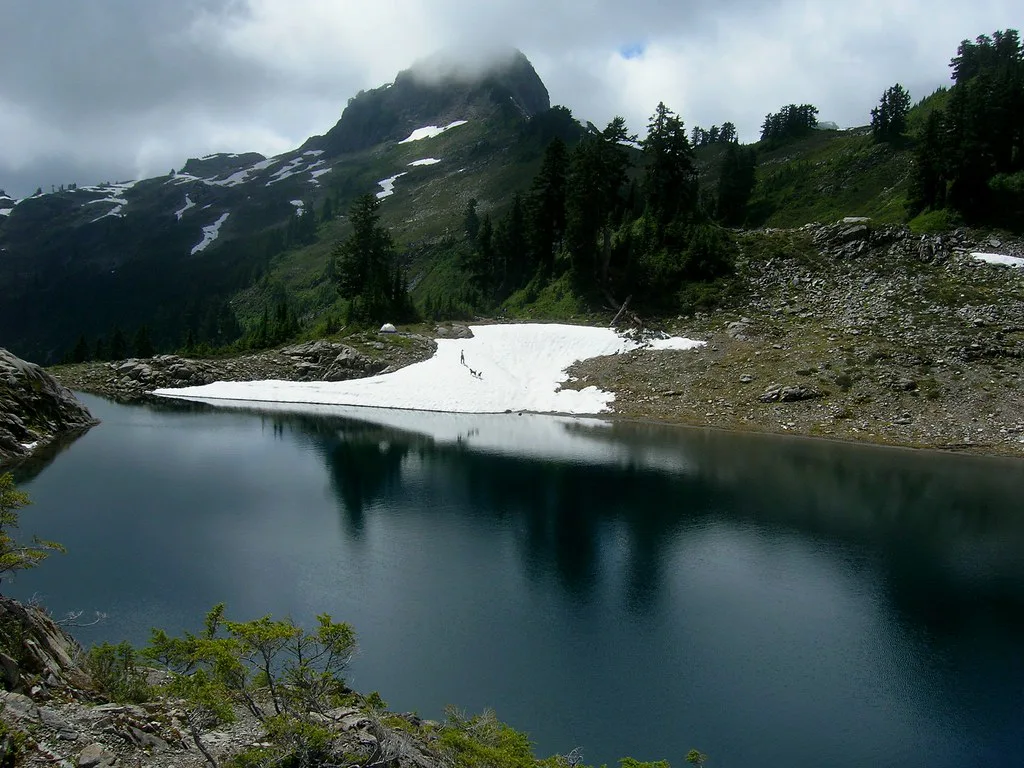
The spring lies in Mount Baker-Snoqualmie National Forest, Mount Baker Ranger District, in Whatcom County north of Concrete. The forest road address is on Forest Road 1144 off Baker Lake Road, and the trailhead coordinates published for the site are roughly 48.7638, -121.6717, useful when cell service drops on the drive in.
This is the Baker Hot Springs of the North Cascades, near Baker Lake and Mount Baker, not any of the springs sharing the name elsewhere. For the wider set of soaks across the state, from resort pools to other primitive forest springs, browse our guide to hot springs in washington before you commit this one to an itinerary.
Getting there
From Concrete, follow Burpee Hill Road as it becomes Baker Lake Road for about 11.5 miles. Turn left onto Forest Road 1130 just past the Boulder Creek Bridge, continue about 3.9 miles, then bear right onto Forest Road 1144 and follow it to the parking area at the trailhead. The guide that documents this route gives roughly 90 minutes from Bellingham and about two and a half hours from Seattle.
Save the directions offline before leaving Concrete. Navigation apps are unreliable once you leave the highway, and the left turn onto Forest Road 1130 after the Boulder Creek Bridge is the step to have written down.
Save the directions offline before leaving Concrete. App-based navigation is unreliable once you leave the highway, and the junction sequence — left onto 1130 after the bridge, right onto 1144 — is the part worth having written down. Fuel up and buy supplies in Concrete, since services thin out quickly north of town.
The road in
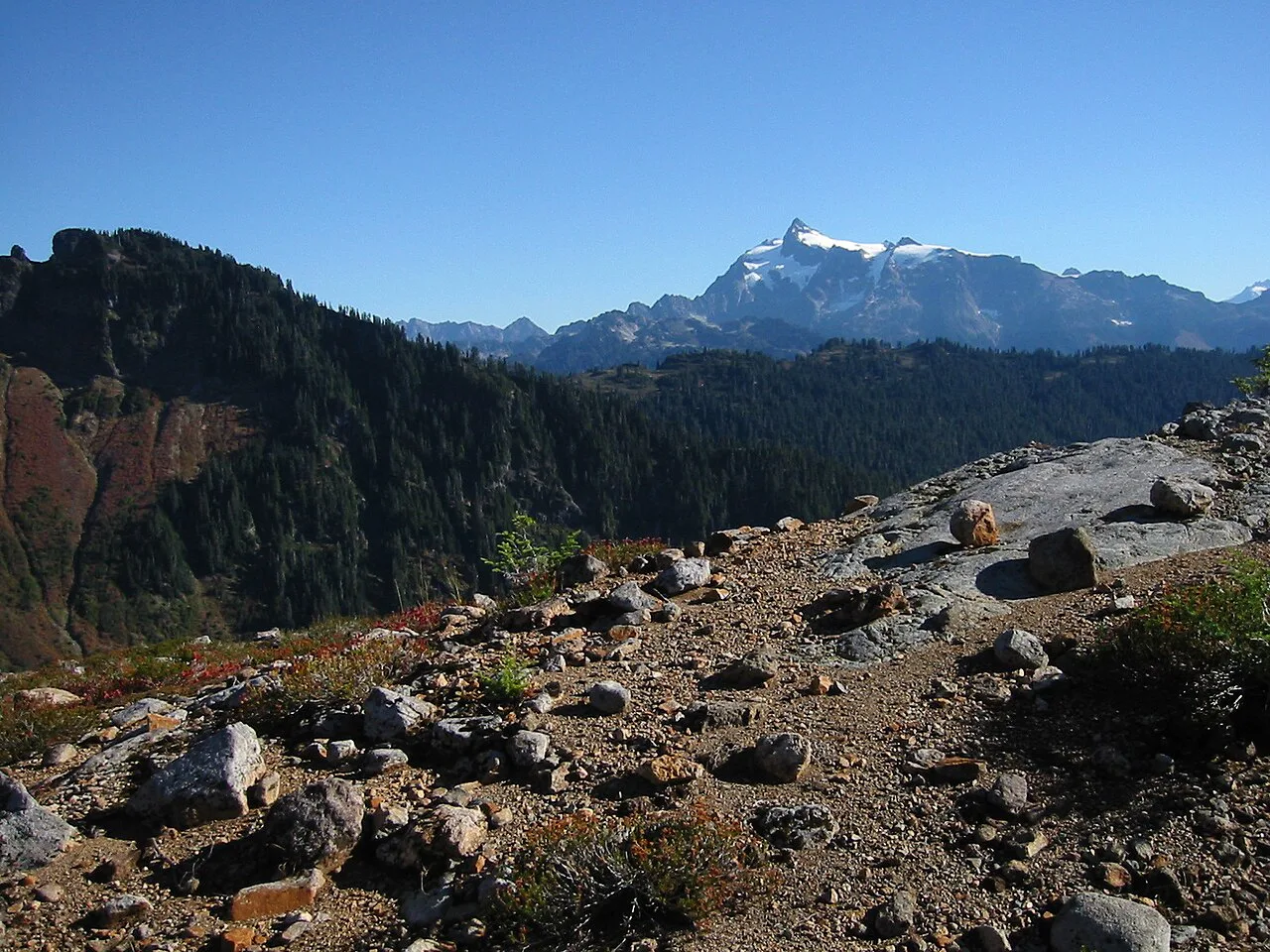
Forest Road 1144 is the decision point of the trip. It is rough and potholed, and a high-clearance vehicle or 4WD is strongly recommended; standard sedans are not advised on this stretch.
Forest Road 1144 is rough and potholed. Standard sedans are not advised on this stretch, and icy conditions make the road a poor bet regardless of vehicle.
If your car is low, the honest choice is to skip the spring or plan around it rather than scrape a sedan up the last miles. Driving slowly and picking lines through the potholes is the whole technique; there is no alternate paved approach to the trailhead. Icy conditions make the road a poor bet regardless of vehicle, so the shoulder seasons are about snow-free road days, not just warm weather.
The trail
From the trailhead, a roughly 0.3-mile trail leads directly to the springs with minimal elevation gain, which makes the walk itself easy for most visitors once they have parked.
AllTrails lists the route as an easy 0.6-mile hike with about 72 feet of elevation gain, taking half an hour to an hour round trip, which is consistent with a short there-and-back walk rather than a hike.
Wear shoes you can drive in and walk in, and carry your soaking gear in one bag so you are not making two trips. The path is short enough that a towel and a warm layer are all the logistics you need beyond the drive.
The pools
There is one main rock-lined pool that holds around 10 people, plus a smaller secondary pool that works more as a foot bath. The water is silty and murky rather than clear and carries a mild sulfur odor.
The main pool is where you want to sit; the secondary basin is best for cooling your feet or warming up while you wait for space. The pool floor is slippery with silt, so step in slowly and keep your footing rather than hurrying to a spot. Facilities were removed decades ago as the Forest Service returned the site to natural conditions, so plan on changing at your vehicle.
Water and temperature
The source runs at about 110 degrees Fahrenheit, while the main pool typically sits around 100 to 101 degrees. The ground nearest the vents is the hottest zone, so test the water and choose your seat accordingly rather than settling straight onto the warmest spot.
Treat the water as untreated geothermal water: keep your head above the surface and avoid drinking it. Seasonal landslides send volcanic ash and mud into the pools, sometimes clogging the vents until spring visitors clear them out, so the temperature and clarity you find can shift from year to year.
Season and access
Snow closes the forest road to the trailhead from late fall into spring, so the workable window runs from roughly late spring through autumn. Winter soaks happen only when the road is passable, and icy sections make the drive a poor bet for a low-clearance car even then.
Before a shoulder-season run, check road and avalanche conditions with Mount Baker-Snoqualmie National Forest, which manages the district. That one call covers the two things most likely to cancel the trip: a gate closed by snow and a slope you should not park under.
Crowds and timing
Summer is the busiest stretch, and the main pool's roughly 10-person capacity fills fast on warm weekends. Spring and fall give the best balance of comfortable soaking weather and manageable crowds, while a weekday start gets you to the trailhead before the midday arrivals.
Arrive early and plan a backup. If the pool is full, walk down to look at the secondary basin, eat lunch at the trailhead, or shift the soak to a nearby day on your itinerary rather than hovering over bathers. A flexible schedule is the real crowd-management tool at a spring this popular.
Rules on site
Use at Baker Hot Springs is clothing-optional in practice, and nudity is common among visitors. Families should weigh that before making the drive, since the atmosphere at the pool may not match a typical park setting.
Camping is not permitted at the springs themselves, though dispersed camping is available on surrounding national forest land. Dogs are welcome and may be off-leash in some areas, so keep a leash handy for the trail and around other bathers.
Camping and lodging
Dispersed camping on national forest land around the Baker Lake corridor is the closest overnight option, and it pairs well with an early soak before the day-trippers arrive. Choose a previously used site, keep your camp well back from the water, and pack out everything you bring in.
For a bed and a real meal, base yourself in Concrete or farther west toward Bellingham, then drive up in the morning. Baker Lake Road has campgrounds and lake access along its length, so a night near the lake shortens the rough-road section on soak day. Check the fee situation at any national forest campground you plan to use, since those charges are set per site.
What to bring
Pack water shoes for the slippery, silty pool floor, a towel, and a warm layer for the cool forest setting. Bring your own drinking water and snacks, since there are no facilities at the trailhead or the springs, and carry a dry bag for clothes you do not want damp on the drive out.
Cell coverage is limited in this part of Whatcom County, and the surrounding terrain is wild. Carry an offline map, tell someone your plan and expected return time, and store food and scented items properly because bears and other wildlife are present in the forest.
Etiquette for a primitive spring
This is an undeveloped site, so leave it cleaner than you found it: pack out towels, food scraps, and anything else you carried in. Keep soap, shampoo, and sunscreen out of the pool, and do not rearrange rocks or dig out the vents beyond what the spring needs to flow. Give other bathers space, keep voices low, and let the quiet forest setting be part of the soak.
Nearby soaks and road-trip pairings
Baker Hot Springs fits a North Cascades itinerary that continues west toward the coast or south through the Cascade foothills. For a developed alternative on the Olympic Peninsula, Sol Duc Hot Springs Resort runs mineral pools and cabins in a national park setting, a very different soak from this rock-lined forest basin. If you are weighing a primitive forest soak against a resort pool, our Oregon hot springs guide runs through the same choice at pools south of the Columbia.
Closer to the Columbia River corridor, Carson Hot Springs, Washington pairs a historic resort and bathhouse with the Wind River valley, and Goldmyer Hot Springs, WA offers a reservation-limited primitive soak near North Bend for travelers who want another hike-in option. Both work as second stops if you are building a longer loop, and our state guide maps the rest of the options.
Plan Your Visit
Baker Hot Springs rewards planning more than most soaks: the rough road, the snow season and the small pool all shape the trip. Go on a weekday in spring or fall, drive a high-clearance vehicle, and bring everything you need for a short forest walk and a long sit in the water.
Pair the soak with dispersed camping or a night in Concrete, and keep the drive back in daylight. If the road or the weather turns, shift to a developed pool or another North Cascades stop rather than forcing the approach.
Frequently Asked Questions
Is Baker Hot Springs free to visit?
The spring sits on national forest land and no day-use fee or Northwest Forest Pass is required, according to the site guide that documents the access route. It is an undeveloped site with no facilities, so bring your own water, towel and gear.
How long is the hike to Baker Hot Springs?
The trail from the Forest Road 1144 trailhead to the springs runs about 0.3 miles with minimal elevation gain. AllTrails lists the route as a 0.6-mile out-and-back that takes roughly half an hour to an hour at a relaxed pace.
Is the road to Baker Hot Springs rough?
Yes. Forest Road 1144 is rough and potholed, and a high-clearance vehicle or 4WD is strongly recommended. Standard sedans are not advised on that final stretch, so plan your vehicle choice before leaving Concrete.
What is the water temperature at Baker Hot Springs?
The source runs at about 110 degrees Fahrenheit, while the main pool typically sits around 100 to 101 degrees. The ground nearest the vents is hottest, so test the water and choose a seat a little away from the active vents.
Is Baker Hot Springs clothing optional?
Use at the spring is clothing-optional in practice and nudity is common among visitors. Families should consider that before driving up, since the pool atmosphere differs from a developed park or resort setting.
Can you camp at Baker Hot Springs?
Camping is not permitted at the springs themselves. Dispersed camping is available on surrounding national forest land, which lets you stay nearby and reach the pool early before the day-use crowd arrives.
When is the road to Baker Hot Springs open?
Snow closes the forest road to the trailhead from late fall into spring, so the practical window runs from late spring through autumn. Winter visits happen only when the road is passable, and icy conditions make the drive a poor choice even for capable vehicles.
Are dogs allowed at Baker Hot Springs?
Dogs are welcome and may be off-leash in some areas of the national forest around the spring. Keep a leash handy for the trail and around other bathers, and store pet food with your own so wildlife is not drawn to the site.
Sources
Hot springs notes for your next road trip
Optional updates when we add or revise hot springs guides.
You might also like
Continue reading
More guides you'll find useful