
Hot Springs Near Santa Fe: Natural Soaks and Resort Pools
Compare hot springs within reach of Santa Fe, New Mexico, from Jemez Springs primitive soaks to the Gila Wilderness, and pick the right one for your trip.
On this page
Santa Fe works well as a base because two distinct hot spring districts sit within reach: the Jemez Mountains to the west and the Gila country to the southwest. The Jemez corridor rewards a half-day, while the Gila demands a full day or an overnight. Decide how much driving and walking you want before you pick a spring, because the two areas are not interchangeable.
This guide covers the primitive rock pools around Jemez Springs, the developed village baths in the same canyon, and the hike-in springs of the Gila Wilderness. Each entry gives what you actually need to plan: parking, trail length, reported water temperature, and whether to treat it as a quick stop or a backpacking trip.
Where Santa Fe sits relative to the springs
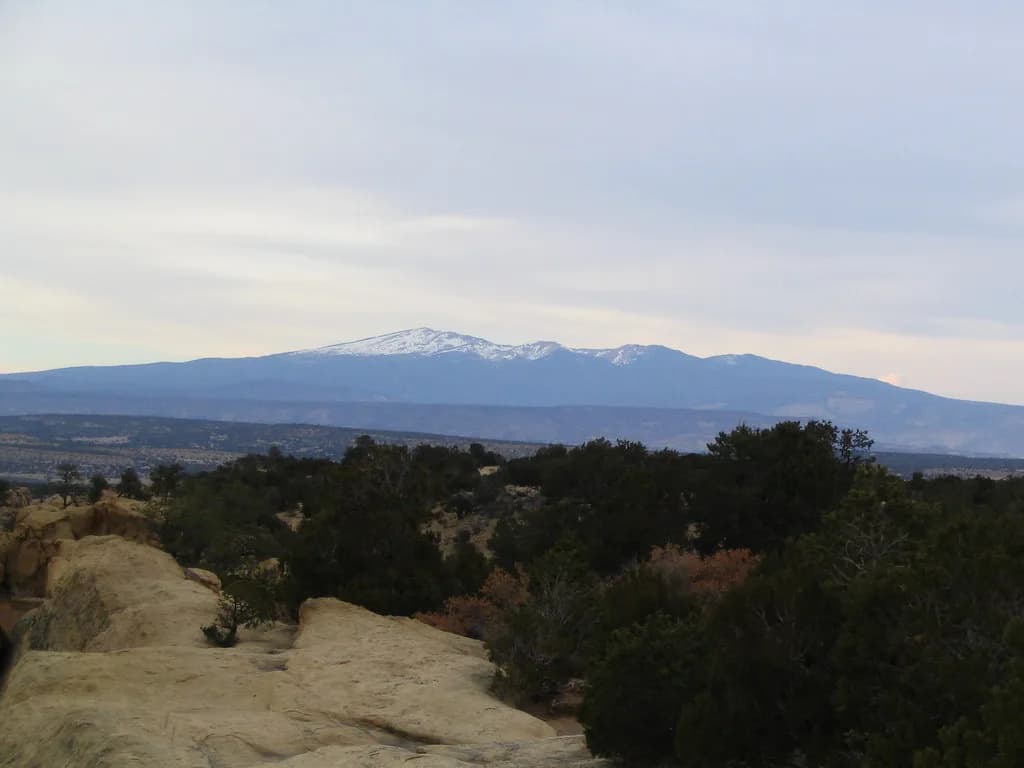
The Jemez Springs corridor runs west of Santa Fe along NM-4, climbing into the Santa Fe National Forest past Jemez Springs village. Most of the well-known primitive soaks here sit within a short walk of the highway, which makes them the easiest natural hot springs to reach from the city. The trade-off is popularity: you trade solitude for convenience.
The Gila country is a different commitment entirely. Lightfeather and Jordan sit near the Gila Visitor Center in the Gila National Forest, southwest of Santa Fe, and the drive is long enough that a day trip is a stretch. Plan the Gila as its own trip with a night in Gila Hot Springs or Silver City rather than tacking it onto a Santa Fe afternoon.
The Jemez Springs corridor on NM-4
NM-4 threads through the canyon past Spence, San Antonio, and the village of Jemez Springs, so you can string several soaks into one loop. Spence sits about seven miles north of the village with a large parking lot on the east side of the highway, and the trail drops to the river and climbs the far bank. That short approach is why Spence draws the heaviest use of the corridor's primitive springs.
San Antonio is farther up a rough forest road and needs a high-clearance vehicle for the final stretch, which thins the crowd. The road sign directs you to the trailhead, and from there it is roughly a half mile of moderate climbing to the pools. Spence's easy access and San Antonio's rougher approach make a natural pair for one afternoon.
Spence Hot Springs: the short walk off NM-4
Spence is the closest thing to a quick primitive soak from Santa Fe: a short trail off NM-4, a quarter mile from the highway, with a pool that sits at about 95 degrees Fahrenheit. The water has cooled in recent years and now reads close to body temperature, so treat it as a warm soak rather than a hot one. That still makes it the most efficient stop if you have limited time.
Day use only here, with no overnight camping at the spring, and bathing suits are required rather than optional. Dogs are allowed on leash but stay out of the water. Because the pool is small and the trail is short, arrive early on weekends or aim for a weekday, and expect to share the rock with a rotating crowd.
San Antonio Hot Springs: rough road, short climb, cascading pools
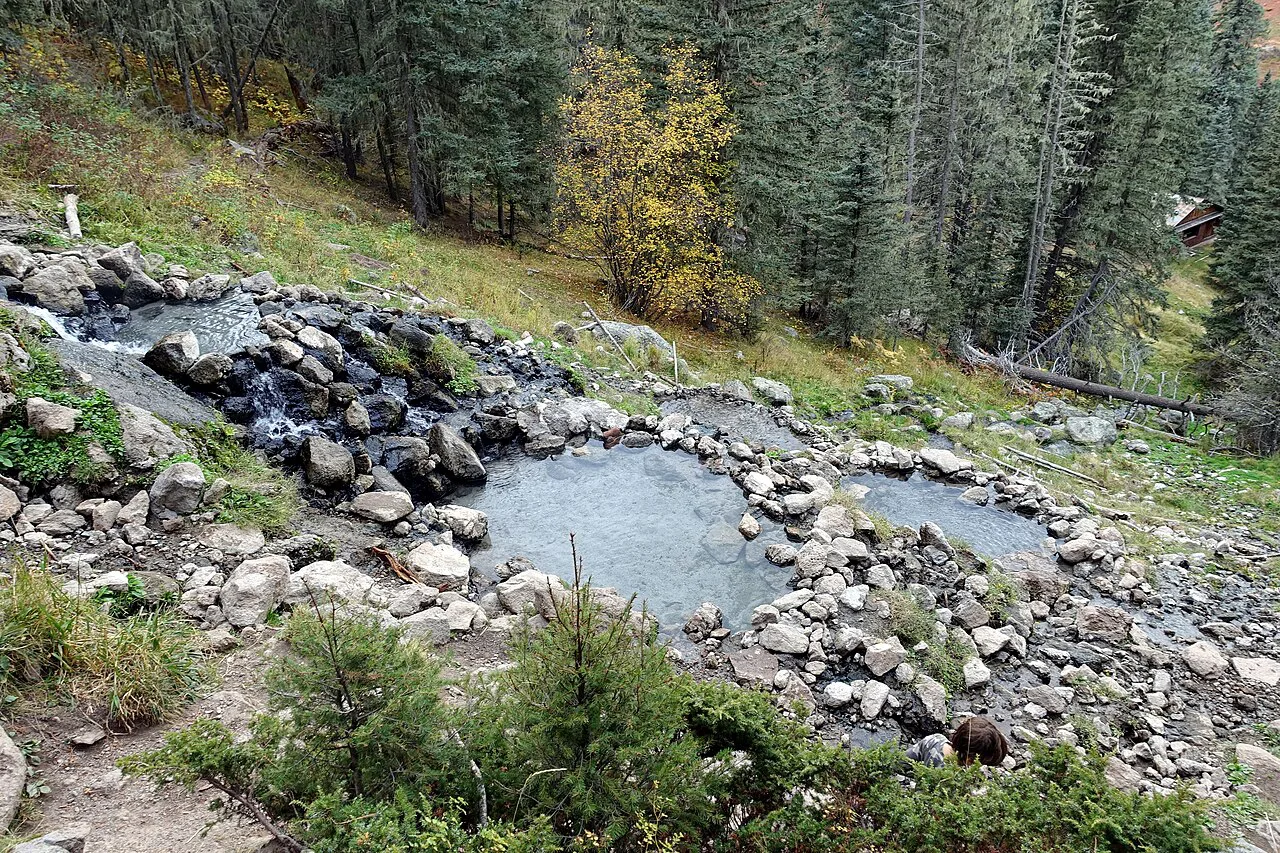
San Antonio is a series of three primitive rock-walled pools stepping down a steep hillside, with the source reported at about 125 degrees and the first pool near 105 degrees. Water cools as it spills between pools, so you can pick your temperature by moving downstream. The pools sit in the Santa Fe National Forest, and forest regulations apply across the site.
The last few miles of forest road are rough enough to call for a 4x4, and that final stretch keeps the pools quieter than Spence. There is no camping at the springs themselves, and the nearest services are a long drive away, so carry what you need. The view down the canyon is the reason many people rate this the best soak in the corridor.
Bath House and village pools in Jemez Springs
If you want a developed soak with no hike, the village of Jemez Springs has commercial baths and a bathhouse where you pay for a maintained pool rather than scrambling to a rock tub. These work well for mixed groups, older travelers, or anyone who would rather not deal with a rough forest road. Book ahead on weekends, when the canyon fills with day visitors from Santa Fe and Albuquerque.
Pair a morning village soak with an afternoon at Spence for a low-effort day that still gets you into the national forest. The drive between the two is short, so you are not burning daylight on the road. That combination suits first-time visitors who want to see the corridor without committing to a long hike.
Gila country: Lightfeather Hot Spring
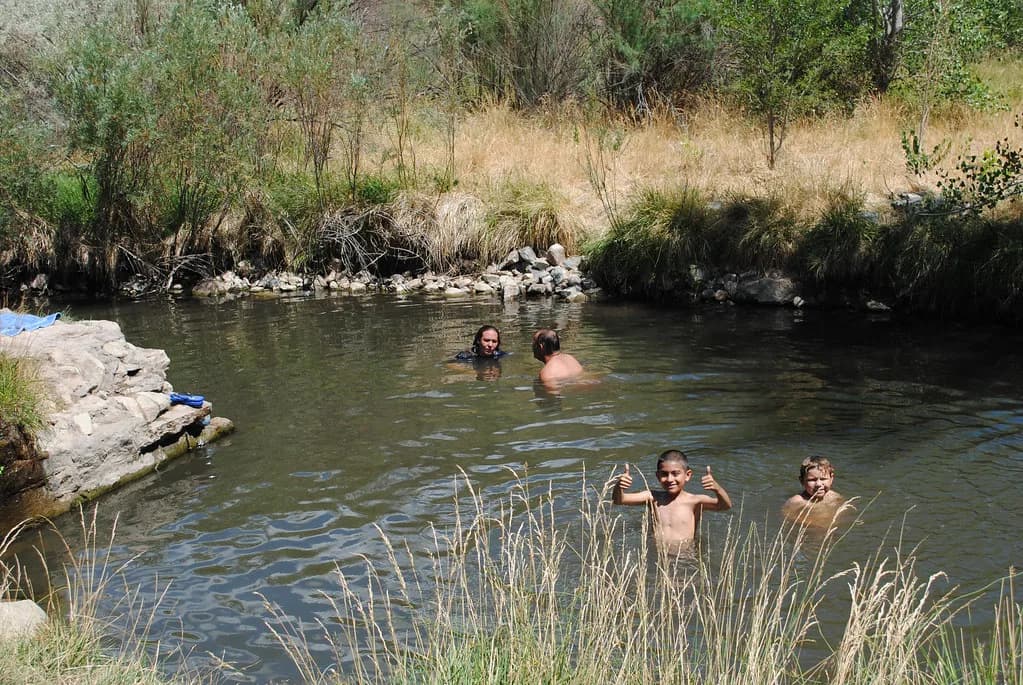
Lightfeather is about a three-quarter-mile, twenty-minute walk from the Gila Visitor Center along Trail 157, the Middle Fork Trail, which puts it among the most accessible wilderness soaks in the state. The spring flows from the base of a hill into the Middle Fork of the Gila River in a steep canyon. It pulses from the ground roughly once a minute.
The source runs about 130 degrees Fahrenheit, which is far too hot to enter, so soak in the rock-lined pools visitors have built in the river rather than at the vent. Geothermal activity can also make rocks in the riverbed hot in spots, so test the bottom with a foot before you settle in. This is the spring to choose if you want a short hike and real heat in the same afternoon.
Jordan Hot Spring: the long hike that works best as an overnight
Jordan sits roughly seven miles in via Little Bear Canyon, Trail 729, or a little over eight miles via the Middle Fork route, and both approaches involve many river crossings. The Park Service rates the hike moderately strenuous and recommends it as an overnight rather than a day hike. Camp sites sit both above and below the spring.
The pool itself is about twenty feet across and three feet deep, holding near 94 degrees Fahrenheit, which is why some call Jordan a warm spring rather than a hot one. Firewood is scarce because of heavy use, and cutting standing trees or brush is unlawful; gather only dead and down wood. Spring break is the busiest stretch, so shift your dates if you want the pool to yourself.
This is wilderness, so pack out everything you carry in and keep camp well away from the water. River crossings rise with snowmelt and monsoon runoff, so check the flow before you commit to the Middle Fork route with a full pack. If you want big scenery without the mileage, Lightfeather is the better fit.
Comparing the options
Ranked by effort, Spence is the easiest primitive soak, San Antonio adds a rough road and a half-mile climb, Lightfeather is a short canyon walk, and Jordan is a full wilderness day or overnight. Water runs hottest at the Lightfeather source and San Antonio source, while Spence and Jordan sit near body temperature. Match the temperature to your preference before you choose the drive.
| Spring | Access | Water temperature | Camping |
|---|---|---|---|
| Spence Hot Springs | Short trail, a quarter mile from NM-4 | About 95 degrees Fahrenheit | Day use only |
| San Antonio Hot Springs | Rough forest road, half-mile climb | Source about 125 degrees, first pool near 105 | No camping at the springs |
| Lightfeather Hot Spring | Three-quarter-mile walk from the Gila Visitor Center | Source about 130 degrees | — |
| Jordan Hot Spring | About seven miles in, recommended as an overnight | Near 94 degrees Fahrenheit | Camp sites above and below the spring |
Crowds follow access: Spence and Lightfeather see the most traffic because both are short walks, and Jordan draws overnighters in spring. San Antonio and the deeper Gila routes reward anyone willing to work a little harder. If you have one day, stay in the Jemez corridor; if you have two, give the Gila its own day.
Best time to go
Spring and early summer bring the heaviest visitation, and Jordan in particular fills around spring break. Fall is the sweet spot for the Jemez corridor: cooler hiking weather, thinner crowds, and stable forest roads. Winter access varies with snow on the high forest roads, so a rough-road spring like San Antonio can be out of reach after a storm.
Fall is the sweet spot for the Jemez corridor, with cooler hiking weather, thinner crowds and stable forest roads.
Weekdays beat weekends across the board, especially at Spence, where the parking lot off NM-4 fills quickly on Saturday mornings. Monsoon season raises river levels in the Gila, which matters most for the many crossings on the Jordan approach. Build a flexible plan around the forecast rather than locking in a single spring.
What to bring for primitive soaks
For Spence and San Antonio, carry shoes with grip for steep dirt and slick rock, plus a towel, water, and sun protection for the exposed climb. For Lightfeather and Jordan, add river-crossing footwear you do not mind soaking, a dry bag for layers, and a headlamp if the hike out runs late. The Middle Fork crossings are the crux of the Jordan trip, so plan for wet feet.
At the primitive hike-in springs, follow Leave No Trace: pack out all trash, keep soap and sunscreen out of the water, and camp on established sites. Do not build new fire rings or move rocks to reshape pools at Lightfeather. A trash bag in your pack makes it easy to carry out what others left behind.
Camping and lodging bases
For the Jemez corridor, Jemez Springs village is the natural base, with lodging and campgrounds along NM-4 and national forest sites nearby. For the Gila, Gila Hot Springs sits close to the visitor center and Lightfeather trailhead, and Silver City is the larger supply stop. Las Vegas, New Mexico works as a base for the northern springs along the Gallinas Creek corridor.
Montezuma Hot Springs sits just outside Las Vegas along State Route 65, with a parking area and a short walk to three soaking areas of rock and cement tubs. Reported tub temperatures range from about 95 to 120 degrees, and bathing suits are required. The springs close from midnight to 5 a.m., and there is no camping or overnight parking at the site.
Combining springs into a road trip
The Jemez corridor loop is the simplest road trip: Spence, San Antonio, and the village baths all sit along NM-4 within a short drive of each other. Start early, soak at San Antonio while the light is low, then work back toward the village for a developed soak and lunch. That order puts the roughest road first, when you are freshest.
The Gila run is a separate trip: Lightfeather on arrival day, Jordan as an overnight, and a night in Gila Hot Springs before or after. If you are already heading north, the hot springs in taos make a sensible add-on, while travelers coming from the south can slot in a stop near Albuquerque on the way.
If you want a developed resort soak with a spa and dining, Ojo Caliente Mineral Springs Resort & Spa lies north of Santa Fe and pairs well with the Taos corridor. Book treatments and pools ahead for weekends. That gives you a resort day to balance the primitive soaks on the rest of the trip.
Soak safety
Source water at Lightfeather and San Antonio is scalding, so enter downstream of the vent and test with a hand before committing. Rock in and around geothermal water can be hot and slippery, and riverbed rocks at Lightfeather may be heated by the spring itself. Keep your head out of untreated geothermal water, including at warm springs near body temperature.
Source water at Lightfeather and San Antonio is scalding, so enter downstream of the vent and test with a hand before committing.
River levels matter on the Jordan approach, where repeated crossings are the main hazard, and monsoon storms can raise the Middle Fork quickly. Plan the crossing for low flow and turn around if the water is pushing hard against your legs. Tell someone your route and expected return before heading into the wilderness.
Plan Your Visit
Pick your spring by how much time and effort you want to spend: Spence for a quick warm soak, San Antonio for a short climb and hotter pools, Lightfeather for a canyon walk with a scalding source, and Jordan for a wilderness overnight. The Jemez corridor fits a half-day from Santa Fe; the Gila needs its own day or two. If you are weighing this same time-and-effort trade-off elsewhere, our Utah hot springs guide covers developed resorts and wild soaks with the same split.
Check current conditions with the Gila Cliff Dwellings National Monument or the Santa Fe National Forest before you drive out, especially after storms or snow. Then build the rest of the trip around a single base rather than zigzagging between districts. For every soak in the state, start with our guide to New Mexico hot springs.
Frequently Asked Questions
Does Santa Fe have any hot springs?
Santa Fe has no soaking pools within the city itself, but the Jemez Springs corridor along NM-4 west of town holds several primitive springs within a half-day drive. The Gila Wilderness springs are farther southwest and work better as their own trip.
What are the best natural hot springs near Santa Fe?
Spence Hot Springs is the easiest primitive soak from Santa Fe, with a short trail off NM-4 and a pool near body temperature. San Antonio Hot Springs adds a rough forest road and a half-mile climb but offers hotter cascading pools. Lightfeather and Jordan in the Gila country are the best options if you want wilderness scenery and have more time.
How far is Jemez Springs from Santa Fe?
The drive runs west from Santa Fe along US-84 and NM-4 into the Santa Fe National Forest, and most of the corridor's springs sit within a short walk of the highway. Plan on a half-day for one or two soaks, and start early on weekends when the Spence parking lot fills.
Can you drive to San Antonio Hot Springs?
You can drive most of the way, but the final stretch of forest road is rough enough to call for a high-clearance or 4x4 vehicle. From the trailhead, it is roughly a half-mile moderate climb to the rock pools. Check road conditions with the Santa Fe National Forest after snow or heavy rain.
How long is the hike to Jordan Hot Spring?
Jordan is about seven miles in via Little Bear Canyon, Trail 729, or a little over eight miles via the Middle Fork route, and both approaches involve many river crossings. The Park Service recommends it as an overnight rather than a day hike, with camp sites above and below the spring.
Which hot springs near Santa Fe are developed pools?
The village of Jemez Springs has commercial baths and a bathhouse for a developed soak with no hike. North of Santa Fe, Ojo Caliente Mineral Springs Resort & Spa offers a full resort experience with thermal pools and spa treatments.
Sources
Hot springs notes for your next road trip
Optional updates when we add or revise hot springs guides.
You might also like
Continue reading
More guides you'll find useful
.jpg)
