
Hot Springs Near Yellowstone: Montana Soak Guide
Compare hot springs near Yellowstone by drive time, pool type, camping and access, from the pools at Corwin Springs to the Gardner River corridor.
On this page
The hot springs near Yellowstone that you can actually soak in sit outside the park boundary, and the best of them lie along a short stretch of US-89 north of Gardiner. Yellowstone Hot Springs at Corwin Springs pairs flow-through mineral pools with a riverbank setting and a campground, which makes it the simplest base for a trip that mixes soaking with park days. It suits families, RV travelers, and anyone who wants a developed pool rather than a hike and a river ledge.
Inside the park, the famous geothermal features are protected and off-limits to swimming. That makes the corridor between Gardiner and Corwin Springs the practical place to plan a soak, with Mammoth Hot Springs and the Gardner River forming a natural day-trip loop around it.
Why soak outside the park boundary
Yellowstone's thermal features are viewing attractions, not swimming holes. Grand Prismatic Spring, the Mammoth terraces, and the geyser basins are boardwalk and trail experiences where the water is far too hot and the ground too fragile for anyone to enter. Visitors who arrive expecting a soak inside the park leave disappointed unless they know where the developed pools outside the boundary are.
The North Entrance at Gardiner puts you within minutes of that alternative. From the park boundary, US-89 runs north through Paradise Valley, and the hot springs development at Corwin Springs sits along that road. Planning your soak for the end of a park day means you can leave the crowds at the entrance behind and still be in warm water before dinner.
Yellowstone Hot Springs at Corwin Springs
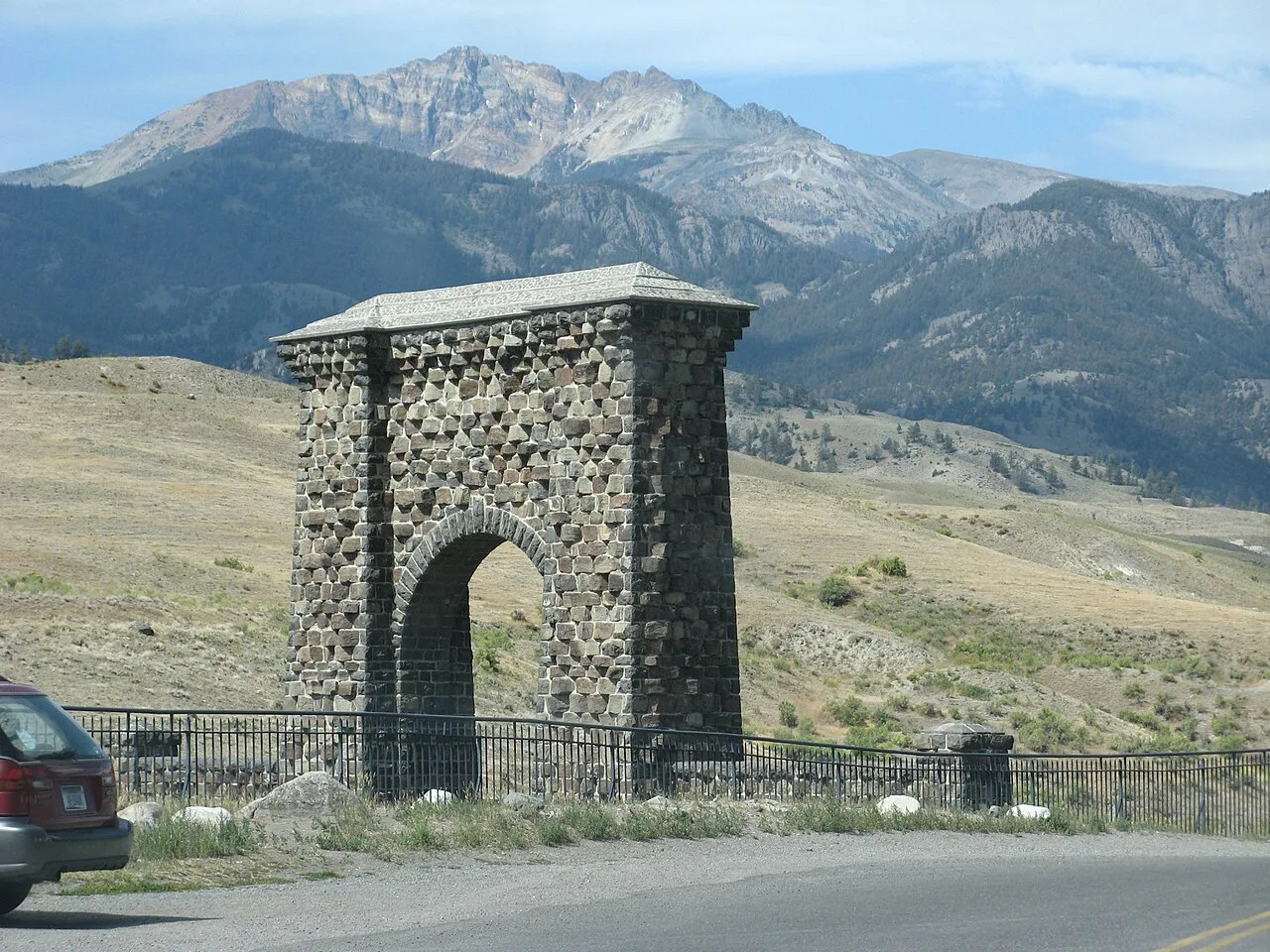
Yellowstone Hot Springs is a developed soaking facility on US-89 in the Corwin Springs area, about six miles north of Gardiner and eight miles north of the North Entrance to Yellowstone. It perches at the south end of Paradise Valley between two mountain ranges, with the Yellowstone River running along the property. The address is 24 East Gate Road, Gardiner, MT 59030.
The soaking area holds roughly 400 square feet of pools in a natural setting, fed by mineral-rich water that circulates continuously through the pools rather than sitting stagnant. That flow-through design keeps the water fresh and gives the soak a clean, open feel. The pools look out on the surrounding mountains, so the experience is as much about the view as the water.
Because this is a developed facility, you get the amenities that primitive soaks lack: showers, bathrooms, and a pavilion on site, with internet access available. That makes it the right choice for travelers with kids, anyone who wants a rinse-off after soaking, or a group that includes non-soakers who need a comfortable place to wait. The trade-off is that you share the pools with other guests rather than having a river ledge to yourself.
The pools: what the soak is like
The setting does most of the work here. The pools sit on the bank of the Yellowstone River, framed by the mountains of Paradise Valley on both sides, and the property has earned recognition for its views. Birds working the river and the big Montana sky are part of the experience, so plan to linger rather than treat this as a quick dip.
This is a pool soak, not a wild-river plunge. The water arrives through continuous flow-through circulation, which keeps the pools mineral-rich and refreshing, and the developed layout means easy entry and exit without scrambling over slippery rock. If your ideal hot spring involves a hike and a gravel bar, look elsewhere in the region; if you want a comfortable soak with a view, this is the one.
Camping and lodging at Corwin Springs
The campground attached to the springs makes it possible to soak in the evening and again in the morning without driving. Tent sites are walk-in only, set along the Yellowstone River directly next to the hot springs, with parking along the road beside the camping area. Rates start at $29 per night for tent sites, and portable toilets, a shower house, and potable water spigots serve the campground.
RV travelers have two choices. Full-hookup sites sit in RV Park B next to the shower house and are charged nightly, while electric-only sites with 50-amp service lie south of Cinnabar Basin Bridge Road and carry a lower nightly rate; bring a 30-to-50-amp adapter if your rig needs one. Tents are not allowed in the full-hookup area because of underground utility lines, and RVs must dump wastewater before connecting to the septic line.
Cabins sleep between four and six guests, each with a private bathroom, shower, Wi-Fi, and a smart TV, and are rented by the night. The two-bedroom suites come in two layouts, and the Farmhouse, which sleeps a larger group, is priced separately. Cabins are pet-friendly with a non-refundable pet fee.
The Gardner River corridor and Boiling River
Boiling River was once the classic Yellowstone soak, where warm water mixed with the cool Gardner River near Mammoth Hot Springs. The trailhead sits just north of the Montana border at the 45th Parallel sign, and the walk along the west bank of the Gardner River ran about 1.25 miles round-trip. The pools were open dawn to dusk, required swimsuits, and closed in spring when high water made them unsafe.
Since the 2022 flooding of the Gardner River, the Boiling River attraction has been inaccessible, and the National Park Service has kept the area off-limits to visitors. Do not plan a soak there on the strength of older guidebooks or maps. Check with the National Park Service before you drive to the trailhead, and treat the developed pools at Corwin Springs as your working alternative.
Mammoth Hot Springs: a walk, not a soak
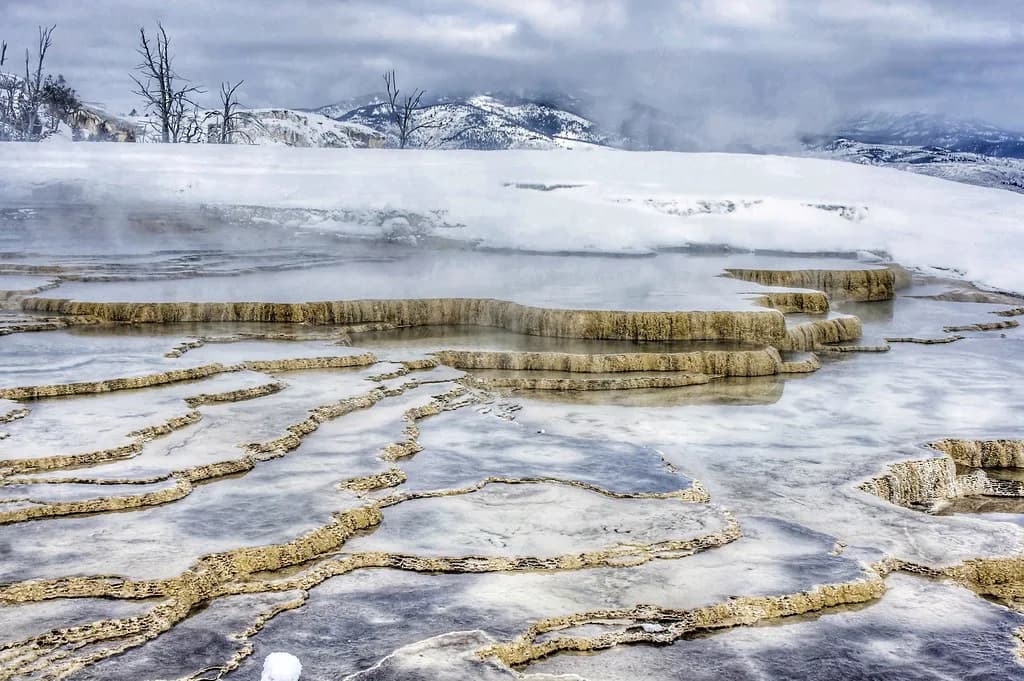
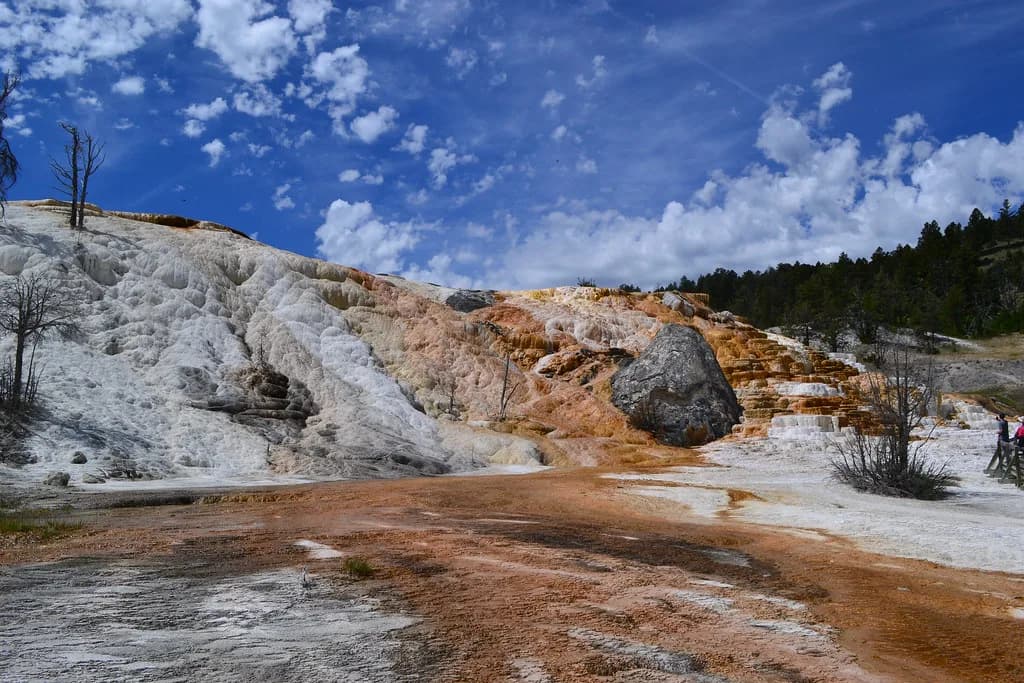
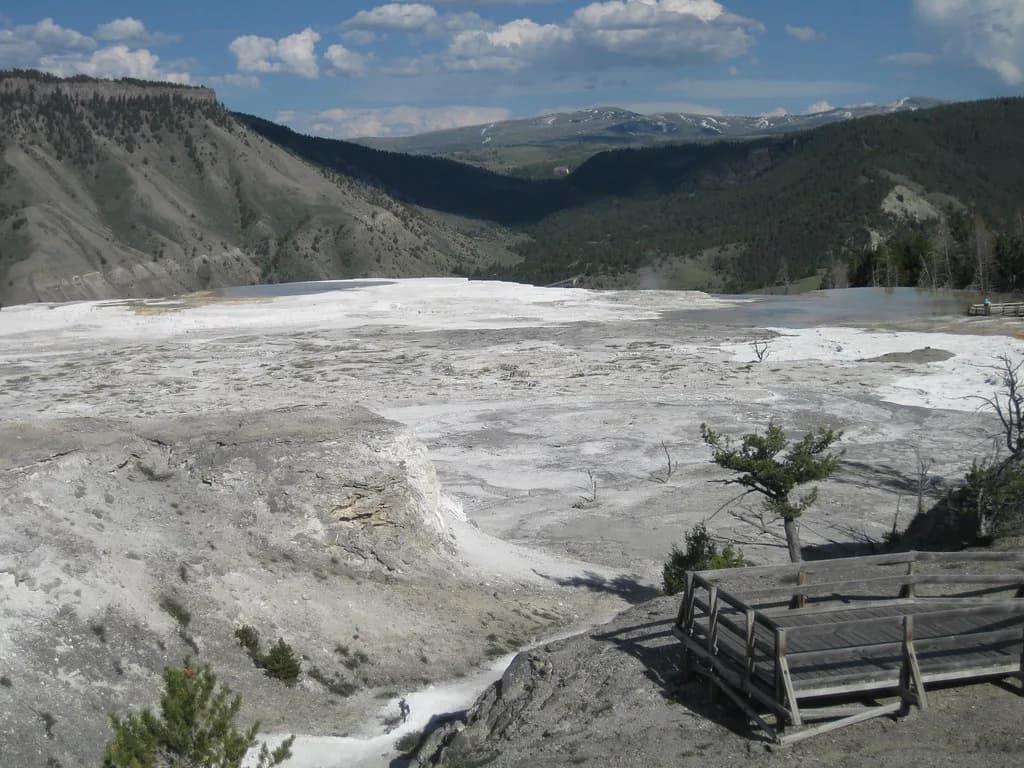
Mammoth Hot Springs is one of Yellowstone's signature geothermal areas, with travertine terraces built by hot water rising through limestone. It is a walking experience on boardwalks and trails, and the terraces themselves are protected formations you view from a distance. Visitors sometimes confuse the name with a swimmable spring, so set expectations before you go: this is scenery, not a pool.
Pair Mammoth with a soak at Corwin Springs by driving the US-89 corridor between the park and Paradise Valley. The terraces make a good morning stop before the day warms up, and the springs at Corwin Springs give you a place to unwind on the way back toward Gardiner. That combination covers both the geothermal spectacle and the actual soak in a single day.
Choosing your soak
The choice near the North Entrance comes down to developed versus primitive. Yellowstone Hot Springs offers pools, showers, bathrooms, and a campground on site, which suits families, RV travelers, and anyone who wants a predictable, comfortable soak after a park day. The region has other developed resorts and primitive river soaks, but the Corwin Springs facility is the one set up for soaking close to the park boundary. If you are weighing the same developed-versus-primitive decision on the other side of the region, the hot springs in Idaho follow a similar split between resort pools and river soaks.
| Spring | Type | Access | Status and facilities |
|---|---|---|---|
| Yellowstone Hot Springs | Developed pools fed by flow-through mineral water | About six miles north of Gardiner on US-89 | Showers, bathrooms, a pavilion and a campground on site |
| Boiling River | Former river soak where warm water met the Gardner River | Walk of about 1.25 miles round-trip from the 45th Parallel sign | Inaccessible since the 2022 flooding of the Gardner River |
| Mammoth Hot Springs | Travertine terraces inside the park | Boardwalks and trails | Scenery to view, not a place to soak |
Drive times are short enough to treat the corridor as one destination. Corwin Springs is about six miles from Gardiner and eight miles from the North Entrance, so you can soak, eat in Gardiner, and still make an evening wildlife drive. If you are building a longer Montana hot springs itinerary, the broader roundup of hot springs in montana helps you slot this stop alongside other resorts and pools.
Best time to go
The North Entrance sees its heaviest traffic in summer, when park visitors pour through Gardiner and fill the corridor. Late spring and early fall bring lighter crowds, cooler evenings that make a soak more inviting, and better odds of having the pools to yourself. Winter soaks have their own appeal, but check road conditions on US-89 before committing to the drive.
Late spring and early fall bring lighter crowds. Check road conditions on US-89 before committing to a winter drive.
Time your soak for the late afternoon or evening, after the day-trippers have left the park and before dinner service in Gardiner. Because the springs sit on the riverbank, breezy evenings can cool you quickly once you leave the water, so keep a towel and a warm layer within reach. Book camping or cabins ahead for summer weekends, when the Corwin Springs sites fill.
Nearby springs for a road trip
Paradise Valley and the country south toward Bozeman hold enough springs to fill a long weekend. Build a loop that starts with the Corwin Springs pools, continues down US-89 toward Livingston, and then turns west toward Bozeman, where developed soaking options cluster. From there, the hot springs near bozeman give you a second anchor for the trip and a different style of pool complex.
Keep the driving realistic: Gardiner to Bozeman is a solid half-day on Montana highways, so plan an overnight rather than trying to soak and return in one push. If your loop swings farther west, the hot springs near missoula add another cluster around a college town with plenty of lodging. A five- to seven-day itinerary can connect the Yellowstone corridor, Bozeman, and Missoula without excessive time behind the wheel.
Leave No Trace for primitive river soaks
If you seek out a primitive river soak along the Gardner or Yellowstone corridors, treat the site as if it has no staff. Pack out everything you bring, including food scraps and wrappers, and leave the rocks and banks as you found them. Keep soaps, including biodegradable ones, out of the water, and give wildlife a wide berth; riverside springs are shared habitat, not just a bathtub.
Treat a primitive river soak as if it has no staff. Pack out everything you bring, and keep soaps, including biodegradable ones, out of the water.
Plan Your Visit
For a soakable hot spring near Yellowstone, point your car north from Gardiner on US-89 and head for Corwin Springs. The developed pools at Yellowstone Hot Springs, the walk-in tent sites along the river, and the RV and cabin options make it the practical base for a trip that pairs park days with warm water. Book your site or cabin ahead, and check with the operator or the National Park Service for current conditions before you go.
Frequently Asked Questions
Are there hot springs you can swim in near Yellowstone?
Yes, but they sit outside the park boundary. Yellowstone Hot Springs at Corwin Springs, about eight miles north of the North Entrance on US-89, offers developed pools fed by flow-through mineral water. Inside the park, the thermal features are protected and off-limits to swimming.
Can you swim in Grand Prismatic Spring?
No. Grand Prismatic Spring is a protected thermal feature viewed from boardwalks and overlooks, and its water is far too hot for people to enter. Treat the park's geyser basins and hot springs as scenery, and plan your soak for a developed facility outside the boundary.
Is the Boiling River open again?
The Boiling River attraction has been inaccessible since the 2022 flooding of the Gardner River, and the National Park Service has kept the area off-limits. Check the park's current status before driving to the trailhead at the 45th Parallel sign.
How far is Yellowstone Hot Springs from Gardiner?
It is about six miles north of Gardiner along US-89, or roughly eight miles from the North Entrance to Yellowstone National Park. The drive is short enough to combine with a park day, and the property sits at the south end of Paradise Valley.
What is the difference between Yellowstone Hot Springs and Mammoth Hot Springs?
Yellowstone Hot Springs at Corwin Springs is a developed soaking facility with pools, showers, and a campground. Mammoth Hot Springs is a geothermal terrace formation inside the park that you view from boardwalks and trails rather than soak in.
Can you camp at Yellowstone Hot Springs?
Yes. The property has walk-in tent sites along the Yellowstone River, full-hookup and electric-only RV sites, and cabins. Book ahead for summer weekends, and check the booking page for current site availability and rates.
Sources
Hot springs notes for your next road trip
Optional updates when we add or revise hot springs guides.
You might also like
Continue reading
More guides you'll find useful

.jpg)