Free Hot Springs in New Mexico: 8 Wild Soaks Worth the Hike
Eight free hot springs in New Mexico, from roadside tubs near Las Vegas to Gila Wilderness soaks, with access, hike lengths and trip planning details.
On this page
New Mexico's free soaks split into two families: travertine and rock pools in the Jemez Mountains within an hour of Santa Fe, and remote Gila country soaks that demand a full day on foot. Both reward travelers who plan around trail effort rather than drive time. This list orders eight of them from easiest roadside access to the toughest backcountry trip, with the posted temperatures and trail numbers you need to choose.
If you want the wider picture first, our guide to hot springs in new mexico maps the developed resort towns alongside these wild pools, so you can see how a free soak fits a longer loop through Taos or Truth or Consequences.
What makes a free soak different in New Mexico
At a free spring you get a pool and a trailhead and little else: no changing room, no posted attendant, no towel service. Trail length and water temperature vary enormously, from a roadside cluster of cement tubs to rock pools a full day's walk into the Gila Wilderness. Decide how far you are willing to hike before you pick a spring, because a 1-mile approach and a 14-mile round trip suit very different days.
Across the state at least 24 springs are documented, with nine described as free wild soaks and the rest paid resorts, bathhouses or managed pools. That split matters when you plan: the free pools usually sit in national forest or wilderness, while the paid ones come with tubs, changing rooms and posted rules.
Montezuma Hot Springs near Las Vegas: the easiest soak on this list
Five miles from Las Vegas, New Mexico, Montezuma Hot Springs lines the Gallinas River with about nine cement soaking tubs, reached with easy roadside access rather than a hike. Posted tub temperatures run from 94 to 120 degrees, so test each one before you commit, and the site stays open until 10pm.
This is the spring to choose when you have an hour, a car and no appetite for a climb. Pair it with a night in Las Vegas, where the plaza and historic hotels give you a base for the Gallinas Canyon drive.
Spence Hot Spring near Jemez Springs: short hike, hot rock pools
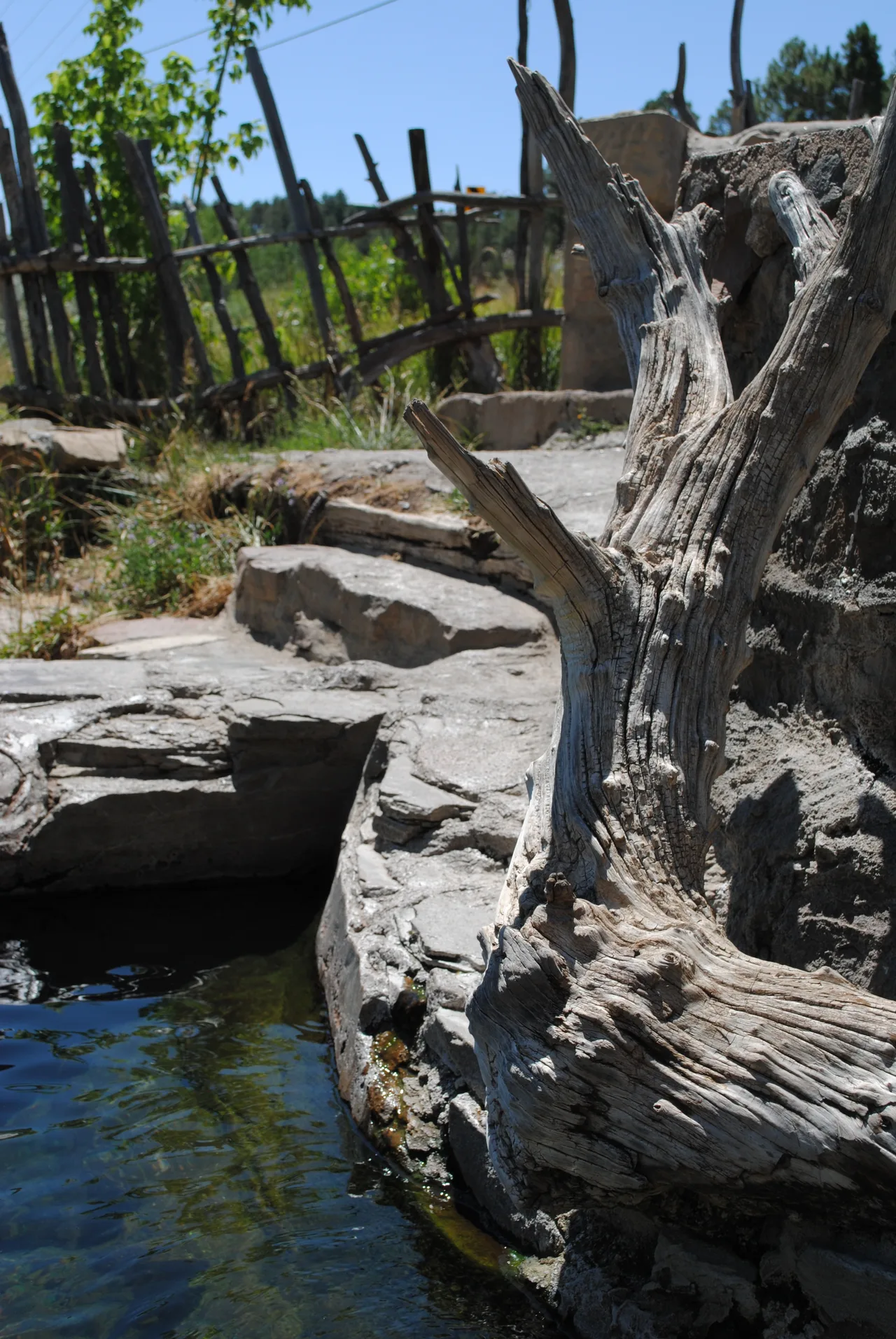
Spence Hot Spring sits in Santa Fe National Forest above the Jemez River, a set of rock pools at roughly 95 degrees reached by a short uphill trail. The climb is brief but steady, and the Forest Service lists a Naegleria fowleri risk at this spring, so keep your head above water. Clothing is optional here, which is worth knowing if you are bringing a group.
Because the hike is short, Spence draws the heaviest traffic of the Jemez soaks. Arrive early in the morning or aim for a weekday, and park only in the designated pullout rather than on the highway shoulder.
San Antonio Hot Springs: primitive pools and a seasonal road
San Antonio Hot Springs holds primitive pools at 95 to 110 degrees in Santa Fe National Forest near Jemez Springs. A short trail leads from the road, but the access road closes seasonally, which adds distance on foot depending on the time of year. There are no facilities and clothing is optional.
The pools are undeveloped, so bring water and footwear you can wear on slick rock. The reward is a quieter soak than Spence with hotter water in the upper pools.
McCauley Warm Springs: the gentler 3.5-mile hike
McCauley Warm Springs, about seven miles north of Jemez Springs, is a 3.5-mile hike to primitive pools at 87 to 95 degrees. The water runs cooler than the other Jemez soaks, which makes it the better choice on a hot afternoon or for anyone who finds 105-degree water punishing. It is day use only, with no facilities.
The New Mexico tourism office groups McCauley with nearby Battleship Rock and describes large pools around 99 degrees. Treat the numbers as a range and expect the temperature to shift with flow and season.
Manby Hot Springs near Taos: stagecoach ruins on the Rio Grande
Manby Hot Springs sits 12 miles from Taos at stagecoach ruins on the Rio Grande, with primitive pools at 90 to 100 degrees and a 4.1-mile hike to reach them. There are no facilities, and the site carries flood and poison ivy risk, so check the river level before you commit to the trail.
This is a half-day outing with a real payoff: stone ruins above the river and pools that look out over the gorge. Wear long pants where the trail brushes vegetation, and carry more water than you think you need for the climb back out.
San Francisco Hot Springs near Glenwood: Gila National Forest trail and river crossing
Near Glenwood in southwest New Mexico, San Francisco Hot Springs offers pools at 100 to 120 degrees on the San Francisco River, reached by Trail 250 in Gila National Forest. A river crossing is required, and there is a restroom at the trailhead.
The crossing makes this one flow-dependent, so plan it for low water and turn around if the river is running high. Pair the soak with the Catwalk and the mining towns along US 180 for a solid Glenwood weekend.
Jordan Hot Spring in the Gila Wilderness: the long one
Jordan Hot Spring is a free backcountry soak in the Gila Wilderness, a 13.9-mile round trip from TJ Corral with fifteen river crossings and pools at 94 to 100 degrees. There are no facilities, and the crossings alone make this a full-day commitment with wet feet from the start.
Jordan's round trip is 13.9 miles with fifteen river crossings, and the approach is long, wet and physically demanding.
If you want a Gila soak with a shorter approach, the private Gila Hot Springs Campground beside the West Fork Gila River runs three natural rock pools at 101 to 104 degrees, charges day use and camping fees, and sits near the Gila Cliff Dwellings.
Turkey Creek Hot Springs: the toughest trek on this list
Turkey Creek Hot Springs is a 165-degree backcountry spring in the Gila Wilderness, reached by a strenuous 8.3-mile trail with river crossings and scrambling. The source water is far too hot to enter directly, so bathers use the river to temper it. This one is for experienced hikers with route-finding skills and a full day to spare.
Go with a map and a plan for the crossings, and expect the trail to be slow where it scrambles. The effort buys you one of the quietest soaks in the state.
Soda Dam Hot Spring: a roadside stop, not a soak
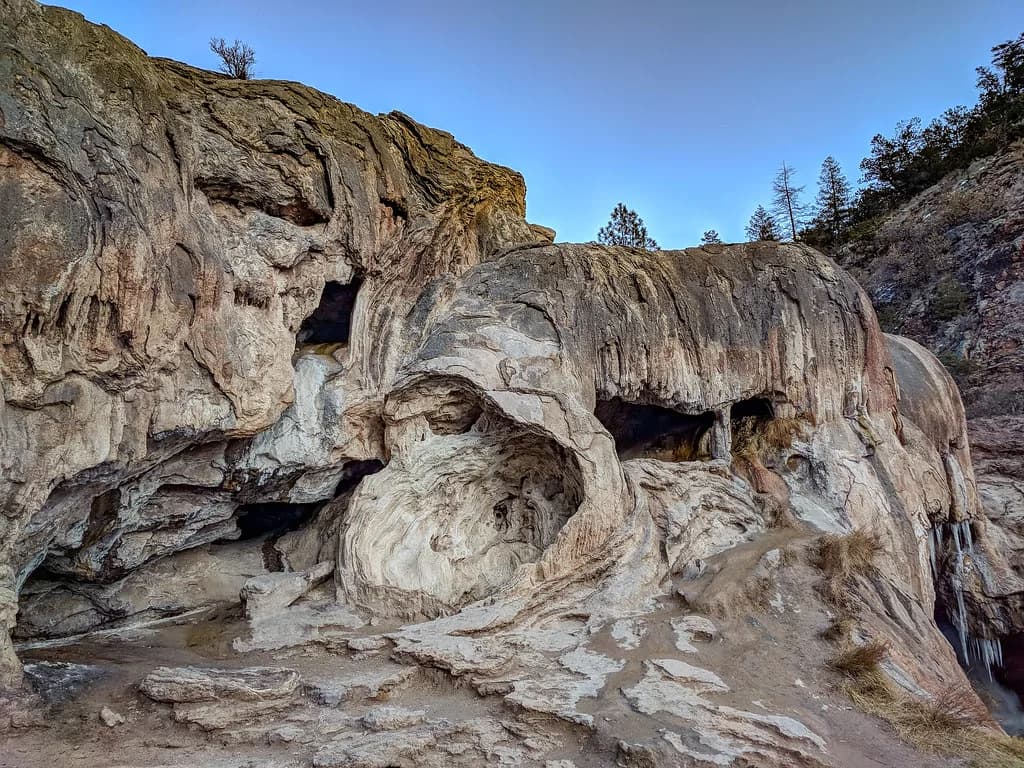
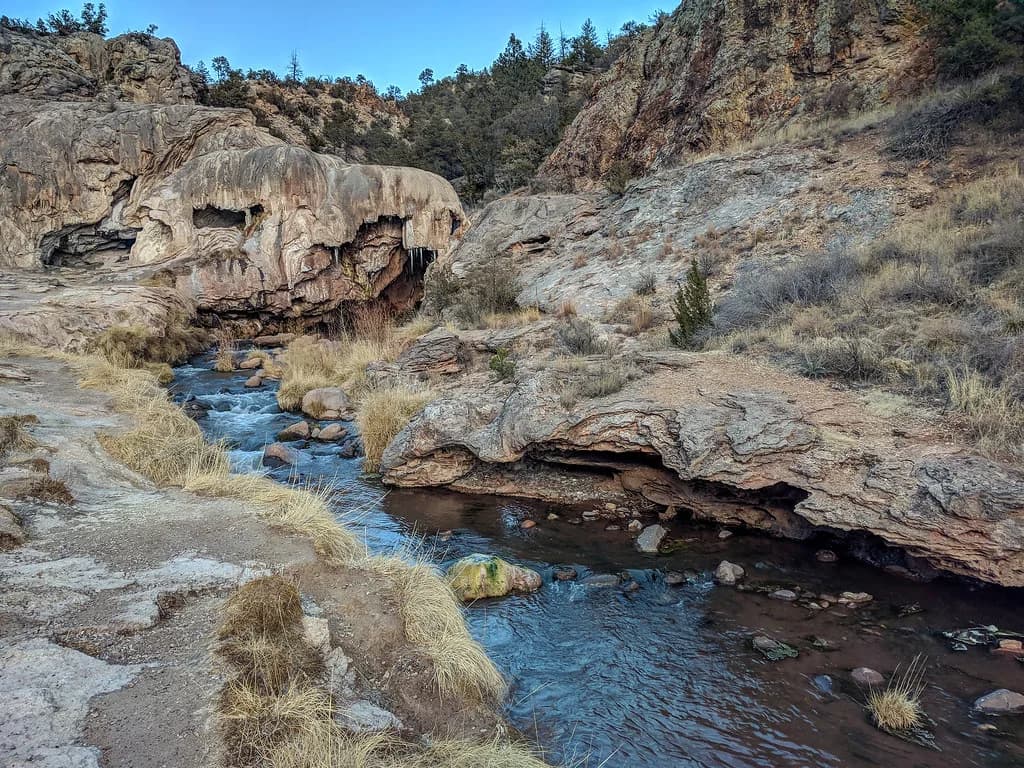
Soda Dam Hot Spring is a 7,000-year-old travertine dam built by 117-degree springs over the Jemez River on Highway 4 near Jemez Springs. It is a free roadside geological feature, and the water is far too hot for bathing. Stop for the photographs and the geology, then drive on to an actual soak.
The water is far too hot for bathing, so treat Soda Dam as a stop to look at rather than a place to soak.
Because it sits directly on the highway, Soda Dam works as a five-minute leg stretch between Spence and San Antonio. Combine all three in a Jemez day loop.
Choosing by effort: Jemez day trips versus Gila expeditions
The Jemez cluster is built for day trips: Spence, San Antonio, McCauley and Soda Dam all sit within a short drive of Jemez Springs, and the trail approaches range from a brief climb to 3.5 miles. The Gila soaks, by contrast, demand a full day and often a pre-dawn start. If you are weighing a drive west instead, the Utah hot springs guide compares developed resorts and wild soaks the same way.
| Spring | Location | Approach | Water temperature |
|---|---|---|---|
| Spence Hot Spring | Above the Jemez River, near Jemez Springs | Short uphill trail | Roughly 95 degrees |
| San Antonio Hot Springs | Near Jemez Springs | Short trail from the road | 95 to 110 degrees |
| McCauley Warm Springs | About seven miles north of Jemez Springs | 3.5-mile hike | 87 to 95 degrees |
| Manby Hot Springs | 12 miles from Taos | 4.1-mile hike | 90 to 100 degrees |
Rank the springs by round-trip distance and you get a clean planning tool: Montezuma needs almost no walking, Spence and San Antonio need a short trail, McCauley and Manby need a few miles, and San Francisco, Turkey Creek and Jordan need serious mileage. Pick one from each tier for a weekend rather than trying to bag them all.
Best season and timing
Most New Mexico springs sit at high desert elevation with warm days and cool nights, and fall and spring bring the easiest access. Summer monsoon storms can flood the canyon soaks in the Gila and Jemez, which turns a river crossing into a hazard and can close a road.
For the Jemez soaks, aim for a weekday morning to beat the Santa Fe and Albuquerque crowds. For the Gila, watch the forecast for several days before you go and keep a shorter soak as a backup.
What to pack for a primitive soak
Bring shoes you can get wet for any spring with a river crossing or a slick rock approach, plus a towel and a dry layer for the walk back. Water matters more than gear at this elevation, so carry a liter per person for hikes under four miles and more for the Gila trips. A small trowel and a bag for trash cover the basics at sites with no facilities.
Pairing soaks on a road trip
Three clusters make natural loops. The Jemez loop runs Santa Fe to Jemez Springs on Highway 4, hitting Spence, Soda Dam, San Antonio and McCauley in a day. The Las Vegas loop pairs Montezuma with the Gallinas Canyon drive, and the Glenwood-Gila corridor links San Francisco Hot Springs with the Gila Wilderness trailheads.
If you want a tub, a changing room and a bed at the end of the day, Truth or Consequences anchors the developed end of the state and makes a good contrast to a primitive weekend.
Leave No Trace at wild pools
At primitive springs, pack out everything you bring in, including food scraps and tea bags, and keep soap, shampoo and sunscreen out of the water. Use a bandana or a rinse away from the pool if you need to clean up, and stay on established paths to protect the travertine and moss around the pools.
Nearby paid options when you want a tub and a changing room
Free pools come without changing rooms, so some travelers finish a Jemez hike with a paid soak in town. Jemez Hot Springs runs four outdoor mineral pools at 98 to 105 degrees beside the Jemez River. The company lists walk-in only entry at $25 per person, with ages 14 and up, so check current prices before you set out.
The Jemez Springs Bath House has been operating since 1876 and offers eight private tubs, soaks from $12, and massage and wraps on site. It admits ages 14 and up and is closed Wednesdays.
Plan Your Free Soak
Start with your hiking tolerance: a roadside soak at Montezuma, a short Jemez climb at Spence, or a full Gila day at Jordan. Build the trip around one cluster rather than crisscrossing the state, and leave a backup soak for weather.
When you want a resort tub, a private bath or a riverside room after a day on the trail, our guide to new mexico hot springs resorts covers the developed side of the state.
Frequently Asked Questions
Are Jemez Hot Springs free?
No. Jemez Hot Springs is a paid, walk-in facility with four outdoor mineral pools beside the Jemez River; the entry rate and age limit are posted on its own site. The free soaks in the same area are Spence, San Antonio and McCauley, all reached by trail in Santa Fe National Forest.
How many free hot springs are in New Mexico?
At least nine of the 24 documented New Mexico springs are free wild soaks, mostly mountain pools reached by trail in the Jemez Mountains and the Gila country. The rest are paid resorts, bathhouses or managed pools, so the free list is shorter than the total but spreads across several regions.
Which free hot springs in New Mexico are easiest to reach?
Montezuma Hot Springs near Las Vegas has easy roadside access along the Gallinas River with about nine cement tubs, so it needs almost no walking. Spence Hot Spring near Jemez Springs comes next, with a short uphill trail to rock pools above the Jemez River.
Do you need a permit for Gila Wilderness hot springs?
Jordan Hot Spring and Turkey Creek Hot Springs sit in the Gila Wilderness, where wilderness rules apply and the approaches are long, wet and physically demanding. Check entry requirements and current trail conditions with the Gila National Forest before you go, since crossings and trail damage change with flow.
Are New Mexico hot springs clothing optional?
Some are. Spence Hot Spring and San Antonio Hot Springs are both listed as clothing optional, which is worth knowing before you bring a family group. Developed facilities such as Jemez Hot Springs and the Jemez Springs Bath House set their own rules and age limits.
When is the best time to visit free hot springs in New Mexico?
Spring and fall bring the easiest access, since summer monsoon storms can flood the canyon soaks in the Gila and Jemez. The springs sit at high desert elevation with warm days and cool nights, so pack layers whenever you go.
Can you soak at Soda Dam Hot Spring?
No. Soda Dam is a 7,000-year-old travertine dam formed by 117-degree springs over the Jemez River, and the water is far too hot for bathing. Treat it as a free roadside geological stop on Highway 4 and save your soak for Spence or San Antonio nearby.
What should you bring to a primitive hot spring?
Bring shoes you can get wet for river crossings and slick rock, a towel, a dry layer for the walk back, and plenty of water. There are no facilities at the wild pools, so pack out everything you carry in and keep soap out of the water.
Sources
Hot springs notes for your next road trip
Optional updates when we add or revise hot springs guides.
You might also like
Continue reading
More guides you'll find useful