Fish Lake Valley Hot Springs, Nevada: Soak or Camp?
Plan a soak at Fish Lake Valley Hot Springs in Nevada: the concrete tub and overflow ponds, the rough desert road in, primitive camping and what to bring.
On this page
Fish Lake Valley Hot Springs rewards the drive: a concrete soaking tub fed by an old well, cooler overflow ponds where goldfish gather, and a campsite under the White Mountains in one of Nevada's emptiest corners. It suits self-sufficient road-trippers who want a soak and a night out in the desert rather than a resort pool with a locker room.
Esmeralda County manages the site, which has a large parking area, primitive campsites and a vault toilet and stays open to the public year-round, according to Travel Nevada. That combination of a soak and a place to camp is why it works as an overnight stop on a Great Basin trip rather than a quick roadside pause.
Where the spring sits in Fish Lake Valley
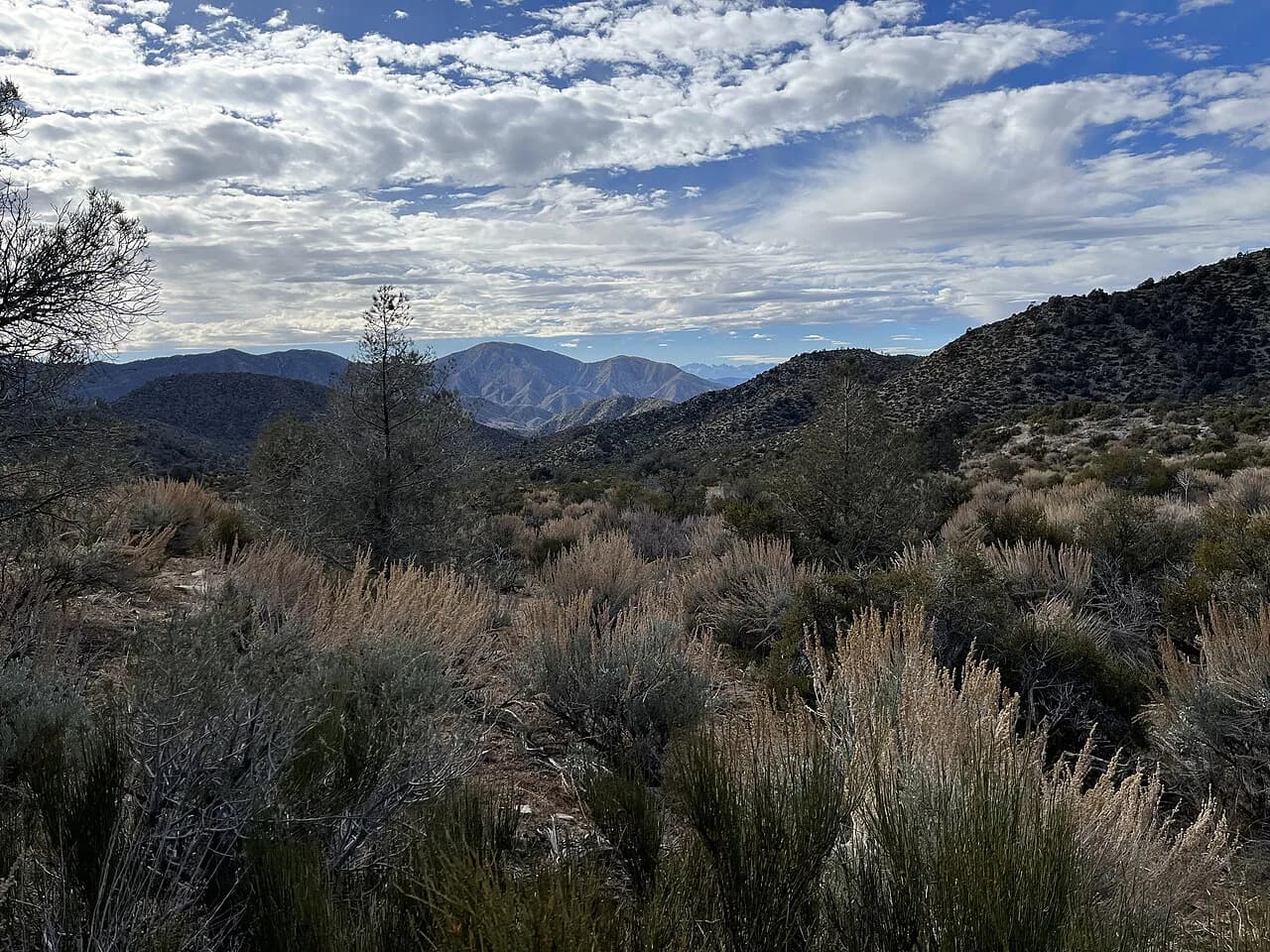
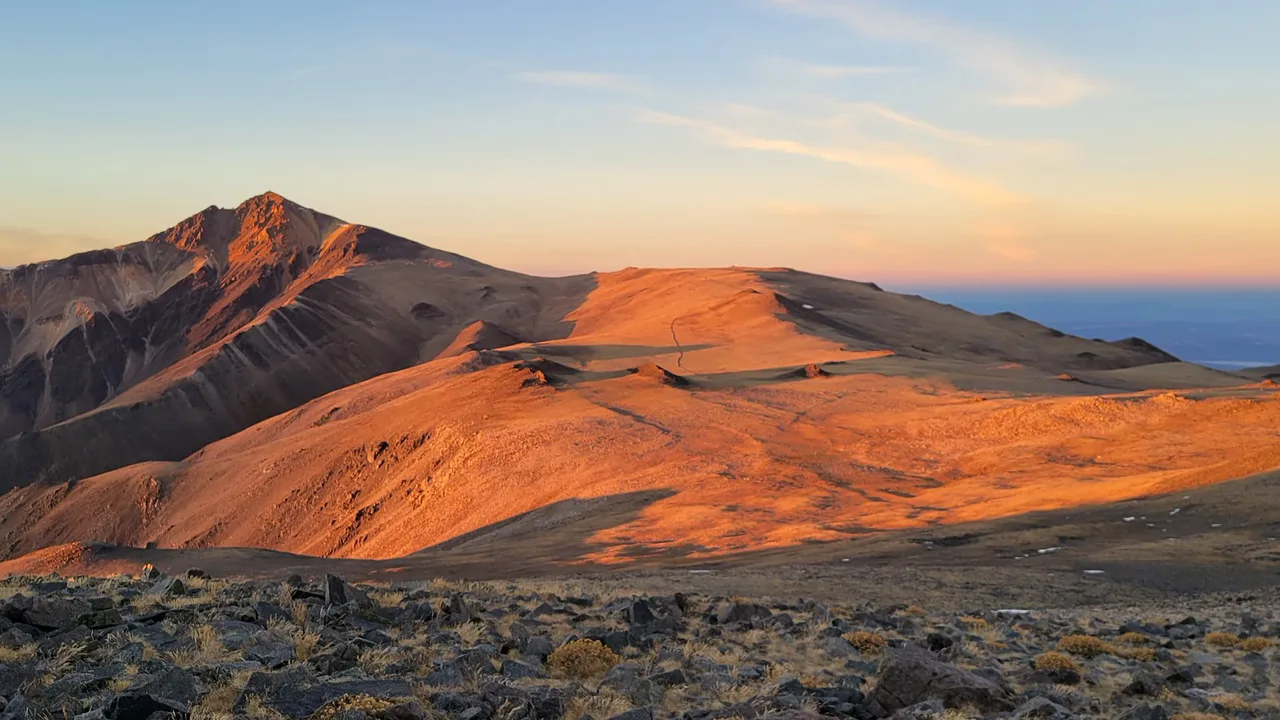
The spring sits in Fish Lake Valley, the long high-desert basin between the White Mountains and the Nevada–California line, near the small community of Dyer. The guidebook lists the address simply as Dyer, Nevada.
From Las Vegas the drive runs about 250 miles and roughly four hours, most of it on US-95 before the turn onto NV-266. That distance matters for planning: this is not a quick side trip from a city, so the soak usually anchors a longer loop through the Great Basin rather than filling an afternoon. If you're building that loop, a wider look at hot springs in nevada helps you stack several stops into one itinerary.
Getting there
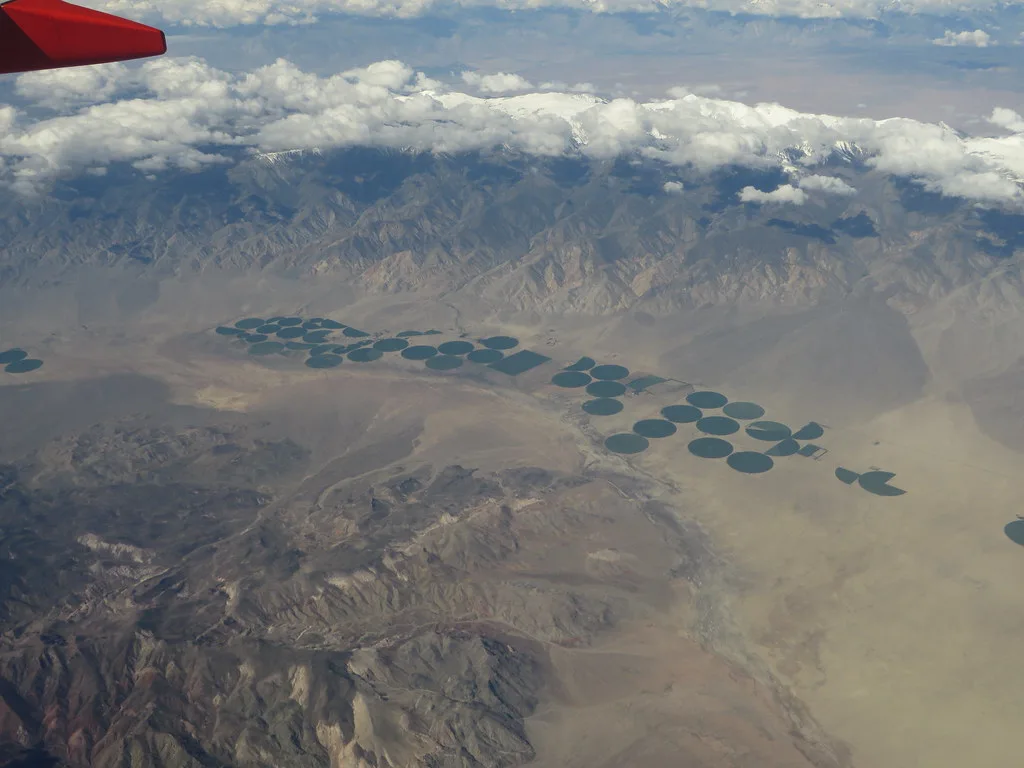
The approach splits into two legs. The highway stretch on US-95 and NV-266 is paved and straightforward, then the final leg turns onto dirt. The guidebook describes the access as an off-road drive and recommends a four-wheel-drive vehicle rather than a passenger car.
Give the high-clearance-versus-4x4 trade-off some thought before you commit. A vehicle with decent clearance handles the washboard and gravel stretches that a low sedan struggles with, while four-wheel drive earns its value if the dirt is soft, recently graded or affected by storms. Mountain weather on the White Mountains side can change road conditions quickly, so ask about the dirt road before you leave the pavement.
Cell coverage thins out as you head down the valley, so download offline maps and note your turnoff before you leave the highway. Carry a spare tire, extra water and a full tank from the last town with services. The spring is remote enough that a breakdown is a long wait, and fuel stops are scarce in this part of Esmeralda County.
Parking and the walk in
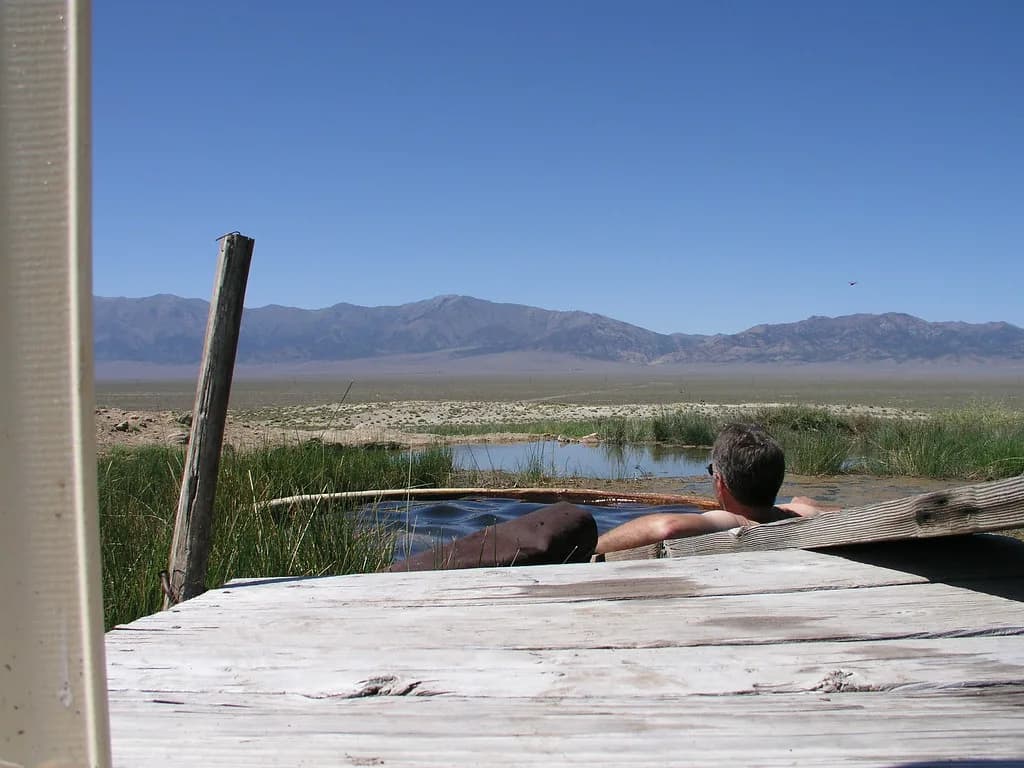
You can drive right up to the tub and park beside it; the site has a large parking area and flat ground around the pools. That means no long hike-in with gear, which is unusual for a spring this remote.
Because the tub sits at the road, expect company rather than solitude in the middle of a sunny weekend. The trade-off is simple: easy access brings casual visitors and day-trippers, while a weekday or a chilly shoulder-season morning thins the crowd considerably.
The pools
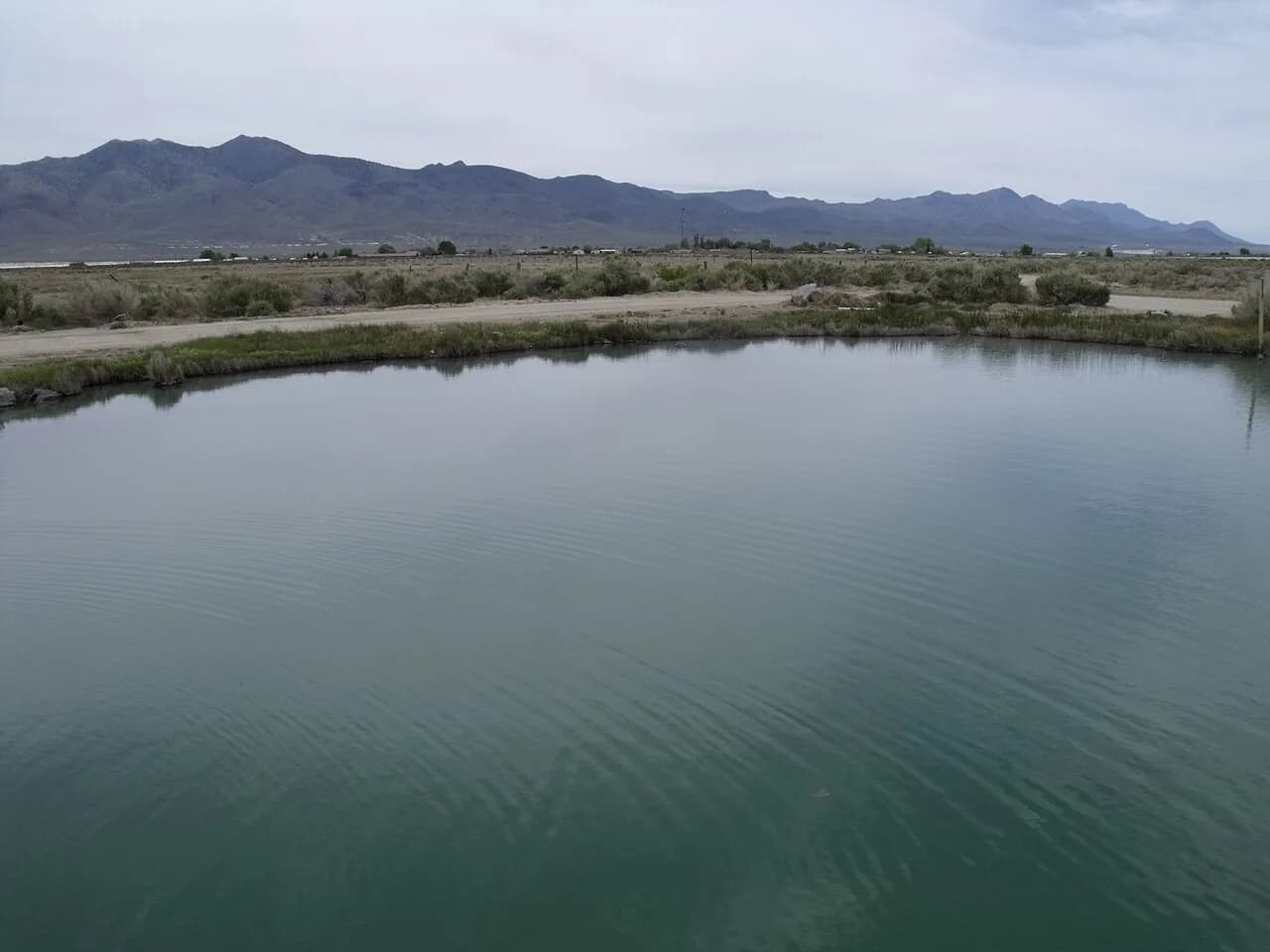
The centerpiece is an outdoor concrete tub roughly 4 by 6 feet and four feet deep over a gravel bottom, fed by a well drilled in the 1800s. The guidebook puts the tub around 105°F, varying with the season.
| Pool | Temperature | Notes |
|---|---|---|
| Concrete tub | Around 105°F, varies with the season | About 4 by 6 feet and four feet deep, gravel bottom, fed by a well |
| Overflow ponds | Roughly 85°F | Small ponds where goldfish live |
| Tub, hiker report | Closer to 104°F | Overflow spills into two holding ponds that work well for swimming |
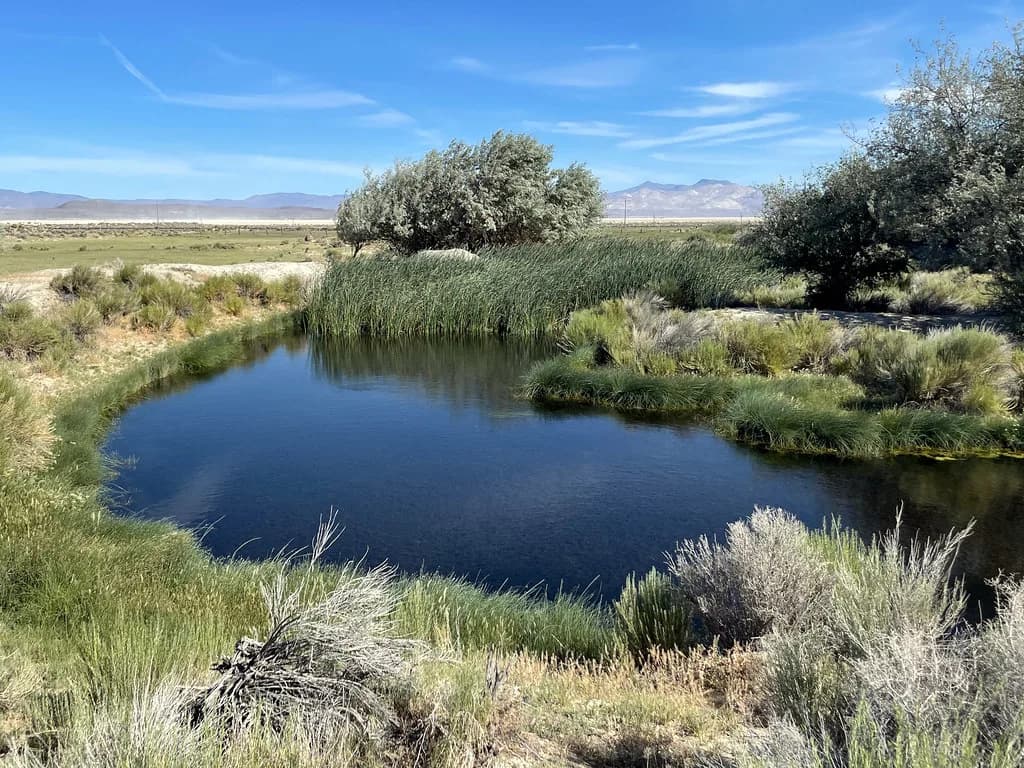
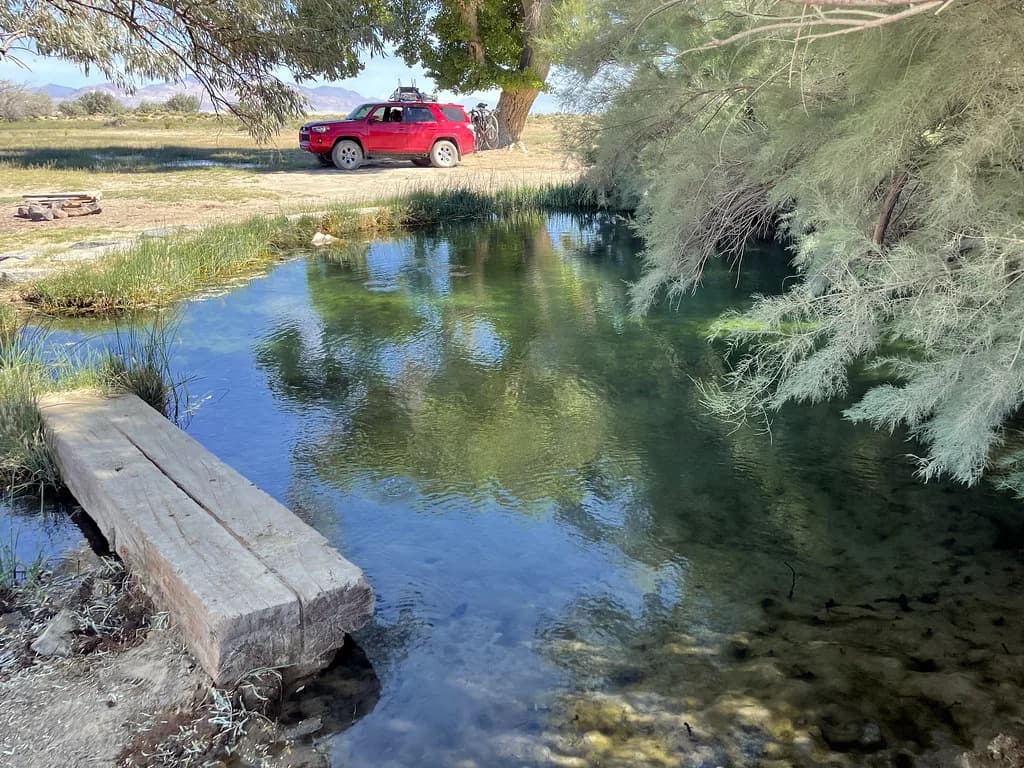
Water from the tub flows into small overflow ponds, where the temperature drops to roughly 85°F and goldfish live. Both pools are naturally shallow or small enough that a few people fill them, so plan to share.
Another hiker-reported figure puts the tub closer to 104°F, with the overflow spilling into two holding ponds that work well for swimming. The range reflects the reality of a spring-fed tub in open desert: readings move with the season and the day, so test the water with your hand before you settle in.
Fees, hours and season
Esmeralda County manages the spring as a public site, and Travel Nevada describes it as free and open to the public year-round. There is no resort building, gate or front desk here; you drive in, soak and camp.
Year-round access does not mean uniform comfort. Summer afternoons in this high-desert valley climb well above what most people want for a hot soak, while winter nights drop below freezing and can leave ice on the tub rim and snow on the road in. Spring and fall give the steadiest window of mild days and cool soaking.
Rules to know before you strip down
Soaking here is clothing-optional, according to the guidebook entry for the site. Treat that as a shared-space courtesy issue: ask before you assume, and keep the tone relaxed if other soakers are in the tub.
The guidebook also notes that dogs are welcome in the camping area but must be leashed and kept out of the hot springs. Glass is a bad idea around bare feet and stone rims, so decant drinks into cans or bottles and pack out every bit of trash you bring.
Beyond those basics, county rules for the site are worth confirming before a large group visit or an overnight stay, since posted signs at the tub are the final word on camping and use. Esmeralda County is the managing authority to ask.
Camping on site
Primitive campsites and a vault toilet sit on site, and the guidebook notes fire pits in the camping area. That makes the spring a genuine overnight stop: soak in the evening, camp on the flat, and wake up to the White Mountains.
Fire restrictions can apply even where fire pits exist, so keep fires within seasonal rules and bring your own wood rather than scavenging the desert.
Fire pits do not guarantee firewood or a fire ban, so check seasonal fire restrictions before you light anything and bring your own wood rather than scavenging the desert. Lacking established hookups or water, the site asks you to arrive self-contained: water, shelter and a way to pack out your own waste are on you.
What to bring for a desert soak
Pack for a wide temperature swing. A high-desert valley can be hot at midday and cold after dark, so bring layers, a windproof jacket and a warm hat for evening soaks. Add sun protection, more water than seems reasonable and a pair of sandals for the gravel bottom in the tub.
The nearest services are a long way off, so carry food and water for the whole stay rather than counting on a shop nearby. A shade tarp, a cooler with ice, and containers you can reseal for leftovers make the site far more comfortable. A headlamp matters for nighttime trips to the tub and vault toilet.
Crowds and timing
This is a drive-up soak in a remote valley, which means it can be empty on a Tuesday and busy with a dozen rigs on a holiday weekend. The tub fits only a few people at once. Aim for a weekday morning or a midweek evening, and expect the overflow ponds to absorb some of the overflow crowd in summer.
Shoulder season is the strongest bet: mild days, cool evenings and fewer visitors than the summer school break. Winter visits can be stunning and quiet, but snow and ice can affect the dirt road, so ask Esmeralda County about the route before you commit to a winter trip.
Nearby springs to combine on a road trip
Fish Lake Valley pairs well with a Great Basin loop rather than a same-day round trip. If you're driving the long US-95 corridor, build a route that connects a couple of developed soaks with this primitive one, and use a wider Nevada hot springs guide to pick stops that fit your driving days. If your loop wanders beyond the state line, the hot springs in Utah make a natural next chapter for comparing developed resorts with wild soaks.
In the northwest corner, Walley's Hot Springs in the Carson Valley offers a developed resort-style soak, a full contrast with the county tub out in the desert. If your route pushes toward the Black Rock Desert, Trego Hot Springs adds a soak in very open country on the way.
Southeast of the valley, Sauna Cave Hot Springs in Black Canyon near the Colorado River gives a long desert road trip a completely different second soak. It works best as the anchor of a separate southern leg, since the drive between the two springs eats a full day on its own.
Leave No Trace at a remote, lightly serviced soak
This is a lightly serviced, primitive site, so pack out everything you bring in, including food scraps and toilet paper, and use the vault toilet rather than open desert. Keep soap and sunscreen out of the tub and ponds, camp on existing bare ground, and leave the fire pits clean. If a spot already looks well-worn, use it rather than spreading damage to a fresh patch of desert floor.
Safety around hot water and open desert
The tub runs near 105°F, which is hot enough to need care. Ease in gradually, get out if you feel lightheaded, and avoid submerging your head in untreated geothermal water. The concrete rim and gravel bottom get slippery, so step in wearing sandals and use the rim for balance.
The desert itself is the other hazard. Sun, dry air and long distances between towns are the real risks, so carry more water than you think you need, keep your fuel topped up and tell someone your plans before heading down the valley. A first-aid kit and a charged phone with offline maps round out the basics.
Plan Your Fish Lake Valley Soak
Fish Lake Valley Hot Springs is a straightforward remote soak: a county-managed site, a drive-up concrete tub, cooler ponds and primitive camping with a vault toilet. Build the trip around a high-clearance vehicle, a full water supply and a shoulder-season window, and the long drive pays off.
Treat it as one stop on a larger Great Basin loop and give yourself the margin of an overnight stay. Confirm current conditions with Esmeralda County before you leave the pavement, then settle in and let the valley do the rest.
Frequently Asked Questions
How do you get to Fish Lake Valley Hot Springs?
From Las Vegas, take US-95 north, turn onto NV-266, and follow the valley toward Dyer, roughly 250 miles and four hours in total. The last stretch is dirt, and a four-wheel-drive vehicle is recommended for it.
Do you need a 4x4 for Fish Lake Valley Hot Springs?
Four-wheel drive is recommended, not required, and a high-clearance vehicle gives you the most margin on the dirt road. Check the road with Esmeralda County before you head out if the weather has been wet or snowy.
How hot is the water at Fish Lake Valley Hot Springs?
The concrete tub typically runs around 104 to 105°F, with readings varying by season. Water spilling into the overflow ponds cools to roughly 85°F, which makes a gentler soak.
Can you camp at Fish Lake Valley Hot Springs?
Yes. The site has primitive campsites, a vault toilet, and fire pits in the camping area, and the county keeps it open year-round. Bring your own water, food, and shelter.
Is Fish Lake Valley Hot Springs clothing optional?
The site is used as clothing-optional, so expect a mix of soakers and keep the shared space respectful. A towel and a relaxed, courteous approach cover it.
Are dogs allowed at Fish Lake Valley Hot Springs?
Dogs are welcome in the camping area but must be leashed and kept out of the tub and ponds. Bring bags and pack out waste.
How far is Fish Lake Valley Hot Springs from Las Vegas?
It's about 250 miles and roughly four hours from Las Vegas, most of it on US-95. Plan an overnight stay rather than a same-day round trip.
What is the best time of year to soak at Fish Lake Valley Hot Springs?
Spring and fall give the most comfortable combination of mild days and cool soaking evenings. Summer afternoons get hot, and winter can bring snow and ice to the dirt road.
Sources
Hot springs notes for your next road trip
Optional updates when we add or revise hot springs guides.
You might also like
Continue reading
More guides you'll find useful