
Trego Hot Springs, Nevada: Black Rock Desert Soaking Guide
Trego Hot Springs is Nevada's swimmable Black Rock Desert soak off Jungo Road. Plan the dirt drive, the mud-bottom ditch, camping and nearby springs.
On this page
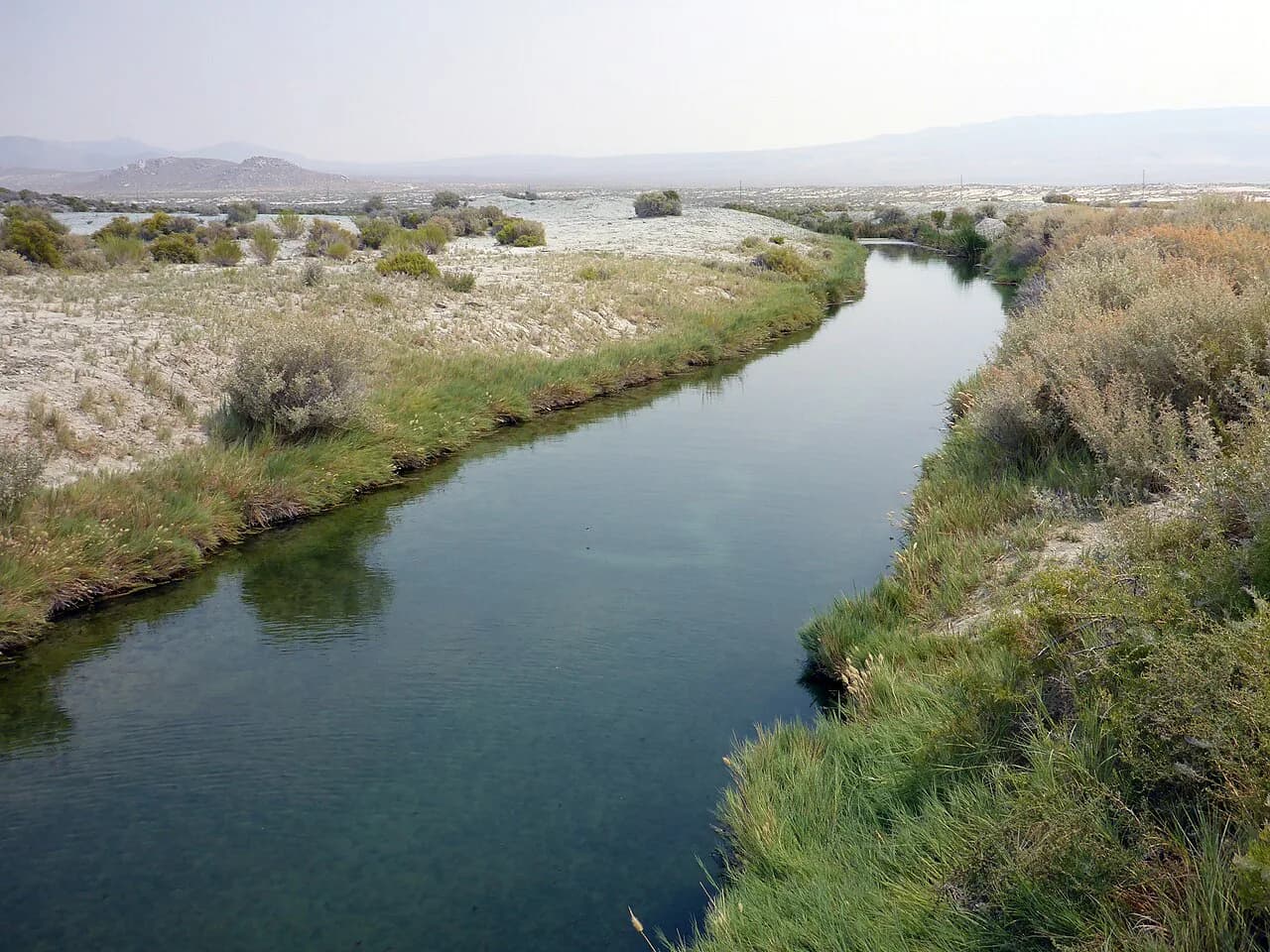
Trego Hot Springs suits road-trippers and dispersed campers who want a real desert soak without a trailhead, a gate or a developed pool. It is a long, canal-like ditch on the east side of the Black Rock playa, and you can park almost beside the water.
This is not a rock pool with a view. The bottom is soft mud that coats boots, gear and vehicle floors, and the spring sits next to live railroad tracks. Accept that trade-off and you get one of the easiest soaks in the Black Rock Desert; want a hot tub and a towel service instead, look to a developed resort.
What Trego Hot Springs is
Trego Hot Springs sits at the site of Trego, a former station on the Western Pacific Railroad in the Black Rock Desert. When crews building the railroad struck water, a ditch was cut and filled with hot water, which is why the spring is a channel rather than a natural pool.
That origin explains the shape and the appeal. Friends of Black Rock-High Rock describes it as the only hot spring in the area people can swim in, since the region's other well-known springs are too hot or fenced off.
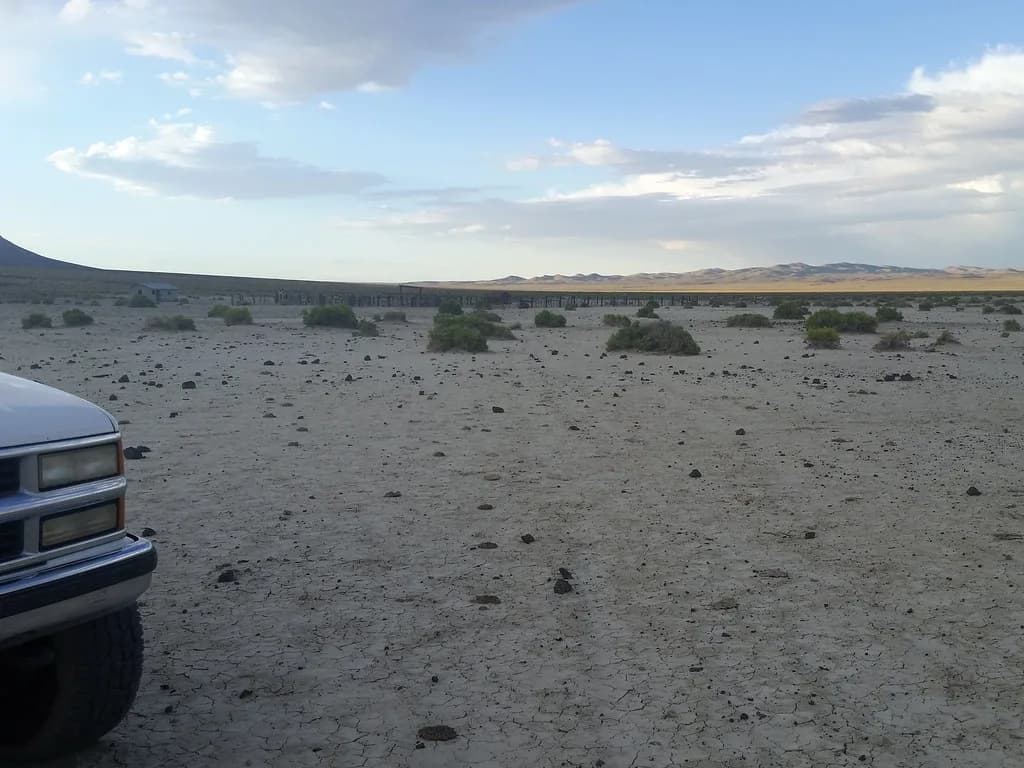
Plan around the location rather than a facility: the spring lies in Pershing County on the east side of the playa, on public land, with no developed parking, changing room or deck. Camping is dispersed desert camping, and the nearest services are in Gerlach or along the Interstate 80 corridor.
Who should skip it
Skip Trego if you want predictable water temperature, clean facilities or a short paved walk. The ditch varies in heat along its length and with the season, and the mud bottom means you will not leave clean.
It is also a poor choice for anyone unwilling to drive a long dirt road or to stop and look both ways at unmarked railroad crossings. Drivers in low-clearance cars should weigh the road carefully, since rain can leave the surface rutted and, on the playa, impassable.
Getting there from Reno
From Reno, take I-80 east and then NV-447 north toward Gerlach, then continue to State Route 48 and turn onto Jungo Road toward Trego Road in Pershing County. That routing runs roughly 104 miles and about an hour and 53 minutes to the State Route 48 turnoff, with another 17 miles or so on Jungo Road to the spring.
The whole trip from Reno runs about two and a half hours. Fuel up before you leave the interstate, because the run north through the desert passes little in the way of services.
From Gerlach, the other approach uses the twelve mile access road off Highway 34 north of town, then heads east across the playa on dirt. Either way, Trego ends up on the north side of Jungo Road when you are heading east.
Driving the dirt road
Expect a substantial dirt-road run between the pavement and the spring, roughly 17 miles on Jungo Road from the State Route 48 turnoff. The surface is heavily affected by rain, so a storm can turn a straightforward drive into rutted, slick going.
A storm can turn the drive into rutted, slick going, and wet playa can hold a vehicle for days before anyone passes.
The playa approach from the twelve mile access road crosses open desert and two railroad track crossings. Both crossings are unmarked, and you should stop and proceed with caution across the rails; trains are not the only thing moving out there.
Dry ground is the deciding condition. Wet playa can hold a vehicle for days before anyone passes, so carry water, food and a way to stay warm if the weather turns while you are out there.
The pools
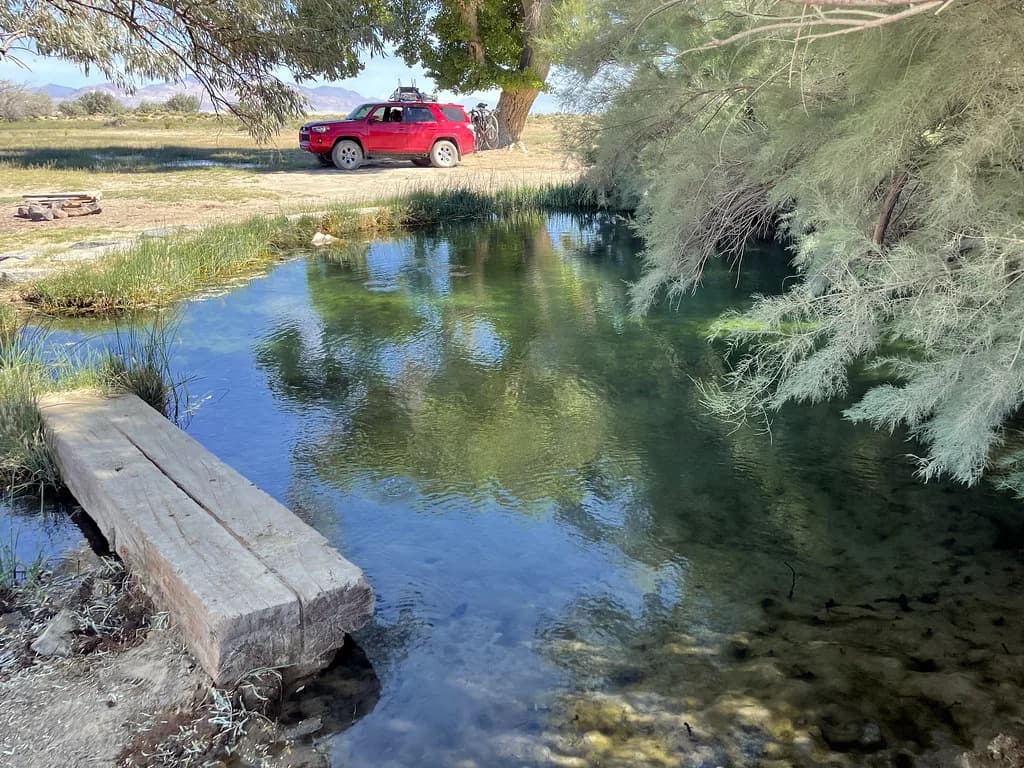
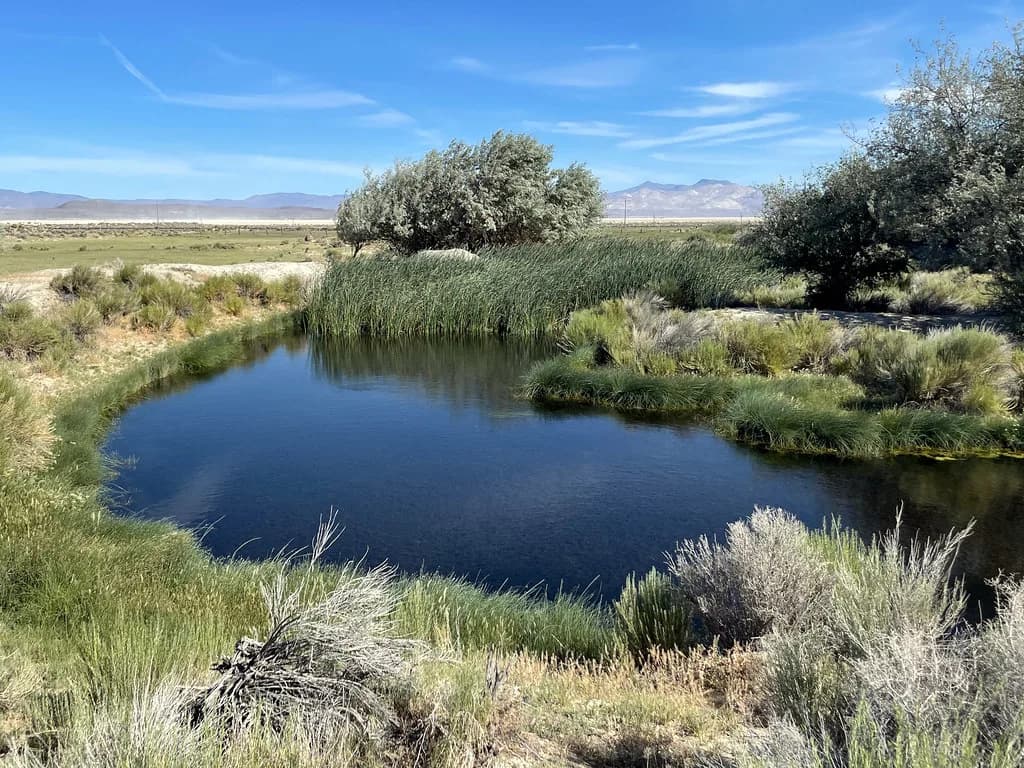
The soak is a long ditch or canal with a soft mud bottom rather than a single pool. Because water enters along its length, the temperature shifts depending on where you get in, and it also changes with the season. If you like this kind of no-frills drive-up soak, our Idaho hot springs guide covers similar roadside pools where the thermometer decides your spot.
The published range is about 90 to 100 degrees Fahrenheit. The practical move is to walk the bank and test the water with a hand at several points before committing, then settle where it feels right for you.
Mud is part of the experience and part of the cleanup. Bring a towel you do not mind ruining, shoes that can get wet, and a bag for muddy clothes so the ditch does not end up ground into your car seats.
Rules and etiquette at the spring
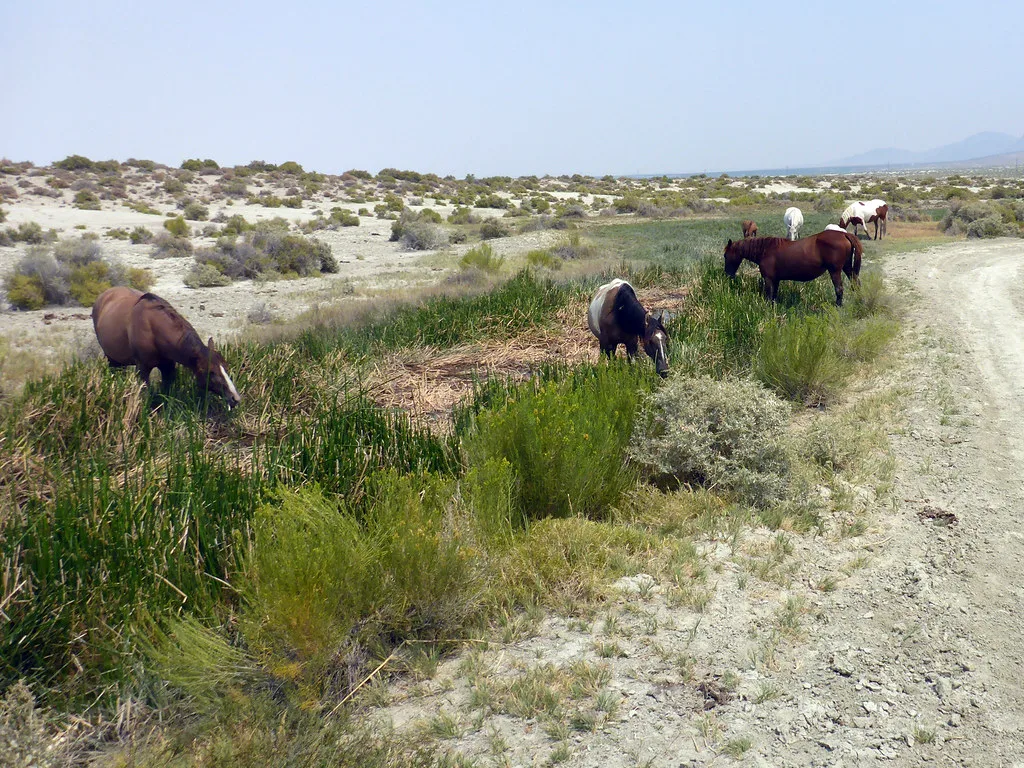
Camp at least 300 feet from any water source, a rule Friends of Black Rock-High Rock states for springs across the region. At Trego that setback shapes where you pitch: close enough to walk to the soak, far enough to respect the bank.
Camp at least 300 feet from any water source, and keep dogs leashed and out of the spring. Glass is not allowed.
Dogs are welcome but must be leashed and kept out of the spring, and glass is not allowed. Trego is also clothing optional, so set expectations if you are traveling with a group.
Treat the mud and the bank as fragile ground and keep your group on established paths where they exist. Soaking is the point, but leaving the site in the condition you found it keeps it open to the next rig.
Camping near Trego
Camping at Trego is dispersed desert camping on BLM land, with plenty of room to spread out and no designated pads. The main planning constraint is the 300-foot water setback, which pushes sites back from the ditch.
Come self-contained. There is no water, shade structure or trash service out here, so haul out everything you bring and pack a shade tarp for midday. A solid wind forecast matters more than a temperature forecast, because the open playa offers nothing to break it.
Best time to go
Spring and fall give you the widest window of comfortable soaking and dry roads, while summer heat makes midday soaking unpleasant and winter storms can close the dirt approach. The season you choose is mostly a question of road and weather conditions.
Arrive early in the day if you want the ditch to yourself; as a drive-up spring on a public-land route, it draws travelers passing through the Black Rock Desert. Weekdays are quieter than weekends.
Nearby springs to combine
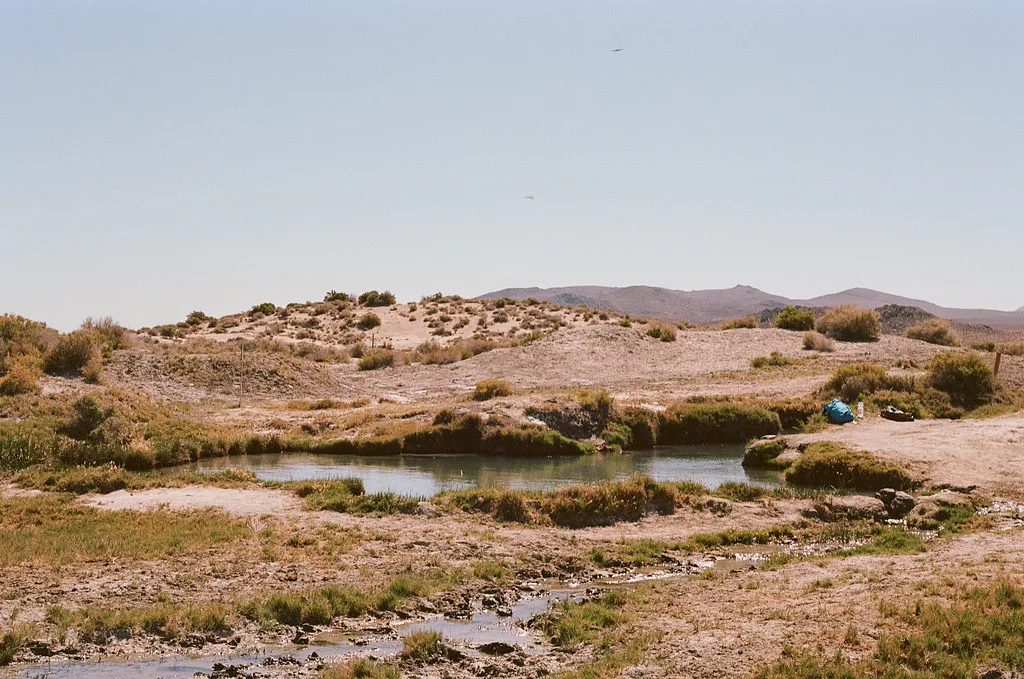
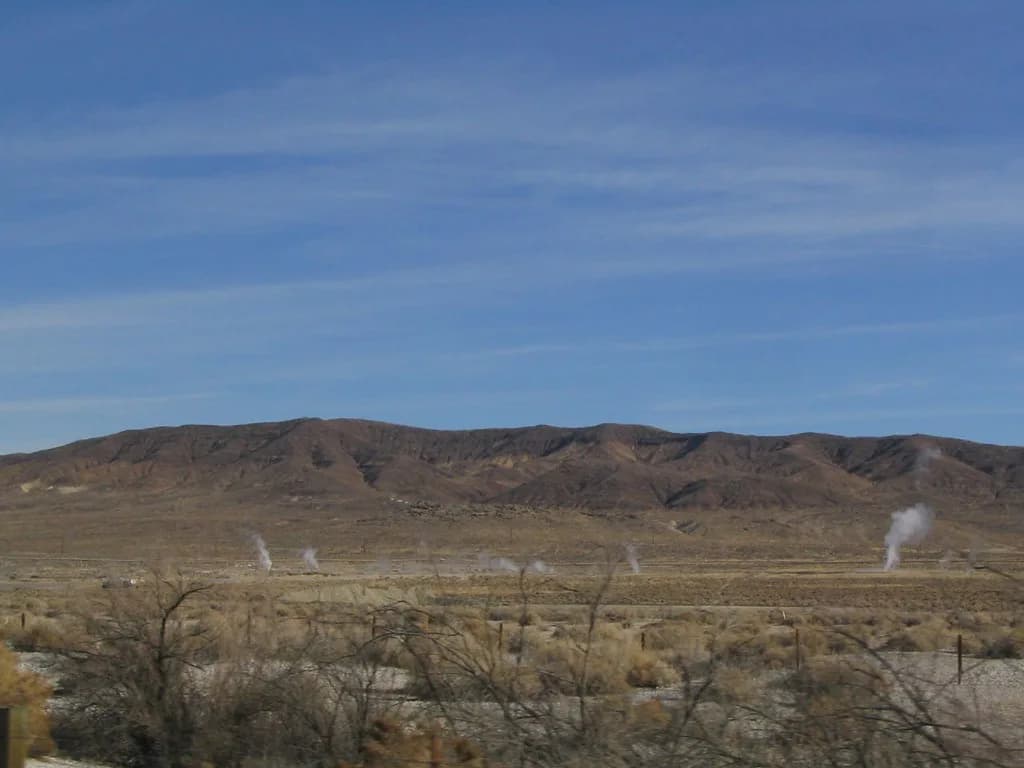
Double Hot Springs and Black Rock Springs are the natural pairings, both reachable from the same road network north of the playa. Treat them as viewing stops: Double Hot Springs is fenced and posted against entry, and its pools run around 180 degrees, while Black Rock Springs has overlapping pools that are far too hot to enter.
| Spring | What to expect |
|---|---|
| Double Hot Springs | Fenced and posted against entry, with pools that run around 180 degrees |
| Black Rock Springs | Overlapping pools that are far too hot to enter, best treated as a viewing stop |
| Soldier Meadows Hot Springs | Man-made dams that form a series of shallow pools |
Soldier Meadows Hot Springs, north of Fly Canyon Road, has man-made dams that form a series of shallow pools with the Black Rock Range to the east. It makes a logical second night if you are looping the desert rather than running straight back to Reno.
For a developed finish to the trip, resorts closer to population centers offer pools, lodging and posted rules. Sauna Cave Hot Springs, Nevada, in Black Canyon, and Walley's Hot Springs, Nevada, in the Carson Valley are both options worth pricing before you commit to a desert-only itinerary.
Safety in Black Rock-High Rock Country
Scalding is the leading hazard at Black Rock hot springs, and Nevada springs frequently run hotter than 150 degrees Fahrenheit. Never judge water by appearance, since a still pool on a cool morning can look harmless and be far past soaking temperature.
Heed posted hazard signs and fences, and stay back from steep, slippery banks. At Trego the specific risks are the mud bottom, the variable heat along the ditch and the adjacent railroad tracks.
Keep your head above the water in untreated geothermal water, and keep children and dogs close on the bank. Check current conditions with the Friends of Black Rock-High Rock visitor center in Gerlach or the BLM before a long desert approach.
Leave No Trace at a desert soak
Pack out all trash, including food scraps and anything that blows away in the wind. Desert ground recovers slowly, so keep vehicles on existing tracks rather than cutting new ones across the playa or the vegetation around the spring.
Plan Your Trego Soak
Trego Hot Springs rewards a traveler who treats the drive as part of the trip: a long dirt run, two railroad crossings to stop for, and a mud-bottom ditch waiting at the end. Go in dry weather, carry your own water and shade, and camp back from the water.
Build the day around the spring's variability rather than a single ideal temperature, pair it with the fenced viewpoints at Double Hot Springs and Black Rock Springs, and check road and water conditions with the land manager before you commit to the desert. For every soak in the state, start with our guide to Nevada hot springs.
Frequently Asked Questions
Can you swim at Trego Hot Springs?
Yes. Trego is a long, canal-like ditch with a mud bottom, and Friends of Black Rock-High Rock describes it as the only hot spring in the area people can swim in. The other well-known springs nearby are either fenced against entry or far too hot to get into.
How do you drive to Trego Hot Springs from Reno?
Take I-80 east and NV-447 north toward Gerlach, continue to State Route 48, then follow Jungo Road toward Trego Road. The drive runs about two and a half hours, with roughly 16 miles of dirt road at the end. From Gerlach you can also use the twelve mile access road off Highway 34 and cross the playa.
What is the water temperature at Trego Hot Springs?
The temperature varies from about 90 to 100 degrees Fahrenheit depending on where you enter the ditch, and it also shifts with the season. Walk the length of the soak and feel the water at a few spots before you settle in.
Is camping allowed at Trego Hot Springs?
Yes, dispersed camping is part of the visit, with the 300-foot water setback as the main constraint on where you pitch. Bring everything you need, including water and shade, and pack out all trash.
Are dogs allowed at Trego Hot Springs?
Dogs are allowed but must be kept on a leash and out of the spring, and the site is glass free. The area is also clothing optional, so plan accordingly if you are traveling with a mixed group.
What other hot springs are near Trego Hot Springs?
Double Hot Springs, Black Rock Springs and Soldier Meadows Hot Springs sit on the same desert road network. Double Hot Springs is fenced and should not be entered, Black Rock Springs is far too hot to soak in, and Soldier Meadows has shallow dammed pools.
Sources
Hot springs notes for your next road trip
Optional updates when we add or revise hot springs guides.
You might also like
Continue reading
More guides you'll find useful
.jpg)