Olympic Hot Springs, Washington: Hike-In Soaking Guide
Plan a hike-in soak at Olympic Hot Springs in Olympic National Park, reached by road and trail from Port Angeles, with nearby Sol Duc for a developed pool day.
On this page
Olympic Hot Springs suits hikers who want their soak earned on foot, in a national park valley that stays quiet because the road ends before the springs do. The primitive pools sit in the Elwha Valley, and reaching them means walking Olympic Hot Springs Road and a bypass trail rather than pulling into a paved lot.
If you want a developed pool with a cabin bed and a posted temperature, plan a separate day at Sol Duc. Olympic Hot Springs is the wilder half of that pairing, and the two make a natural loop through the northern Olympic Peninsula.
Where the springs sit
Olympic Hot Springs lies in the Elwha Valley, the Olympic Peninsula's largest watershed and the central northern slice of Olympic National Park. The valley sits 11 miles west of Port Angeles, reached by the Olympic Hot Springs Road off Highway 101.
Port Angeles is the practical base: it is the closest town with a full spread of motels, groceries and gas, and the park visitor center is there for maps and trail updates. Lake Crescent, on the same highway west, puts you closer to Sol Duc for a second soaking day.
Current access and the walk in
The Elwha area is closed to vehicle traffic beyond the Madison Falls parking lot at the park boundary because of flood damage and road washout, and parking and turnaround space there are limited. Olympic Hot Springs Road stays open beyond the lot to bicycle and pedestrian traffic only, and there are no visitor facilities past the gate; a bypass trail carries you around the damaged section.
Vehicles cannot go past the Madison Falls parking lot. Plan on walking or biking the rest of the way, and carry food and water because nothing is sold beyond that lot.
Plan the day around a long walk rather than a short stroll: you cover the closed road on foot or bike, then the bypass trail, and the return trip adds the same distance again. Start early enough that you finish the road section in daylight, and carry water and food, since nothing is sold beyond the Madison Falls lot.
Leashed pets are allowed on the road and bypass trail only. The National Park Service posts road status and trail conditions, and both are worth reading after fall or winter storms before you set out.
The route on foot
Follow the closed Olympic Hot Springs Road up the valley, then pick up the bypass trail where the road damage blocks the way; the bypass rejoins the route toward the springs. The grade is gentle along the valley floor, with the valley's lowland and montane forest on both sides, so the difficulty comes from distance rather than steepness.
Expect a wet surface much of the year on the Olympic Peninsula. Waterproof boots and a rain shell matter more than a heavy pack, and the valley's shade keeps the road cool even on warm afternoons.
Trail conditions past the gate
The distances are the part that surprises people. The park's Boulder Creek Trail page lists 2.5 miles to the springs from the trailhead, with about 200 feet of elevation gain on a well-maintained, flat-trending trail through montane forest with several small streams to cross. With the road closed, the same page puts that trailhead 7.9 miles beyond the Madison Falls parking area, reached by a temporary access trail. Added together, the round trip is a long day, well past what most people picture as a casual soak.
The Washington Trails Association trail entry rates the full outing hard and gives it as roughly 19.6 miles round trip from Madison Falls. It describes a wide, smooth road walk at the start, a detour around a washed-out section near mile 0.88, and a stretch past Altair campground where the road narrows and climbs for about 1.3 miles before dropping steeply over a large landslide. Crystal Creek is crossed on a log bridge because the suspension bridge washed out.
The trail is open all year, though the road may be closed before the trailhead in winter. The park lists a road-conditions line at (360) 565-3131 and posts trail conditions on its Trail Conditions page. Because there is no vehicle shortcut, a snowstorm or a fallen tree can turn a day trip into something much harder than the mileage suggests, so pack the ten essentials, carry a map, and set a turnaround time before you start.
A bicycle can shorten the closed-road section, since the park leaves the road open to bicycles as well as pedestrians. Plan on the landslide and log-bridge sections being easier on foot, and lock the bike where you leave it.
The pools
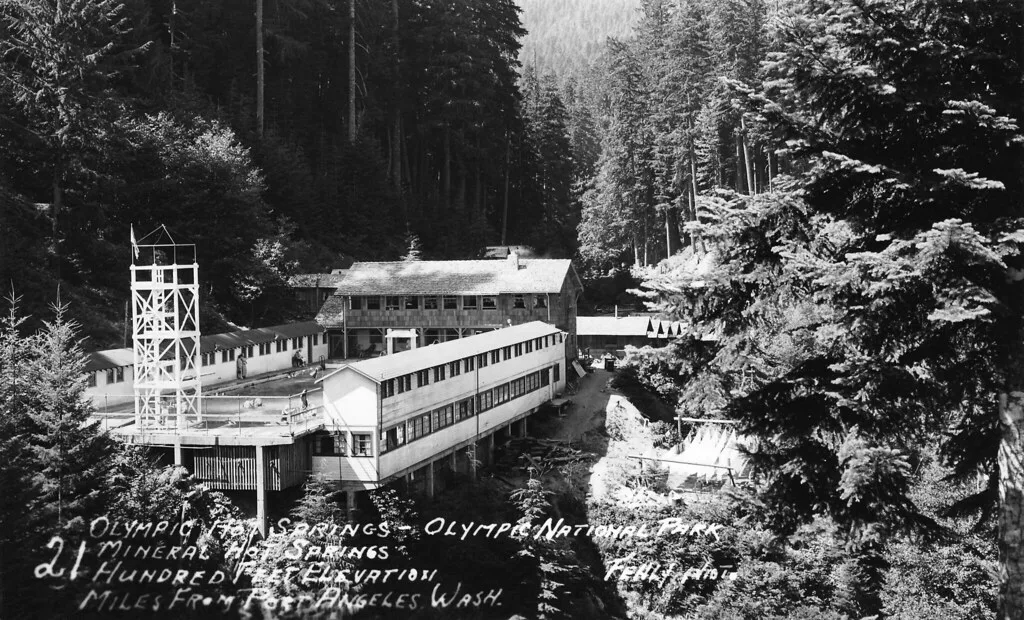
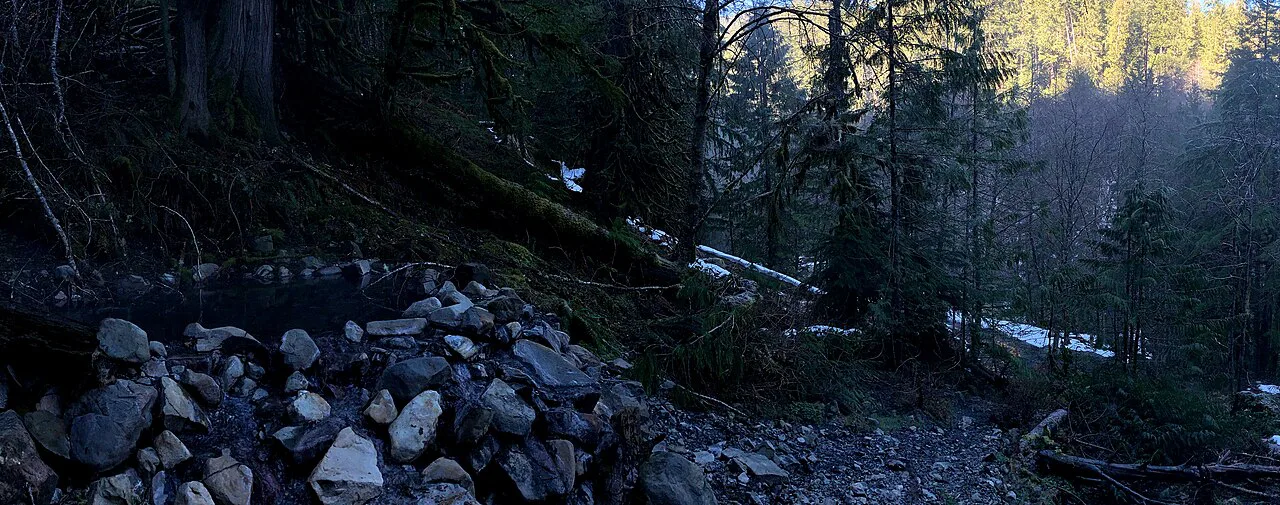
The soaking pools are primitive, built up in rock and log along Boulder Creek in the Elwha drainage, and they sit within Olympic National Park rather than at a resort. Water levels and pool condition shift with the creek and the season, so read the water before you commit: feel the source flow, watch how the pools fill, and choose the pool whose temperature suits you rather than the biggest one.
The springs are reached on foot from the road and trail network, part of the Elwha's hiking trail system; treat the pools as a backcountry stop, with no changing rooms, lifeguards or lighting. Bring a towel and dry layers, and change well away from the water.
Rules and etiquette
This is national park land, so park regulations apply to the pools and the road. Campfires are prohibited at the hot springs and at Boulder Creek Campground to protect vegetation, and food, garbage and scented items stay in approved bear canisters. Keep your head above water, since the pools hold untreated geothermal water. With no facilities past the gate, carry out your trash and leave the rock pools as you found them.
Water quality, temperature and clothing
The park's trail page states that the hot springs' water quality is not monitored and may contain high levels of fecal coliform bacteria, and it tells bathers to soak at their own risk. That is the main reason to keep your head out of the water, avoid swallowing it, and skip the soak if you have an open cut.
Test the water by hand before you step in, and keep your head out of the pools. The park does not monitor the water quality.
Temperatures vary from pool to pool. The Washington Trails Association entry notes the water can reach 118F, hot enough that you should test it by hand before stepping in. Some pools sit right beside the trail and others are more secluded, so a cooler or quieter pool is usually a short walk farther on. Cold creek water mixes in at different rates through the year, so a pool that felt right in summer can run hotter or cooler in fall.
On clothing, the park's page says plainly that nudity is common. Bring a swimsuit if you prefer one, stay relaxed about whoever else is there, and keep other people out of your photos. A weekday start or a visit outside summer helps if you want more privacy.
Drinking water needs its own care. The park advises collecting water from Boulder Creek above the confluence with the hot spring water, and boiling, filtering or chemically treating all of it to guard against Giardia. Do not fill a bottle from the pools.
Camping and lodging
The Elwha Valley has no developed campground, so the nearest beds are in Port Angeles or inside the park at Lake Crescent. That makes the springs a day trip or an overnight based in town, and it means you should book lodging before a summer weekend. Backpackers who want to sleep near the pools use the backcountry Boulder Creek Campground, covered in the permits section above.
For a two-night stay, Port Angeles gives you restaurants and services, while Lake Crescent shortens the drive to Sol Duc and the park's western valleys. Fishing rules are separate from soaking rules, and the park publishes its own fishing regulations if you plan to combine the two.
Overnight permits, fees and bear safety
If the round trip looks too long for one day, Boulder Creek Campground is the overnight option. The park's trail page describes established sites with pit toilets, and you camp only in those sites. Campfires are prohibited at both the hot springs and the campground to protect vegetation.
A permit is required. The park states that backpacking permits are required year-round, obtained in advance through Recreation.gov, by phone or at a Wilderness Information Center, and paper trailhead registration is no longer offered. The fee is $8 per person per night for adults 16 and older, free for those 15 and under, plus a $6 non-refundable reservation fee per permit. An Annual Wilderness Pass costs $45 per person and covers the nightly fee but not the reservation fee. Walk-up permits are not available, and the Port Angeles Wilderness Information Center answers questions at (360) 565-3100.
Food storage is not optional. The park requires all food, garbage and scented items to be kept in park-approved bear canisters, and canisters can be borrowed with a backpacking permit on a first-come basis, though supply can run short on busy weekends. Keep food secured whenever you are not carrying, eating or preparing it.
Day visitors pay to enter the park. The park's fees page lists $30 per private vehicle, valid for seven days, or $15 per person for those arriving on foot or by bicycle, with visitors 15 and younger free. An Olympic-specific annual pass is $55.
Crowds and timing
Weekday mornings give you the quietest road walk and the best odds of having the pools to yourself, since the trail fills on summer weekends. Fall and spring bring rain and shorter daylight but far thinner traffic, and the valley's forest colors are at their best then.
Any season, build in daylight margin: the walk back along the closed road takes as long as the walk in. A headlamp weighs little and covers a late start.
Nearby soaks and road-trip pairings
Sol Duc Hot Springs Resort is the developed counterpoint, a riverside resort inside the park with three mineral pools and one freshwater pool. The wading pool runs about 99F, the medium mineral pool about 104F and the larger fountain pool about 101F, with the freshwater pool varying from roughly 50F to 85F by season; the resort opens late March to late October and offers 32 cabins and 17 RV sites.
The road trip around the Elwha works because the park's other draws sit close: the visitor center, Hurricane Ridge, Lake Crescent and the Sol Duc Valley are all within an hour's drive of the Elwha. Give the Elwha a full day for the walk-in soak and put Sol Duc on the next day, so your legs recover between outings.
If you want a different character of soak on the same trip, the state's other options range from permit-limited pools near North Bend to roadside soaks off Stevens Pass. Compare them against the Elwha's long walk before you commit a day to each, and if you are willing to cross a state line, the hot springs in Oregon offer similar drive-up soaks to weigh against the hike-in pools here.
Safety on a primitive soak
Rock and log pool edges stay slick with algae and mineral film, so step in slowly and keep a hand free. Pools differ in temperature and can sit hotter than feels comfortable at first; ease in, and get out if you feel lightheaded. Keep your head out of the untreated geothermal water.
Boulder Creek feeds the springs, and creek levels rise after storms, which changes how the pools fill. Winter and spring visits bring the highest water, so give the pools time to settle after heavy rain before you get in.
Plan Your Visit
Build your Olympic Hot Springs day around distance, not a quick stop: park at the Madison Falls lot, walk or bike the closed road, take the bypass trail and soak only after you have read the water. Base yourself in Port Angeles or at Lake Crescent, and pair the hike with a Sol Duc day for a developed pool.
On the same Washington trip, the broader list of hot springs in Washington helps you weigh drive times against walk-ins. Leave the pools as you found them. For every soak in the state, start with our guide to Washington hot springs.
Frequently Asked Questions
Can you visit Olympic Hot Springs?
Yes, on foot or by bicycle. The Elwha area is closed to vehicle traffic beyond the Madison Falls parking lot because of flood damage, and a bypass trail gets you around the washout toward the springs.
How do you reach Olympic Hot Springs from Port Angeles?
Head west on Highway 101 and turn onto Olympic Hot Springs Road about 11 miles from town. Park at the Madison Falls lot at the park boundary, then continue on foot or bike past the gate and follow the bypass trail.
Is Olympic Hot Springs a developed pool or a primitive soak?
It is a primitive soak: rock-and-log pools along Boulder Creek inside Olympic National Park, with no facilities past the Madison Falls parking lot. There are no changing rooms, lifeguards or lighting.
Can you drive to Olympic Hot Springs?
No. The road beyond the Madison Falls parking lot is closed to vehicles, and parking and turnaround space there are limited. Bicycles and pedestrians can continue, using the bypass trail around the damaged section.
Where can you camp or stay near Olympic Hot Springs?
The Elwha Valley has no developed campground. Port Angeles is the closest town with a full range of lodging, Lake Crescent offers in-park stays closer to the western valleys, and backpackers with a wilderness permit can use the backcountry Boulder Creek Campground near the springs.
Is Sol Duc Hot Springs a good alternative to Olympic Hot Springs?
Yes, as a developed counterpoint. Sol Duc Hot Springs Resort has three mineral pools plus a freshwater pool, along with cabins and RV sites, and it typically operates from late March to late October.
Sources
- Visiting the Elwha Valley - Olympic National Park (U.S. National Park Service)
- Sol Duc Hot Springs Resort in Olympic National Park
- Boulder Creek Trail - Olympic National Park (U.S. National Park Service)
- Fees & Passes - Olympic National Park (U.S. National Park Service)
- Wilderness Backpacking Reservations - Olympic National Park (U.S. National Park Service)
- Olympic Hot Springs — Washington Trails Association
Hot springs notes for your next road trip
Optional updates when we add or revise hot springs guides.
You might also like
Continue reading
More guides you'll find useful