
Hot Springs Near Las Vegas: 5 Soaks Within Reach
Goldstrike is the closest natural soak to Las Vegas, but it is a strenuous rope-assisted hike. Here are the springs within reach, with access and timing.
On this page
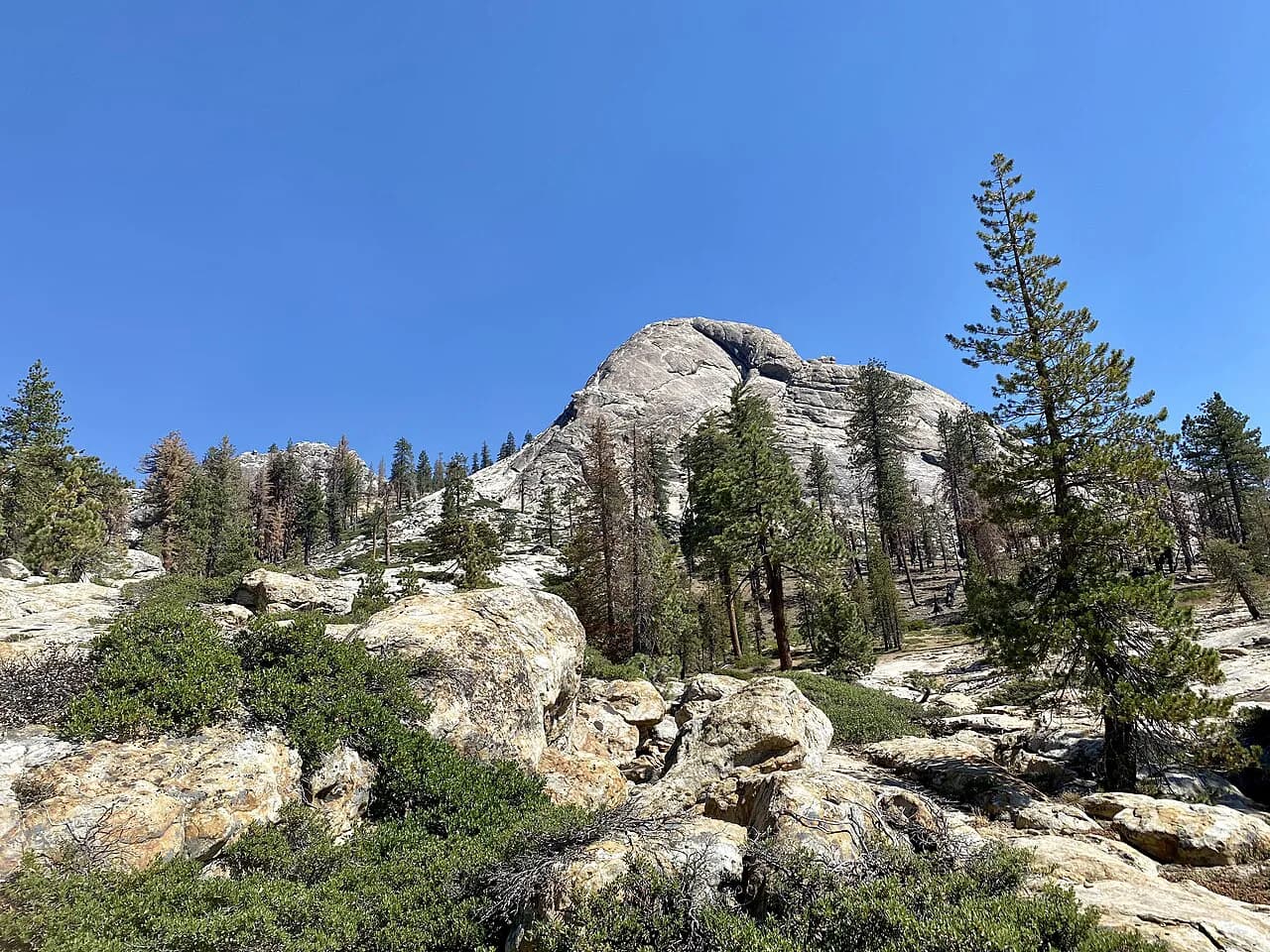
Las Vegas sits within an hour or two of some of the most varied geothermal water in the Great Basin, and the deciding factor is effort rather than distance. Goldstrike Canyon, tucked into the Black Canyon stretch of Lake Mead National Recreation Area, delivers the closest natural soaking pools but demands a strenuous scramble with fixed ropes. The easy soaks sit much farther out, in the open desert north and west of the city.
The springs near the city divide into two clear groups: canyon pools that reward fitness and nerve, and desert soaks you can reach by vehicle. Pick Goldstrike if you want a proper hike and can move fast over boulders, or head for the flat, drive-up water if you would rather not climb. From there, the choice of which hot springs in nevada to add comes down to how many dirt-road miles you are willing to trade for quiet. If this decision sounds familiar, the hot springs in Idaho offer a similar split between wild soaks and easy access.
Why Las Vegas Works as a Soak Base
Nevada holds 314 documented thermal springs, with water ranging from 68°F to 210°F, so the state's geothermal map is dense enough that several distinct soaks sit within a day's drive of the Strip. Fifteen of those springs reach boiling temperature, which explains how often a hike ends at a pool far hotter than the surrounding desert. Las Vegas puts you on the doorstep of the Black Canyon springs to the southeast and the open desert country to the north and west.
The city's real advantage is logistics: fuel, groceries, camping supplies and rental cars are all easy to secure before heading out, while the country beyond the suburbs thins out fast into BLM and National Park Service land. Plan your spring day around one target soak and one optional add-on rather than a long list. That way a long dirt road or a slow canyon hike doesn't wreck the itinerary.
Goldstrike Canyon: The Closest Natural Soak to the City
Goldstrike Canyon, on the Nevada side of Lake Mead National Recreation Area between the park's main visitor center and Hoover Dam, is the natural hot spring closest to Las Vegas and by far the most popular canyon soak in the area. The appeal is not just proximity: the route passes through narrow, volcanic-walled slots and delivers you to a series of warm pools before ending on the banks of the Colorado River. It suits fit, experienced hikers who are comfortable on fixed ropes and loose boulders, not casual strollers.
Treat the round trip as a full day and a serious one. The hike runs about 2.6 miles each way through boulder chokes and pouroffs, with roughly nine fixed rope assists that a trailhead map underestimates. The ropes help with drops but do not make the route easy, because scrambling, modest climbing and some teamwork are required, and the climb back up the ropes is harder than the descent. A round trip is reported at 5.2 miles, and most hikers should count on several hours.
Goldstrike Route: Trailhead and Canyon Obstacles
Reach the trailhead from the Goldstrike Canyon Road exit off Interstate 11 and U.S. Route 93, then park in the marked lot and walk back up the road toward the interstate to the signed trailhead with its information kiosk. The lot fills by mid-morning on busy weekends, so an early start or a weekday is a practical choice rather than a suggestion. From the kiosk the route drops east into a wide sandy wash before the canyon walls close in.
The middle section is where the hike earns its rating: an early pouroff is bypassed on a steep but manageable flank, and then come the ropes, the tightest narrows and stretches of water running down the canyon floor. Sandbags reinforce some of the pools, and flowing water becomes constant near the lower springs, so many hikers switch to water shoes or accept wet boots for the final stretch. The reward is a landscape of polished rock, sulfur seeps and bighorn sheep country that most visitors to Lake Mead never see.
The Goldstrike Pools and the River Landing
Goldstrike holds at least four distinct soaking areas along the canyon. The first sits high in the boulders and is largely shallow, with depth and heat rising as you work back into the rocks; it makes a reasonable turnaround for hikers who are short on time or energy, giving a roughly 4.2-mile round trip. Below that come smaller basins fed by a waterfall, then a deeper third pool, and finally the largest and most scenic pool just above the Colorado River.
The lowest pool splits into a wide entry basin, a warmer pool to one side, a cool pool at the base of the cascade and an inset pocket that runs warmest. From there it is only about a tenth of a mile to the river's edge, where the warm creek meets the cold Colorado in Black Canyon. Storm flows can rearrange the pools, so treat any arrangement as seasonal.
Goldstrike Season, Heat Closure and Flash Floods
The canyon trail closes annually from May 15 through September 30 because of extreme desert heat, which rules out summer soaking here and makes late fall through spring the realistic window. Even in the open season, avoid the canyon when rain is in the forecast, since steep narrows turn a trickle into a flash flood quickly. A canyon hike that looks fine at the parking lot can be dangerous an hour later upstream.
Avoid the canyon when rain is in the forecast, since steep narrows turn a trickle into a flash flood quickly.
Plan to keep your head above water in any of the pools. The park area carries a published advisory about Naegleria fowleri, the amoeba that causes a rare but serious infection, and submerging your head in untreated geothermal water is the specific risk to avoid. Follow posted guidance at the trailhead kiosk, and check current conditions with the National Park Service before heading out.
Rogers Spring and the Moapa Valley Corridor
If Goldstrike's ropes sound like too much, Rogers Spring is the low-effort alternative in Lake Mead National Recreation Area. It is a warm roadside spring in Clark County, about 16 miles from Moapa Valley, open to the public and listed at around 82°F, which makes it a comfortable stop rather than a hot soak. The water is warm enough to relax in and the access is short, so it pairs naturally with a Lake Mead or Valley of Fire day.
The Muddy River corridor around Moapa Valley holds a cluster of warm springs and seeps, including the system listed as Crystal Springs in Lincoln County, roughly 11 miles from Alamo, with water around 90°F at the low end of soaking temperature. Warm Springs Natural Area near Moapa protects dozens of springs that feed the Muddy River, and parts of the area are managed to protect sensitive habitat. Expect a mix of public viewing and restricted water rather than a single swimming hole.
Trego Hot Springs: The Long Black Rock Desert Soak
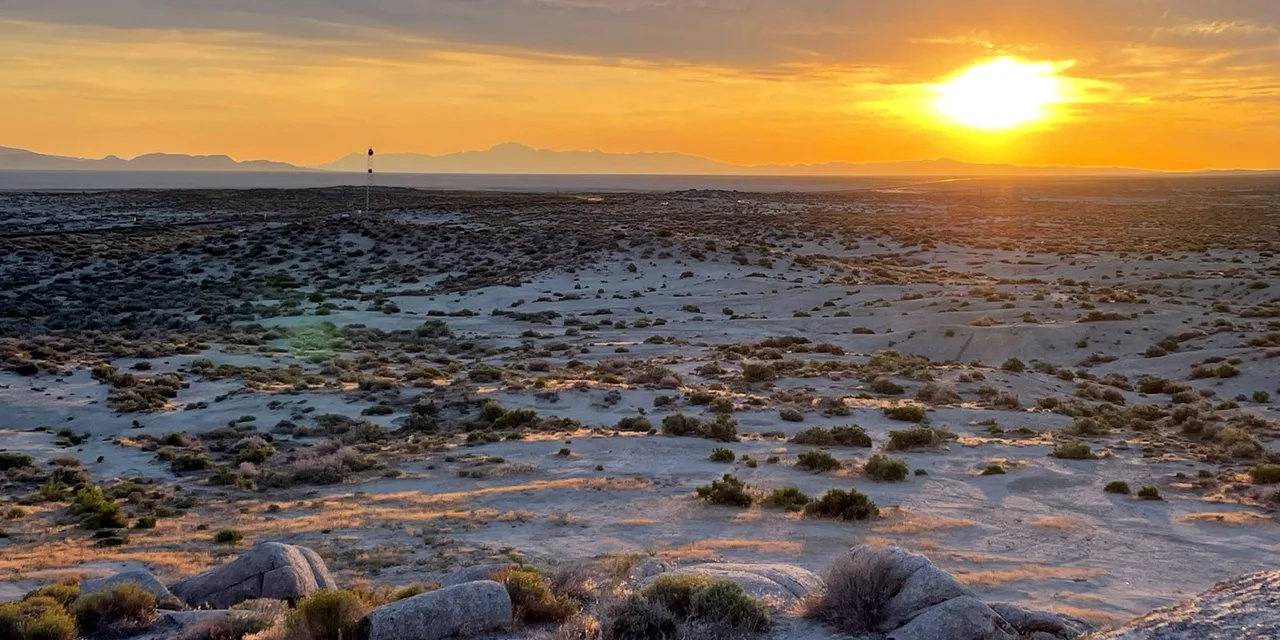
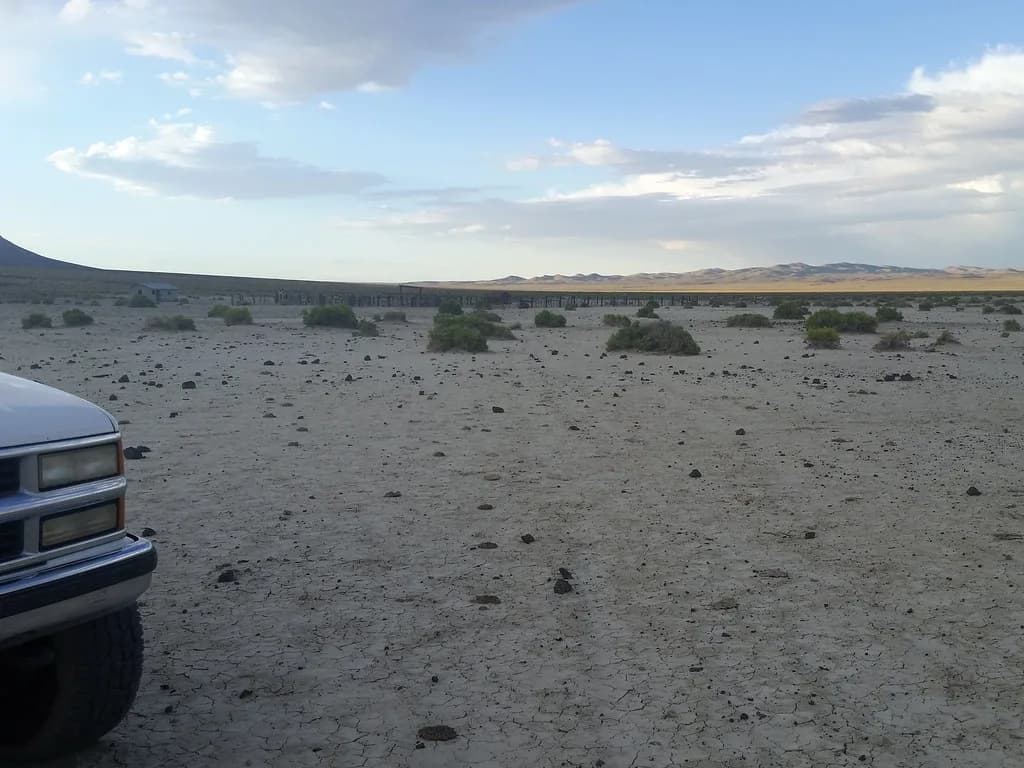
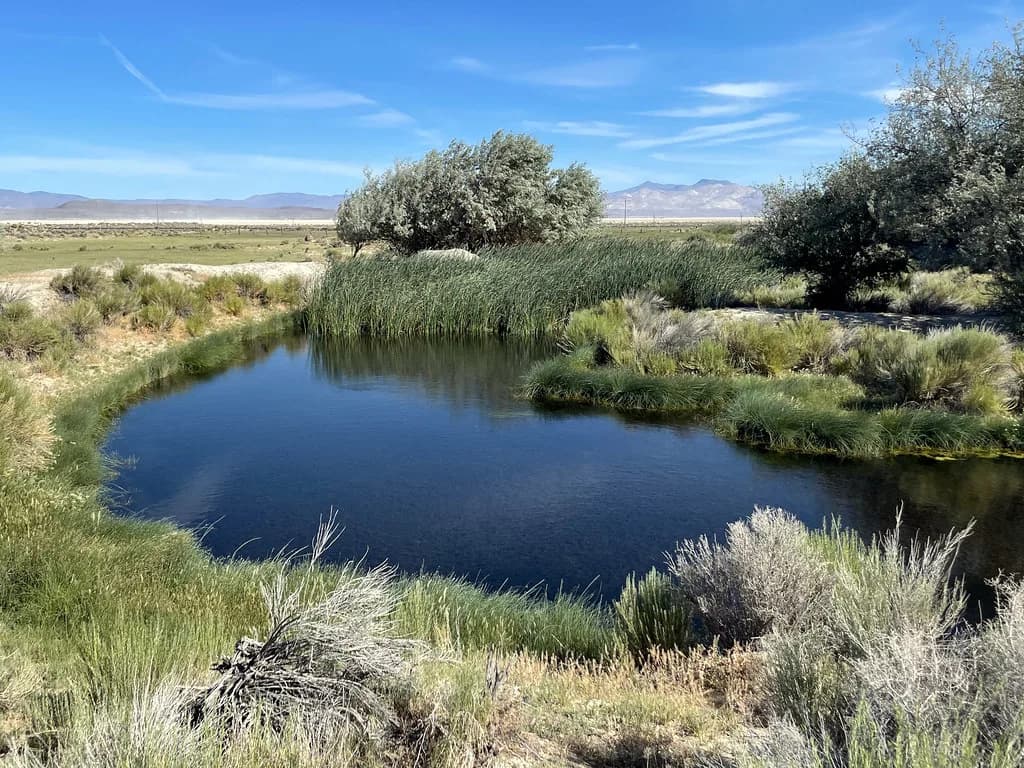
Trego Hot Springs, out in the Black Rock Desert in Pershing County, is a different animal entirely: a long, mud-bottomed ditch or canal beside the railroad tracks, sitting on BLM land and open to the public. Water temperature varies along the soak and with the season, ranging from roughly 90°F to 100°F depending on where you step in. The mud gets into everything, so bring a towel you don't mind ruining and shoes with grip.
Rain changes that road significantly, so a wet forecast is a genuine go/no-go call.
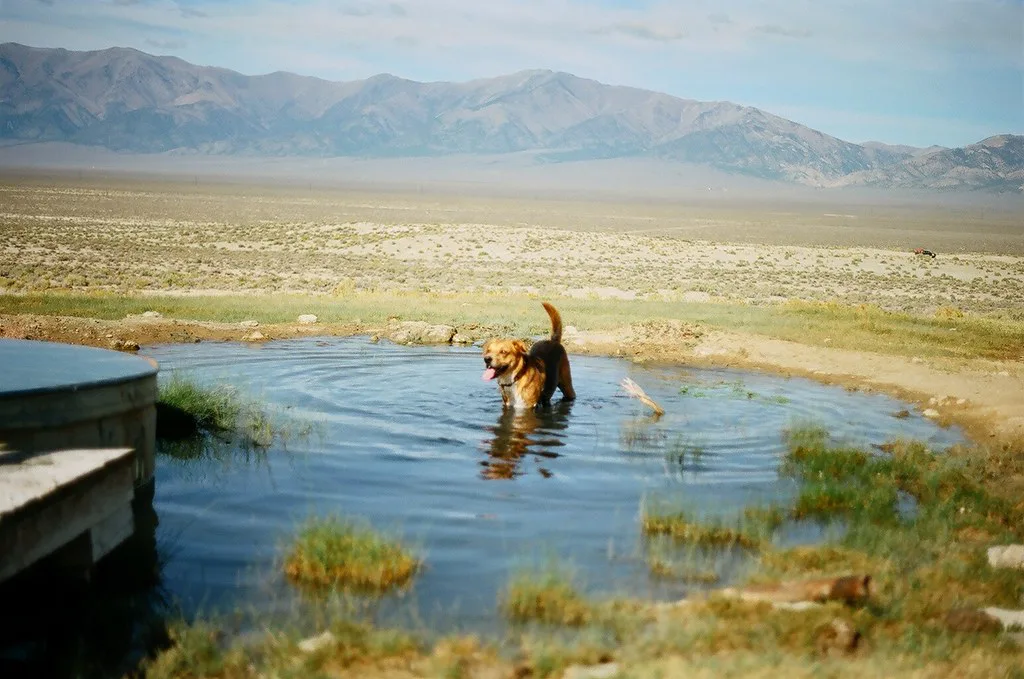
Access is by vehicle: from Reno the route runs east on Interstate 80 and north on Nevada 447 toward State Route 48, then down Jungo Road to Trego Road, with about 16 miles of dirt at the end. Rain changes that road significantly, so a wet forecast is a genuine go/no-go call. The spring is clothing optional and pet friendly, with dogs required to be leashed and kept out of the water, no glass allowed, and campers asked to pitch at least 300 feet from the spring.
Kyle Hot Springs: Trough Tubs in Buena Vista Valley
Kyle Hot Springs sits on private property in Buena Vista Valley, northeast of Reno, and it is a built soak rather than a natural pool. The setup is a primitive concrete tub plus two large troughs, with the concrete pool around 105°F and the troughs running near 103°F and 96°F. Temperatures shift with the season, so expect variation from one visit to the next.
The drive ends with a dirt road that can turn rough in wet weather, and the source water at Kyle is extremely hot, so approach the inlet edges carefully. There are no services nearby, which means you carry your own fuel, food and water. From Reno the route takes Interstate 80 east to Imlay, then Nevada 400 south toward Kyle Hot Springs Road, so it slots naturally into a north-valley loop. If you're building a soaking itinerary around that side of the state, Hot Springs Near Reno covers the closer options.
Planning the Drive: Fuel, Water and Gear
Distances around Las Vegas are deceptive, and the far springs sit at the end of long dirt approaches with no fuel or water in between. Fill the tank before leaving the city and carry more water than you think you need, plus a full-size spare, a shovel and a paper map. Cell service fades in the Black Rock and Buena Vista country, so download offline maps before you go.
For Goldstrike, pack water shoes, a dry bag, a swimsuit and gloves for the rope sections, and wear footwear with real grip for wet rock. For desert soaks like Trego and Kyle, pack old shoes for mud, a towel, sun protection and cash only where a fee applies. Fuel range and daylight matter more than gear on these drives, so plan to be off the dirt roads before dark.
Camping Near the Springs
Camping options track the land manager: Lake Mead National Recreation Area for the Goldstrike and Rogers Spring side, and BLM land for the Black Rock and Buena Vista soaks. At Trego, camping is spread along the surrounding BLM ground, and the published guidance asks for a camp at least 300 feet from the spring, which keeps the water clean and the experience quiet. Along the Muddy River corridor, developed campgrounds and RV parks near Moapa Valley make a comfortable base.
Near Lake Mead, established campgrounds serve the national recreation area, and dispersed camping is available on nearby BLM land outside the park boundary. Kyle Hot Springs sits on private property, so do not assume you can camp at the tubs themselves. Book a motel in Moapa Valley or Overton if you'd rather not camp at all.
Pairing Springs Into a Road Trip
A sensible southern Nevada loop starts at Goldstrike for the hike, then shifts to Rogers Spring and the Muddy River corridor for a lower-effort second day. Add Valley of Fire or the Lake Mead shoreline between soaks to break up the driving. Keep the itinerary to two soaks per day so you're not racing daylight on unfamiliar dirt roads.
The bigger road trip heads north: from Las Vegas up Interstate 15 and across to the Black Rock Desert for Trego, then on toward Reno and the Buena Vista Valley for Kyle. If you route through the capital, Carson Hot Springs in Carson City, Nevada gives you a developed pool stop between the remote ones. The full hot springs list, including Steamboat Hot Springs and lesser-known desert soaks, is worth browsing while you sketch the route.
For a central-Nevada option between Reno and Las Vegas, Spencer Hot Springs in Big Smoky Valley is a classic desert stop that pairs well with Highway 50 driving. Distances are long either way, so decide whether the trip is a canyon hike or a dirt-road tour before booking lodging. A mixed itinerary with one developed pool and one primitive soak usually gives the most satisfying balance.
Leave No Trace at Primitive Soaks
At primitive springs like Trego, everything you bring comes back out with you, including food scraps and wet gear that would otherwise blow away. Keep soap, sunscreen and bug spray out of the water, pack out trash, and camp on established ground rather than trampling vegetation around the spring. One walk around the soak should tell you whether it has been looked after; leave it cleaner than you found it.
Pick Your Soak and Go
Choose Goldstrike if you want the closest thing to a wild canyon soak near Las Vegas and you can handle ropes, boulders and a full day on your feet. Choose Rogers Spring and the Muddy River corridor if you want warm water without the scramble, and head for Trego or Kyle if you want a long desert road, mud and quiet.
| Spring | Type or access | Water temperature |
|---|---|---|
| Goldstrike Canyon | Canyon hike with fixed ropes, about 2.6 miles each way | — |
| Rogers Spring | Warm roadside spring with short access | Listed at around 82°F |
| Trego Hot Springs | Long mud-bottomed ditch about 16 miles of dirt road from the highway | Roughly 90°F to 100°F |
| Kyle Hot Springs | Built concrete tub and troughs on private property | Concrete pool around 105°F |
Whichever you pick, match the trip to the season: Goldstrike is off-limits for summer heat, the desert roads around Trego and Kyle turn slick in rain, and the canyon floods when storms hit upstream. Check conditions with the National Park Service or Bureau of Land Management before the drive, and carry enough water and fuel to get yourself home.
Frequently Asked Questions
What is the closest natural hot spring to Las Vegas?
Goldstrike Canyon, in Lake Mead National Recreation Area, is the natural hot spring closest to the city. It sits on the Nevada side of the Black Canyon stretch between the main park visitor center and Hoover Dam, reached from the Goldstrike Canyon Road exit off Interstate 11 and U.S. Route 93.
Do you need a permit or fee to soak at Goldstrike Canyon?
Entry to Lake Mead National Recreation Area follows the park's own entrance rules, so check the park's current fee and pass information directly with the National Park Service before you go. No separate soaking permit is described in the route guidance for the trail, and you should not assume any posted station at the trailhead.
When is Goldstrike Canyon closed?
The trail closes each year from May 15 through September 30 because of extreme heat. Outside that window, skip the canyon when rain is forecast, since flash floods move through the narrows quickly and without much warning.
Can you drive to Trego Hot Springs?
Yes. You can drive to Trego Hot Springs, but the last stretch is about 16 miles of dirt road that changes with the weather. From Reno the route runs east on Interstate 80 and north on Nevada 447 before turning onto Jungo Road and Trego Road.
Are dogs allowed at Nevada hot springs?
Rules vary by site and land manager. At Trego, dogs are permitted but must be leashed and kept out of the water, and glass is not allowed. For the Lake Mead springs and any BLM or private site, follow the specific posted rules, as no single policy covers all of them.
Which springs near Las Vegas are easy to reach without hiking?
Rogers Spring in Lake Mead National Recreation Area is a warm roadside spring about 16 miles from Moapa Valley, with short access and water around 82°F. Trego Hot Springs and Kyle Hot Springs are also drive-up soaks, but both sit at the end of long dirt roads far from the city.
Sources
Hot springs notes for your next road trip
Optional updates when we add or revise hot springs guides.
You might also like
Continue reading
More guides you'll find useful
.jpg)