
Breitenbush Hot Springs, Oregon: Soak and Stay Guide
Plan a soak at Breitenbush Hot Springs near Detroit, Oregon: meadow pools, spiral tubs, the sauna, clothing-optional etiquette, lodging and access.
On this page
Breitenbush Hot Springs is the rare Oregon soak that rewards slowing down rather than pulling off the highway. The retreat center sits on 155 forested acres in the Cascades, and its appeal is the whole package: river-rock pools in a meadow, a ladder of hotter tubs along the river, a cedar steam sauna, and three vegetarian meals a day built into an overnight stay. It suits first-timers who want a developed, supervised bathing area and travelers who would rather stay the night than rush a roadside dip.
Why Breitenbush suits an overnight stay
This is a retreat center first and a hot spring second, run as an intentional community by the people who live and work on the property. Guests can come for day use or book overnight lodging across a range of options. The rhythm of a stay runs on three meal bells a day, with free classes such as yoga or tai chi filling the hours in between, so the schedule rewards people who arrive planning to stay put.
If you are building a wider Cascade soaking loop, Breitenbush makes a natural anchor night between the developed resorts and the primitive forest tubs. Compare it with the full spread of hot springs in Oregon before you commit, since the drive times between them are long enough that two soaks in one day rarely works.
Where Breitenbush sits
Breitenbush is about 60 miles east of Salem, in the Willamette National Forest outside the small town of Detroit, roughly two hours from Portland. The final approach is a steep gravel climb, and from November 1 to April 1 chains or traction tires are required.
The property is off-grid, powered by a hydroelectric turbine on the Breitenbush River and heated by the geothermal water itself. That self-sufficiency is part of the appeal, but it also means you should treat the last hour of the drive as the point where you stop relying on your phone. Expect no cell service and no internet once you arrive.
Getting there
From Salem, take OR-22 east through the Santiam Pass corridor to Detroit, then follow Breitenbush Road for roughly the last 11 miles. GPS tends to misdirect drivers on the final leg, so switch to written directions before the pavement ends and watch for signage rather than your navigation app.
The Estacada and Hood River routes are closed from November 1 to April 1, and the Estacada (OR-224) route from Portland was also closed for wildfire as of August 9, 2026, so Detroit is the only way in. Winter travelers should expect snow on the final climb.
The pools
Bathing is spread across two settings. Down a path in the meadow, three smooth river-rock-lined springs sit in the open; closer to the river, three spiral hot tubs step up in temperature, with a fourth tub kept cold for a quick plunge. Bathing suits are welcome but not the norm, and you hang your towel and clothes a few steps from each pool.
Test the hottest tub with a toe before committing, and keep your head above water. Technicians adjust the temperatures, but the water is untreated geothermal water straight from the ground.
Because the pools are fed by geothermal water straight from the ground, treat them like any untreated soak: keep your head above water, move slowly on wet rock, and test the hottest tub with a toe before committing. Technicians monitor and adjust the temperatures, which run from about 100 to 110 degrees Fahrenheit and vary from pool to pool.
The cedar steam sauna
A geothermal-heated cedar cabin sauna sits near the pools and is, for many regulars, the centerpiece of a visit. Like the spring areas, the sauna follows the clothing-optional convention. Plan your soak in rounds: a few minutes in the hot tubs, a stretch in the sauna, a cool-down, then repeat.
Clothing-optional etiquette
The spring areas and sauna are clothing optional, and bathing suits, while welcome, are in the minority. Guests hang clothes and towels steps from each pool, and the atmosphere is quiet and respectful across all ages and body types. If you or someone in your group would be uncomfortable with that, plan around it rather than hoping to opt out of the setting.
Day use versus overnight stays
Day visitors and overnight guests share the same pools, sauna and grounds. Reserve through the retreat center directly, which takes bookings online. Overnight stays include three vegetarian meals a day, while day passes leave lunch as an add-on.
Lodging and camping
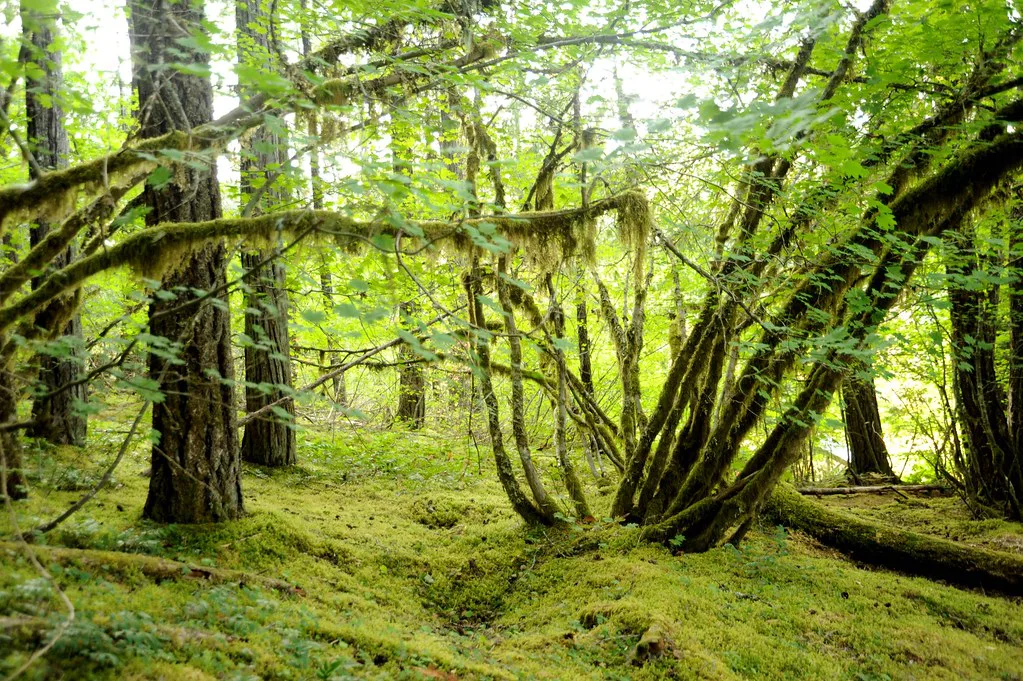
Lodging ranges from rustic 1930s cabins heated by geothermal radiators to lodge rooms, single-sex dorm cabins and platform tents with foam mattresses. Cabins are spare — some have plumbing, some do not, and doors do not lock — and you can bring your own bedding or rent theirs. Tent and vehicle camping is seasonal, and there are no hookups.
Day-use hours, passes and cancellation rules
Breitenbush runs day use on a fixed daily frame: day use begins at 9:00 am and ends at 6:00 pm, and lunch is not part of the pass but can be added through the office. Dinner is served to overnight guests only. Day passes are non-refundable and cannot be moved to a different day, so book for a date you are sure about.
Overnight guests have a slightly different clock. Soaking opens at 3:00 pm on arrival day, lodging is ready at 4:00 pm, and you vacate your room by 1:00 pm on departure day and leave the property by 3:00 pm. The Gatehouse closes at 6:00 pm; if you arrive later, a grounds map with your name waits on the Gatehouse porch, and a callbox is there for help.
Overnight changes follow a sliding scale under the cancellation policy. One free reschedule is allowed when requested more than 72 hours before noon on arrival day, while a cancellation in that window carries a $50 fee with the rest refunded. Between 72 and 24 hours out, the remainder becomes a credit voucher valid for one year, and inside 24 hours there is no refund or credit.
House rules on pets, alcohol, devices and children
Breitenbush is stricter than most hot spring destinations about what comes through the gate. No pets are allowed anywhere on the property, including the parking lot, so dogs cannot wait in the car. Guests with service animals are asked to contact the office before arriving. The grounds are also substance-free, meaning no alcohol, drugs or intoxicants, and firearms are on the leave-at-home list.
The property describes itself as a digital detox. Electronic devices, cell phones included, are prohibited in the soaking areas and the sauna, which is one reason the pools feel quiet. Quiet hours start at 10:00 pm. Clothing is optional in the pools and steam sauna, but swimwear is required everywhere else on the property, so pack a suit or cover-up for the walk between the lodge, meals and the river.
Families are welcome. Children 12 and under must be supervised at all times, infants need swim diapers in the water, and kids are asked to walk rather than run around the lodge and pools. A lawn, a playground and the river give younger guests room to play, and a few events are marked adult-only. Youth ages 5 to 12 get reduced meal and soaking prices, and children ages 0 to 4 are free, per the retreat center's family information.
Meals and the daily rhythm
Three mostly organic vegetarian meals a day are included with overnight stays and served buffet-style, with options for wheat, egg, dairy and gluten-free needs. Herbal tea and hot water are out all day, and many guests bring their own coffee. Meals are announced with a ten-minute bell, and you bus your own dishes when you finish.
Between meals, the schedule offers free classes such as yoga or tai chi, plus trails, a labyrinth and a fire circle in the evenings. Paid workshops and massage are booked separately. Treat the daily rhythm as the plan and leave room for it rather than scheduling your own excursions tightly.
Crowds, seasons and winter access
The retreat center fills up, especially on weekends and during workshops, so book well ahead if you want a specific lodging type. Late spring through fall brings the easiest driving; winter is quieter but requires chains or traction tires, written directions and a flexible schedule.
Wildfire, smoke and road closures
Wildfire has changed access to this part of the Cascades. As of August 9, 2026, the retreat center lists the Estacada (OR-224) route from Portland as closed because of wildfire, leaving Detroit as the only way in. Older hiking trails on the property are closed for fire damage too, with newer trail options available if you ask on arrival.
As of August 9, 2026, the Estacada (OR-224) route from Portland is closed because of wildfire, which leaves Detroit as the only way in. Expect snow on the final climb in winter.
Smoke is handled with on-site air quality readings. At an AQI of 200 to 299 guests may still arrive and can reschedule or take a full credit; at 300 to 499 they are advised not to come, and those already there may stay or leave for a credit. At 500 or higher, guests on site are evacuated. The retreat center contacts guests before arrival if conditions are unsafe.
Nearby springs to combine
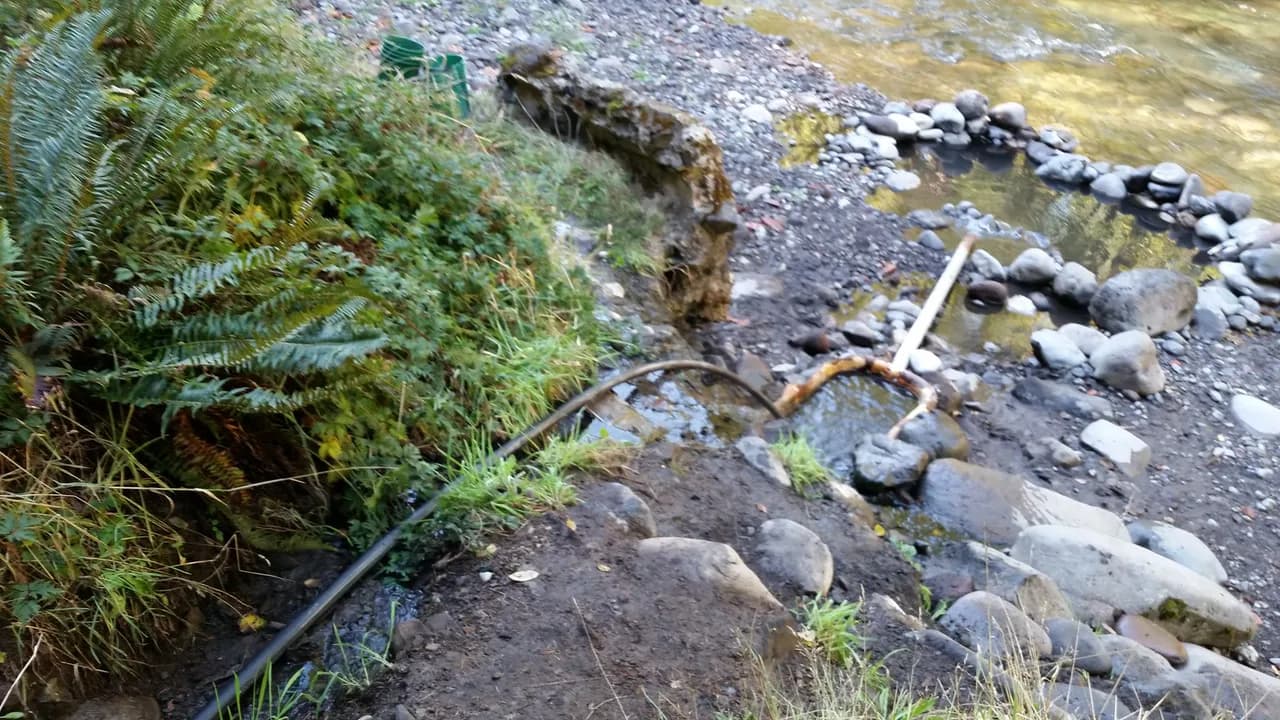
Lower Breitenbush, also known as Ann Arbor, sits downstream along the Breitenbush River and is a different animal entirely: a short walk from a parking area leads to the remnants of a century-old resort, with cement tubs fed by hoses and a cast-iron tub on the riverbank. Source water runs over 150 degrees, and tub temperatures swing widely depending on how the hoses are set. It is open year round and a bucket helps you adjust the mix.
Farther afield, the developed pools and campground at Belknap Hot Springs make an easy add-on along the McKenzie River corridor, and Bagby Hot Springs offers a hike-in, tub-in-the-woods contrast on the west side of Mt. Hood National Forest. On the drier east side, Crystal Crane Hot Springs near Burns pairs a pond soak with overnight options if you are extending the trip toward Harney County.
Water, bedding and what the property provides
The property filters its own drinking water, so bring a reusable bottle that is not glass instead of bottled water. Hot water is available around the clock in the dining room. Beyond towels, the packing list asks for a flashlight, biodegradable scent-free toiletries, warm bedding and a pillow, since only a fitted sheet is provided, a trash bag, and a critter-proof food container for your vehicle.
Candles, incense, firewood and glass containers should stay home. CPAP machines are allowed, and satellite internet such as Starlink works only inside your own vehicle.
What to pack
Bring a towel, sandals for wet rock, a reusable non-glass water bottle and warm layers for the walk between pools and cabin. Overnight guests should pack bedding or plan to rent it, plus a headlamp for evening paths and your own coffee if you are particular. Leave expectations of connectivity at home; there is no cell service and no internet on the property.
Leave No Trace at the downstream tubs
Lower Breitenbush is a pack-it-out site with no services, no camping and no dogs in the water. Bring a bag for your trash, a bucket for adjusting tub temperatures, and shoes with grip for the half-mile trail. Keep soap and food out of the river and leave the tubs as you found them.
Plan Your Visit
Breitenbush rewards a committed plan: book lodging early, print directions for the final gravel climb, and arrive ready to eat when the bell rings rather than squeezing a soak into a driving day. Pair it with Lower Breitenbush for a primitive contrast, or with Belknap and Bagby on a longer Cascade loop. Before you go, confirm current conditions with Breitenbush Hot Springs Retreat and Conference Center or the Willamette National Forest.
Frequently Asked Questions
Is Breitenbush Hot Springs clothing optional?
Yes. The spring areas and the cedar sauna are clothing optional, per the retreat center's published guidance. Bathing suits are welcome, but they are not the norm, and guests hang clothes and towels steps from each pool. The atmosphere is described as quiet and respectful across ages and body types.
Who owns Breitenbush Hot Springs?
Breitenbush is operated by a worker-owned cooperative and intentional community that lives across the river from the retreat center. Members make major business and community decisions at annual meetings and elect a board of directors. Guests are welcome at the retreat center but should not enter the community village without a staff escort.
Can you visit Breitenbush Hot Springs for the day?
Yes. Day use runs from 9:00 am to 6:00 pm, and day visitors share the pools, sauna and grounds with overnight guests. Day passes are non-refundable and cannot be moved to another day. Lunch is not included but can be added through the office.
Is there camping at Breitenbush Hot Springs?
Yes, camping is seasonal, with platform tents that come with foam mattresses plus separate areas for tent camping and vehicle camping. There are no hookups and no locks on cabin doors. Bring your own bedding or rent it from the retreat center.
What is the difference between Breitenbush and Lower Breitenbush?
Breitenbush is the developed retreat center with meadow springs, spiral tubs, a sauna and lodging. Lower Breitenbush, also called Ann Arbor, is a primitive site downstream with the remnants of an old resort, hose-fed cement tubs and a cast-iron tub on the riverbank. Lower Breitenbush has no services and no camping.
How far is Breitenbush Hot Springs from Portland?
It is roughly a two-hour drive from Portland and about 60 miles east of Salem, near the town of Detroit in the Willamette National Forest. The final stretch is a steep gravel climb, and from November 1 to April 1 chains or traction tires are required. Detroit is the only access while the Estacada route is closed for wildfire.
Sources
Hot springs notes for your next road trip
Optional updates when we add or revise hot springs guides.
You might also like



Continue reading
More guides you'll find useful


