
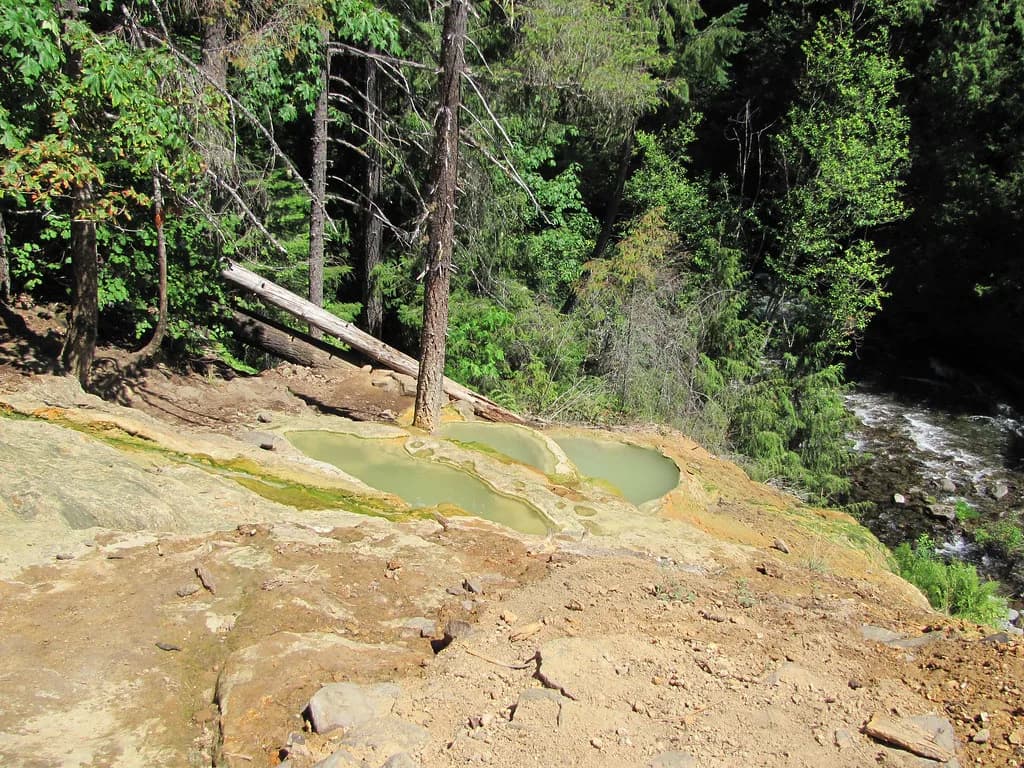
Borax Hot Spring, Oregon: Boiling Ground & Protected Lake
Borax Hot Springs in Harney County, Oregon, is a scalding geothermal site, not a soaking pool. See what's there and where to soak instead nearby.
On this page
Borax Hot Springs rewards travelers who want to see raw geothermal ground rather than sit in a pool. The feature sits in Harney County on the Fields-Denio corridor, where the Alvord Basin floor spreads out below Steens Mountain and steam rises from an active fault line. It suits curious road-trippers, photographers and geology-minded hikers who are happy to look, learn and move on to a real soak elsewhere.
The headline is the temperature gap: water at the springs ranges from 104 to 300°F, so the hottest ground is far beyond anything you would enter. Treat the site as a short interpretive stop, keep your distance from steaming vents and crusted margins, and save the bathing for a developed pool with a posted soaking temperature.
What Borax Hot Springs is
This is a steam-and-boil geothermal feature, not a tub. Heat comes from groundwater circulating along an active fault, and the surface expression is bare, mineral-stained ground with hot vents rather than a walled basin. Plan on 20 to 30 minutes on foot, plus time for photos and a look at the lake beside it.
Because the appeal is geological rather than recreational, bring binoculars, a wide-brim hat and water for the exposed walk. The basin offers little shade, and the ground around the springs stays hot year-round. A short visit fits neatly between the Fields store and the Alvord Desert playa.
Where it sits in the Alvord Basin
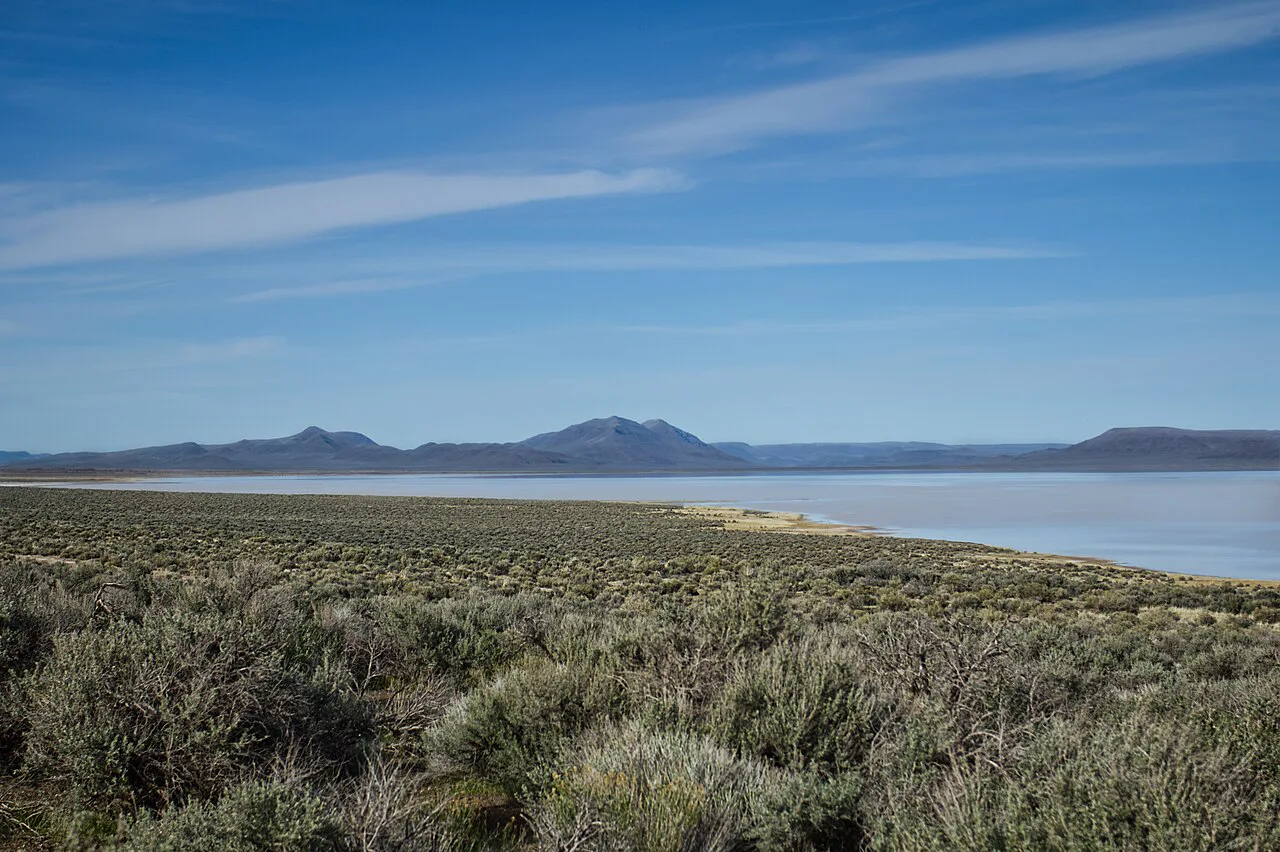
Borax Hot Springs lies in Harney County, Oregon, on the Fields-Denio corridor that runs along the eastern edge of the Alvord Basin. The nearest services are in Fields, a small desert community on the same road, and the terrain is high desert floor below Steens Mountain. Expect gravel stretches, open range and long views rather than signage at every junction.
The state geological survey lists the feature as a natural spring that discharges geothermally heated groundwater in Oregon, which confirms its identity as a geothermal site rather than a developed facility. Save an offline map before you leave pavement, because cell coverage thins out across the basin.
Getting there
Most travelers reach the area from Burns via Oregon 78 and the Fields-Denio Road, the same corridor that serves Alvord Hot Springs. From Fields, continue north on Fields-Denio and watch for the Borax Lake area; the final approach is on desert road surface, so drive to conditions and carry a spare tire.
Alvord Hot Springs sits 23 miles northeast of Fields on this corridor, which makes it a useful landmark for judging your position along the drive. Fuel up in Burns or Fields before heading out, and top off water there too, since the basin has no services between towns.
The springs
Published temperatures for the Borax Hot Springs feature run from 104°F to 300°F, a range that reflects how differently the vents and pools behave across the site. The low end is still hot enough to scald, and the high end is boiling. Read the range as a reason to stay on established ground, not as a soaking guide.
Crusts around hot vents can be thin, and the ground between them may be warmer than it looks. Stay back from the steaming margins.
The heat is tied to an active fault line, which is why geothermal water reaches the surface here in the first place. Crusts around hot vents can be thin, and the ground between them may be warmer than it looks. Keep children close, keep dogs on leash and stay back from the steaming margins.
Borax Lake next door
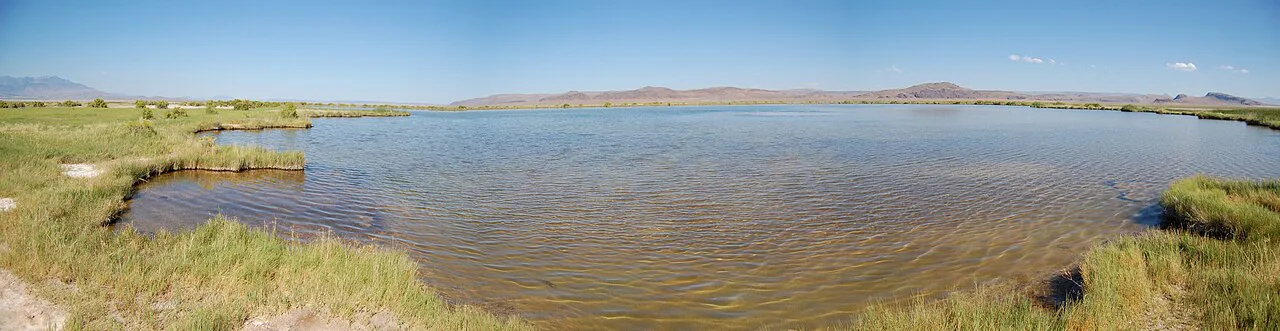
The roughly 10-acre Borax Lake formed from these hot springs and is owned by The Nature Conservancy, which manages it as an ecologically sensitive area. The lake carries high concentrations of sodium borate, arsenic and lead, and it supports unique microbes along with the endangered Borax Lake chub. View it from a distance and leave the shoreline undisturbed.
The lake is the reason this stop reads as conservation first and recreation second. That framing matters when you decide how long to linger and where to park. The Borax Lake Area of Critical Environmental Concern designation signals that the surrounding ground is managed for habitat, so stay on durable surfaces and follow any posted guidance at the access.
Why you look and don't soak
Scalding water, thin crust and a protected shoreline all point the same direction: this is a viewing site. The 300°F upper end of the range is far above any safe bathing temperature, and the lake's chemistry adds a second reason to stay out of the water. Photograph the steam, read the landscape and keep your boots on.
If you want to soak in the Alvord Basin, head for a developed pool with a posted temperature instead. Alvord Hot Springs maintains two adjoining concrete pools fed by much hotter source water and cooled to a soaking range, with a caretaker on site and restrooms. That split lets you see the geothermal source at Borax and still end the day in warm water.
Reading the landscape
The water and soil here carry borate, arsenic and lead, which is part of why the lake is fenced off from casual use. Look for white and gray mineral crusts, saltbush flats and the odd wet patch that stays green in a dry basin. These are visual clues to the chemistry underfoot, not an invitation to touch.
Bring a hand lens or a zoom lens if you like detail, and skip collecting rocks or mineral samples. The basin's story is in the patterns, the colors and the steam, all of which photograph well in low morning light.
Best time of year for the drive
Spring and fall give the most comfortable temperatures for walking exposed ground, and the light is softer for photographs. Summer afternoons in the Alvord Basin get genuinely hot, so start early and carry more water than you think you need. Winter can bring snow and ice to the high desert roads, so check conditions before committing to the drive.
Spring and fall give the most comfortable temperatures for walking exposed ground. Summer afternoons get genuinely hot, so start early and carry more water than you think you need.
The basin is remote enough that weather changes the trip more than crowds do. Build slack into your day for a slower gravel drive and a longer stop than planned, and avoid the approach after dark.
Where to soak instead
Alvord Hot Springs is the natural pairing: same corridor, real pools, and a caretaker who monitors the area. The source water runs about 170°F and is cooled to a soaking range of roughly 100 to 110°F in the pools, which gives you a legitimate place to sit after the geology stop. The water carries elevated arsenic, so do not ingest it.
For a broader tour of soaks across the state, the guide to hot springs in oregon covers developed resorts and primitive sites from the Cascades to the high desert. It is the right place to line up a second or third stop on a longer road trip rather than tacking them onto a single day. If your route eventually turns east, the Nevada hot springs make a fitting next chapter of the same high-desert soaking trip.
Camping and lodging for a Fields-based trip
Alvord Hot Springs offers RV and tent camping plus sleeping huts, and Pike Creek Campground sits 1.6 miles north of the pools. Fields has limited lodging, so plan your overnight before you leave Burns. Bring your own shade, fuel and water, and expect simple facilities rather than full hookups in this corner of Harney County.
If you want a bed and a shower, base in Burns and treat the Alvord Basin as a long day trip. That trade-off costs you dawn light on the playa but spares you a night of desert wind.
Pack-it-out etiquette on the Alvord approach
This is open high desert with little infrastructure, so everything you carry in should leave with you. Pack out trash, food scraps and gray water, stay on existing tracks to protect the crust, and leave the lake shoreline untouched for the chub and the microbes that depend on it. Keep groups small and voices low around the springs so other visitors can hear the landscape rather than you.
Nearby road-trip pairings
Pair Borax Hot Springs with the Steens Mountain loop and the Alvord Desert playa for a full basin day. The playa is where people go for open horizons and fast wind, while Steens Mountain gives you elevation and long views back across the desert floor. String all three together and you have a loop that shows the basin from ground level and from above.
If you are chasing more soaks on a longer Oregon itinerary, Umpqua Hot Springs on the North Umpqua River is a well-known Cascades stop, and Bagby Hot Springs in Mt. Hood National Forest offers a very different forest setting. Both reward planning ahead on access and timing, and neither resembles the open desert you find here.
Plan Your Borax Hot Springs Visit
Treat Borax Hot Springs as a short, careful viewing stop on the Fields-Denio corridor and put your soaking time into the pools at Alvord Hot Springs. The payoff is a look at an active geothermal fault, a protected desert lake and a landscape shaped by heat and minerals.
Before you drive, confirm road conditions and any access notices with the managing agencies, and carry an offline map because cell service is thin in the basin. Build in daylight, water and a spare tire, and the trip stays simple.
Frequently Asked Questions
Can you soak in Borax Hot Springs?
No. Published temperatures for the feature run from 104 to 300°F, far above a safe soaking range, and the adjacent Borax Lake is a protected Nature Conservancy site with elevated borate, arsenic and lead. Plan to view the springs from a distance and soak at a developed pool such as Alvord Hot Springs instead.
How hot is Borax Hot Springs?
The geothermal springs range from about 104°F to 300°F, tied to an active fault line that brings heated groundwater to the surface. The high end is boiling, and even the low end is hot enough to scald, so stay on established ground and keep back from the vents.
Where is Borax Hot Springs in Oregon?
It sits in Harney County on the Fields-Denio corridor in the Alvord Basin, with the small community of Fields as the nearest settlement and Burns as the usual supply stop. The basin floor here lies below Steens Mountain, and the approach includes gravel road.
Is Borax Lake protected?
Yes. Borax Lake is owned by The Nature Conservancy and sits within the Borax Lake Area of Critical Environmental Concern. The lake supports unique microbes and the endangered Borax Lake chub, so view it from a distance and leave the shoreline undisturbed.
What is the Borax Lake chub?
It is an endangered fish that lives in Borax Lake, the roughly 10-acre water body formed by the hot springs. The lake's unusual chemistry, including high concentrations of sodium borate, arsenic and lead, shapes the habitat the chub depends on.
Where are the nearest hot springs to Borax Hot Springs?
Alvord Hot Springs is the closest developed soak on the same corridor, roughly 23 miles northeast of Fields, with two concrete pools cooled to a soaking range and a caretaker on site. It pairs naturally with a Borax Hot Springs viewing stop.
Do you need a high-clearance vehicle to reach Borax Hot Springs?
The approach is on desert road surface with gravel stretches, so drive to conditions and carry a spare tire regardless of vehicle type. Check road conditions before setting out, since weather can change the surface quickly.
Sources
Hot springs notes for your next road trip
Optional updates when we add or revise hot springs guides.
You might also like



Continue reading
More guides you'll find useful




.jpg)