
Hot Springs Near Klamath Falls, Oregon: Where to Soak
Compare the hot springs within reach of Klamath Falls, Oregon, from developed pools to remote soaks, and learn how to plan a road trip around them.
On this page
Klamath Falls works as a soaking base because it sits at the seam between two very different geothermal landscapes, the forested Cascade Range to the west and the dry high desert to the east, so a single trip can mix a short walk-in soak with a remote desert pool. The article is built for people driving in with a day or a weekend and deciding which springs deserve the mileage.
The springs within reach divide cleanly into commercial resorts with concrete pools, semi-developed sites with a short trail and a day-use fee, and undeveloped soaks on public land that may require rough-road driving. Each type sets your day: resorts reward a late arrival, while trail-access sites reward an early start and a packed-in kit.
Why Klamath Falls works as a soaking base
The town sits south of the Cascade crest and north of the Oregon outback, which puts the forested hot springs of the Willamette and Umpqua national forests on one side and the desert springs of Lake and Harney counties on the other. Oregon Discovery's statewide map groups the springs by region, making it easy to see which cluster fits a day out of Klamath Falls before you commit to a route.
That geography also sets the season. Cascade-side soaks come with forest roads that can hold snow into late fall, while the high-desert pools are reached on long, exposed gravel where summer heat and washboarding are the bigger constraints. Pick the side of the crest that matches the month, not the other way around.
How to use this guide
Sort the options by what they demand rather than by a ranked list. A commercial resort needs only a car and a towel; a semi-developed spring such as Terwilliger, also called Cougar Hot Springs, needs a forest-road drive and a short trail to a set of pools; an undeveloped soak may need high clearance and a longer hike.
| Spring | Type | Temperature | Fee or access |
|---|---|---|---|
| Terwilliger (Cougar Hot Springs) | Semi-developed, four pools on a short trail | 112 down to 85 degrees Fahrenheit | $7 day-use fee |
| Umpqua Hot Springs | Terraced pools on a cliff above the river | Up to 105 degrees Fahrenheit | Northwest Forest Pass |
| Wall Creek Warm Springs | Single oval pool on a trail through old growth | About 95 degrees Fahrenheit | — |
| Alvord Hot Springs | Two concrete pools fed by piped source water | Source water at 170 degrees Fahrenheit | $20 per person day pass |
Match the site to your vehicle and your schedule. A standard SUV handles most forest roads described by travelers, but rough desert tracks and winter snow push the primitive springs out of reach for a sedan and a short afternoon.
Developed and semi-developed soaks
For an easy soak, the commercial resorts around the state run concrete pools, changing rooms and posted rules, and the top day-use operations in Oregon include Breitenbush Hot Springs, Jackson Wellsprings and Belknap Hot Springs. A resort pool is the sensible pick when you are traveling with people who want hot water without a hike.
Semi-developed springs are the middle ground: Terwilliger holds four soaking pools, with published temperatures ranging from 112 down to 85 degrees Fahrenheit, and the trail from the trailhead on Aufderheide Drive runs about 0.4 mile and rates easy. Clothing is optional there, and the pools close on Thursday morning for cleaning.
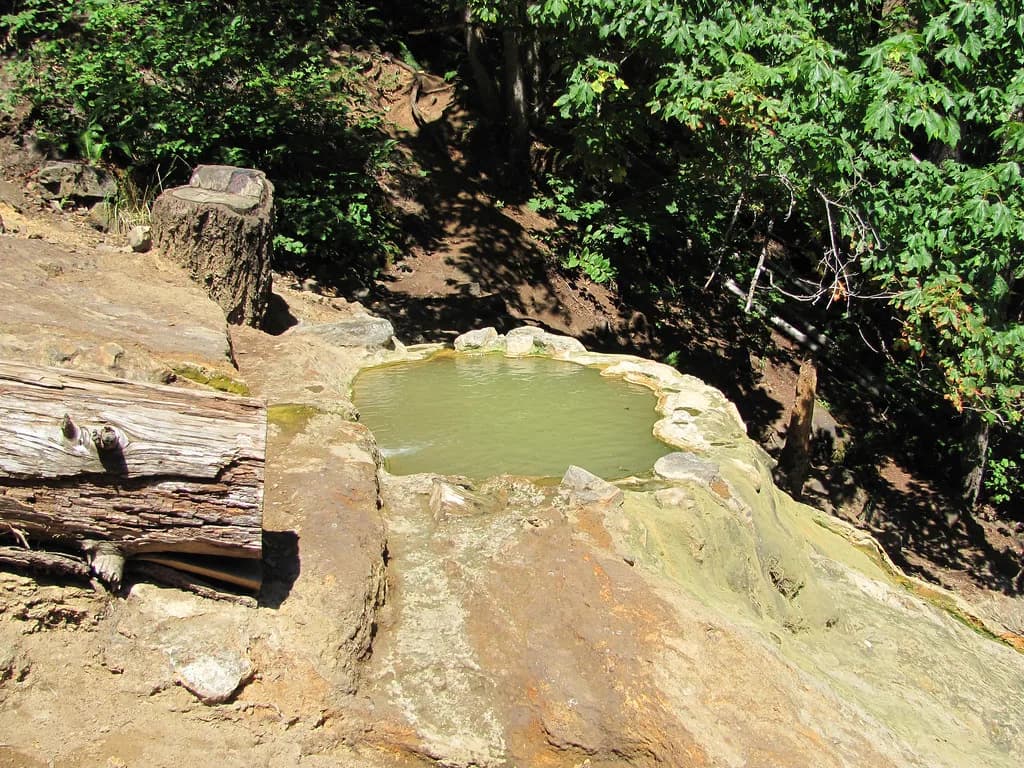
Umpqua Hot Springs, on the North Umpqua side, is a set of terraced pools on a cliff above the river, published at up to 105 degrees Fahrenheit, with roughly 0.8 mile of easy trail from the trailhead. It is among the most scenic of the regulated soaks and also among the busiest, so an early arrival matters more here than anywhere else on this list.
If you are building a trip around a developed pool, Hot Springs Near Bend, Oregon covers the resort side of the Cascades in more depth, including Belknap Hot Springs, and pairs well with a Klamath Falls loop that heads north through the mountains. Soakers weighing the long drive north can also compare the resort-and-soak options in our Nevada hot springs guide, which covers a similar mix of developed pools and remote desert soaks.
Primitive soaks on public land
The forested, hike-in springs of the Cascades reward people who carry everything they need. Wall Creek Warm Springs, also called the Meditation Pool, sits in the Willamette National Forest at the end of a roughly 0.6-mile trail through old growth, and it is a single oval pool published at about 95 degrees Fahrenheit.
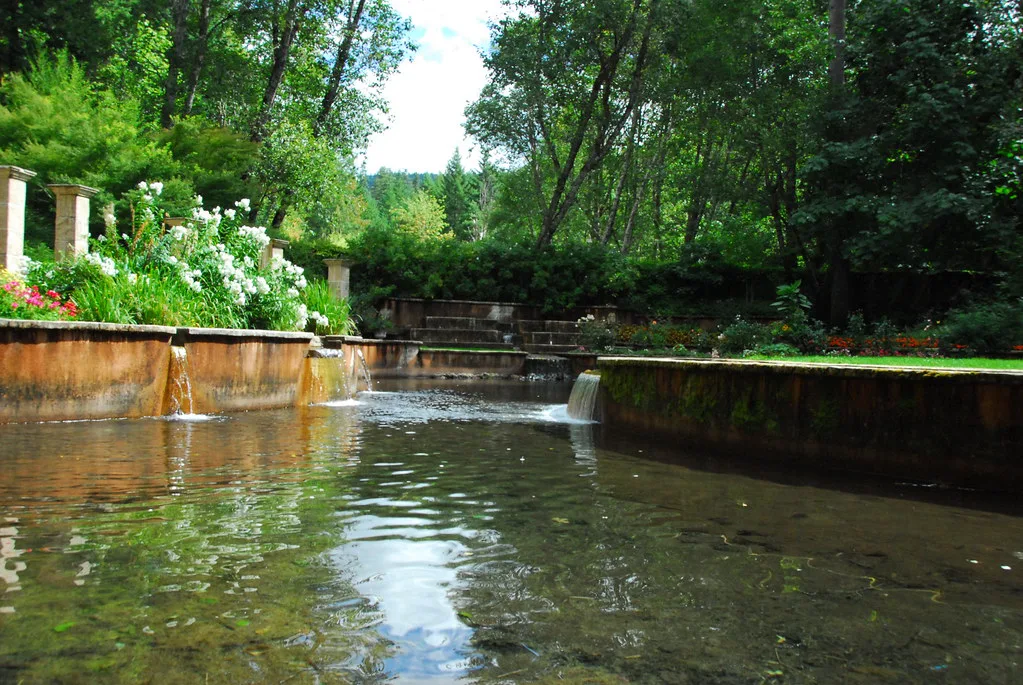
McCredie Hot Springs is built of man-made rock walls that hold the naturally heated water beside Salt Creek, and it is undeveloped outside those walls, reached by about 0.4 mile of easy trail. The pools sit close to the road, so expect company and plan your timing around it.
Farther east, Hart Mountain Hot Springs sits on the Hart Mountain National Antelope Refuge with two pools published at about 100 to 102 degrees Fahrenheit, one walled pool a short walk from the road and a second about five minutes out in the field. A first-come campground sits minutes away, which makes this the best primitive option for a longer desert loop.
Water temperature: source versus pool
Source water runs hotter than the pool you sit in, and that gap is the whole point of the plumbing at developed springs. At Alvord Hot Springs, water emerges at a published 170 degrees Fahrenheit and is piped into two concrete pools, where it mixes with cooler water and the soaking temperature is adjusted with valve shutoffs.
At primitive springs the pools are as hot as the flow and the mixing allow, with no valve to turn. Terwilliger's spread from 112 down to 85 degrees Fahrenheit across four pools shows how much a single site can vary, so move between pools to find the temperature that suits you instead of committing to the first one you reach.
Fees, passes and hours at regulated springs
The regulated springs charge day-use fees, and the amount varies by site. Terwilliger charges a published $7 day-use fee and is open dawn to dusk, while Alvord charges a published $20 per person for a day pass, with overnight camping guests getting 24-hour pool access.
Umpqua requires the Northwest Forest Pass, and the America the Beautiful national parks pass also covers entry there, so an annual federal pass can pay off across a multi-spring trip. Oregon Discovery notes day-use fees at a few semi-developed springs including Bagby, Terwilliger and Umpqua.
For a deep dive on Bagby Hot Springs, Oregon, the forest bathhouse site in Mt. Hood National Forest, check the site's own guide before you plan around it. Fees and hours at any of these springs can shift with the season, so confirm the current rate with the U.S. Forest Service before you drive out.
Camping options near the springs
Camping is the way to make a multi-spring trip work, and the options split by land type. Hart Mountain has a first-come campground a couple of minutes from the pools, and the Alpine-style overnight stays at Alvord include pool access for campers.
On the western side, national forest campgrounds and dispersed sites along the Aufderheide corridor serve Terwilliger and the McKenzie-area springs, while Umpqua's cliffside pools sit near Forest Service campgrounds on the North Umpqua. Book reservable campgrounds ahead for summer weekends and carry your own water where the campground does not supply it.
Crowds and timing
The regulated springs draw crowds, and the hour you arrive shapes the experience more than the season does. Sunrise is the best shot at having a pool to yourself, and sunset is the busier, more social alternative.
Sunrise is the best shot at having a pool to yourself, and weekdays beat weekends everywhere on this list.
Fall through early winter is the sweet spot: steam rises off the water, snow dusts the rocks and the crowds thin out substantially. Early winter beats deep winter on Cascade-side roads, which can close in heavy snow and add miles to the hike in.
Weekdays beat weekends everywhere on this list, and a Thursday-morning cleaning closure at Terwilliger is worth remembering when you set your days.
Combining springs on a road trip
A sensible loop from Klamath Falls runs west into the Cascades first, hitting Terwilliger and the McKenzie corridor, then swinging south to Umpqua before turning back east. That order puts the long forest drives first and leaves the desert for a separate, longer push.
For the desert leg, head east toward Lake and Harney counties, where Summer Lake Hot Springs and Crystal Crane Hot Springs offer commercial soaks and Hart Mountain delivers the primitive version. Hot Springs Near Burns, Oregon covers the desert cluster in detail, including Crystal Crane Hot Springs.
If you are heading north toward Crater Lake on the way home, Hot Springs Near Crater Lake, Oregon picks up the Umpqua and North Umpqua soaks and makes a natural final stop before the drive back to town.
Safety at geothermal water
Source water can be scalding, and the rock around the pools is often slick with mineral deposits, so test the water with a hand before you step in and move slowly on wet stone. Keep your head out of untreated geothermal water, and at river-adjacent springs like McCredie and Umpqua, check river levels before you cross or soak on the bank.
Source water can be scalding, and the rock around the pools is often slick with mineral deposits, so test the water with a hand before you step in.
Soap, shampoo and even biodegradable soap do not fully break down and are illegal in most wilderness and public land areas, so shower before you arrive and leave the bottles in the car.
Leave No Trace at primitive springs
At hike-in and undeveloped springs, pack out everything you bring in, including food scraps and trash you find that is not yours, and skip glass entirely. Carry a trash bag in your pack for the walk out, and choose footwear you can wear down slick, uneven ground.
Plan Your Visit
Klamath Falls gives you a rare choice: a Cascade forest soak in the morning and a high-desert pool by late afternoon, provided you match the spring type to your vehicle and your patience for a trail. Start with one regulated spring and one primitive one, and you will know which side of the crest suits your next trip. For every soak in the state, start with our guide to Oregon hot springs.
Frequently Asked Questions
What are the closest hot springs to Klamath Falls, Oregon?
The springs within a reasonable drive of Klamath Falls fall into two groups: the Cascade-side soaks such as Terwilliger, Umpqua and Wall Creek in the national forests to the west, and the desert springs around Summer Lake, Crystal Crane and Hart Mountain to the east. The statewide map from Oregon Discovery sorts them by region so you can see which cluster fits a day out of town.
Are the hot springs near Klamath Falls developed or primitive?
You get both. Terwilliger and Umpqua are semi-developed with short trails and pools built up with rock or terraces, while Wall Creek and McCredie are undeveloped pools reached on foot, and the resorts such as Breitenbush and Belknap run concrete facilities. Hart Mountain and Alvord are the desert options, one a short walk from a campground and the other a set of concrete pools with piped source water.
Do you need a pass or day-use fee for Oregon hot springs?
Some sites charge a day-use fee and some require a federal recreation pass. Terwilliger has a per-person day-use fee and Alvord charges per person for a day pass, while Umpqua requires the Northwest Forest Pass, which the America the Beautiful pass also satisfies. Check current rates with the land manager before you drive out.
What is the best time of year to soak near Klamath Falls?
Fall through early winter is the strongest window, with steam on the water, lighter crowds and a dusting of snow on the rocks. Early winter is safer than deep winter on Cascade-side roads, which can close in heavy snow and lengthen the hike in. Sunrise soaks beat midday visits year-round for solitude.
Can you camp near the hot springs around Klamath Falls?
Yes. Hart Mountain has a first-come campground a couple of minutes from the pools, and Alvord offers overnight camping with 24-hour pool access for guests. On the Cascade side, national forest campgrounds and dispersed sites along the Aufderheide corridor serve Terwilliger and the McKenzie-area springs.
Which hot springs can you combine on a road trip from Klamath Falls?
A west-side loop links Terwilliger, the McKenzie corridor and Umpqua before heading back east, while a desert leg covers Summer Lake, Crystal Crane and Hart Mountain. Crater Lake makes a natural northern bookend if you are finishing on the North Umpqua.
Sources
Hot springs notes for your next road trip
Optional updates when we add or revise hot springs guides.
You might also like



Continue reading
More guides you'll find useful



