
Mickey Hot Springs, Oregon: Plan Your Soak & Stay
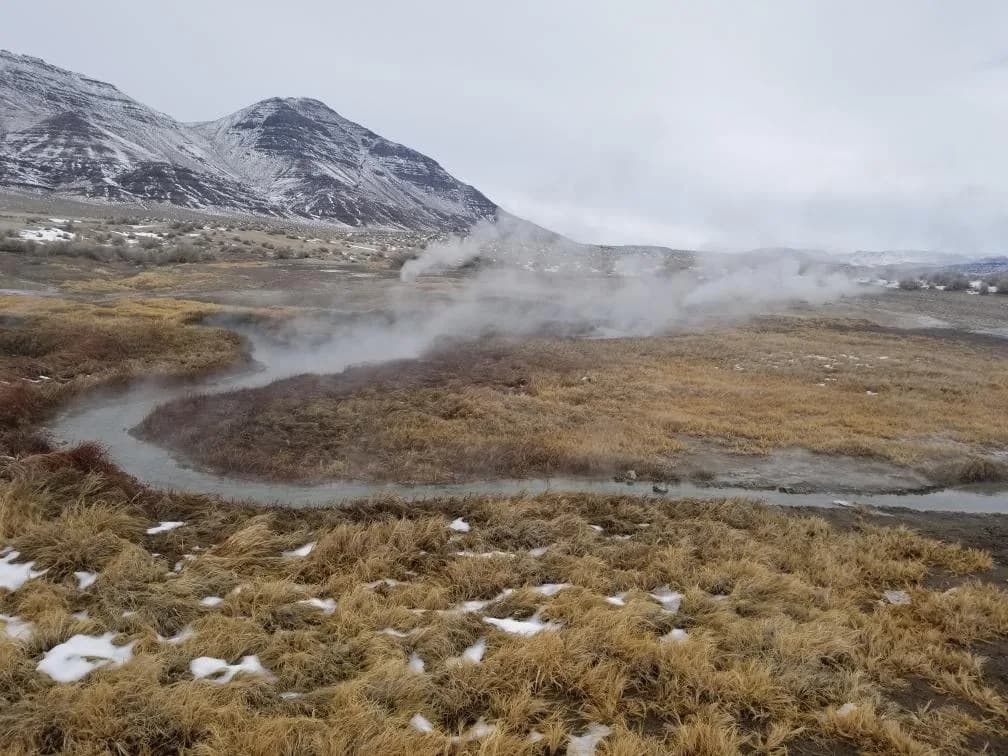
Mickey Hot Springs in Oregon is a geothermal basin of steam vents, boiling mud pots and clear blue pools near the Alvord Desert that you visit, not soak in.
On this page
Mickey Hot Springs rewards travelers who treat it as a geothermal spectacle rather than a swimming destination. The basin northeast of the Alvord Desert playa holds steam vents, boiling mud pots and several crystal-blue pools set against alkali flat and the Steens Mountain escarpment. It suits photographers, geology-minded road-trippers and anyone building a Steens Country loop who wants a short, strange walk between longer drives.
The catch is simple and worth planning around: the pools are far too hot for soaking, and the BLM asks visitors to keep pets and children a safe distance away. You come here to look, listen and shoot, then soak somewhere else in the Alvord corridor. Read on for the approach, the ground you walk on, and how to pair the stop with the playa and nearby water.
What Mickey Hot Springs Is
Mickey Hot Springs sits in Mickey Basin, a depression in the dry desert playa north of the Alvord Desert, in the shadow of Steens Mountain. Mickey Butte, the high point of a dark ridge that splits the basin into two valleys, rises to 6,294 feet. The springs themselves are a cluster of geothermal features rather than a pool you enter.
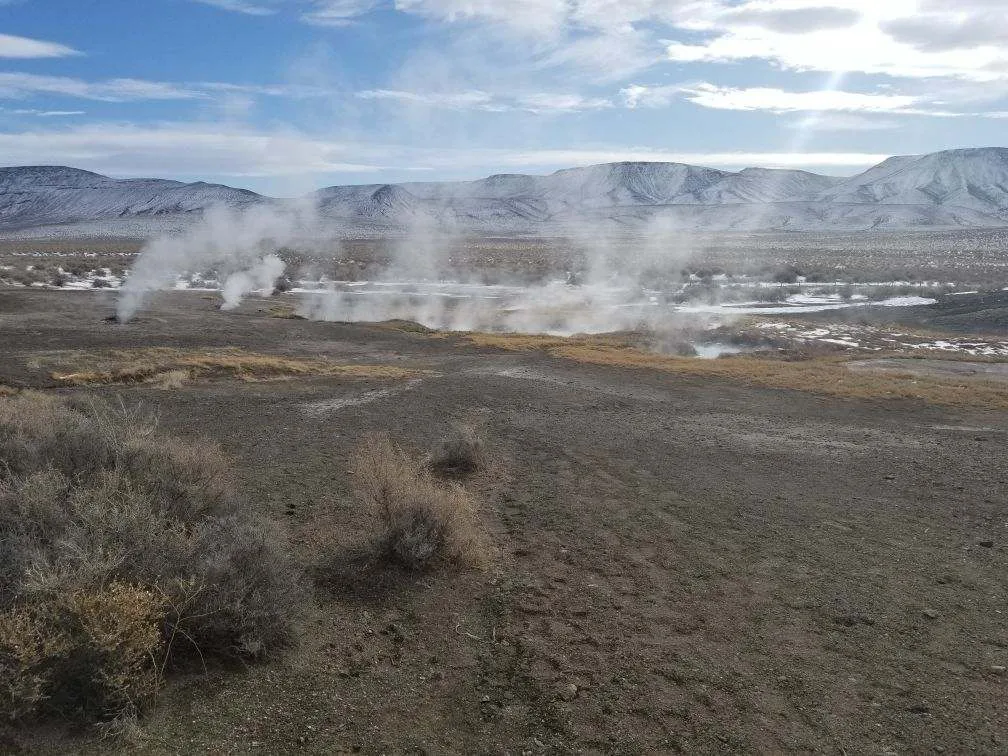
The BLM describes the site as a geothermal area roughly 15 miles northeast of the Alvord Desert, where a short walk leads past steam vents, boiling mud pots and several crystal-blue pools. That combination is the draw: you get the full surface expression of a hot spring system, from hissing fumaroles to mineral-tinted water, in a compact area you can cover on foot.
Because the features are active and the water is scalding, this is a look-not-touch stop. Stay on established paths and firm ground, and keep your distance from pool edges where the crust can be thin. The basin is open and exposed, so bring water, sun protection and a wind layer even for a short visit.
Getting There
The standard approach is through the Alvord Desert. From Burns, take State Highway 78 southeast for about 65 miles, turn right onto East Steens Road (also signed as Folly Farm Road) and continue southwest about 40 miles, then turn left onto Frog Springs Access Road to reach the playa. Mickey Hot Springs lies roughly 15 miles northeast of the playa, so you continue past the Frog Springs area rather than stopping at the first salt flat.
Fields, Oregon is the nearest town to the Alvord Desert, roughly an hour south, and it is where you find food and fuel before heading into the basin. Treat the drive as remote desert travel: fill the tank in Burns or Fields, carry extra water and a shade option, and download offline maps before you lose signal.
A second common route runs southeast from Burns on Highway 78 to Folly Farm Road, then south along the Fields-Denio Road, part of it gravel, toward Fields. Either way you are on a long, partly unpaved corridor with sparse traffic, so plan your fuel and daylight around the drive; the nearest fuel and food are at Fields Station about an hour south of the playa, and it is worth checking their hours before you rely on them.
For a wider sweep of soaks across the state, including primitive Forest Service pools and developed resorts, see this guide to hot springs in oregon before you lock in a route.
Road Conditions and Timing
The BLM notes the Alvord Desert is accessible year-round, but ideal conditions exist June through November, when the playa is usually dry enough for vehicle travel. Outside that window, rain can leave the clay surface slick and impassable.
The Alvord Desert playa is usually dry enough for vehicles from June through November, so plan the drive for that window.
The playa is fine clay sediment that turns treacherously slick when damp, and the BLM warns that a harmless-looking puddle can become thick, sticky mud that traps a vehicle with little warning. It also states plainly that getting stuck out here is serious and a tow from the remote location can be costly. If the surface looks wet or even slightly wet, stay off it.
Plan the Mickey stop for a dry stretch and check conditions with the BLM Burns District Office before a shoulder-season trip, since wet playa and washouts can close the approach. Time your drive so you reach the basin with daylight to spare; the nearest fuel and food are an hour or more away.
Walking the Basin
A short walk from where you park takes you past the springs, steam vents and mud pots, so you can see the range of features in one loop without a long hike. The terrain is flat but rough, with crumbly crust and soft ground near the active water, so wear boots rather than sandals and watch where you place each step.
The mud pots are actively boiling, and ground that looks dry can crust over a wet, hot layer. Keep to firm ground and give pool rims a wide berth.
Read the ground as you go. Ground that looks dry can crust over a wet, hot layer, and the mud pots are actively boiling. Keep to bare, firm alkali flat where possible, give pool rims a wide berth, and keep children close and pets leashed or in the vehicle rather than roaming the thermal area.
Photography and Geology
The turquoise and deep-blue pools against the pale alkali flat, with Steens Mountain rising behind, make this one of the more photogenic geothermal sites in eastern Oregon. Early and late light brings out the mineral color and the steam, while midday flattens the pools and hardens shadows. Bring a tripod for the steam vents and a way to shade the lens from the near-constant wind.
The basins and buttes here are part of a volcanic landscape shaped by the same forces that built Steens Mountain, and the hot springs are surface evidence of that geothermal system. Look for the terraces and old shorelines around the Alvord playa, reminders of a lake that once covered the valley floor.
Nearby Water: Borax Lake and Alvord Hot Springs
Borax Lake, a 10-acre pool with an adjacent hot spring, sits in the same corridor and is worth a look for its unusual chemistry and its resident Borax Lake chub. The BLM notes the lake is a biological reserve, not suitable for swimming, so treat it as a viewing stop.
For an actual soak, head to Alvord Hot Springs, a private property on the Alvord Ranch with two adjoining concrete pools. Spring water arrives blisteringly hot, around 170 degrees Fahrenheit, and is cooled to a soaking range the site reports as roughly 100 to 110 degrees Fahrenheit. The pools sit at about 4,080 feet between the desert and the mountain, a short drive from the playa.
The same source warns that the spring water carries elevated arsenic, so avoid swallowing it and keep your head above water. That advice applies to any untreated geothermal pool: soak below the neck and keep your face clear of the spray.
If you are stringing together soaks across the Cascades and the high desert, keep a developed stop like Austin Hot Springs, Oregon in mind for a different landscape and a roadside setting.
Camping on the Alvord Playa
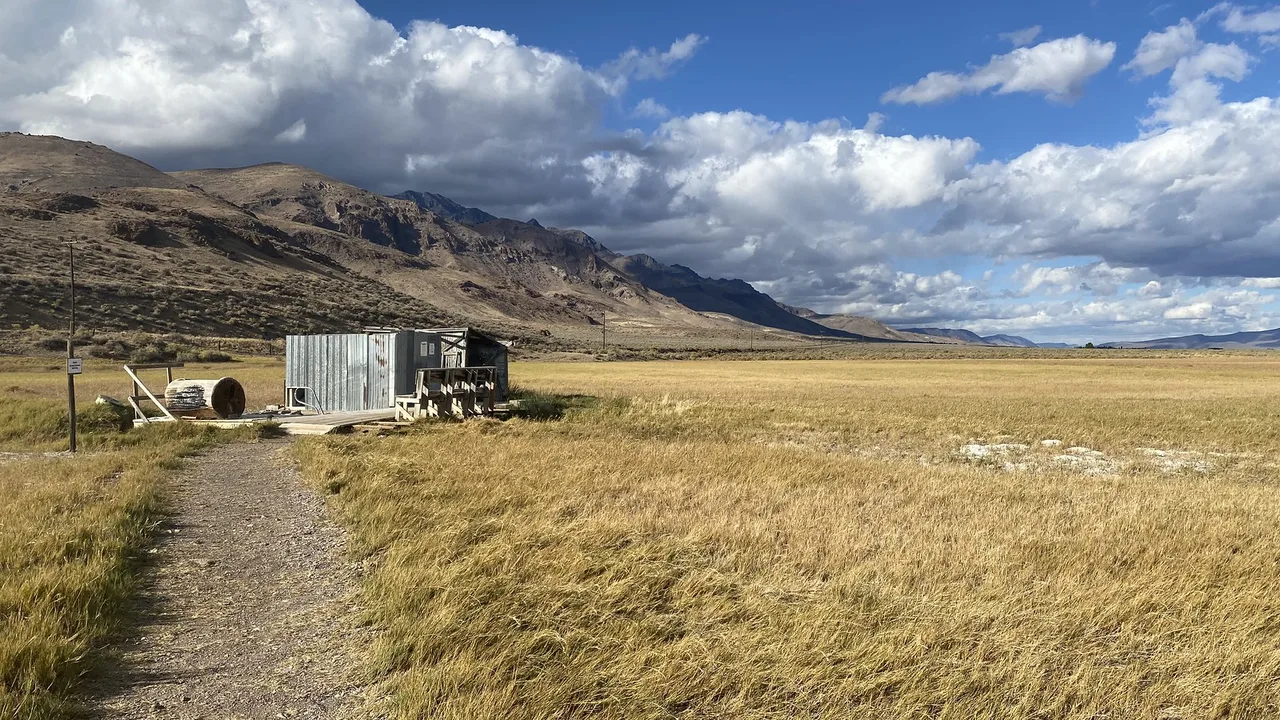
The BLM allows dispersed camping on the Alvord playa, and the open flat offers room to pitch a tent and watch the stars. There are no designated camping areas, and the only public facility for miles is a single vault restroom at Frog Springs between the playa and East Steens Road.
There is no potable water or cell service in the Alvord Desert, so bring all the water you need, your own shade and shelter, and tie everything down against the strong and unpredictable wind. Camping here is a self-sufficient, barren-air experience, not a campground with services.
Alvord Hot Springs also offers RV and tent camping alongside its pools, which makes a practical base if you want a soak and a shorter drive to the basin. Pike Creek Campground sits about 1.6 miles north of the springs for another option.
Pairing Mickey with a Steens Loop
Build a loop that links Fields, the Alvord playa, Mickey Hot Springs and Alvord Hot Springs in a single day of driving and short walks. Fields is your last reliable stop for fuel and food before the desert stretch, so top off there and carry lunch rather than counting on anything else.
From Burns, you can add a soak at Willow Creek Hot Springs, Oregon on a separate leg of the trip, or swing west toward Hunter's Hot Springs for a developed stop near the lake country.
Farther afield, Bagby Hot Springs in the Mt. Hood National Forest makes a completely different trip, with forest trails and cedar tubs instead of open desert. It is a good second anchor for a longer Oregon hot springs itinerary.
Safety Around Scalding Water and Open Ground
The pools and mud pots at Mickey are dangerously hot, so keep a generous margin from every pool edge and keep pets and children well back. Ground near the features can be thin and unstable, and the mud pots actively boil.
The basin is exposed and windy, with no shade and no water, so heat and dehydration are the real risks on a summer afternoon. Carry more water than you think you need, wear a hat, and plan your walk for the cooler ends of the day. Never submerge your head in untreated geothermal water anywhere in this country, and keep any open cuts away from the pools.
Leave No Trace in a Facility-Free Basin
With almost no facilities, the Alvord basin asks you to pack out everything you bring in, including human and pet waste, and to leave the thermal features exactly as you find them. Do not throw anything into the pools, do not stack rocks or build cairns, and park on firm ground rather than tearing up the fragile playa crust.
Plan Your Steens Country Stop
Mickey Hot Springs is best planned as a short, sharp stop on a Steens Country loop: a walk past steam vents and blue pools, an hour or two with a camera, then a drive to Alvord Hot Springs for a soak you can actually get into. Build the day around dry roads, full fuel and water, and daylight, and it delivers a side of eastern Oregon that few stretches of highway can match. If you enjoy comparing volcanic soak landscapes, this Idaho hot springs guide covers similar geothermal country across the border.
If your Oregon itinerary runs longer, use the statewide hot springs guide to line up further soaks, and treat this basin as the scenic, geology-first chapter between them.
Frequently Asked Questions
Can you soak in Mickey Hot Springs?
No. The BLM describes the pools at Mickey Hot Springs as far too hot for soaking and asks visitors to keep pets and children a safe distance away. Come to look at the steam vents, mud pots and blue pools, then drive to Alvord Hot Springs for an actual soak.
How do you get to Mickey Hot Springs in Oregon?
Reach the Alvord Desert from Burns via State Highway 78 and East Steens Road, then follow the Frog Springs Access Road onto the playa. Mickey Hot Springs lies roughly 15 miles northeast of the Alvord Desert playa, so you continue past the main flat. Fields, Oregon is the nearest town for fuel and food, and the drive includes long stretches of gravel.
Where is Mickey Hot Springs relative to the Alvord Desert?
Mickey Hot Springs sits in Mickey Basin, north of the Alvord Desert playa and below the Steens Mountain escarpment. The BLM places it about 15 miles northeast of the desert playa. That makes it a natural add-on to a playa and Steens loop rather than a separate destination.
What is there to see at Mickey Hot Springs?
Expect steam vents, boiling mud pots and Several crystal-blue pools set on pale alkali flat, with Steens Mountain rising behind. It is a compact geothermal area you can cover on a short walk, and the color and steam make it a strong photography stop in early or late light.
Can you camp near Mickey Hot Springs?
Dispersed camping is allowed on the Alvord Desert playa, which puts you within driving distance of the basin. There are no designated camping areas and the only public facility is a vault restroom at Frog Springs, so bring all your water, shade and supplies and pack out everything. Alvord Hot Springs also offers RV and tent camping.
What other hot springs are near the Alvord Desert?
Alvord Hot Springs is the developed soak in the corridor, with two concrete pools and camping, 1.6 miles from Pike Creek Campground. Borax Lake and its hot spring sit nearby but are a biological reserve and not suitable for swimming. Use the state hot springs guide to add more stops to the loop.
When is the best time to visit the Alvord Desert basin?
The BLM calls June through November the ideal window, when the playa is usually dry enough for vehicle travel. The desert is accessible year-round, but wet clay turns slick and can trap a vehicle, so avoid the playa after rain. Check conditions with the BLM Burns District Office before a shoulder-season trip.
Sources
Hot springs notes for your next road trip
Optional updates when we add or revise hot springs guides.
You might also like



Continue reading
More guides you'll find useful



.jpg)
.jpg)