
Soda Dam Hot Springs, New Mexico: Soak or Skip Guide
Soda Dam Hot Springs is a travertine landmark in Jemez Springs, New Mexico, with 15 springs and water up to 118°F. Here is how to see it and where to soak.
On this page
Soda Dam earns its stop because the geology is the attraction: a mineral-rich spring has laid down a travertine dam across the Jemez River, and the formation itself is the reason to pull off NM-4. It suits travelers driving the Jemez Valley who want a short, striking look at how hot springs shape a canyon, not a long wallow. Soakers should treat the dam as one stop on a route and plan their actual soak at a nearby pool or primitive spring.
What Soda Dam is
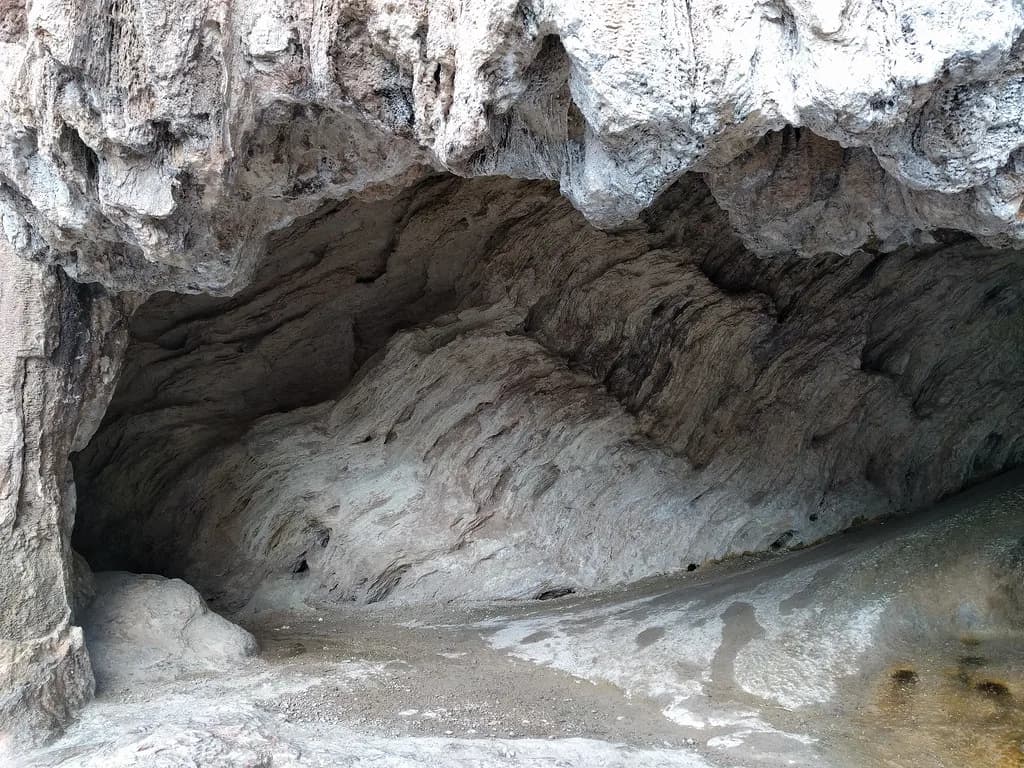
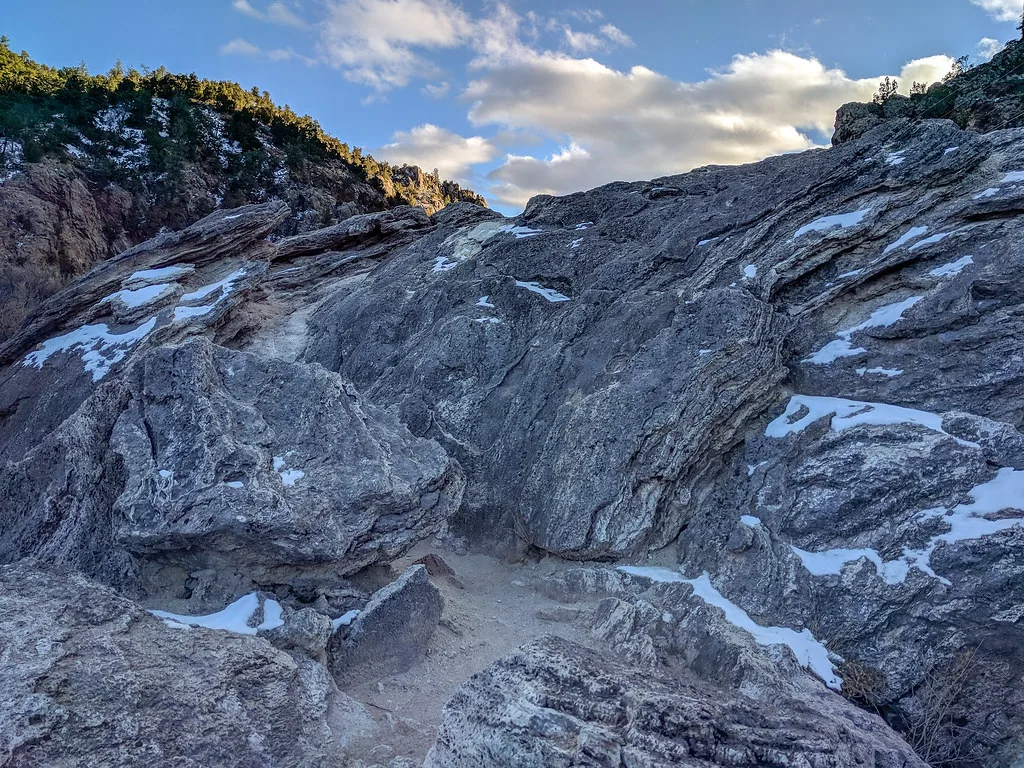
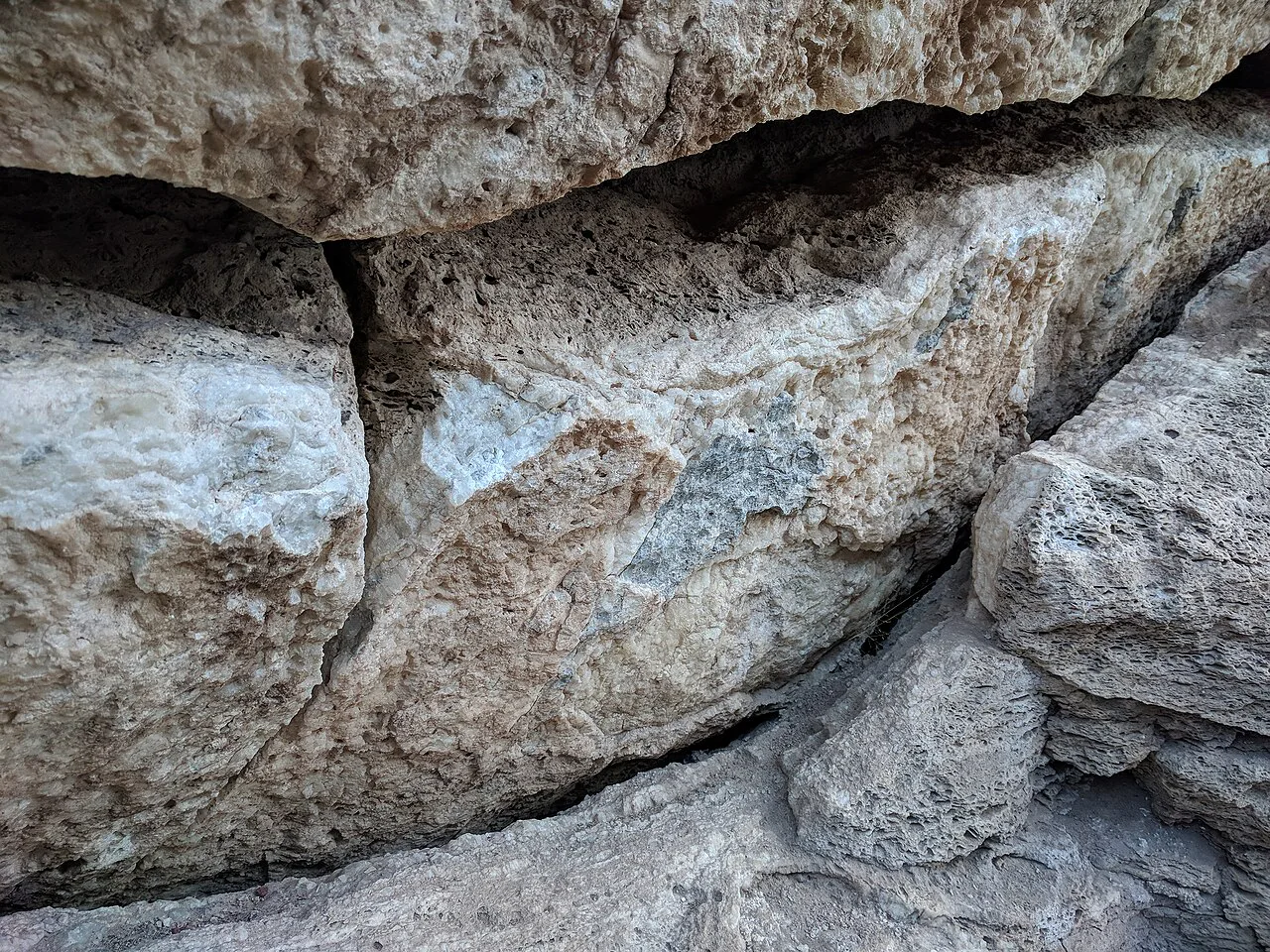
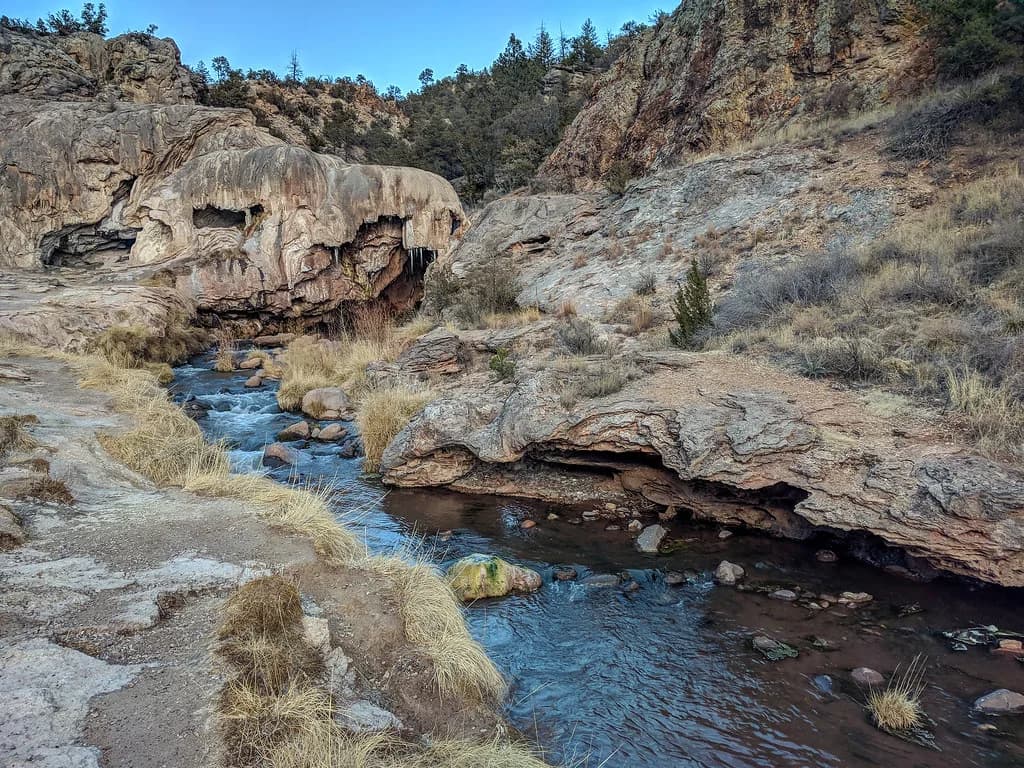
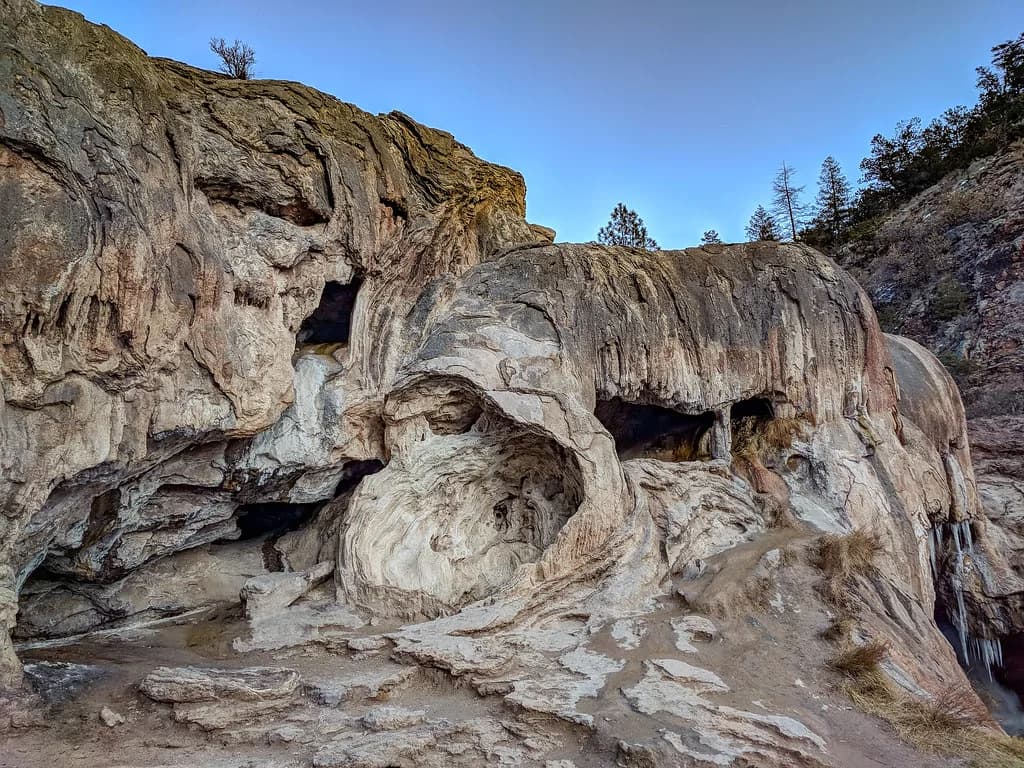
Soda Dam is a travertine barrier built where mineral springs discharge near the Jemez River, and the village of Jemez Springs describes it as a formation surrounded by 15 springs, with water reaching as high as 118°F. That source temperature is far hotter than a comfortable soak, which is why the dam works best as a viewpoint and a geology lesson rather than a place to settle in. The travertine is wet, uneven rock, so keep your footing and your distance from the hottest outflow.
The dam sits in the Jemez Valley along NM-4, the same road that threads the village of Jemez Springs and the Santa Fe National Forest. From Albuquerque the drive runs roughly an hour and a half, and from Santa Fe it is shorter; both routes funnel onto NM-4 for the final stretch. Plan the dam as a quick roadside stop and build the rest of the day around soaks and villages farther along the same highway.
The springs and the water
The 15 springs clustered around the dam discharge at different points, and the hottest reach about 118°F at the source. That spread matters: the water you see emerging is not the water you would sit in, and the dam's travertine is built from the minerals those springs deposit as they cool. Read the outflow temperatures before you think about touching water anywhere in the Jemez Valley.
For a soak, the valley gives you a clear choice by temperature. Spence Hot Spring holds roughly body-temperature water, San Antonio's source runs about 125°F and cools as it cascades through three rock-walled pools, and the village has developed baths for a predictable soak. Pick by the water you want, then match it to the access you are willing to earn.
Viewing the dam
Treat the dam as a short stop: park, walk the bank, look at the travertine and the river, and move on. The rock is slick where springs wet it, and the hottest water emerges at the source, so stay off the wet aprons and keep children close. This is the kind of stop that fits between a village breakfast and an afternoon soak, not a destination that fills a day.
The rock is slick where springs wet it, and the hottest water emerges at the source, so stay off the wet aprons and keep children close.
Spence Hot Spring
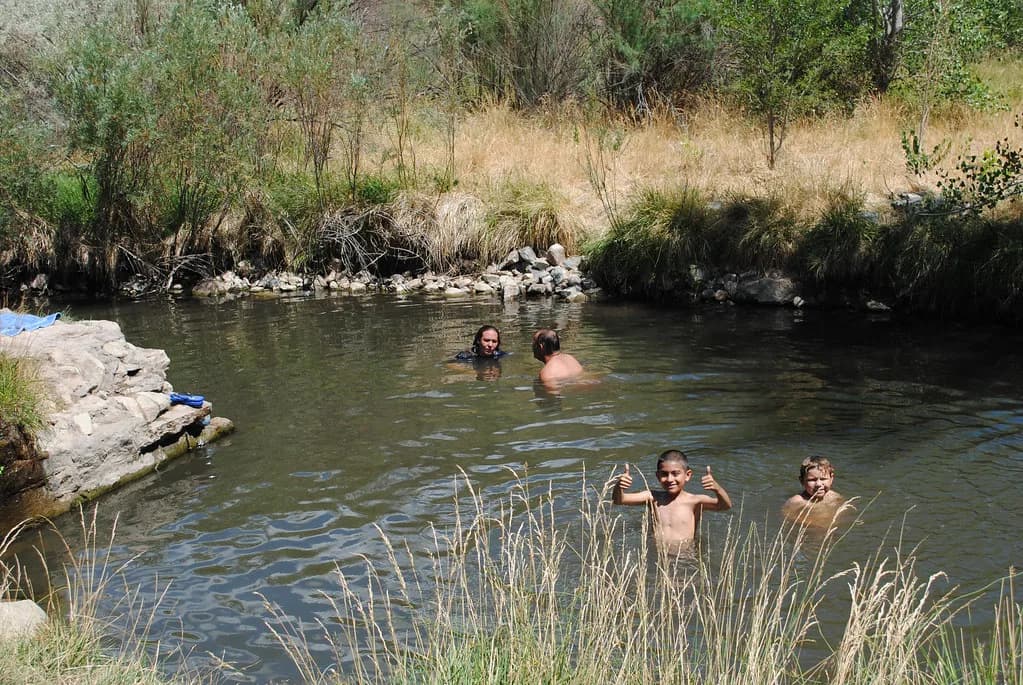
Spence is the easy soak in the valley: a large lot on the east side of NM-4 about seven miles north of Jemez Springs, then a quarter-mile trail down to the river and up the far side. The spring holds around 95°F, warm rather than hot, which makes it forgiving for a first primitive soak. Day-use only, no overnight camping, no glass, and dogs must be leashed and kept out of the water.
Because Spence is short and close to the road, it draws a crowd and is the busiest primitive soak on this stretch of NM-4. Go early on a summer weekend or save it for a weekday, and expect to share the pools. Pair it with the dam on the same drive, since both sit on the same highway north of the village.
San Antonio Hot Springs
San Antonio is the commitment: the last five miles of dirt road need a high-clearance four-wheel-drive vehicle, and from the signed turnoff it is about a half-mile moderate climb to the springs. Three rock-walled pools cascade down a steep hillside, starting near 105°F and cooling as the water drops between them. Clothing is optional here, and camping at the springs is not allowed.
The last five miles of dirt road need a high-clearance four-wheel-drive vehicle, so Spence is the easier soak if your car is not built for it.
That rough road is the real decision point between Spence and San Antonio. If your vehicle or your schedule will not take the drive and the climb, Spence delivers a soak with far less effort; if you want three pools and a hillside view, budget the extra time for the road and the walk. Either way, arrive with water and footwear that handle wet rock. If you are weighing similar trade-offs in another state, our Utah guide covers the same split between developed resorts and wild soaks.
Developed soaks in the village
Jemez Springs village gives you a developed option when you want a predictable soak without a trail. The village baths and pools sit right along NM-4, which makes them an easy pairing with the dam and a sensible fallback when the primitive springs are crowded. Treat the village as your base for the day and the dam as a stop on the way through.
Camping and lodging in the Jemez Valley
Camping in the Jemez Valley leans on Forest Service ground in the Santa Fe National Forest, with the village of Jemez Springs providing lodging and services along NM-4. Spence is day-use only and the springs at San Antonio do not allow camping, so plan your overnight base separately from your soak. Book village lodging ahead for summer weekends, when the valley fills with Albuquerque and Santa Fe day-trippers.
Crowds and timing
Midday summer weekends fill the NM-4 pullouts, and Spence in particular sees steady traffic because of its short trail. Early mornings and weekdays give you the dam and the pools with more room, and spring and fall bring cooler air that makes a warm soak more appealing. Winter access to the high dirt roads can change quickly, so pick your season with the road in mind.
What to bring
Bring shoes with grip for wet travertine and slick rock, plus a towel, water and layers for the elevation. The valley sits high enough that mornings and evenings cool off even in summer, and the dam's spray zone stays wet year-round. Cash and a full tank save you a detour if you decide to add a soak farther along NM-4.
Leave No Trace at the primitive soaks
At Spence and San Antonio, pack out everything you bring in, stay on established paths and keep soap and sunscreen out of the water. These are primitive springs on public land, and the pools stay usable only if visitors treat them that way. Carry a trash bag and leave the pools cleaner than you found them.
Safety notes
Source water at Soda Dam reaches about 118°F and San Antonio's source runs about 125°F, so test any pool before you commit and keep children away from the hottest outflow. Travertine and wet rock are slick, and the Jemez River runs cold and fast after storms. Keep your head above untreated geothermal water; the National Park Service notes that Naegleria fowleri can enter through the nose and advises against submerging your face in natural hot springs.
A longer New Mexico loop
If you are building a longer loop, the Gila country south of here holds two springs worth the drive: Lightfeather is a 3/4-mile walk on Trail 157 from the Gila Visitor Center with a source near 130°F, and Jordan is a 7- to 8-mile hike to a 20-foot pool around 94°F. Both are sweet springs without the sulfur smell, and both ask for a real hike rather than a roadside stop. Add them as an overnight leg after your Jemez Valley day.
Farther afield, Truth or Consequences anchors a different cluster of New Mexico soaks along the Rio Grande, and Stagecoach Hot Springs (Manby) sits in the Rio Grande del Norte country to the north. Use the state guide to pick a route that links the Jemez Valley with one of those clusters instead of bouncing across the state in a single day.
Plan Your Jemez Valley Day
Build the day around NM-4: stop at Soda Dam for the travertine and the 118°F springs, then choose Spence for an easy warm soak or San Antonio for a rough-road climb to three cascading pools. Check current conditions with the Santa Fe National Forest before you commit to the dirt roads, and keep your head above untreated geothermal water wherever you soak. For every soak in the state, start with our guide to New Mexico hot springs.
Frequently Asked Questions
Can you swim at Soda Dam Hot Springs?
Soda Dam is best treated as a viewpoint. The springs around the dam reach about 118°F at the source, and the travertine is wet and slick, so plan your soak at Spence, San Antonio or a village bath instead.
How hot is the water at Soda Dam?
The village of Jemez Springs describes the springs around the dam as reaching as high as 118°F. That is source temperature, not soaking temperature, and the water cools as it moves across the travertine and into the river.
How far is Soda Dam from Jemez Springs?
Soda Dam sits along NM-4 in the Jemez Valley, a short drive from the village of Jemez Springs. From Albuquerque the drive runs roughly an hour and a half, and from Santa Fe it is shorter, with both routes joining NM-4.
What hot springs near Jemez Springs allow soaking?
Spence Hot Spring offers a quarter-mile trail to pools around 95°F, and San Antonio Hot Springs has three rock-walled pools cascading from a source near 125°F after a rough five-mile dirt road and a half-mile climb. The village of Jemez Springs also has developed baths.
Do I need four-wheel drive for San Antonio Hot Springs?
Yes. The last five miles of dirt road to San Antonio need a high-clearance four-wheel-drive vehicle, and the trail from the signed turnoff is about a half-mile moderate climb to the pools.
Are dogs allowed at Spence Hot Spring?
Dogs are allowed at Spence but must be leashed and kept out of the water. Day-use only applies, glass is not allowed, and overnight camping is not permitted.
Sources
Hot springs notes for your next road trip
Optional updates when we add or revise hot springs guides.
You might also like
Continue reading
More guides you'll find useful
_(32579494998).jpg)